THE SUSSEX MOTIVE POWER DEPOTS WEBSITE.
HAS NOW BEEN MOVED TO A NEW SITE CALLED
IGNITING THE FLAMING OF UNITY
https://ignitingtheflameofunity.yolasite.com/
PLEASE CLICK ON THE IMAGE BELOW
TO TRANSFER TO THIS NEW SITE
CLICK ON THE ABOVE IMAGE TO TAKE YOU
TO THE NEW UPDATED COMBINED AND WEBSITE
IGNITING THE FLAME OF UNITY WEBSITE
https://ignitingtheflameofunity.yolasite.com/
THIS WEBSITE COMBINES THE FOLLOWING WEBSITES
THE BRIGHTON A.S.L.E.&F., THE BRIGHTON MOTIVE POWER DEPOTS
& THE SUSSEX MOTIVE POWER WEBSITES
WHICH EXPLAINS THE EVOLUTION OF THE FOOTPLATE GRADES AND THE
HISTORY OF THEIR TRADE UNIONS AND THE STRUGGLES TO IMPROVE
THEIR WORKING LIVES
CLICK ON THE ABOVE IMAGE TO TAKE YOU
TO THE NEW UPDATED COMBINED AND WEBSITE
IGNITING THE FLAME OF UNITY WEBSITE
https://ignitingtheflameofunity.yolasite.com/
THIS WEBSITE COMBINES THE FOLLOWING WEBSITES
THE BRIGHTON A.S.L.E.&F., THE BRIGHTON MOTIVE POWER DEPOTS
& THE SUSSEX MOTIVE POWER WEBSITES
WHICH EXPLAINS THE EVOLUTION OF THE FOOTPLATE GRADES AND THE
HISTORY OF THEIR TRADE UNIONS AND THE STRUGGLES TO IMPROVE
THEIR WORKING LIVES

NEWHAVEN LOCO
1847 ~1963
page 1592
This web page is dedicated to all A.S.L.E.F. members who have worked at Newhaven depot over the years, and it
features A.S.L.E.F. members who brought the trains of Newhaven to life.
PHOTOGRAPHER UNKNOWN
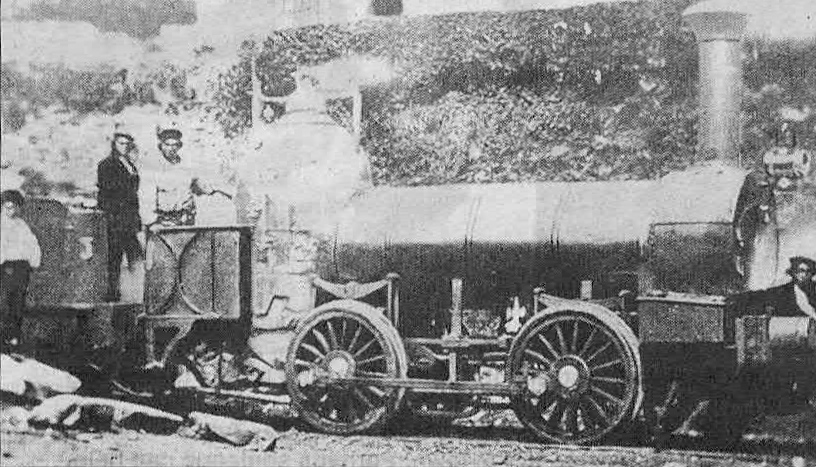
Newhaven locomotive Shed was opened on 8th December 1847 by the L.B.S.C.R. (Shed Code N) and
located at Newhaven Harbour. The shed was closed in 1887 and relocated to behind Newhaven Town
station.
Newhaven locomotive shed was a sub-depot of the Brighton shed and closed on the 9th September 1963.
The Newhaven Branch of A.S.L.E.F. was opened in 16th June 1912 and closed in 30th September 1963.
PHOTOGRAPHER UNKNOWN
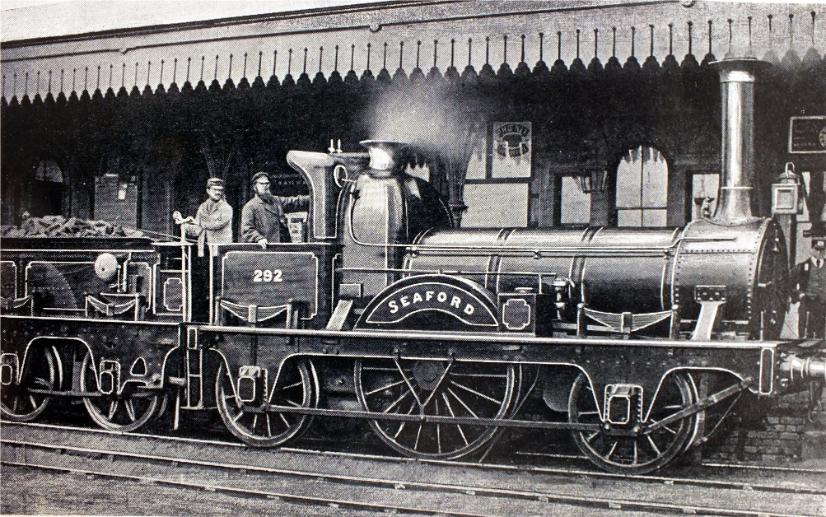
Loco No. 292, July 1874 at Seaford
.
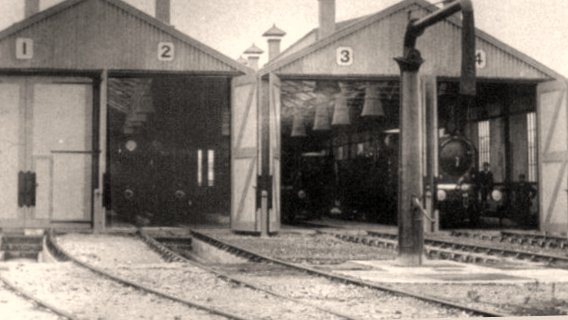
PHOTOGRAPHER UNKNOWN
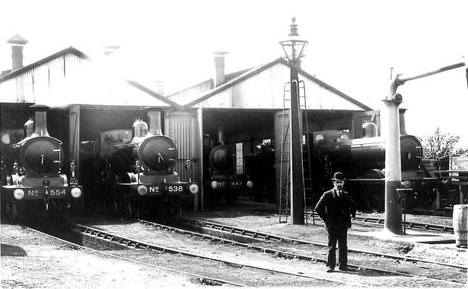
Newhaven Loco Shed
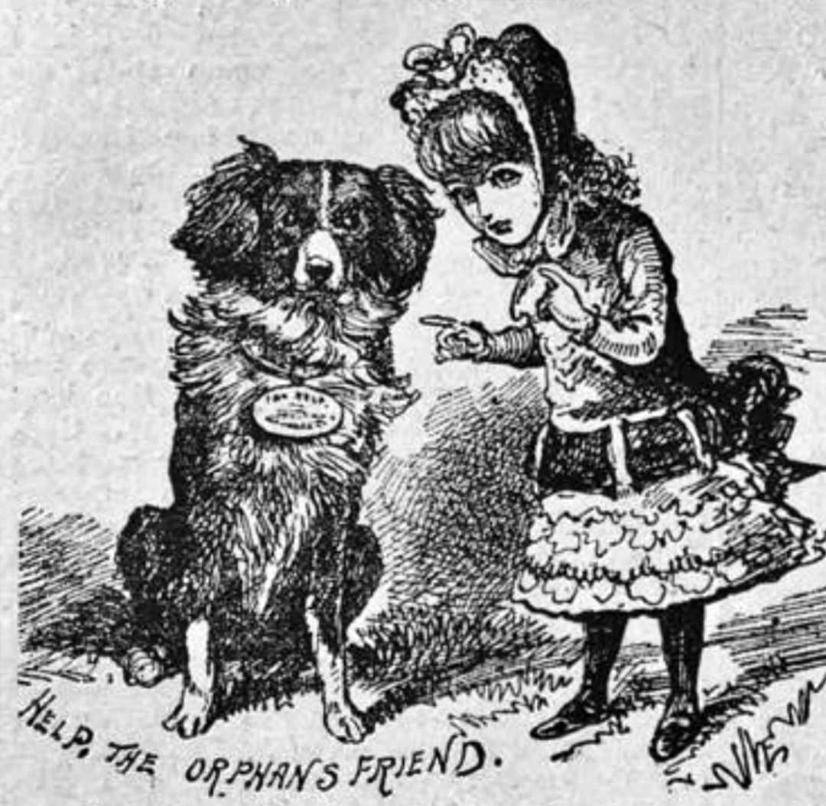
THE RAILWAY DOGS
Courtesy of Steve West
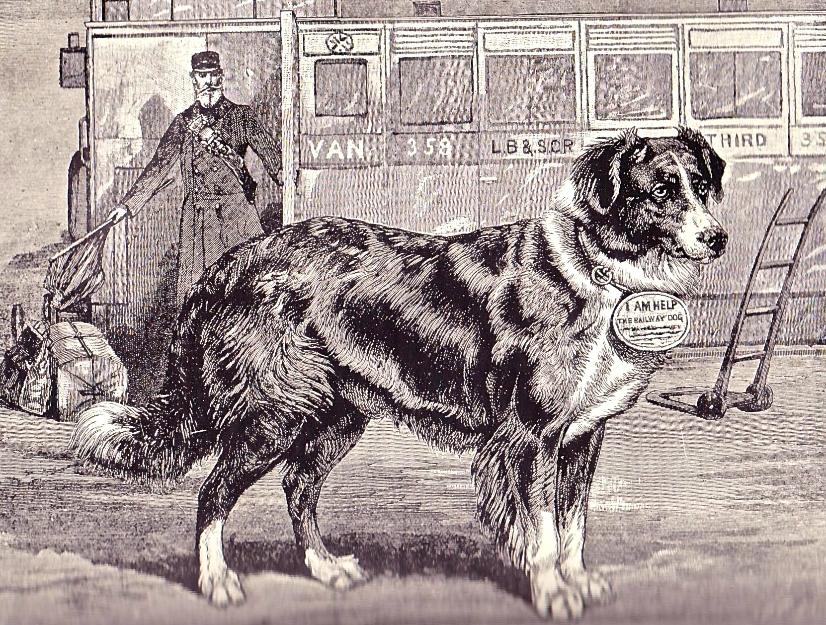
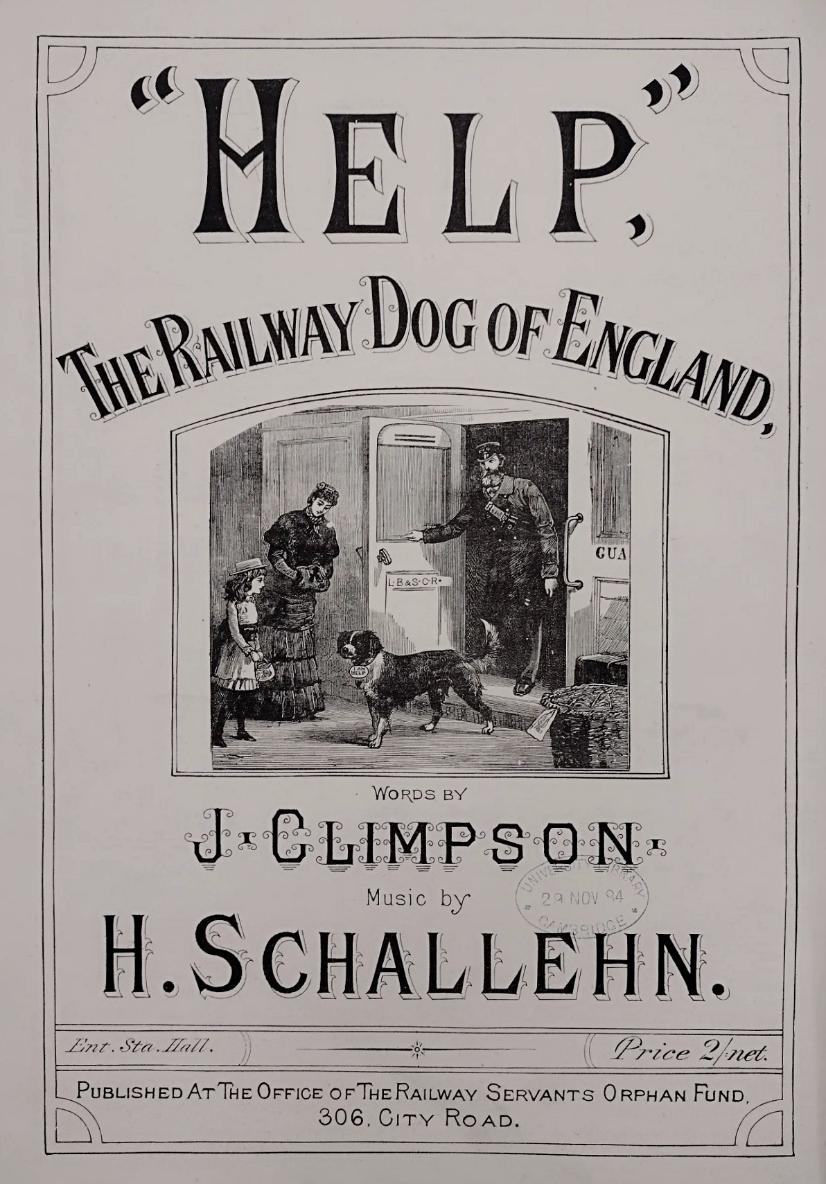
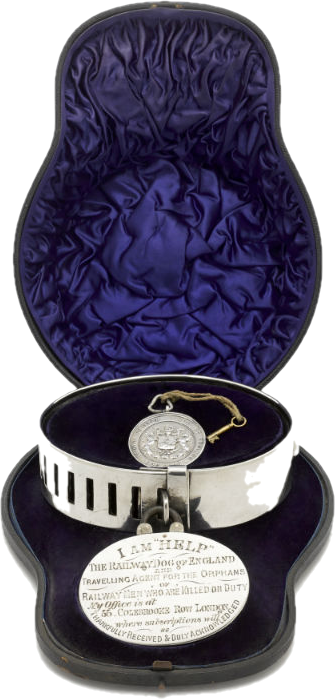
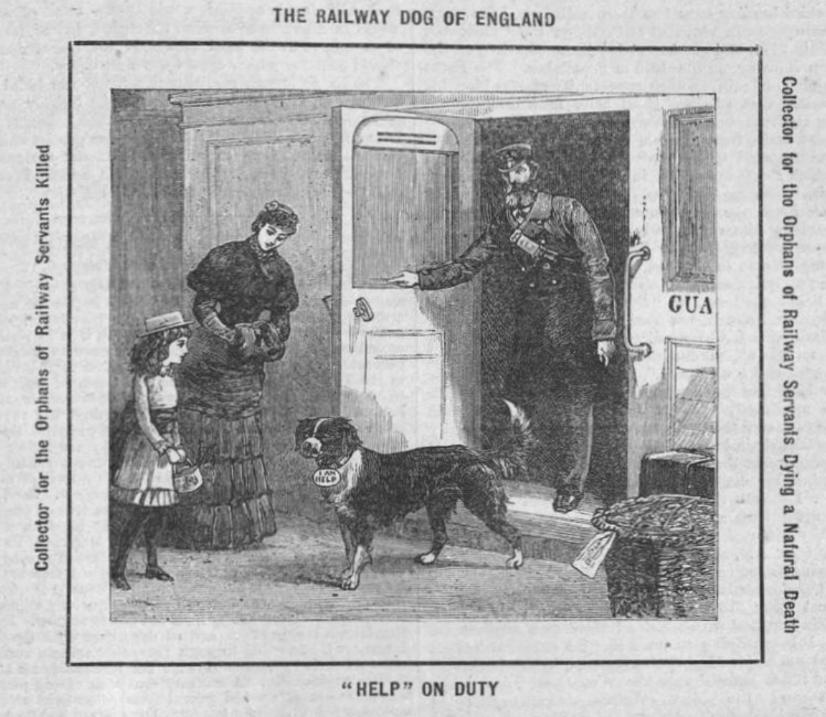
The first railway dog can be traced back to 1881, he was called “HELP” and collected money for the “Orphan Fund” of the Amalgamated Society of Railway Servants.
This famous dog, a pure Scotch Collie was a gentle andHe carried a handsome silver collar, bearing a silver Medal endorsed "I am Help the railway dog of England, and travelling agent for the orphans of railwaymen who are killed on duty" plus the address of the London offices to which interested persons could send donations.
The amalgamation in 1923 of the London South Western with the London Brighton and South Coast and the South Eastern and Chatham Railways extended the area for fund raising, but at the same time increased the number of children requiring help and care, and by now dogs were collecting at all London Termini and large stations down the Thames to Dover, then round the coast to Plymouth and beyond.
Information extract & adapted from
the Old Southeronians Association Website
Which was written By H.T. Hunt
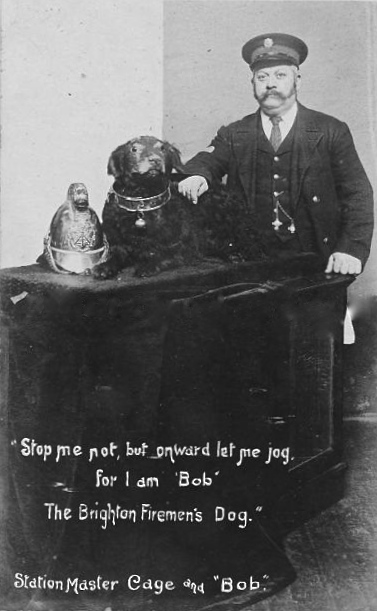
Right Station
Master Gage with Bob the Railway Dog
PHOTOGRAPHER UNKNOWN
PHOTOGRAPHER UNKNOWN
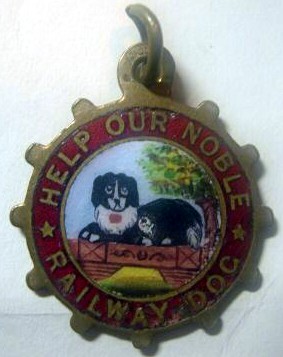
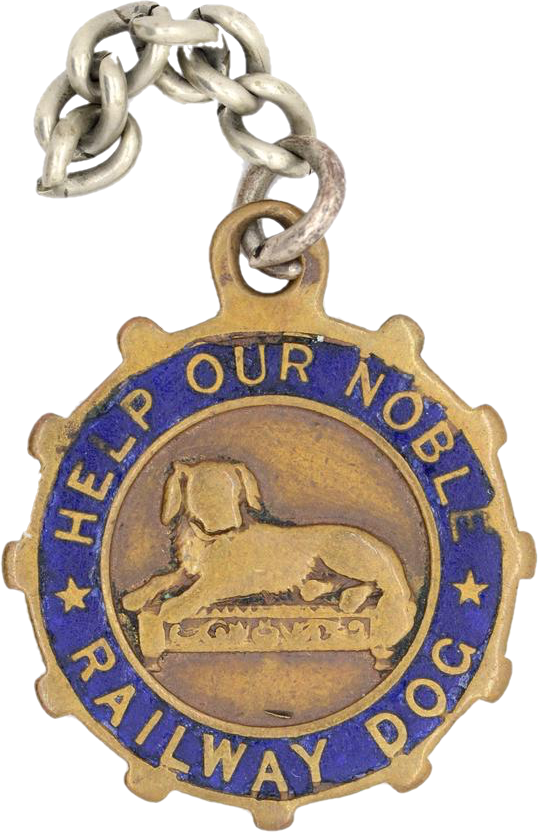
Above is the rear of an Amalgamated Society of Railway Servants (A.S.R.S.) fob, which features the “Railway Dog".
This badge is extremely rare and is over 100 years old.
R.M.T. COLLECTION
Help the noble Railway Dog
This photo was taken from the book title is 50 years of Railway Trade Unionism, the story of the N.U.R. published in c1920

CLICK ON ICON FOR MORE INFORMATION REGARDING
THE HISTORY OF RAILWAY DOGS
E. J. Bedford Collection
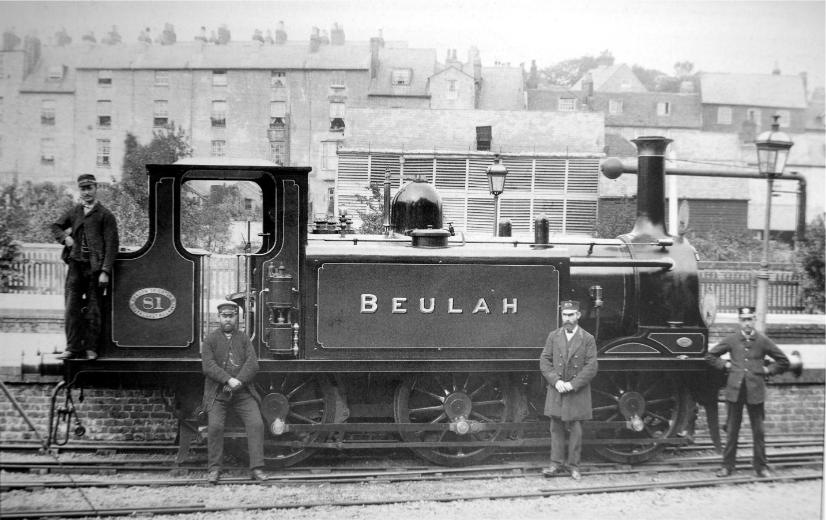
Beulah was based at Newhaven when this photo was taken at Lewes in c1876
Right: Inspector William Hayden (Department unknown).
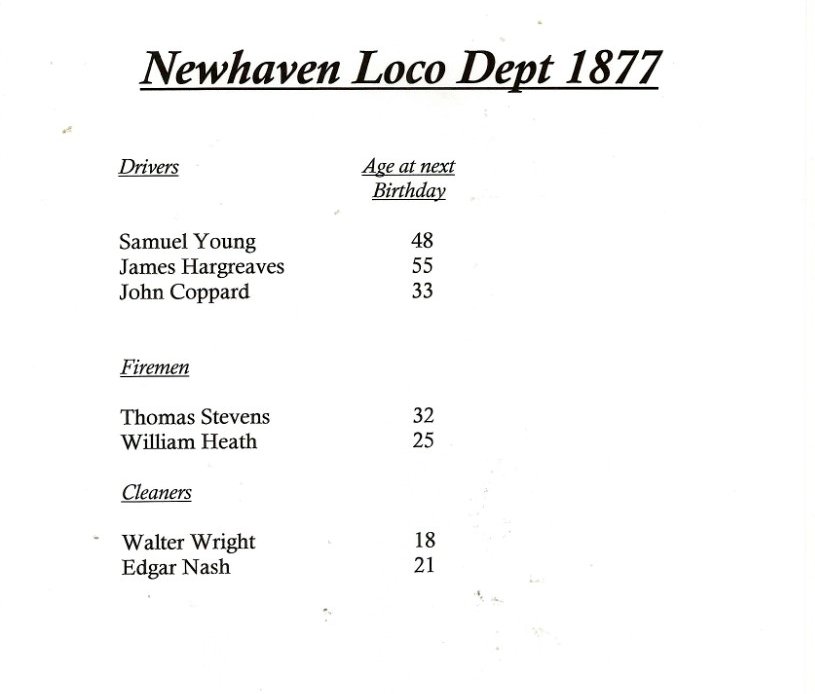
Above is a list of all the engine men that where employed at Newhaven (Harbour) Locomotive Department in 1877. It is not know if this is list was compiled in seniority order or not. However, the list does clearly indicates the difference in the ages of both drivers & fireman at that period of time.
E. J. Bedford Collection
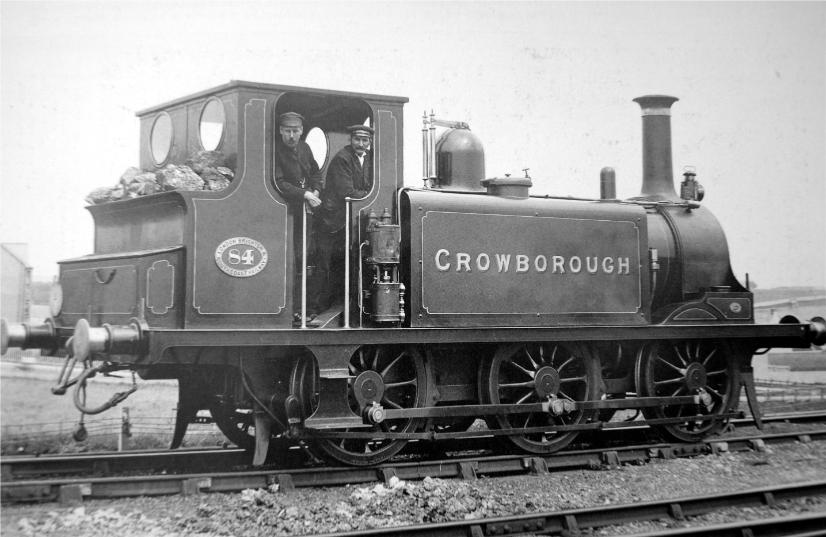
Crowborough was based at Newhaven when this photo was taken at Lewes in c1892
STORIES FROM THE SHOVEL
extracted from the R.C.T.S. book of L.B.S.C.R. Locomotive
SHED DOORS
The escape of engine No.133 Picardy on the evening of 11th February, 1889, when it was being stabled until the morning on Newhaven shed after having worked in with a train of horse boxes. The shed doors were partly closed and not noticing this in the darkness driver Benson drove through them and in the subsequent confusion crashed into a wagon of loaded with ashes. Apart from odd scratches and dents, and a lost chimney damage was so slight that hurried repairs permitted the return working to be taken with little delay. Nevertheless driver Benson was fined £2. 2s. 0d. and a shed labourer dismissed for moving the shed doors without permission and not placing a red light on the wagon which he was loading.
Life could be hard on the Brighton!
Driver James Beach who was driving an A Class Terrier Tank No. 41 'Piccadilly', on the 4th February 1901, On this morning he was running light engine from Newhaven to Seaford, there to undertake a spell of shunting before working a goods back to Lewes. When about three hundred yards from Seaford beach he attempted to feed water to the boiler only to find the pumps would not to work, so he had to walk along the side framing and opened the left hand pet tap. On making his way back to safety of his cab a sudden jerk upset Driver Beach’s grip and he fell to the ballast. fortunately the engine wheels missed him.
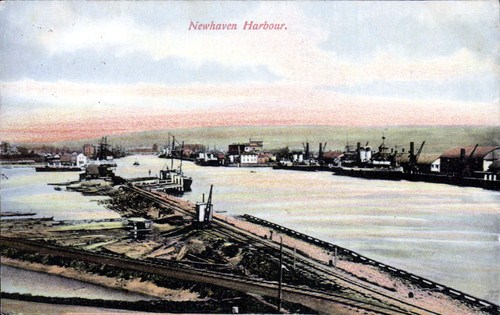
POST CARD
NEWHAVEN HARBOUR
COMPANY'S LOCOMOTIVES
|
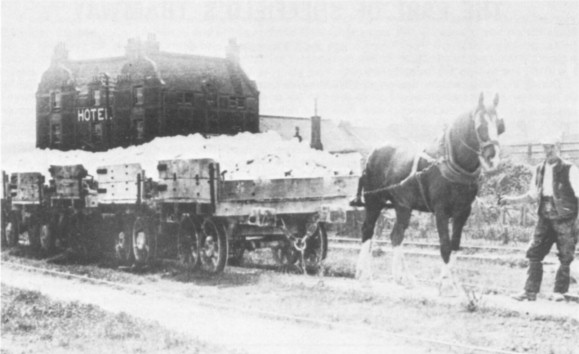
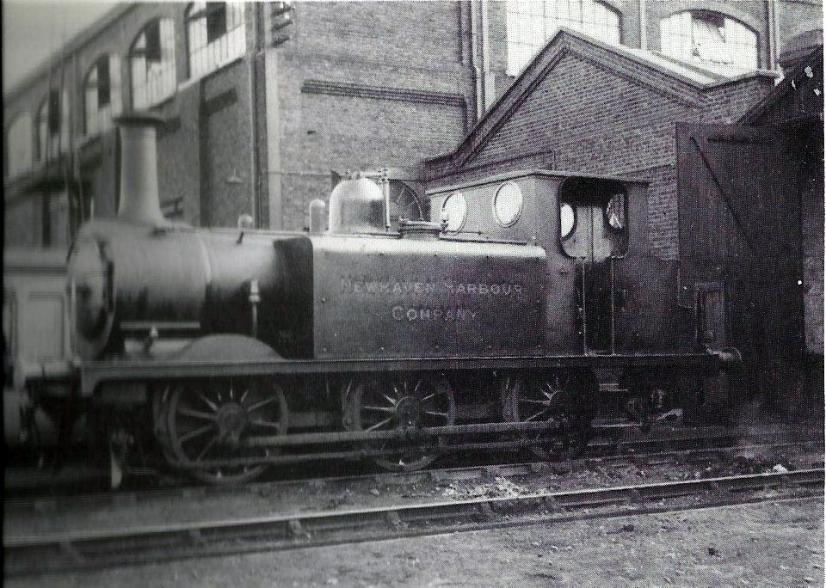
Owing to difficulties the Newhaven Harbour had to be controlled by an independent company, which worked in close co-operation with the L.B.S.C.R. Known as the Newhaven Harbour Company, this concern employed horses on the quays for some years before turning to steam power. The first indication of this was on 6th July, 1880 when the Minute Book records £300 being made available for purchasing a suitable tank locomotive. Apparently one was not found, for on 5th April, 1881 Stroudley suggested raising the price to £550 and offered to inspect a second hand engine advertised for sale by the Huslett Engine Company. The was accepted and on 3rd May, 1881 a saddle tank engine named ‘Wave’ was at work hauling sand from the beach to Denton Cement |
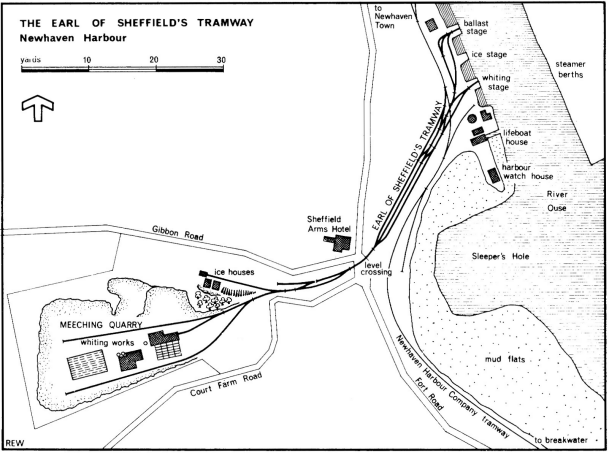 |
Works. A similar engine named ‘Bradford’ said to be ten years old and in good order, was inspected on 2nd May, 1882 and purchased together with a steam crane and patent grab, on 20th June at an auction in Manchester for £742. Both engines were repainted in standard Stroudley livery with their names inscribed across the tank sides. At weekends they were washed out and given minor repairs at Newhaven shed, while heavier attention was given by Brighton works. In July 1888 their regular crews were passed by L.B.S.C.R. inspectors for working between the Harbour and the Town stations, thereby avoiding the necessity of providing pilot-men on journeys from the beach to the West Breakwater. In addition the senior driver was also passed for occasional journeys in daylight hours from Newhaven Town to Seaford or Lewes. Two carriages were borrowed in March, 1889 and purchased for £42 in February, 1892 on Billinton’s request because they were not fitted with the Westinghouse brake and he wished to inform the Board of Trade that all the company’s coaching stock was so fitted
|
With no signalling on the quay lines, apart from that applying to the Brighton Company’s track it is not surprising that minor incidents occurred from time to time. For instance ‘Wave’ ran into and killed one of the shunting horses on the night of 11th February, 1883, while in the following year on 6th May ‘Bradford’ collided with several loaded coal wagons and pushed two of them into the harbour. Of greater consequence was the accident on the evening of 23rd March, 1888 when Wave’s crew lost control of a heavy train of stone blocks and crashed at speed into some empty wagons, which in ran into Bradford. No one was injured, both crews having jumped clear in time, but the Harbour |
 PHOTOGRAPHER UNKNOWN |
company’s complete stock of locomotives was out of commission, and ‘Terriers’ engines Nos. 69 ‘Peckham’ and 79 ‘Minories’ had to be borrowed until repairs could be completed. Bradford was quickly dealt with on the spot by fitters
|
sent out from Brighton shed and was back at work in four days, but Wave had to be towed away to Brighton Works and returned to traffic on 27th May, 1888, on the 7th December 1892 was sold for scrap. Bradford was again damaged by runaway wagons on 25th April, 1892 and was sent to Brighton for repairs and returned back to Newhaven on 28th July and was laid up in February, 1898. Terrier engine no. 69 acted as a temporary replacement, while negotiations were made for the purchase of Terrier engine No.72 ‘Fenchurch’ on 27th June 1898. Over the following months various Terriers were hired for varying periods, but once work ceased on the sea defences in February 1902, Fenchurch proved sufficient. |
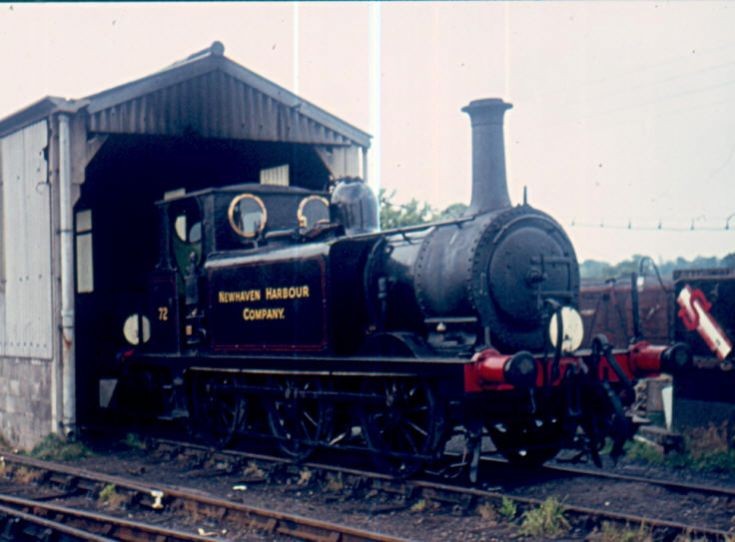 PHOTOGRAPHER UNKNOWN |
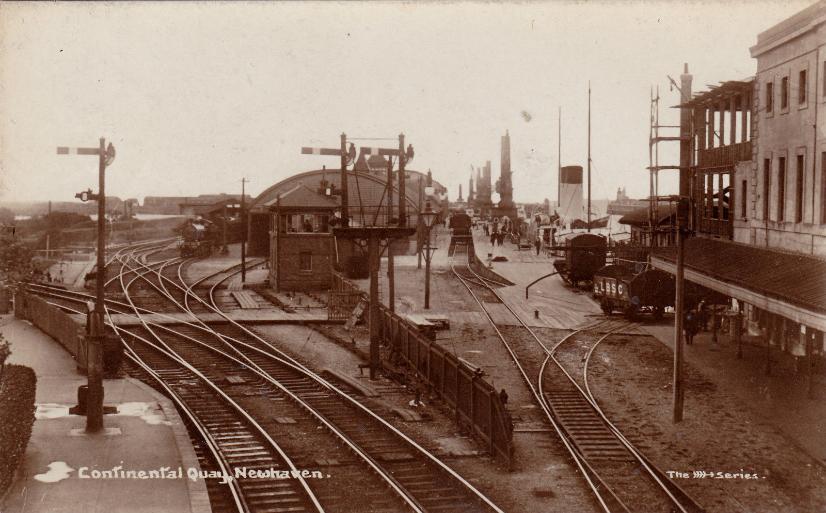
POST CARD
LOCOMOTIVE JOURNAL
JULY 1911
Extracted and adapted from A.S.L.E.F. Organising Secretary W. Warwick’s
report page 332
The following Wednesday (3rd May) found me at Newhaven, a small locomotive centre on the London, Brighton
and South Coast Railway, about the only one on the Brighton line where we have not got a branch of our
Society. I got to work and made the necessary preparations by way of hall and bills for open meeting on the
Sunday (7th May), but on the Friday (12th May) was called away to attend a Board of Trade inquiry at New
Cross. In this case a wagon examiner had been killed whilst engaged in his duties, but after going thoroughly
into the matter it was agreed that our member was in no way to blame.
I returned to Newhaven, and at the meeting a few of our members from Brighton and Eastbourne attended,
together with Brother Harrison, of Battersea, who presided, but the Newhaven men made a poor show in
turning up. However, it was very interesting and those who did attend went away wiser with regard to the
position and doings of our Society, and thus, I hope, the first step was taken towards establishing a branch of
our Society at Newhaven.
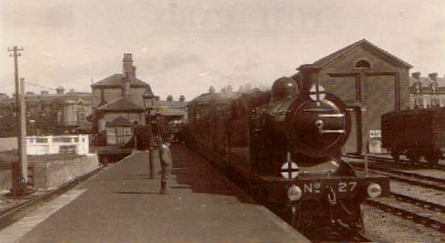
POST CARD
LOCOMOTIVE JOURNAL
page 358
AUGUST 1912
Extracted and adapted from
A.S.L.E.F. Organising Secretary W. Warwick's report
I then spent nine days at the Conference, and on returning visited Fulham in the morning and an open meeting at
Covent Garden in the evening, and the following day left for Newhaven, with the view to open a branch of our
Society there. This is rather a small depot on the London, Brighton and South Coast Railway, but quite large
enough to maintain a branch. I did the needful by way of visiting, bills, &c., and on the Sunday a few friends from
Brighton with Brother Marshall, from Eastbourne, came over to lend a hand, with the result that a branch was
opened and arrangements made for the future.
W. Warwick
September 1912
Page 409
As intimated in my last report, a branch of our Society was opened at Newhaven on Sunday, June 16th, but
owing to not having books, &c, it was necessary for me to pay another visit in order to instruct our new
secretary, and to assist in finding a suitable club room, &c. I attended to this on the Tuesday, 25th, and am
pleased to state I had but little difficulty in carrying out the above mentioned duties.
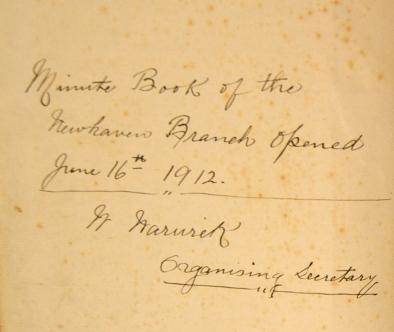
Above are the minutes from the opening meeting of the Newhaven Branch of A.S.L.E.F.
The Branch's first meeting was held in the White Hart Hotel on Sunday 30th, June, whereby two more loco-men Bros.
W. Goldsmith & W. Smith joined the Branch
NEWHAVEN BRANCH
OF A.S.L.E.F.
1912 ~ 1963
The following minutes have been
extracted and adapted from the Newhaven Branch
at Newhaven Loco shed, and what
Special Open meeting held at the Co-Operation Hall on
Sunday June 16th 1912 at 3.0 p.m.
Chairman Bro T. Hatcher, Mr W. Warwick, A.S.L.E.F. District Organiser A.E. Harrison from Battersea Branch, Bros A.E. Marshall from Eastbourne Branch and Brighton Branch members Bros. T.W. Hatcher (Branch Chairman), J. Enves (Branch Secretary), F. Smith, J. Smith, H. Funnell, F. Wilson, F. Queen, A. Pope, G. Thomas, T. Leaney, T. Burtenshaw and F. Christmas, and several Newhaven men.
Bro Jack Enves in a few remarks stated that an effort was made twelve months ago to open a branch at Newhaven but it was not successful. As it was understood that several of the Newhaven men were now unanimous to join our ‘Society’ the present meeting was called to enable the loco-men to form a branch of the ‘Associated Society’ or join a convenient branch. It was pointed out that we had branches at all the depots in the Southern District namely St Leonards, Eastbourne, Brighton & Fratton, and the men of Bognor, Midhurst and Littlehampton with exceptions were members of the Horsham Branch but that see correspondence at each of those depots.
Bro. A.E. Harrison stated that from the experience of his serving the last twelve months in working with the A.S.R.S. he had come to the conclusion that the loco-men cannot get their business satisfactorily endorsed in a branch room consisting of all grades as it is very difficult to get our men together owing to our irregular hours it is best manage our own business by locomotive men only.
Bro. A. Marshall stated that from his experience of the Coastal Depots where loco-men had but two representatives out of eight he was of the opinion that loco-men must manage their own business through their own organisation. He also pleaded with the men at Newhaven to use this influence to get the four ‘Associated’ candidates for the Southern District returned at the forthcoming Conciliation Board elections.
Mr Warwick in a long and interesting address hoped the men at Newhaven would see their way clear to form a branch of our Society. He did not go there to ask them to assist us to form or build up our Society as we were now 24,000 strong with £ 188.000 at our disposal.
We were asking for but 1/- entrance fee when he joined the Society they paid anything up to 10/- and did not know whether the Society would be a success or not. A man joining now practically knew that he was joining a strong and finically sound organisation.
Bro T. Hatcher thanked the speakers on behalf of the meeting for their remarks and appealed for new members. But hoped they would elect a Chairman and Secretary so could manage their own business.
Seven Newhaven men responded by joining with promises from several men who were unable to attend.
It was agreed to form a Newhaven Branch and to elect Chairman and Secretary.
Pro. by A. Pearce, Sec. by L. Lower that Fred Wilmshurst, be the Secretary of Newhaven Branch, Carried Unanimously.
Pro. F. Wilmshurst, Sec. by D. Boyle: - C. Barrow be Chairman of the Newhaven Branch Carried Unanimously.
Pro. by T.W. Hatcher Sec. by H. Funnell:- That the following men be members of the Newhaven Branch,
C. Barrow, F. Wilmshurst, H.G. Bowden, D. Boyle, E. P. Ettridge, A.H. Pearce & L. Lower. Carried Unanimously.
Pro. by T.W. Hatcher Sec. by J. Smith: - That a vote of thanks be given to Bros. Warwick, Marshall and Harrison for attending also for their interesting addresses. Carried.
Pro. by Bro Warwick, Sec. by F. Smith: - That a vote of thanks be given to Chairman for the able manner he had performed his duties and vice of the opinion that we had a most pleasant meeting. Carried.
Bro. Harrison endorsed Mr. Warwick remarks and stated that when they opened the Bricklayers Arms Branch about five years ago it was a most disorderly meeting but the Branch is now 150 strong.
PHOTOGRAPHER UNKNOWN
Minutes of the Newhaven Branch Meeting
held at the White Hart on Sunday June 30th at 6 o’clock
Present members from Brighton Branch: - T.W. Hatcher, J. Smith, F. Christmas, F. Queen & W. Baldwin, and members of the Newhaven Branch.
It being our first Branch meeting it was proposed by Bro J. Smith and Sec. Bro. A. Pearce. “That Bro. T.W Hatcher take the chair just to wake us up a bit.” Carried.
Minutes read of open meeting of June 16th Pro. C. Barrow & Sec. A. Pearce. “That they be accepted as a true record."
Pro. T. W. Hatcher, Sec. J. Smith. "That William Smith be a member of the Society, Carried. Pro. T. W. Hatcher, Sec. that William Goldsmith be a member of the Society.” Carried.
Bro. J. Smith explained the Benevolent Call Fund, its objects and what to pay and urged our members to take up same.
Bro. T.W. Hatcher in a few remarks explained the Pension Fund and asked for our support for same by returning him & Bro. J. Enves as Delegates.
Pro. by Bro. W. Smith, Sec. by Bro. C. Barrow that Bro. F. Wilmshurst attends a Conference to discuss the National Programme, Carried.
Pro. C. Barrow and Sec. A. Pearce that a vote of thanks be accorded to Bro. T.W. Hatcher for the able manner he conducted the meeting, Carried Unanimously.
The Newhaven Branch held it meetings in the White Hart Hotel from the 30th June, 1912, until the 28th December, 1924, when the
Newhaven Branch relocated to the Newhaven Labour Club and the first meeting being held the 25th January 1925. The Branch
remained there until its last meeting on the 8th September 1963.
Minutes of the Newhaven Branch Meeting
held at the White Hart on Sunday July 14th 1912
Bro. C. Barrow presiding
Minutes read of the last meeting, pro by Bro. A. Pearce & sec. W. Smith. “That they be accepted as a true record.
Election of Officers
Pro. A. Pearce & sec C. Barrow
That Bro. W. Smith be Vice Chairman. Carried
Pro. L. Lower & sec. W. Smith
That Bro. H. Bowden be Check Steward. Carried
Committee
Pro. by Bro. C. Barrow & sec. Bro. W. Smith
That Bro. A. Pearce be one of the committee members. Carried
Pro. by Bro H. Bowden & sec. Bro. A. Pearce
That Bro. L. Lower be one of the committee members. Carried
Pro. by Bro. C. Barrow & sec Bro. A. Pearce
That Bro. D. Boyle be one of the committee members. Carried
NEWHAVEN
BRANCH
OFFICERS
1912 -13
Chairman Bro. C. Barrow
Vice Chair Bro. W. Smith
Secretary Bro. F. Wilmshurst
Delegate gave his report of the Conference held at Brighton on July 11th 1912.
Pro. Bro. C. Barrow & Sec. Bro. W. Smith.
That the Secretary write to the Corresponding Secretary disapproving of Eastbourne proposal of having four & four delegates to submit the programme before the Company and they thought it have been better to have had five A.S.L.E.F & three A.S.R.S. Men. Carried.
Minutes of the Newhaven Branch Meeting
held at the White Hart on Sunday July 28th 1912
C. Barrow presiding
Minutes read of the last meeting, pro. by Bro. A. Pearce & sec. by Bro. L. Lower. That they be accepted as a true record.
Letter read from Brighton re 4 & 4 to submit the National Programme, and it was agreed that the Secretary write to Brighton supporting their proposal.
Cleaners Lobby came up for discussion, Pro. by A. Pearce & Sec. By L. Lower.
That it stand over to the next meeting when we hoped to have moved there. Carried.
Minutes of the Newhaven Branch
Meeting
held at the White Hart on
Sunday August 4th 1912
when we had a good number present,
Bro. C. Barrow in Chair
Minutes read of the last meeting Pro. by Bro. A. Pearce & sec. by Bro. L. Lower. That they be accepted as a true record. Carried
Letters read from the Brighton branch re Joint action in submitting National Programme, and it was thought the reply was satisfactory.
Cleaners lobby again came up for discussion and was Pro. By Bro. H. Bowden & Sec. By Bro. W. Smith.
That the Secretary take up with Bro. Pullen concerning the same asking him to take up with Mr. Richardson at an early date. Carried.
Discussion took place re Cleaners having to stop and help coal engines and it was decided to it drop as what they would gain one way they would lose another.
PHOTOGRAPHER UNKNOWN
Minutes of the Newhaven Branch Meeting
held at the White Hart on Sunday September 8th 1912
Bro. C. Barrow in the Chair
Minutes read of the last meeting, pro. A. Pearce & sec. L. Lower. That they be accepted as a true record.
Pro by Bro. H. Bowden & sec. Bro. A. Pearce. That John William Green be a member of this Society.
Correspondence read from Brighton re deputation and also reply from our Superintendent which was very much appreciated.
Medalions again came up for discussion and it was proposed that the Secretary indicated to write for same.
Minutes of the Newhaven Branch Meeting
held at the White Hart on Sunday September 22nd 1912
Bro. C. Barrow in Chair
Minutes read of last meeting, pro. by H. Bowden & sec by Bro. W. Smith. That they be accepted as a true record. Carried
Pro. C. Barrow & Sec. A. Pearce. That the Secretary be instructed to write to Head Office for Rule Books as it was thought it was time we had the same. Carried.
Pro. W. Smith & Sec. A. Pearce. That the Secretary be instructed to take up with Bro. Pullen, New X, asking him if he had taken up our letter of August 11th re Cleaners Lobby. Carried.
Pro. C. Barrow & Sec H. Bowden. That the Secretary be instructed to take up with Bro. Pullen New X re 7.55 p.m. Goods from Newhaven to Norwood and 1.5. a.m. Goods from Norwood to Newhaven, not having sufficient brake power, 10 ton and one brake wooden blocks 40 to 50 on. Carried.
Minutes of the Newhaven Branch Meeting
held at the White Hart on Sunday October 6th 1912
Bro. C. Barrow in Chair
Minutes read of last meeting, pro. by W. Smith & sec by Bro. L. Lower. That they be accepted as a true record. Carried.
Letter from Brighton, receipt from Head Office for branch dues and accepted as correct.
Minutes of the Newhaven Branch Meeting
held at the White Hart on the Sunday October 20th 1912
Bro. C. Barrow in the Chair
Letters read from Brighton & Battersea, re better Conditions for Loco-men.
3 days Holidays with pay each year, 10 per cent drivers making 20 per cent to receive.
Drivers when Fireman to receive 5/- a day. First year Driving 6/-, 2nd 6/6.
Passed Fireman when in the Shed to receive 3/3 per day. First year firing 3/9 2nd 4/-, 4th 4/3, an additional 10 per cent making 20 per cent to receive 4/9 per day.
Increases in pay to start from Friday Sept. 27 from, Holiday from Oct 1st 1912.
Bro. L. Lower proposed & Bro. A. Pearce Seconded.
That this branch express their obligation for their able manner in which they brought about such a successful settlement and think that we should not have gain any more through the Conciliation Board.
Bro. W. Smith proposed & Bro. H. Bowden seconded as an amendment.
That was not satisfied with settlement and thought it ought to have gone to the Conciliation Board as he thought we should have got a weeks holiday and 4/9 for all fireman.
For the amendment 2, against 5, the amendment was lost.
Election of Organising Secretary to stand over, minutes read of last meeting, pro. A. Pearce & sec. H. Bowden. That they be accepted as a true record.
Minutes of the Newhaven Branch Meeting
held at the White Hart on Sunday Nov. 3rd 1912
Bro. C. Barrow in the Chair
Minutes read of the meeting, pro. Bro. A . Pearce & sec. L. Lower. That they be accepted as a true record.
Letter read from Head office re application for clerks
Book of tickets accept in aid of the Blind, also rule books to hand.
Minutes of the Newhaven Branch Meeting
held at the White Hart on Sunday Nov. 17th 1912
Bro. C. Barrow in the Chair
Minutes read of the meeting, pro. Bro. A . Pearce & sec. H. Bowden. That they be accepted as a true record.
Letter read from Battersea re open meeting also resolution from Battersea Branch re signatures of all person off men to assert them to get all station pass for them.
PHOTOGRAPHER UNKNOWN
PHOTOGRAPHER UNKNOWN
Pro. C. Barrow & Sec. A. Pearce. That this Branch does not think it will be any good having an open meeting for we shall get all the members we are gaining to get without a meeting. Carried.
Letter read from Brighton re Passed Fireman passes, also list of grievances. Pro. H. Bowden & Sec. W. Goldsmith. That the Secretary take up with Brighton Bro. J. Green. Holiday pass also Cleaners Lobby, and 8/- for drivers.
Pro. C. Barrow & Sec. A. Pearce. That Fredderick Charles Harris be a member of the Society.
Pro. H. Bowden & Sec W. Goldsmith. That Frederick Seager Sherwin be a member of the Society. Carried.
Voting paper for Organising Secretary filled up.
Minutes of the Newhaven Branch Meeting
held at the Co operative Hall on Sunday Dec. 1st 1912
When a good muster was present to hear the report of Bro. Enves & Smith, re the recent concessions granted by the Directors.
Pro. By Bro. F. Smith & Sec. By Bro. C. Barrow. That Mr. Warwick be Chairman. Carried.
Mr. Warwick in a few remarks said no doubt the men knew what had been granted and he gave a brief outline how the concessions were brought about and said it he would ask Bro. Enves to give his report.
Bro. Enves dwelt with some length reading the correspondence that had passed between the deputation and the Officials and then gave his report of the meeting with the Board of Directors and said they were meeting Mr. Billinton to discuss certain points that they were not satisfied with 8/ for Drivers 4/9 for Firemen and holidays for Passed Cleaners also passes for Firemen.
Bro. Smith said he did not think he could say any more than what Bro. Enves had said but he felt confident that when they went next time they would get a weeks holidays and thanked all present for their support and hoped they do the same next time as they need not be afraid as the Officials did not look at the signatures.
Mr. Warwick then made a few remarks with regards to concessions of other railways and said the Company worked on a basis one with another and said he did not think the Company had given much away as his opinion was that the loco-men were the back bone of the Company and urged all men to belong to their own Organisation they could demand what they wanted.
Several questions were asked and answered in a most able manner by the Chairman and he said he hoped he would be able to come and see them again, this brought to a close a very successful meeting when Bro. F. Wilmshurst proposed a vote of thanks to the Chairman Seconded by A. Pearce. Mr. Warwick replied and proposed a vote of thanks to Bro. Enves & Smith, seconded by A.G. Wise. Bros. Enves & Smith replied.
* See District Organiser W. Warwick report below
(February’s 1913, Locomotive Journal)
H. Hills Collection
The Locomotive Journal.
DECEMBER 1912
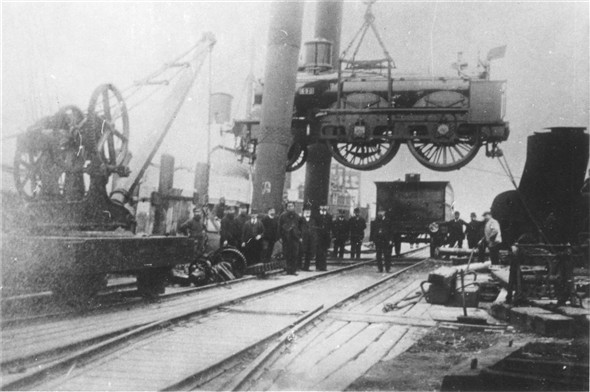
BY RAIL ACROSS THE ENGLISH CHANNEL.
By FELIX J. KOCH
Perhaps no one report has caused so much interest in transportation circles, the world about, as that of a train-ferry being established across the English Channel. Tourists from the United States
in particular, who have writhed and groaned with the mal-de-mer when making the Channel crossing, will no doubt be among the most grateful at the innovation.
According to news just come from Rouen, the much-discussed question of establishing ferry-service between Dieppe, France, and Newhaven, England, is likely to soon become an established fact.
At present, passengers and freight are transferred, at one city or the other, from the railway cars to steamers, transported across the English Channel and again loaded on the railway. By having ferry steamers, upon which the entire train could be transported without disturbing passengers and freight, not only would much annoyance and expense be saved, but also a considerable amount of time, now necessary to make these transfers, would be cut off in trips between London and Paris.
To undertake this service an Inter- national Railway Company was formed in the year 1910. It now states that negotiations with an English railway have been favourably received, and that a Bill permitting the establishment of the ferry has passed the British Parliament. The railway in question, with the French West State Railways, own and operate the steamers now running between Dieppe and Newhaven, and it is therefore considered certain that the other line involved will agree to this plan.
The new ferry will not exceed in length the one which has been so successful between Sweden and Germany. It is hoped to have the project inaugurated within a year.
To Americans, of course, it recalls, in miniature, the great railway ferry across the Mississippi, some few miles beyond New Orleans, or, again, across the Straits of Canso, at Mulgrave, in Canada, or over the Detroit River at the Michigan City.
Of course, the experience on each is almost identical. At New Orleans, taking this for example, before one-half suspects it, the train has run on to a boat fitted with three tracks, on each of which some of the cars have been switched. Then one is ferried across. Usually some of the passengers are glad of the chance to climb up into the cab of the engine and study its construction. Above rises the bridge, with the ferry operators—all about is the muddy water, and beyond, again, the great crescent that marks the city.
One feels a slight shaking underfoot as he walks around the boat, otherwise you would not know you were moving. In fact, when one takes his seat in the dining- car, before the other bank is reached, he will have become used to it and feel wholly unconscious of motion.
PHOTOGRAPHER UNKNOWN
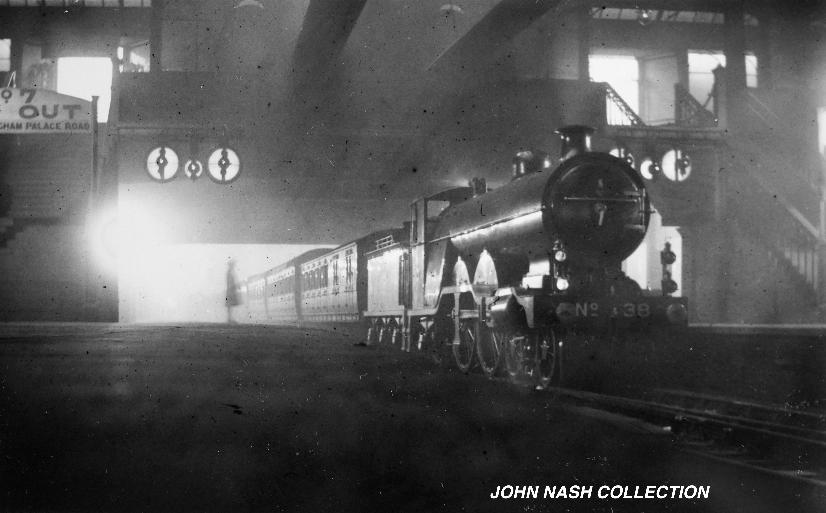
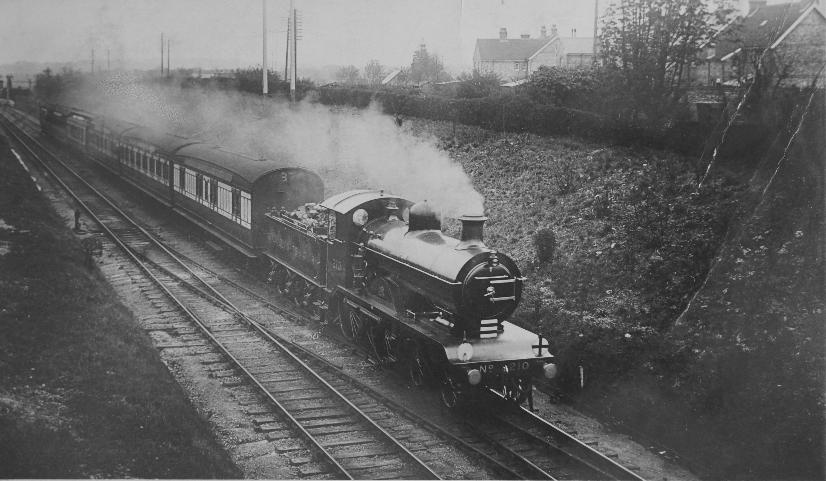
Victoria to Newhaven Continental Boat Train
Minutes of the Newhaven Branch Meeting
held at the White Hart on Sunday Jan. 12th 1913
Bro. C. Barrow in the Chair
Minutes read of last meeting, pro. F. Harris & sec. W. Smith. That they accepted as a true record.
Correspondence read from Brighton re interview with Mr. Billinton, also reply from General Manager, which was not very satisfactory.That the Secretary approach the Secretary of the A.S.R.S. asking for him for a copy of the same.
Minutes of the Newhaven Branch Meeting
held at the White Hart on Sunday Jan. 26th 1913
Bro. C. Barrow in the Chair
Minutes read of last meeting, pro. H. Bowden & sec. J. Green. That they accepted as a true record.
Letter read from Brighton re interview with Mr. Billinton 10 hours to count as one days holiday 50 hours for 8 days over time to be paid at the rate of 8 hours after 60 hours.
Letter read from Eastbourne asking for our support for Bro. A. Marshall for Annual General Meeting.
Secretary stated he had seen A.S.R.S. Secretary re loco-men's duties list and it was decided to let the matter stand over.
Minutes of the Newhaven Branch Meeting
held at the White Hart on Sunday Feb. 9th 1913
Bro. C. Barrow in the Chair
Minutes read of last meeting, pro. A. Pearce & sec. L. Lower. That they accepted as a true record.
Letter read from Head Office re member being stood off owing to small pox being in East part of the Town.
Letter read from Brighton, also telegram re coupling up. Discussion took place on the same and
PHOTOGRAPHER UNKNOWN
it was proposed by Bro. F. Harris & seconded by Bro. W. Smith.
That this branch express it dissatisfaction at the way the Company are imposing upon the men re coupling engines and pledge their support to the delegate in their endeavour to stop it.
LOCOMOTIVE JOURNAL
FEBRUARY 1913
Extracted from A.S.L.E.F. Organising Secretary W. Warwick's report
on his visit to the Newhaven Branch meeting, on Sunday, 1st December, 1912
The following morning, Sunday, I was astir betimes in order to leave for Newhaven, where an open meeting was called in the afternoon to hear reports from two delegates, who, with others, had waited on the directors of the London, Brighton and South Coast Railway. The concessions granted compare favourably with what have been granted by other companies, but the question is : what have we to compare with ? On the strength of the promise by the Government after August, 1911, that they would be allowed to recoup themselves from the pockets of the public for concessions granted, the railway companies have doled out a few meagre improvements, amounting in some instances to one shilling per week, or two-pence per day—just on a par with what any shopkeeper would think of offering his errand boy—an insult to a body of men like the footplate, and motormen of this country. Then each railway company has been very careful not to out-do the others in these extravagant concessions, or do anything which could in any way be construed into a precedent, at the same time taking care to so jumble up conditions, wages, &c, that no two companies' men are receiving anything like the same remuneration for the same services performed. Of course, the astute official knows this gives him a fine trump card up his sleeve, so to speak, and while the men are content to approach them as particular companies they can always ring the changes on that card by asking the very innocent question: "What other company's men are there that are better paid than you are ? "
But to come back to the Newhaven meeting. I took the chair, and the delegates gave their report, which, as before said,was satisfactory by comparison. But there was one or two present who soon made it clear by their questions that with them it was not a question of whether the new conditions were satisfactory or not ; they were present to show their disapproval of the manner in which they had been obtained, viz., by and through members of the Associated Society. Needless to say, these were the men who had pinned their faith to an all-grade society. As chairman, I did not attempt to stifle discussion, but allowed all the latitude possible, using both argument and diplomacy to try and get at the why and wherefore. But I found these men at Newhaven were not a bit more intelligent on these matters than others I have met; and so I failed to get anything more from them than the fact that they couldn't leave the shed unless the signalman turned the points, and they couldn't shunt the train unless there was a shunter present. I have been wondering ever since what that had to do with the concessions and the way they were obtained. How-ever, I am pleased to say there are only one or two at Newhaven whose education has been neglected, and I hope the little branch I have opened there will soon bring them up-to-date.
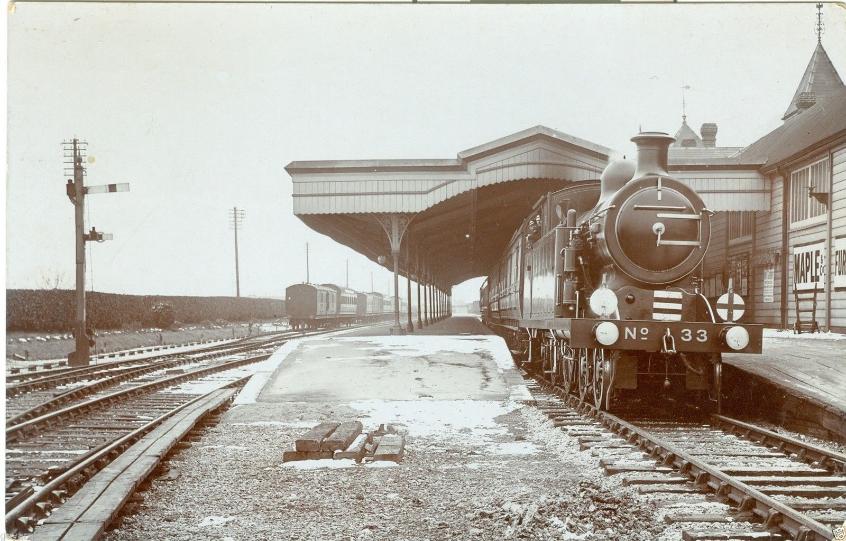
PHOTOGRAPHER UNKNOWN
Minutes of the Newhaven Branch Meeting
held at the White Hart on Sunday March 9th 1913
Bro. C. Barrow in the Chair
Minutes read of last meeting, pro. F. Sherwin & sec. A. Pearce. That they accepted as a true record.
Letter read re coupling up of engines being settled also promise from General Manager re loco-men for Motor jobs.
Letter read asking for grievances at this depot so as the grievance committee can take up same.
One member claimed suspension pay and a strong discussion took place on the same and seeing the members was of a mix feeling on the matter it was Proposed by Bro. F. Sherwin & Seconded by Bro. C. Barrow.
That the Secretary be instructed to write to Brighton asking their ruling on the same.
Minutes of the Newhaven Branch Meeting
held at the White Hart on Sunday March 23rd 1913
Bro. C. Barrow in the Chair
Minutes read of last meeting, pro. H. Bowden & sec. W. Smith. That they accepted as a true record.
Letter read from Brighton re grievance meeting.
Bro. Bowden paid one days suspension pay.
Voting paper to hand for A.G.M
Minutes of the Newhaven Branch Meeting
held at the White Hart on Sunday May 4th 1913
Bro. C. Barrow in the Chair
Minutes read of last meeting, pro. H. Bowden & sec. F. Sherwin. That they accepted as a true record.
Correspondence read from the delegation to the Officials, also reply from same dealing with the Electric question.
Report read from grievance committee re list of grievance settled
Letter of thanks from Eastbourne re A.G.M.
Secretary gave his report of delegates meetings.
Minutes of the Newhaven Branch Meeting
held at the White Hart on Sunday June 1st 1913
Bro. C. Barrow in the Chair
Minutes read of last meeting, pro. A. Pearce & sec. W. Smith. That they accepted as a true record.
Correspondence read and noted, discussion took place re oldest Fireman on passenger train and was decide that men affected see the Foreman.
Minutes of the Newhaven Branch Meeting
held at the White Hart on Sunday June 15th 1913
Bro. C. Barrow in the Chair
Minutes read of last meeting, pro. F. Sherwin & sec. A. Pearce. That they accepted as a true record.
Correspondence read and noted. Voting paper for T.U.C. to hand.
Minutes of the Newhaven Branch Meeting
held at the White Hart on the Sunday September 28th 1913
Bro. C. Barrow in the Chair
Correspondence read re Loco-men being paid for learning the electric in their own time.
Discussion took place re. Bro. W. Smith’s illness and it was decided to each pay 4 pence and clear his card and see what could be done with a substitution list later on.
Proposed by Bro. J. Green & Seconded Bro. A. Pearce. That Albert Simmonds be admitted as a member of this Society.
Bro. Goldsmith undertook to sell draw tickets in aid of the blind.
Minutes of the Newhaven Branch Meeting
held at the White Hart on the Sunday November 30th 1913
Bro. C. Barrow in the Chair
Minutes read and discussed, pro. F. Sherwin & sec. W. Smith. That they accepted as a true record.
Discussion took place re Clearing members card, Pro. by Bro. H. Bowden & Sec. by C. Barrow.That each member shall pay 3 pence and clear the same. Carried.
Resolution from Brighton Branch was read re electric trains. Pro. Bro. F. Sherwin & Sec. by Bro. W. Smith. That we support the same.Minutes of the Newhaven Branch Meeting
held at the White Hart on the Sunday December 28th 1913
Bro. C. Barrow in the Chair
Minutes read of last meeting, pro. W. Smith & sec. A. Pearce. That they accepted as a true record.
Letter read re L.N.W. men action in regards motormen’s position.
There was no recorded Branch meetings between
NEWHAVEN
BRANCH
OFFICERS
1914 -17
Chairman Bro. A. Pearce
Vice Chair Bro. W. Smith
Secretary Bro. F. Wilmshurst
Discussion took place regards clearing members card, Pro. C. Barrow & Sec. W. Smith.
That a fund be raised to clear the same and that we pay half-penny per week and Bro. A. Pearce be collector.
Questions then arose see we have Full & Half Benefit members how should clear cards. Pro. W. Smith & Sec. A. Pearce. That we should pay protection only of 4d. Carried.
Election of Officers
Pro. Bro. C. Barrow & sec. D. Boyle that A. Pearce be Chairman
Pro. Bro. D. Boyle & sec. J. Green that W. Smith be Vice Chairman
Pro Bro. C. Pearce & sec Bro. D. Boyle that F. Wilmshurst be Secretary
H. Bowden Check Steward.
Committee
F. Harris, F. Sherwin, J. Green, C. Barrow & D. Boyle, be on the Committee for 12 months.
Minutes of the a Special Meeting Newhaven Branch Meeting
held at the White Hart on Sunday July 29th 1917
The meeting was called at the instructions of Head Office to discuss the National Programme and correspondence arising out of the same.
The Chairman being absent, it was proposed by Bro. Harris & seconded by Bro. Goldsmith. That Bro. A. Leonard take the Chair. Carried Unan.
Bro. Leonard in opening the meeting gave a very good report of the open meeting held at Brighton on the 22nd and enlightened the membership very much, the National Programme was fully discussed and correspondence arising out of the same from our E.C., and it was decided that the following resolution be sent to our E.C.,also to our Delegate (Bro. Niner St Leonards)
Pro. By A. Leonard & Sec by Bro. W. Smith. That we, the members of Newhaven Branch appreciate the endeavours of our E.C. In trying to improve the conditions of service of loco-men, and we hereby pledge our support in action it may be necessary to take in order to bring about the designed result, especially in regards to the eight hour question. Carried Unam.
Pro F. Harris & Sec. J. Green. That Edward Cyril Veverines be admitted as a member of this Society. Carried
Minutes of the Newhaven Branch Meeting
held at the White Hart on Sunday Aug. 12th 1917
Proposed by Bro. H. Bowden & sec. F. Harris. That Bro. A. Leonard take the Chair.
Previous minutes of Special Meeting read, held Sunday July 29th. Proposed Bro. H. Bowden & sec. F. Sherwin. That they be recorded as a true record. Carried.
A strong discussion took place on the question of the 8hour movement and a the proposal of the Newhaven Branch in the event of a stoppage, it was pro. F. Sherwin & sec. H. Bowden. That this meeting be adjourned for further information. Carried.
Voting papers for Bro. E. Croham.
Minutes of the Newhaven Branch Meeting
held at the White Hart on Sunday Nov. 4th 1917
Pro. F. Sherwin & sec. H. Bowden. That D. Boyle take the Chair. Carried.
It was regrettable that our worthy Secretary Br. Wilmshurst was not able to be with us owing to illness.Bro. A. Leonard read minutes of previous meeting, moved by Bro. C. Barrow & sec. F. Sherwin. That minutes be posted as a true a record. Carried.
Correspondence be dealt with considerably discussion took place re delegations interview with Mr. Jackson Acting Loco Superintendent and the offer he had made re holidays and the ratings, of Firemen and Drivers was suggested that cleaners should have 3 days and after being passed as firemen 12 months to be entitled to 6 days. A number of cleaners were expected at the meeting but for some they did not put in appearance..
Minutes of the Newhaven Branch Meeting
held at the White Hart on Sunday December 30th 1917 at 7.0 p.m
When we had a pleasant surprise our worthy Chairman being on leave paid us a visit and took the Chair. Bro. A. Pearce retold some of the trials and hardships he had gone through and longed for the time to come back with us.
The minutes of the previous meeting was read and accepted and correspondence read and discuss.
Election of Officers took place when it was proposed by Bro. A. Pearce & sec. by F. Wilmshurst.
That D. Boyle be Chairman.
Propoed by Bro. A. Leonard & seconded Bro. J. Rye. That W. Goldsmith be Vice Chairman
Proposed by Bro. A. Pearce & Seconded by Bro. D. Boyle. That Bro. A. Leonard be Secretary.
Proposed by Bro. A. Leonard & Seconded by Bro. J. Rye that Bros. F. Sherwin, J. Rye, H. Bowden, E. Leach, F. Wilmshurst be on the Committee, and
W. Smith Check Steward.
NEWHAVEN
BRANCH
OFFICERS
1918
Chairman Bro. D. Boyle
Vice Chair Bro. W. Goldsmith
Secretary Bro. A. Leonard
Minutes of the Newhaven Branch Meeting
held at the White Hart on Sunday March 3rd 1918
Bro. W. Goldsmith in the the Chair
It was proposed by Bro. A. Leonard & sec. by Bro. C. Barrow. That C.H. Munn & J. Hillman be admitted Cleaner members (Scale 6) Carried Unan.
The minutes of the last meeting were read and accepted as a true record,
Correspondence was read then dealt with, which included letter from the Secretary of the local Trades and Labour Council, with the result that members present decided that we as a Branch should become affiliated to this council. It was proposed by Bro. C. Barrow & sec. by Bro. H. Bowden. That Bro. W. Goldsmith be one delegate. Proposed by Bro. W. Goldsmith & sec. Bro. C. Barrow. That Bro. A Leonard be a delegate. It was proposed by H. Bowden & sec. by Bro. J. Newman. That Bro. C. barrow be a delegate substitute . Proposed by Bro. A Leonard & sec by Bro. H. Bowden. That Bro. F. Wilmshurst be a delegate substitute. Carried/
Discussion then arose re the instructions of our Loco Foreman for men to book off under 10hrs. per day on certain turns, after some discussion it was decided that the Secretary should write to Bro. J. Enves Brighton on the subject.
Minutes of the Newhaven Branch Meeting
held at the White Hart on Sunday April 7th 1918
Our Chairman Bro. D. Boyle accepted the Chair, Bro. W. Goldsmith in Vice Chair.
The first item on the agenda was the mites of the previous meeting which were read and passed as correct.
Correspondence was dealt with on various subjects and discussion arose re the same, also the 10 hrs question, a suggestion was made as regards the meeting night it was thought by some members present that we should get quite as present on a week night and it was thought advisable to give it a trial.
New members, Pro. by A. Leonard & Sec. by F. Sherwin.
That Cleaners S. Lower, V.P. Bannister & A.S. Norman be admitted Cleaner members of this Society. Carried Unam.
Minutes of the Newhaven Branch Meeting
held at the White Hart on Sunday June 20th 1918
Bro. W. Goldsmith in the Chair.
The minutes of the last meeting were read and passed as correct.
Several items of correspondence were read, March Quarterly receipts presented, as this was the first meeting since the quarters dues were sent.
Bro. A. Leonard gave a brief report of the Trades & Labour Council meeting and asked for one delegate to be nominated to serve on the proposed Parliamentary and Local election committee, that was being formed. It was proposed by Bro. J. Rye & sec. by Bro. Bowden. That Bro. F. Wilmshurst should serve. Carried. Bro. A. Leonard pointed out that Bro. Wilmshurst was delegate substitute, and he did not know if it would be agreeable to the Trades Council, it was then proposed that if the nomination was not acceptable that Bro. A. Leonard should stand. Carried.
Nominations were asked for the Urban District Council, owing to the small number of members present it was decided not to nominate.
It was proposed that we should hold our two next meetings on week nights if could be arranged, to see if we could get a better attendance, to be held on Tuesdays if possible.
Bro. A. Leonard proposed & Bro. Goldsmith seconded that Cleaner E. Collington become a Cleaner member. Carried.
Minutes of the Newhaven Branch Meeting
held at the White Hart on Sunday Aug. 25th 1918
with Bro. W. Goldsmith in the Chair
The minutes of the last meeting were read, it was proposed by Bro. Wilmshurst & sec by Bro. F. Sherwin. That they be passed as correct. Carried.
Correspondence were read which included papers from the Land Nationalisation Society, this matter was allowed to lay on the table.
A collection list was reined on behalf of Bro. G. Wilde, but there not any letter explaining, and this matter was left on over.
A letter was received from Bro. J. Enves with copy of letter from Mr. Jackson with regards to delegation business, the following resolution was passed in reference to the same. That this meeting considers Mr. Jackson's reply to the delegation very unsatisfactory, and urge the delegates to press for an interview with Mr. Jackson if unable to obtain the same, to ask for an interview with the Hon Board of Directors. Bro. J. Newman's case then discussed and the Secretary said that he was expecting an interview with Mr. Moore re the same, the meeting thought it advisable to write to Mr. Moore direct for an interview, and to leave the matter in the hands of the Secretary.Carried.
Bro. D Boyle who attend the Trades 7 Labour Council meeting held on August 8th owing to the unavoidable absence of delegates, the report was read, and it was considered by the members to be an exceptional good report
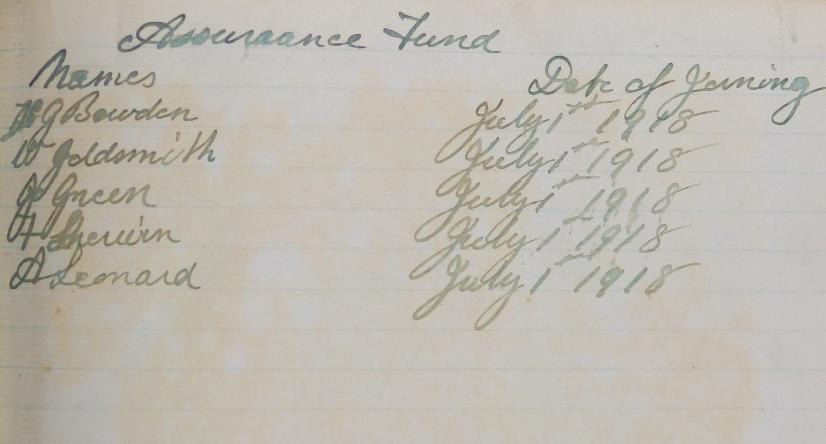
The Secretary read a copy of the alterations to the Benevolent Fund, & Protection Retiring & death Fund. Several members said they would join the new Assurance Fund, which was considered to be very good one new member admitted, one pleasing feature at this meeting was the attendance of some of our younger members which we hope will improve.
The Special collection on behalf of our Political Fund raised 3/-. Bro. F. Wilmshurst proposed & Bro. F. Harris scolded that Bro. F. Sherwin be Labour Council in place of Bro. C. Barrow. carried.
PHOTOGRAPHER UNKNOWN
Minutes of the Newhaven Branch Meeting
held at the White Hart on Sunday Oct. 20th 1918
Bro. W. Goldsmith in the Chair owing to the absence of our Chairman.
The first on the agenda was the minutes of the last meeting which were read and passed as correct.
Correspondence was dealt with which included circular letters from Head office re the recent War wage increase, and the recent Railway strike, which explained the position of our members in reference to the same. Copy of report of Delegation meeting with our Officials at Brighton L. Billinton Esq., J.M. Jackson & E.S. Moore, was received from Bro. J. Enves. The various items were discussed and the question of calling an open meeting in reference to the same. It was advised that the Secretary should write bro. J. Enves for further information in regards to the questions which had been brought up at the delegates meeting at Brighton, especially referring to the 8 hours per day and transfer of loco-men to the electric system, also with regards to the question of seniority, the question was also raised about making an application to be allowed to join the 1st class of the Company's Pension Fund, and it was pointed out that some men at the present time did not avail themselves to go into higher scales which they were entitled to. The Secretary gave a report of an interview he had with Mr. Richardson at Brighton re Bro. Newman's case.
Minutes of the Open Meeting
held at the White Hart on Sunday Nov. 3rd 1918
To discuss report of delegates meeting with Loco Officials at Brighton. There was a fair attendance of members also some N.U.R. members, it was agreed that Bro. A. Leonard should act as Chairman.
The correspondence was then read and considerable discussion arose on various points raised. It was agreed that the 8 hour per day work would be very acceptable if it could be obtained, but doubt was expressed as to it success at the present time.
Re transfer of Loco men to electric, the men thought that the older men who were displace should have the opportunity of transferring to the electrics without loss of pay. The men considered that to be a question to be dealt with by the General Manager on the Hon. Board of Directors, as regards seniority the men were of the opinion that seniority should could from the Fireman, a man was passed as fireman.
Re Pension Fund the men thought that if the pension age was brought down to 60 years instead of 65 as at present, would encourage men to go into the higher scales, the men present said that it would be a good thin if we were enabled to transfer to the 1st class,
The men present at the meeting expressed opinion that it would be more satisfactory if a delegate who was present came and gave report of the interview.
Meeting closed about 8.45.
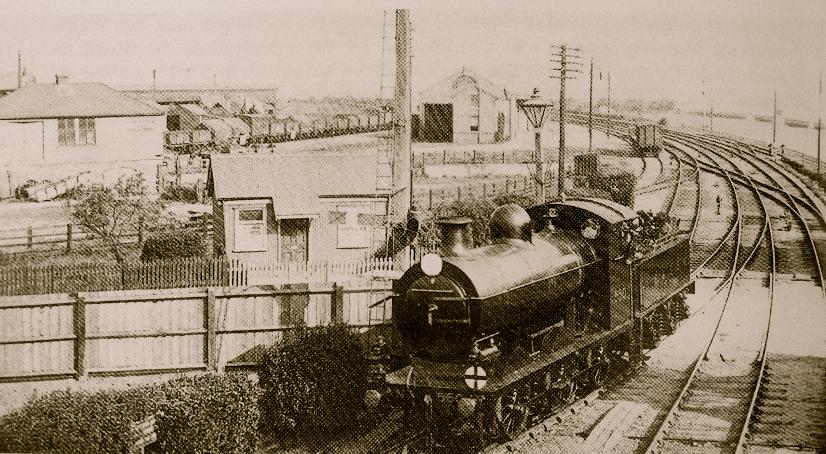
PHOTOGRAPHER UNKNOWN
Minutes of the Newhaven Branch Open Meeting
held at the White Hart on Sunday Dec. 1st 1918
In reference to correspondence received from Head Office re 8hr negotiations, also re local matters that involved alteration. Dealing with the 8hr question it was proposed by Bro F. Sherwin and Seconded by W. Smith. That Bro. A. Leonard be delegate to the District Council meeting if convened (Carried). The question of pilot men being booked on short hours on Saturdays to bring men on at 11.30 p.m. Saturday nights and causing these to work 11 to 11 ½ hours, the greater paid which was worked on Sunday,also men being booked on 10 hr days on Sundays, these matters were discussed and it was proposed that the care should be put before Mr. Moore. It was proposed by Bro. W. Goldsmith & Seconded by F. Sherwin. That the Secretary write to Mr. Moore asking him to grant an interview to Bro. F. Wilsmhurst and A. Leonard in respect of the same (Carried Unanimous). There being a further meeting at the Co-op Hall under the auspices of the Local Trades & Labour Council for the adoption of a Labour Candidate for Lewes division, the men present were invited to attend.
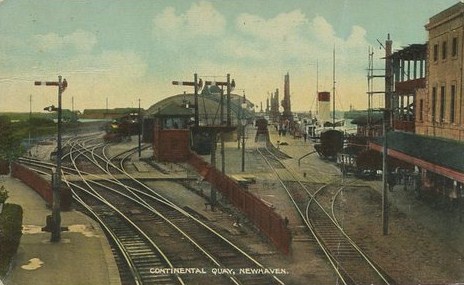
POST CARD
Minutes of the Newhaven Open Branch Meeting
held at the White Hart on Sunday Dec. 8th 1918
Bro. F. Wilmshurst in the Chair
On the instructions from Head Office, to hear report and receive instruction re the 8hr movement.
Correspondence was first dealt with and Bro. Leonard who was elected delegate to the District Council member gave report of the meeting held at the Labour Institute, Fort Road, Bermondsey on Fri Dec. 6th 1918 our delegate said that Bro W. Stevenson our E.C. Member came to the delegate meeting after been negotiating with the government. He pointed out how Sir A Stanley had tried to get the question put off until after the election, our E.C. would not have it, and informed Sir A. Stanley that our men not wait until March for the 8hr to be brought into operation. Sir A. Stanley eventually agreed to meet our E.C. At Manchester & London and that they had agreed on Feb 1st 1919. after hearing the report of our delegate the following resolution was passed. That this open meeting for loco-men sincerely appreciates the firm stand made by the E.C. Of the A.S.L.E. & F. in their demand for the redemption of the pledge given to them by the Government in August 1917, which has resulted in the obtaining for Loco-men the 8hr per day.Moved by Bro. W. Goldsmith & Sec. Bro. J. Rye.
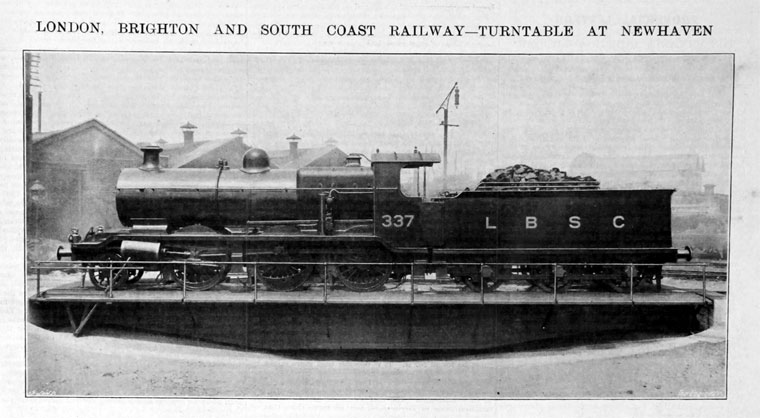
PHOTOGRAPHER UNKNOWN
Minutes of the Newhaven Further Branch Meeting
held at the White Hart on Sunday Dec. 8th 1918
Bro. F. Wilmshurst in the Chair
Dealing with Branch business. The minutes of the Special and Ordinary meetings were read and passed correct.
Correspondence dealt with and arising out of that it was moved by Bro. J. Green & sec. F. Sherwin. That a letter be sent to Mr. Moore withdrawing our application for an interview as matters have been rectified. Carried Unam.
The rest of business was the election of Officers for 1919.
Pro. by Bro. J. Rye & sec Bro. F. Sherwin.
That Bro. F. Wilmshurst be Chairman
Pro by Bro. W. goldsmith & sec. Bro. J. Green
That Bro. F. Sherwin be Chairman.
Voting as follows Bro. F. Wilmshurst 3, Bro. F. Sherwin 6, Bro. F. Sherwin elected
It was proposed by Bro. F. Sherwin & sec. by Bro. J. Rye,
That Bro. J. Green be Vice Chairman Carried Unan.
It was proposed by Bro. F. Wilmshurst & sec. W. Goldsmith
That Bro. A. Leonard be Secretary Carried Unan.
It was proposed by Bro. J. Rye & sec. by Bro. A. Leonard
That the Committee consist of the following members,
Bros. F. Wilmshurst, J. Rye, W. Goldsmith, H. Bowden, & J. Lower. Carried Unan.
Proposed by Bro. A. Leonard & sec. Bro. F. Sherwin That Bro. D. Boyle be Sick Visitor Carried.
NEWHAVEN
BRANCH
OFFICERS
1919
Chairman Bro. F. Sherwin
Vice Chair Bro. J. Green
Secretary Bro. A. Leonard
Proposed by Bro. W. Goldsmith & sec. F. Sherwin. That Bro. J. Giles be Check Stewart.
Proposed W. Goldsmith & sec. F. Sherwin. That we get the Organising Secretary for Open Meeting Carried
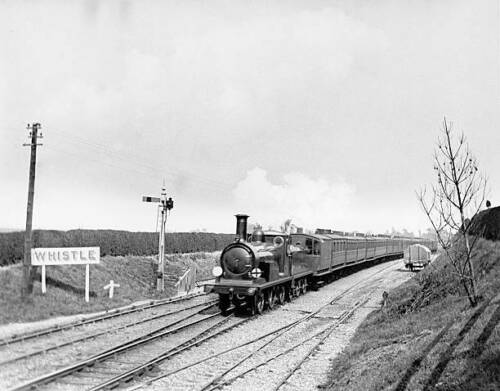
PHOTOGRAPHER UNKNOWN
Minutes of the Newhaven Branch a Special Meeting
held at the White Hart on Thursday Jan. 9th 1919
The meeting was called to discuss the situation caused by the strike at Brighton also in reference to loco-me having to go to Lewes to do work of the men that was on strike, also to get the views of the men in reference to these items, so that it could be understood by the other unions whether we were prepared to give support or not.
Bro. W. Goldsmith was elected to the Chair.
A letter was read from the Brighton Strike Committee also telegram which was discussed, re telegram was also read from Head Office instructing members to keep at work and not to refuse duty.
Bro. Leonard gave a report of meetings, which had been called for all Trade Unionists, after discussion it was moved by Bro. Stoner & Sec. Bro. Barber.
That this meeting decided to stand by our E.C. and take no part in the present strike. (Carried Unam.).
Minutes of the Newhaven Branch Meeting
held at the White Hart on Sunday Jan. 26th 1919
Bro. F. Sherwin in the Chair
The minutes of the previous meetings read and passed correct.
Correspondence dealt with which included items from District council, one received from Brighton Branch stating they had elected Bro. H. Funnell for their representative on the District Council, after some discussion it was proposed by Bro. Wilmshurst & sec. W. Smith.
That while we agree to Brighton sending a representative, at the present time that the smaller branches who are grouped with Brighton should have the opportunity of sending a delegate alternately (Carried Unam).
December Quarterly returns presented, the Secretary explained why the receipt did not correspond with the account sent to Head Office, it was owing to the ft the entrance fees to the new Assurance Fund had been entered in the column for Society Int Fees, and the Secretary said that he had instructions that it was not to be entered there in the future, also that money for the Branch Fund was not to be deducted from the quarterly dues, but a claim sent to Head Office for same. The members present accept the Secretary’s statement. It was moved by Bro. F. Wilmshurst & sec. by Bro. W. Goldsmith (Trustees for Branch Fund). That the Secretary hold the balance of fund 1/6/. Carried.
Bro. W. Goldsmith gave report of Trades & Labour Council meeting.
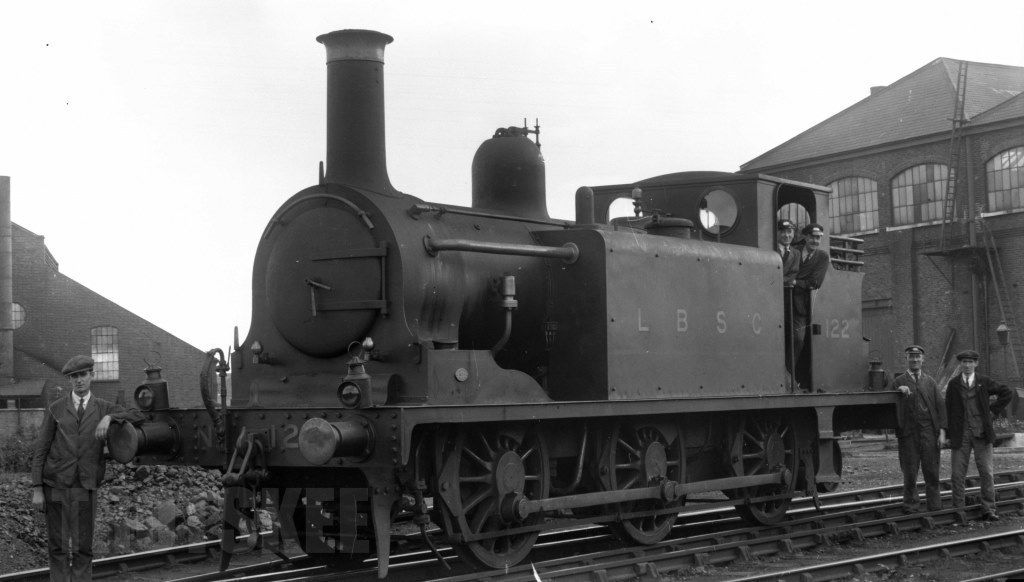
PHOTOGRAPHER UNKNOWN
This photo was probably taken in c1919, when double manning of locos were introduce as a result of the introduction of the eight hour day being implemented. Each loco prior to 1919 had one dedicated driver and after 1919 the loco was shared between to dedicated drivers.
Minutes of the Newhaven Branch a Special Meeting
held at the White Hart on Thursday February 6th 1919
Owing to the Secretary having received a letter from the General Secretary calling our members out in support of the Electric Motormen who were on strike over the question of food time during the 8 hour day.
Brother F. Sherwin was in the chair and a fair number of members present including two N.U.R. Loco-men, after correspondence had been read and telegrams from Brighton Branch.
Some discussion took place, and the Secretary reed rule 24 to the members. It was moved by Bro. F. Wilmshurst & Seconded by A. Stoner.
That meetings be held at 12 noon at the White Hart (Carried Unam)
Strike Committee:- Bros. A. Leonard, F. Sherwin, W. Goldsmith, Proposed by F. Wilmshurst & Seconded W. Goldsmith. That F. Harris be on Committee. Pro. F. Wilmshurst & Sec. F. Harris that H.G. Bowden be on the Committee (Carried Unam.).
The Secretary stated that he received the letter on Wednesday afternoon not in time to arrange for meeting the same day, and that he see our Chairman and Bro. Wilmshurst in reference to it, and that they agreed that if called upon to do duty on the next day other than their booked turn of duty they would refuse, it happened on Thursday morning that our Secretary was called upon to work a passenger train usually worked by Brighton men and he had refused to work it, but finished his own turn of duty.
Minutes of the Newhaven Branch Meeting
held at the White Hart on Sunday March 9th 1919
Bro. F. Sherwin was in the Chair
The minutes of the last Special and Ordinary meet ins were read and passed as correct.
Correspondence dealt with mostly in reference to the recent strike, E.C. Minutes presented and extracts read, arising out of the correspondence.
Bro. F. Wilmshurst proposed & Bro. J. Rye seconded.
That the Newhaven Branch decides to have a subscription list in aid of our Orphan Fund, to commemorate the 8 hour day, any sum acceptable (Carried Unam).
Bro. F. Sherwin (Chairman) then read a letter that he has received from Bro. A. Leonard resigning his position as Secretary of Newhaven Branch as he did not wish to be the cause of any friction between members, questions were asked as to the cause of friction, the Secretary explained his position and said he wished to leave the members free to taking any action they decided re men working here from other depots, after considerable discussion it was moved by Bro. Wilmshurst & Sec. H. Bowden. That Secretary’s resignation be accepted (Carried Unam.).
The Chairman then asked for nominations for position as Secretary. Bro. Wilmshurst was proposed but declined, Bro. Wilmshurst then proposed that Bro. A. Pearce be Secretary, Bro. Pearce stated that having only just returned from service that it would hardly be fair for him to take it on, seeing that he was not conversant with the present working, after further discussion the mover of the previous resolution Bro. Wilmshurst asked permission to move that it be rescinded Bro. H. Bowden agreed. Proposed Bro Wilmshurst & Bro. Bowden seconded.
That previous resolution be rescinded and that the Secretary be asked to reconsider his resignation until the end of the year 1919 (Carried Unam).
The Secretary stated that he was in the same position as before, and asked what action would be taken in the event of work being reduced at this depot, it was agreed that another member should be appointed to conduct any correspondence relating to this question with our Officials at Brighton. Bro. Wilmshurst then agreed in the event of our Secretary away before the end of the year, he would carry on until the end of 1919. It was moved by Bro. Pearce & seconded. That a vote of confidence be accorded to Bro. Leonard (Carried Unam.).
A letter was also read from the Secretary of the Local Labour Party re affiliation, seeing that only a small number of members pay in the Political Fund, it was decided not to take any action at present.
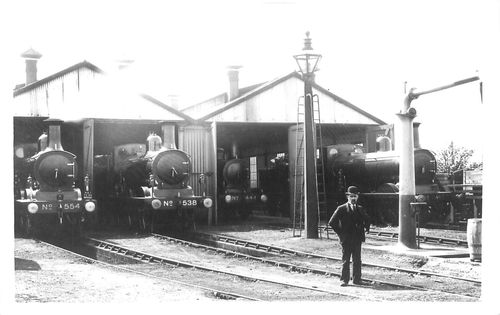
PHOTOGRAPHER UNKNOWN
Minutes of the Newhaven Branch Meeting
held at the White Hart on Sunday April 18th 1919
Bro. F. Sherwin in the Chair
The minutes of the last meeting was and passed as correct.
Correspondence dealt with, quarterly receipts presented.
Bro. F. Wilmshurst & Bro. W. Smith seconded.
That this Branch Secretary records its appreciation of the E.C. And the General Secretary for the able way in which they have conducted negotiations on our behalf (Carried Unam.).
Two cases were dealt with Bros. J. Giles & A.G. Hubbard the members suspended made a statement to the meeting, after which Bro. Wilmshurst proposed & Bro. C. Barrow seconded. That the claim be allowed (carried Unam.).
Bro. A. Leonard proposed & F. Wilmshurst seconded. That Frederick Edward Brown and Edward Hillman become protected members of this Society. Carried
Bro. F. Wilmshurst moved & Bro. C. Barrow seconded.
That a letter be sent to the Foremen, in regards to the reduction of work at this depot, and men being still employed here who have been transferred from other depots (Carried Unam.).
Pro. By C. Barrow seconded by A. Pearce.
That Bro. F. Wilmshurst should write the letter and hand same to Mr. Holton, the signatures of all spare Drivers at the meeting to attached to the letter, also years of service.
Minutes of the Newhaven Branch Meeting
held at the White Hart on Sunday May 4th 1919
Bro F. Sherwin in the Chair
The minutes of the last meeting read, Bro. F. Wilmshurst proposed and Bro. A. Pearce seconded, that the minutes be adopted.
Correspondence read, question were asked, Bro. Wilmshurst said that he had wrote and delivered the letter as requested to Mr. Holton, but had not had anything in reply to same. Bro. A. Leonard asked if the men concerned were satisfied as to the report to the present, as practically three weeks had lapsed since handing in the letter. Members present expressed their opinion and thought they might wait another week or two before taken further action.
The agenda for the Annual Assembly of Delegates May 20th, 1919 was before the meeting, it was proposed by Bro. F. Wilmshurst and seconded by Bro. J. Green.
That the delegate to conference be instructs to oppose terms of arrangements before the A.S.L.E. & F. and the London Provincial Union of Licensed Vehicle Workers, it was pointed out that we accept to first come to an agreement with the Loco men in the N.U.R. (Carried Unan).
Voting paper for delegate to Labour Conference to hand.
Minutes of the Newhaven Branch
a Special Meeting
held at the White Hart on Sunday May 18th 1919
Bro. F. Sherwin in the Chair
Bro. F. Sherwin said that the meeting was called to appoint a Secretary in place of Bro. A. Leonard expecting to return to Tunbridge Wells. Pro. By A. Pearce & Seconded J. Green.
That F. Wilmshurst be Secretary till end of year. Bro. Wilmshurst said he would accept the office but would like to see someone else take it as he did not like the idea of keep changing as would resign at the end of the year.
Minutes read of last meeting moved. Pro. A. Pearce & seconded Bro. C. Barrow. That the minutes be adopted. Correspondence read, questions were asked the question. Bro. F. Wilmshurst asked the question, seeing that the late Secretary thought that three was long enough for an answer to our letter and pressed us to go further on the question of his removal did not think that seeing he had a reply two weeks it was quite long enough. Bro. A. Leonard replied and stated that he was waiting for a reply from his letter asking on what conditions he was returning to Tunbridge Wells but was going to see if he could get a indication on Monday. After a strong discussion it was moved C. Barrow & seconded J. Green. That we wait and see what becomes of the interview.
Bro. A. Leonard as asked for one new member. Moved F. Wilmshurst & second F. Sherwin a vote of thanks be recorded to our late Secretary. Carried.
Minutes of the Newhaven Branch Meeting
held at the White Hart on Sunday June 29th 1919
Bro. F. Sherwin in the Chair
Minutes of the last meeting was read, proposed by Bro. F. goldsmith and seconded by Bro. C.J. Lower, that they be adopted.
Correspondence was read and the following resolution was proposed by H. G Bowden & seconded by M. Smith.
That having discussed the reply received from the General Manager we are of the opinion that the reply is not satisfactory and press on our E.C. To press the matter further with a view to all men leaving the Company Service to start at the bottom of the ladder we pledge our support to the E.C. To get satisfaction. Carried
Bro. Hubbard complained of having to coal engines at cleaners rate of pay also having to help coaling after doing a nights cleaning after a discussion it was proposed by Bro. G Hubbard seconded by C.J. Lower that the Secretary take the matter up with the Loco Foreman. Carried.
Brothers Bowden and Smith complained of being kept firing and other men making overtime when they could have been driving, also still being retained on the goods were they cannot be got at when required. Pro Bro. H.G. Bowden & Sec Bro. W. Smith. Secretary take up with Loco Foreman on the matter. Carried.
Two new members.
Minutes of the Newhaven Branch Meeting
held at the White Hart on Sunday August 10th 1919
Bro. F. Sherwin in the Chair
Minutes of the last meeting was read, proposed by Bro. A. Pearce and seconded by Bro. M. Smith, that they be adopted. Discussion on the minutes took place and the Secretary gave a brief report of his interview with the Loco Foreman. Carried.
Numerous correspondence was read out and discussed, March quarterly receipts presented.
A strong discussion took place regards the work at this depot through the 8 hours and that we have several spare men. It was proposed by A. Pearce & seconded by H.G. Bowden.
That the Secretary take up the Loco foreman and see if he could get more turns of duty at this depot. Carried.
Proposed by M. Smith & seconded by A. Pearce. That William Brown be admitted as a member of this Society.
Minutes of the Newhaven Branch Meeting
held at the White Hart on Monday Sept. 29th 1919
Minutes of last meeting read and confirmed, discussion took place on the last minutes regards more work at this depot. Secretary replied and gave his report regards his interview with the Foreman.
Letter read from Secretary of Brighton Branch and was received with some strong remarks after a strong discussion it was proposed that the Secretary take up with Brighton Branch & Head Office regards the same.
Rule 24 discussed regards Strike pay as all men out in support of the cause.
Minutes of the Newhaven Branch Meeting
held at the White Hart on Sunday Oct 19th 1919
Bro. F. Sherwin in the Chair
The Chairman gave a report on the question of putting engines away and said he had an interview with the Foreman on the question and said he had booked a pair of men on the night shift and would start the day shift when he had the men.
Letters from Head Office read re the Strike also agenda for A.A.D. discussed.
Secretary asked for two delegates to attend Labour conference to be held at the Co operative Hall, Nov. 8th at 2.30p.m.
Bro. A. Pearce proposed and Bro. M. Smith seconded that the Secretary attended. Carried
Bro. L. Lower proposed and Bro. C. Wood seconded that the Chairman attend. Carried
Bro. M. Smith proposed and Bro. A. Pearce seconded. That Bro. H Bowden be a sub delegate in case the others could not attended. Carried
Bro. H. bowden proposed and Bro. C. Wood seconded that Bro. A. Pearce be a sub delegate. Carried
Bro. W. Goldsmith made a strong appeal to the members present to pay the Rule 11 Levy.
A strong discussion took place in regards to changing our meeting place and it was decided to see if we could not find another room, the matter to up next meeting.
Minutes of the Newhaven Branch Meeting
held at the White Hart on Sunday Dec 14th 1919
Bro. F. Sherwin in the Chair
Minutes read of last meeting,proposed by Bro. M. Smith and seconded by Bro. D. Boyle. That they be passed as correct. Carried
A strong discussion took place arising out of the minutes with regards the moving of our Branch Room, when it was moved by D. Boyle & seconded by L. Lower that we stop at the same place. Carried.
Letters read from the Labour Party inviting our members be affiliate with them, when it was moved by Bro.
W. Smith and seconded by Bro. A. Pearce. That we be come affiliated carried.
Correspondence read from Head Office re increase contributions and journals.
Election of Officers for 1920 took place.
Chairman Bro. F. Sherwin,
Vice Chairman Bro. A. Pearce,
Secretary Bro. F. Wilmshurst
Committee
Bros. C. Barrow, W. Smith, P. Reed, J. Green, H. Bowden & D. Boyle.
Moved by Bro. C. Barrow and seconded by Bro. W. Smith. That meeting be held on the first Sundays in each month at 7.0p.m. Carried
NEWHAVEN
BRANCH
OFFICERS
1920
Chairman Bro. F. Sherwin
Vice Chair Bro. A. Pearce
Secretary Bro. F. Wilmshurst
could not attended. Carried
Bro. H. Bowden proposed and Bro. C. Wood seconded that Bro. A. Pearce be a sub delegate. Carried
Bro. W. Goldsmith made a strong appeal to the members present to pay the Rule 11 Levy.
A strong discussion took place in regards to changing our meeting place and it was decided to see if we could not find another room, the matter to up next meeting.
Minutes of the Newhaven Branch Meeting
held at the White Hart on Sunday Jan 4th 1920
Bro. F. Sherwin took the Chair
Very few members present, minutes read of the last meeting, proposed by Bro. A. Pearce and seconded Bro. P. Reed. That they be passed as correct.
Questions arising out of the minutes, Bro. F. Harris moved. That Secretary post notice up in Shed calling meetings. Carried.
Bro. H. Bowden proposed and Bro. A. Pearce seconded.
That the meeting nights be last Sunday in the month instead of the first. Carried
Minutes of No. 5 District Council read and discussed.
Letter read from Head Office asking for resolution on
1, Nationalisation of Mines
2, Withdrawal of troops from Russia
3, Abolish Conscription.
After a little discussion it was moved by Bro. P. Reed & seconded by A. Pearce. That we stand by our E.C. in their action they should take, all members present voted in favour 7.
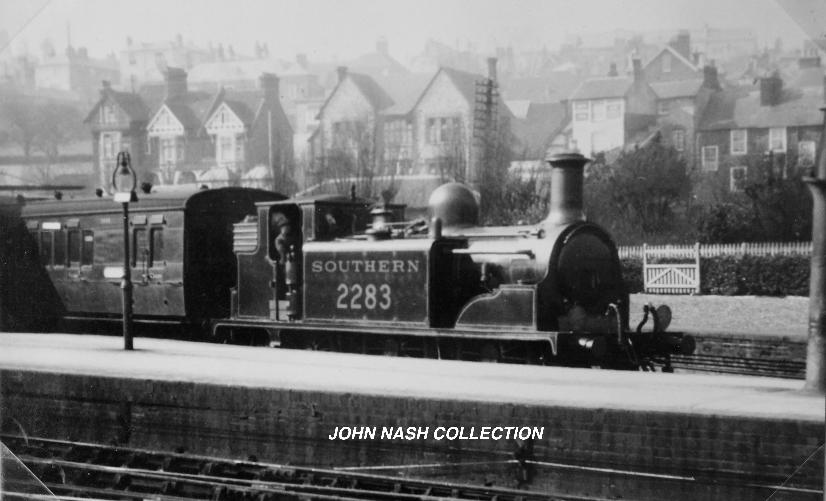
John Nash Collection
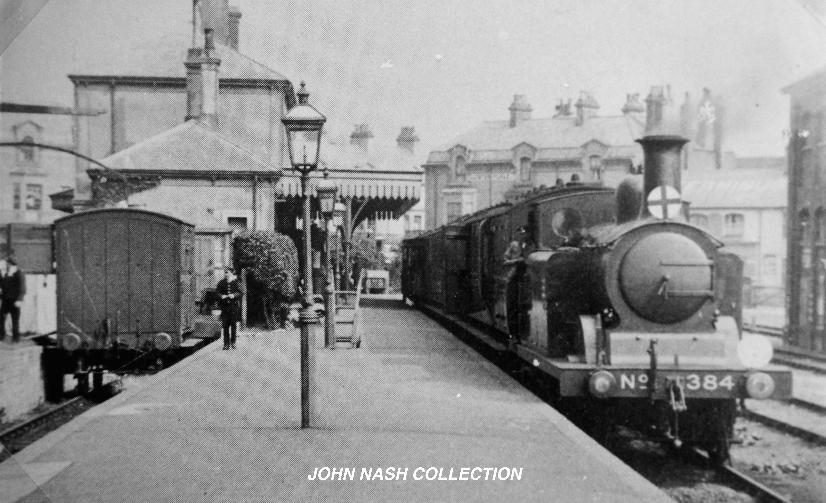
Platform 1 at Lewes
Minutes of the Newhaven Branch Meeting
held at the White Hart on Sunday Jan 31st 1920
Bro. A. Pearce in the Chair
Minutes of last meeting was read and discussed and it was proposed by Bro. L. Lower and seconded by Bro. J. Lower. That thy be accepted arising out of the minutes of the last meeting to nationalisation of mines, the resolution of the last meeting was supported.
Letter from Maidstone branch re representation on District Council, one from each branch. Moved by Bro. C. Barrow and seconded by Bro. P. Reed. That we support Maidstone resolution. Carried.
Letter read from Ash Branch asking for support to their letter to form a union to embrace the body of Loco workers mainly, Shedmen, coalmen, Washers out set to become affiliated to the A.S.L.E. & F. Moved by M.Smith that we support same. Carried.
Discussion arose over enginemen's lockers, when it was moved by C. Barrow & seconded by H. Bowden. That the Secretary take up with the Foreman over same. Carried.
Minutes of the Newhaven Branch Meeting
held at the White Hart on Sunday March 7th 1920
Bro. F. Sherwin was in the Chair
Minutes of last meeting was read and adopted, arising out of the minutes the question was asked about the resolution when the correspondence re nationalisation of mines was read.
Secretary stated he had seen the Foreman about the men’s lockers, who had promised to obtain the same.
Bro. D. Boyle gave a very good report on his attending the Labour Party’s meeting, delegates was elected to represent us on the Labour Party, Bros. D. Boyle and L. Lower being the two elected.
A strong discussion took place on the circular posted in the shed on the question of walking time and the disposal of engines and it was proposed by D. Boyle & seconded by L. Lower. That the circular be accepted. Bro. F. Harris proposed as an amendment & Bro. T. Denman seconded. That the circular be not accepted. The amendment was carried. The question then arose in what way this matter was to be dealt with when it was proposed by F. Harris & seconded by C. Barrow. That the Secretary take up with the next delegation. Carried.
Bro. D. Boyle then spoke on the slackness of members not taking a more prominant part in the work of the Society and called for attention to the time was lost in discussions as said he wished to propose the following resolution.
That a definate period of time should be alloted for each meeting to be sub divided into say 10 minutes periods, and the member of each period after the reading of the correspondence, are available to equal the number of questions to be dealt with at that particular meeting, any questions absorbing more than that time, ie 10 minutes to be refered to an extra meeting, all questions to be given notice of to the Chairman at the commencent of the meeting may be held after the closing of the ordinary meeting on the same day.
There being no seconder to the resolution it was not carried.
Minutes of the Newhaven Branch Meeting
held at the White Hart on Sunday March 28th 1920
Bro. F. Sherwin in the Chair
Minutes of the last meeting read, when it was proposed by Bro. C. Barrow and seconded by Bro. L. Lower. That they be accepted.
Bro. H. Christmas and Bro. J. Collins applied for suspension pay for irregular working of the electric staff. Moved by Bro. P. Reed & seconded by Bro. L. Lower. That the claim be paid.
Letter read from the Labour Party asking for support with the view of celebrating May Day. Moved by Bro. A. Pearce & seconded by W. Goldsmith. That we support same. Carried.
Letter read from the Docker Union protesting against the action of some of our members unloading coal and hope it will not accrue again. Noted.
Bro. C. Barrow asked Bro. Goldsmith wheater he had attended the Trades & Labour Council and if he wanted the Branch to take up the matter of his failing in his eyesight. Bro. Goldsmith replied that he had not attended and he would let the matter of his eyesight stand over.
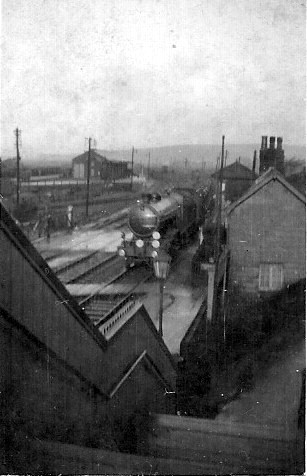
Ron Terrill Collection
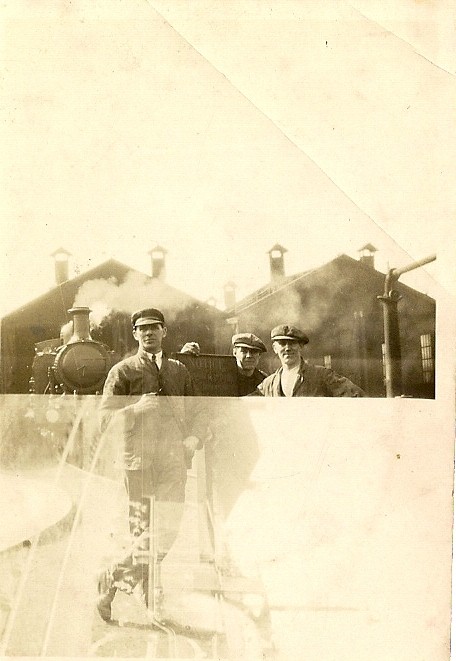
Minutes of the Newhaven Branch Meeting
held at the White Hart on Sunday April 25th 1920
Bro. A. Pearce in the Chair
Minutes read of last meeting and discussed, moved by Bro. P. Reed and seconded by Bro. W. Smith. That minutes be accepted.
Letter from Labour Party and noted, letter from Head Office re settlement of Central Wages Board.
Bro. A. Pearce complained of being kept firing and sending to Brighton for drivers after some discussion it was decided for the Secretary to take up with the Foreman.
Bro. W. Smith complained of being firing at times when ought to be employed as a Shed Driver after some discussion it was decided for the Secretary to take up with the Foreman.
Minutes of the Newhaven Branch Meeting
held at the White Hart on Sunday July 5th 1920
Bro. F. Sherwin in the Chair
Minutes read of last meeting and discussed, moved by Bro. H. Christmas and seconded by Bro. P. Reed. That minutes be accepted.
Letter was read from Tunbridge Wells re eyesight test and was much appreciated.
Letter from Bro. Langridge, Eastbourne, offering to stand as delegate for District council. moved Bro. P. Reed and seconded Bro. L. Lower. That Bo. Langridge stand as delegate.
Bro Hubbard complained of doing coal-man's work and receiving cleaners pay for same after a discussion and the rule of the agreement was read it was moved by Bro A. Pearce & seconded by Bro. J. Green. That the Secretary be instructed to write to Mr. Billinton asking for pay for the time the man had been doing the higher grade work failing a satisfactory reply to put the matter in the hands of Head Office.
A long discussion took place in regards the Harbour works engine be transferred to the Loco Dept and it was thought that we could not do anything on the matter all the time men was confined to their own job but watch events.
One new member
RON TERRILL COLLECTION
Unknown group of Newhaven loco-men outside Newhaven Loco -Shed, includes Bill Terrill first left
Minutes of the Newhaven Branch Meeting
held at the White Hart on Sunday Aug 1st 1920
Bro. F. Sherwin in the Chair
Minutes read of last meeting and discussed, moved by Bro. D. Boyle and seconded by Bro. A. Pearce. That minutes be accepted.
Correspondence read and noted reply from Mr. Billinton received it stating that Bro. G. Hubbard claim would be paid.
A discussion took place on the question of a rate driver doing shed duties also sending to Brighton for drivers when we had drivers when it was moved by Bro. A. Pearce & seconded by Bro. D. Boyle. That the Secretary write to Mr. Billinton calling his attention to same after a heated discussion it was proposed that we approach the Foreman first and if it was not stopped to lay the case direct to Brighton.
Receipt for June quarter read and noted.
Minutes of the Newhaven Branch Meeting
held at the White Hart on Sunday Sept 3rd 1920
Bro. F. Sherwin in the Chair
Minutes read of last meeting, moved Bro. D. Boyle and seconded by Bro. P. Reed. That minutes be accepted. Questions arising out of the minutes was asked, Secretary replied.
Correspondence was read and noted.
Bro. C. Lower raised the question of spare firemen being paid three hours for washing out also Cleaners washing out for Cleaners pay, after a discussion it was decided that the Secretary write to Head Office for information.
Bro G. Hubbard informed the Branch that he had received the back money for doing coal man wok for which he thanked them.
One new member.
Minutes of the Newhaven Branch Meeting
held at the White Hart on Sunday Oct 3rd 1920
Bro. F. Sherwin in the Chair
Minutes of last meeting was rearm moved by Bro. P. Reed and seconded by Bro. J. Green. That minutes be accepted.
Discussion arising out of the minutes re cleaners washing out and reply from Head Office was read after some discussion it was moved by P. Reed & seconded by J. Green.
That Secretary take up with Brighton on the matter. Secretary replied and moved as an amendment that each member make out an application for his back pay by doing so he thought it would be the means of getting higher grade thats the same as the traffic. Carried.
Bro. G. Hubbard brought up the question of getting his money and said he thought there ought to be some arrangements made to get the same. After some discussion it was decided to let it stand over till next meeting, but Bro. Hubbard was advised to apply at the Marine Shops on Friday for his money.
Minutes of the Newhaven Branch Meeting
held at the White Hart on Sunday Oct 31st 1920
Bro. F. Sherwin in the Chair
Minutes of last meeting was read, moved by Bro. P. Reed and seconded by Bro. G. Hubbard. That minutes be accepted.
Correspondence was read re the Miner's strike, Secretary sated that seeing that there was not enough time to have a meeting on the Sunday, as the notice did not arrive till late Saturday, he and the Chairman attended an open meeting of the N.U.R. and drafted a resolution from that meeting. Moved by P. Reed & seconded by Bro. H. bowden. That the Secretary action be endorsed. Carried.
Bro. Hubbard stated that it was not possible to get his money at the shops. Moved by Bro. F. Harris & seconded by Bro. P. Reed. That Secretary see the Foreman with a view of letting one one go and get their money. Carried
Moved by Bro. F. Harris & seconded by Bro. P. Reed. That he thought that we ought to apply for a sheet for tender first working, after a discussion it was decided to let it stand over till next meeting when normal working may be started.
Minutes of the Newhaven Branch Meeting
held at the White Hart on Sunday Nov. 28th 1920
Bro. F. Sherwin in the Chair
Minutes of the last meeting was read, moved by Bro. F. Harris and seconded by Bro. P. Reed. That minutes be accepted.
Correspondence was read and noted.
Moved by Bro. F. Harris and seconded by Bro. P. Reed. That the question left over from the last meeting should again be discussed. After a discussion it was moved by Bro. F. Harris & seconded by Bro. P. Reed. That the Secretary write to Mr. Billinton through the Loco Foreman, with the view of supplying a sheet for tender first running. Carried.
Election of Officers held over till next meeting as there was not sufficient members interested in the cause to attend.
Minutes of the Newhaven Branch Meeting
held at the White Hart on Sunday Dec. 19th 1920
Bro. F. Sherwin in the Chair
Good muster present
Minutes of last meeting was read, moved by Bro. F. Harris and seconded by Bro. H. Bowden. That minutes be accepted.
Correspondence was read and noted.
Moved by Bro. F. Harris. That letter be sent to Bro. M. Smith who is in Hospital, explaining the ruling of the Branch. Carried. Moved that Bro. A Pearce be asked to write the letter.
Election of Officers took place when the following was elected
Chairman Bro. F. Sherwin
Vice Chairman Bro. H. Bowden
Secretary Bro. F. Wilmshurst
Assistant Secretary Bro. A. Pearce
Committee
Bros.C. Barrow, P. Reed, J. Green, D. Boyle, E. Hillman & J. Giles
NEWHAVEN
BRANCH
OFFICERS
1921
Chairman Bro. F. Sherwin
Vice Chair Bro. H. Bowden
Secretary Bro. F. Wilmshurst
Minutes of the Newhaven Branch Meeting
held at the White Hart on Sunday Jan. 23rd 1921
Bro. F. Sherwin in the Chair
Minutes of last meeting was read, moved by Bro. L. Lower and seconded by Bro. J. Giles. That minutes be accepted.
Correspondence from Head Office was read and discussed
A strong discussion took place on the question of appointing delegates to work with the N. U. R. on a Shed Committee That Bros. A. Pearce, F. Wilmshurst, & F. Sherwin stand for Shed Committee.
A discussion then took place on the question of the number seeing that the N.U.R. had elected three and we had got the majority we ought to have more. Moved by F. Harris & seconded by P. Reed. That we elect four. Carried. Moved by F. Brown & Seconded by J. Thompsett. That Bro. T. Denman stand. Carried.
Meeting closed with 27 present
the best meeting we have had
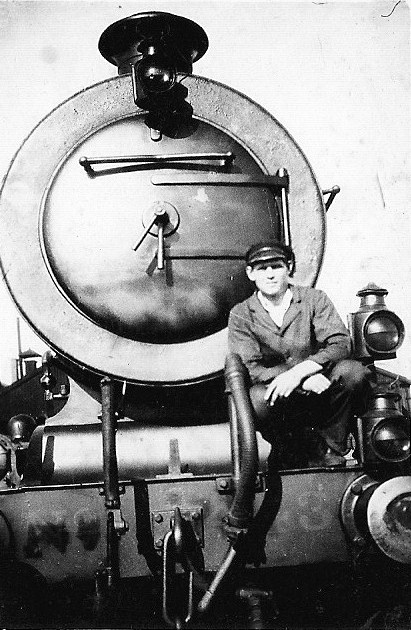
Ron Terrill Collection
Bill Terrill standing on Loco No. 443
Minutes of the Newhaven Branch Meeting
held at the White Hart on Sunday Feb 10th 1921
Bro. F. Sherwin in the Chair
Minutes of last meeting read and discussed, moved by Bro. P. Reed and seconded by Bro. F. Harris. That they be accepted as a true record. Carried.
Letter read from the N.U.R. Re Shed Committee and after a strong discussion it was moved by Bro. F. Harris & Seconded by Bro. P. read. That we accept the resolution of January 16th of joint meeting and that Bro. T. Denman be asked to stand down from Shed Committee. Carried.
Correspondence from Head Office in regards the shooting of railway men in Ireland and the E.C. Decision to withdraw its members. A strong discussion ensued when it was moved by Bro. W. Goldsmith & seconded by Bro. F. Harris.
That this Branch gives their support to our E.C. In any action they may take in this fight for justice.
Bro. C. Barrow moved as an amendment & Bro. A. Pearce seconded.
That seeing that there was so much out of work that we wait and see what other branches was going to do. on the vote be taken the amendment was carried.
This closed the meeting with 24 being present which goes to show that the members are taking more interest in the work of their branch.
Minutes of the Newhaven Branch Meeting
held at the White Hart on Sunday March 27th 1921
Bro. F. Sherwin in the Chair
Minutes of last meeting was read and discussed, moved by Bro. A. Pearce and seconded by Bro. P. Reed. That minutes be adopted.
Correspondence read from Head Office and noted re unemployed Firemen, which showed that the Society was looking after the interest of our cleaner members.
Questions was sake about the Shed Committee, Secretary replied, this closed the meeting as everyone present seemed satisfied.
Minutes of the Newhaven Branch Meeting
held at the White Hart on Sunday May 1st 1921
Bro. F. Sherwin in the Chair
Minutes of last meeting was read and discussed, moved by Bro. D. Boyle and seconded by Bro. J. Green. That minutes adopted.
Correspondence read from Head Office re miners dispute and cause of the strike being called off, questions was asked and discussed.
Minutes of the Newhaven Branch Meeting
held at the White Hart on Thursday May 5th 1921
Bro. H.G. Bowden in the Chair
Minutes of last meeting was read and discuss, moved by Bro. P. Reed and seconded by Bro. W. Smith. That minutes adopted.
Correspondence read from Head Office and discussed.
Moved W. Goldsmith & seconded A. Pearce. That the whole of money received from days off be forwarded for benefit of the miners family.
Moved by P. Reed as an amendment and seconded by W. Smith. That each member be free to give as he likes. On a vote being taken Bro. Reed’s amendment was carried.
Meeting closed at 8.15, not many members present.
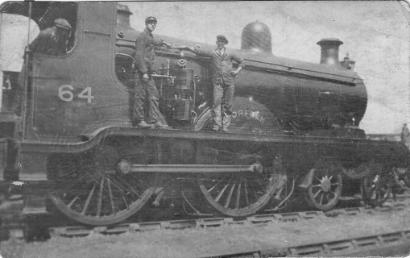
Ron Terrill Collection
Unknown, Bill Terrill & Unknown in 1921
on a Class B4 No.64 'Norfolk'
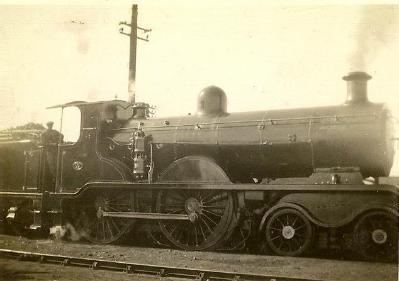
Ron Terrill Collection
Bill Terrill on a Class B4 No.64 ‘Norfolk'
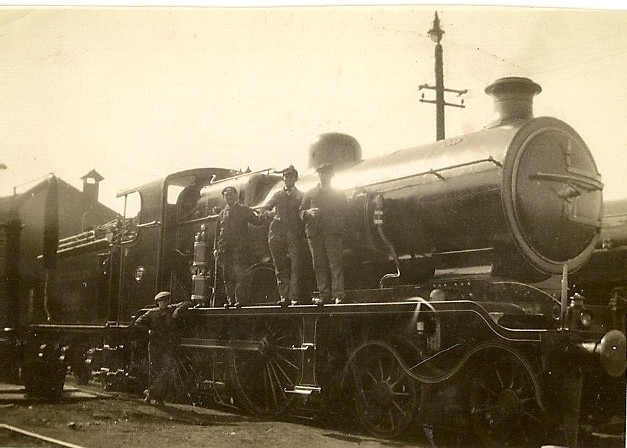
Ron Terrill Collection
L - R unknown, unknown Bill Terrill
Unknown on a Class B4 No. 64 ‘Norfolk'
Minutes of the Newhaven Branch Meeting
held at the White Hart on Sunday Aug 29th 1921
Bro. F. Sherwin in the Chair
Minutes of last meeting was read and discussed, moved by Bro. L. Lower and seconded by Bro. H. Bowden. That minutes be adopted. Carried.
Correspondence was read from Head Office and dismissal, discussion took place over the dismissal of Bro. H. Cotlington. Secretary explained what action he had taken and also read a reply from Mr. Billinton respecting the same. After a long discussion it was moved by Bro. P. Reed & seconded by Bro. A. Rookley.
That Secretary take up with the Shed Committee to see if anything more could be done.
Bro. E. Brooks asked if something could be done to stop the goods men going on the pilots and making overtime. Secretary explained that it was a matter for the Shed Committee.
Moved by Bro. H. Bowden & sec. By Bro. E. Brooker.
That Secretary lay the matter before Shed Committee as soon as possible. Carried.
Minutes of the Newhaven Branch Meeting
held at the White Hart on Sunday Dec. 11th 1921
Bro. F. Sherwin in the Chair
Minutes of last meeting was read and discussed, moved by Bro. P. Reed and seconded by Bro. A. Pearce. That minutes be adopted.
Correspondence was read and discussed.
Election of officers for 1922 took place.
Chairman Bro. A. Pearce
Vice Chairman Bro. C. Barrow
Secretary Bro. F. Wilmshurst
Asst. Secretary Bro. D. Boyle
Committee Bros. P. Reed, C. Jenner, F. Sherwin, E. Bennett, A. Norman & E. Dotterill.
Bros. F. Sherwin and A. Pearce resigned from the Shed Committee.Bros. D. Boyle and E. Dotterill was elected to fill there places.
One new member.
NEWHAVEN
BRANCH
OFFICERS
1922
Chairman Bro. A. Pearce
Vice Chair Bro. C. Barrow
Secretary Bro. F. Wilmshurst
Minutes of the Newhaven Branch Meeting
held at the White Hart on Sunday Feb 26th 1922
Bro. A. Pearce in the Chair
Minutes read of the last meeting and discussed, moved by Bro. P. Reed and seconded by Bro. C. Barrow. That they be adopted.
Correspondence read from Head Office dealing with increase contributions and benefit for Cleaners, also resolution from Head Office dealing with the discharge of Cleaners.
Circular read from E. C. calling on all members to a levy to build up a fighting fund.
Minutes of the Newhaven Branch Meeting
held at the White Hart on Sunday March 26th 1922
Bro. A Pearce in the Chair
Minutes read of last meeting and discussed, moved by Bro. D. Boyle and seconded by Bro. F. Sherwin. That minutes be accepted.
Correspondence read from Head Office and discussed.
The Secretary explained the working of the Railway Councils and asked every member to there own member.
Letter read from Labour Party, asking this Branch to become affiliated to same.
Secretary explained that this Society did not allow any funds for Labour purposes only Trades and Labour Councils, and if they wanted to be become affiliated they must find the money. After a long discussion it was moved by Bro. D. Boyle and seconded by Bro. F. Sherwin.
That Secretary send 5/- to the Labour Party and the members collect same amongst themselves. Carried
Minutes of the Newhaven Branch Meeting
held at the White Hart on Sunday June 25th 1922
Bro. A Pearce in the Chair
Minutes read of last meeting and discussed, moved by Bro. F. Sherwin and seconded by Bro. D. Boyle. That minutes be accepted. Carried
Correspondence read from Head Office and discussed.
Discussion took place in regards taking away three turns from this depot, after a lengthy discussion and several members had expressed their views, it was moved by Bro. H. Bowden & seconded by Bro. F. Sherwin.
That Secretary appeals to Brighton through the local Foreman, asking them to consider this depot with a view of more work here. Carried
Minutes of the Newhaven Branch Meeting
held at the White Hart on Sunday Aug 27th 1922
Bro. D. Boyle in the Chair
Minutes read from last meeting, moved by Bro. P. Reed and seconded by Bro. F. Sherwin. That minutes be accepted. Arising out of minutes, Secretary read letter he wrote to Brighton and explained the out come of it, in regards to putting engines
away, not sufficient time being allowed and that it had been altered, also stated he had settled Bro. Goldsmith Assurance Claim.
Correspondence was read from Head Office and discussed. Much comment was expressed to the letter referring to
defaulting Secretaries.
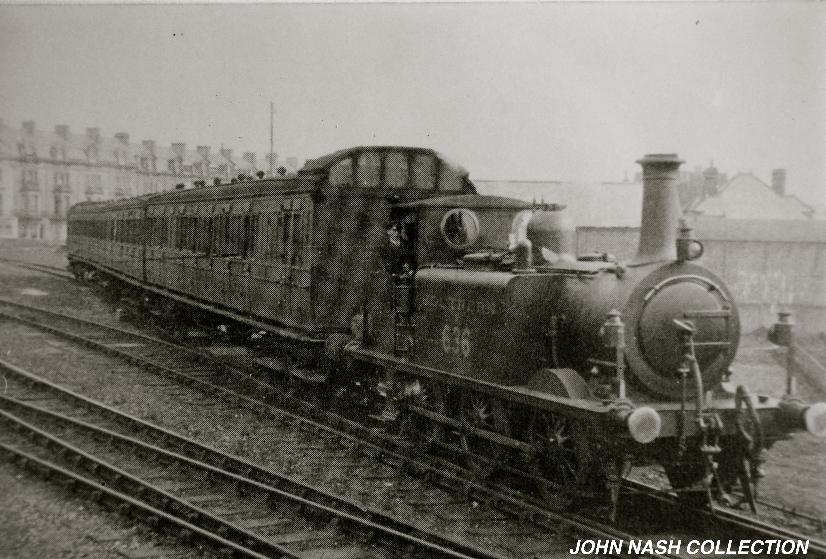
Minutes of the Newhaven Branch Meeting
held at the White Hart on Sunday Sept 24th 1922
Bro. A. Pearce in the Chair
Minutes read from last meeting and discussed, moved by Bro. P. Reed and seconded by Bro. H. Christmas. That minutes be accepted. carried.
Correspondence read from Head Office re certain company reducing cleaners wages, which was discussed.
Letter read from Secretary of Sectional Council re supply of summer & winter cap discussion took place when it was moved by Bro. P. Reed & seconded by Bro F. Sherwin. That we accept the cap as per agreement. Carried.
Letter read from Brighton Branch asking us to arrange open meeting, Secretary stated he had wrote to Brighton stating that it was not convenient for us to arrange a meeting, but would arrange for a party to come over to Brighton.
Moved by Bro. D. Boyle & seconded by Bro. H. Bowden that the Secretary's action be endorsed. Carried.
Complaint was raised in regards to washing out, and after a lengthy discussion it was moved by Bro W. Niner & seconded by Bro. H. Bowden.
That Secretary take up with the Foreman with a view of the Senior Firemen doing washing out. Carried.
Complaint was raised in regards to the 8 spare Fireman turns caused some plain speaking and heated arguments the Secretary pointed out they would loose their firing. It was moved by Bro. C. Barrow & seconded by Bro. A. Rookley.
That the Secretary take up with foreman with a view of getting the spare fireman to work in gangs senior fireman to work in each gang. carried.
Also that Cleaners be put up on the list for duty. Carried.
Complaint was raised in regards to the state of the sanitary pans and also the lockers. moved by Bro. C. Barrow and seconded by D. Boyle.
That Secretary take the matter up. Carried
Meeting closed about 9.0 .p.m., there being a good muster present and the best meeting the history of the Branch.
Minutes of the Newhaven Branch Meeting
held at the White Hart on Sunday Oct 29th 1922
Bro. A. Pearce in the Chair
Minutes read of last meeting and discussed, moved by Bro. W. Goldsmith and seconded by Bro. F. Sherwin. That minutes be accepted. Carried. Questions was raised arising out of the minutes.The Secretary explained his interview with the Foreman.
Bro. G. Bollen spoke in the question of grouping the spare Firemen and said he was not satified with the way it was working. The Secretary stated he could not understand the working after a long discussion it was moved by Bro. G. Bollen & seconded by Bro. J. Hillman. That it be left in the hands of the Secretary. Carried.
Correspondence read from Head Office re Conditions of Service which was discussed at some length moved by Bro. W. Goldsmith & seconded by Bro. D. Boyle. That this Branch express their confidence in our E.C. In any action that might might take. Carried.
The matter of Cleaners getting in firebox came up for discussion moved by Bro. W. Brown & seconded by Bro. B. Piddlesden. That Secretary take the matter up with the Foreman. Carried.
Meeting closed about 8.45 a good muster present
Minutes of the Newhaven Branch Meeting
held at the White Hart on Sunday Nov. 23rd 1922
Bro. A. Pearce in the Chair
Minutes read of last meeting and discussed, moved by Bro. L. lower and seconded by Bro. W. Goldsmith. That minutes be accepted. Carried. Questions was asked arising out of the minutes. Secretary explained his interview with the Foreman regarding spare Firemen’s turns of duty, also Cleaners doing the Boat Engine’s firebox.
Bros. W. Goldsmith and A. Rookley were elected as delegates for the Trade and Labour.
Election of Officers for 1923 took place when the following members were elected.
Chairman Bro. W. Goldsmith
Vice Chair Bro. L. Lower
Secretary Bro. D. Boyle
Asst Sec Bro. F. Wilmshurst
Committee Bros. F. Sherwin, C. Barrow, C. Dotterill, W. Brown, W. Terrill & M. Smith
Trustees Bros. A. Pearce & G. Bollen
Discussion took place regards to the brake power on the 5.52.p.m. goods, moved by Bro. C. Barrow and seconded by Bro. H. Bowden. The Secretary take the matter up. Carried
The sum of 8/6 was collected for the Trades and Labour Whist Driver.
Meeting closed about 8.45.p.m. and nice muster present.
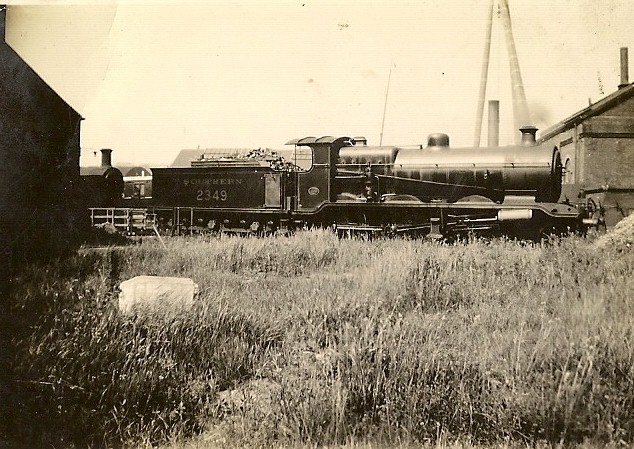
Ron Terrill Collection
Minutes of the Newhaven Branch Meeting
held at the White Hart on Sunday Jan 7th 1923
Bro. W. Goldsmith in the Chair
Minutes read of last meeting and discussed, proposed by Bro. F. Sherwin and seconded by Bro. L. Lower. That they be accepted as a true record. Carried
Correspondence read and noted, Branch endorsing action taken by our E.C.
Annual report of Newhaven and District Trades and Labour Council, read.
Minutes of the Newhaven Branch Meeting
held at the White Hart on Sunday Jan 28th 1923
Bro. W. Goldsmith in the Chair
Minutes read of last meeting and discussed, proposed by Bro. F. Sherwin and seconded by Bro. P. Reed. That they be accepted as a true record. Carried.
Proposed by Bro. F. Wilmshurst and seconded by Bro. W. Niner. That Branch heartily agree with the endeavours of E.C.
Proposed By Bro. F. Wilmshurst & Seconded by Bro. W. Niner. That Bro R. Niner approach the Foreman in connection in his position at this depots failing satisfaction, to place in hands of Secretary
Proprosed By Bro. F. Wilmshurst & Seconded by R. Turner. That foreman be approached in connection with passes for spare Firemen
Proposed By Bro. H.G. Bowden & seconded by Bro. F. Sherwin. That Brighton be approached for more turns to be worked from here seeing the displacement of men, owing to the withdrawal of two turns.
Proposed By Bro. F. Wilmshurst & seconded by L. Lower. Secretary write Head Office for a fuller understanding of working of Seniority.
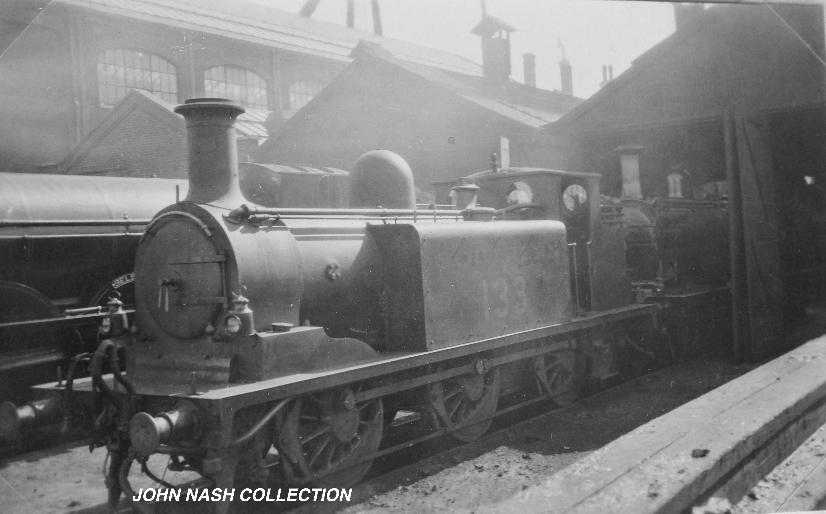
Minutes of the Newhaven Branch Meeting
held at the White Hart on Sunday Feb 25th 1923
Bro. L. Lower in the Chair
Minutes read of last meeting and discussed, proposed by Bro. P. Reed and seconded by Bro. C. Barrow. That they be accepted. Carried. Matters arising out of the minutes were, letter to Brighton requesting more turns read Jan 29th no rely being received it was Proposed by Bro. C. Barrow & Seconded by Bro. F. Sherwin. That we await developments. Carried
Letters read from Head Office with the application of the Seniority clause at this depot, Feb 19th 1923, which gave use to much dissatisfied comment, and marked no further progress.
Executive Committee report and minutes for period December 4th 1922 - January 26th 1923 presented, also agenda of suggestions submitted by Branches for the Annual Assembly of Delegates, which is to be held at General Office, 9 Arkwright Road, Hampstead, NW3, on May 28th at 2.30.p.m. presented.
Correspondence from Head office, re election of E.C. Representatives, 8th Jan. 1923, moved by Bro. F. Wilmshurst and seconded by Bro. C. Barrow. That Bro. J. Cordrey be nominated as candidate for South London District. Carried.
Circular 2nd Feb 1923, calling for organised propaganda to stimulate interest in the activity of our Society, also a warming as to the activity of the N.U.R. in connection with the Underground Electric Railways of London, and that duties in connection with the early days of the electrification of the London District of the L.B. & S.C.
Circular Feb. 15th, 1923, concerning with the Financial difficulties of various Trades Unions as compared with our fortunate position, also Daily Herald circular read, also members joining for full benefits over 30 or between 35 - 40 must pay in accordance with schedule, page 84 of Rule Book.
Letter read from Newhaven and District Trades and Labour Council, asking if any of our members wished to be nominated for the Local Elections.
Report by Bro. D. Boyle, that Bro. W. Goldsmith was elected by the Newhaven and District Trades and Labour Council, to serve on a sub committee to work in
NEWHAVEN
BRANCH
OFFICERS
1923
Chairman Bro. W. Goldsmith
Vice Chair Bro. L. Lower
Secretary D. Boyle
Ass Sec Bro. F. Wilmshurst
conjunction with Church of England Men’s Society with a view to organising a Church parade on March 25th to raise funds for local distress.
Proposed by Bro. C. Barrow and seconded by Bro. F. Sherwin. That we hold our annual dinner on Good Friday, March 30th at 6p.m. Carried
Proposed By Bro. C. Dotteral and seconded that Bro. C. Barrow. That Bro. D. Boyle be Secretary and that Bros. W. Goldsmith, F. Wilmshurst, L. Lower, C. Dotteral & C. Barrow, constitute a committee, the secretary to post a notice announcing same and that it be a cold spread.
Minutes of the Newhaven Branch Meeting
held at the White Hart on Sunday March 25th 1923
Bro. L. Lower in the Chair
Minutes read of last meeting and briefly discussed, proposed by Bro. F. Sherwin and seconded by Bro. P. Reed. That they be accepted. Carried.
Circular 15th March, 1923 read re front end electric train read.
Meeting closed about 8.0 p.m. about 6 members present
Minutes of the Newhaven Branch Meeting
held at the White Hart on Sunday May 6th 1923
Bro. A. Pearce in the Chair
Minutes of last meeting read and discussed, proposed by Bro. F. Wilmshurst and seconded Bro. P. Reed. That they be accepted. Carried.
Circular letters 23rd April re link to link seniority and general conditions of service read discussed.
Proposed by F. Sherwin and seconded by Bro. M. Smith.
That meetings be held at noon during summer months.
Minutes of the Newhaven Branch Meeting
held at the White Hart on Sunday June 24th 1923
Bro. W. Goldsmith in the Chair
Minutes of last meeting read and discussed which were accepted as a true record on the proposition of - Bro. P. Reed and seconded by Bro. M. Smith and carried.
Letter of invitations to meetings read from Tunbridge Wells & Brighton.
Secretary instructed to write Brighton requesting extra duties, which was proposed by Bro. L. Lower and seconded by Bro. P. Reed and carried unanimously.
Also to write Barton Wilde re passes for passed Cleaners, on the proposition of W. Brown & seconded by B. Piddlesden. Carried Unan.
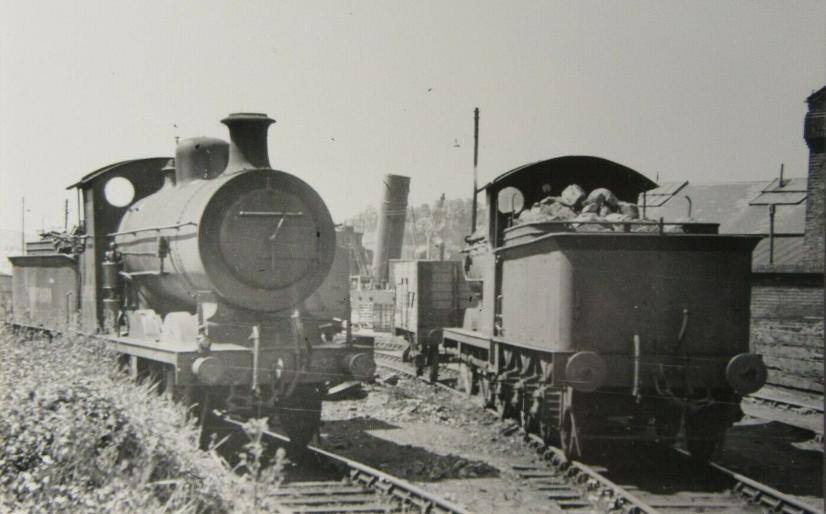
PHOTOGRAPHER UNKNOWN
Minutes of the Newhaven Branch Meeting
held at the White Hart on Sunday Aug 26th 1923
Bro. W. Goldsmith in the Chair
Minutes of the last meeting read and discussed and were accepted as a true record on the propostition of F. Sherwin & Seconded by Bro. H .Bowden and Carried.
The Vice Chairman at this point in the proceedings (who with a few others has come late) on looking through the minutes alleged that they were not a true record because his name had been erroneously recorded as the prospect of that the Secretary should request the management for more turns of duty at this depot and to prevent a future recurrence.
Bro. L. Lower proposed & seconded by Bro. M. Smith. That a member take his seat by the Secretary as check against such absorb inaccuracies to be dealt with more fully at the next meeting.
Proposed by Bro. F. Sherwin & seconded by C. Dotterill.
That a special meeting be called on the 2nd September to deal with Secretary resignation and to clear the matter up.
Correspondence read and fully discussed, no further response to Daily Hearld appeal.
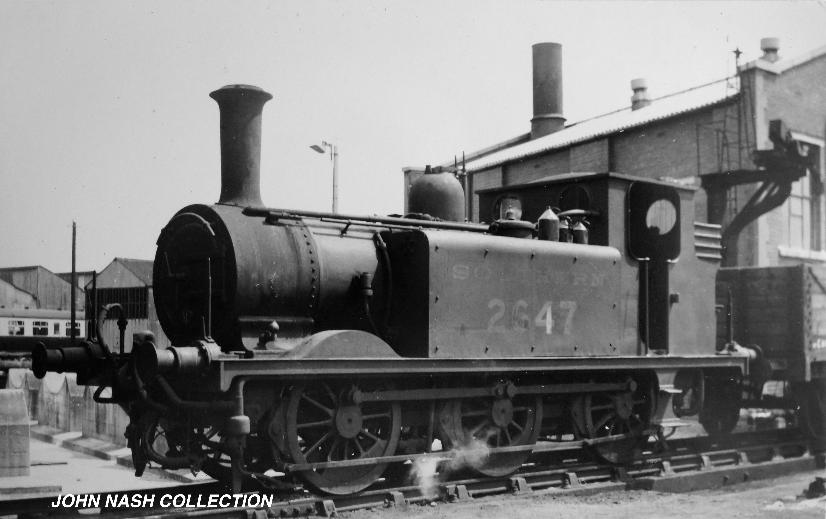
Minutes of the Newhaven Branch Special Meeting
held at the White Hart on Sunday Sept 2nd 1923
Bro. W. Goldsmith in the Chair
Bro. Barton Wild in attendance.
Minutes of June 24th & Aug. 26th read and discussed especially the minute arising out of 24th June minutes re Secretary approaching the Management for more turns of duty at this depot. When it was Pro. C. Barrow & Sec. A. Pearce. That the such minutes be deleted as this proposition was not discussed at this meeting. Carried Unam. Pro by F. Sherwin & sec A. Pearce. That the Secretary carrys on.
The Chairman then calling on Barton Wild as further enlighten us in the purpose of the Political Fund and in its far reaching effects aspect he did explaining that too much politics in the Branch room did not generally meet with the whole hearted approval of various Branches at the same time.
The Political Fund of the Society should be receiving about £2 instead of barely 9/- per an from this Branch, which resulted in four more Political Fund recruits
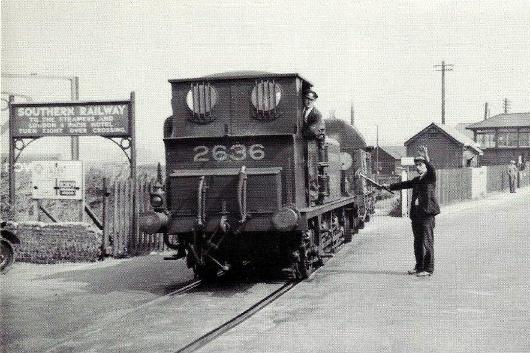
Bros. W. Brown, L. Lower, H. Christmas & F. Harris.
He then proceeded to give us a short address on the railway position, which all present fully appreciated.
The meeting closing with a hearty vote of thanks Pro. By Bro. H. Christmas & seconded by Bro. A. Pearce for his most able and interesting address. To which Bro. Barton wild suitably replied adding that he would be most willing to attend again at any future date.
PHOTOGRAPHER UNKNOWN
Minutes of the Newhaven Branch Quarterly Meeting
held at the White Hart on Sunday Sept 30th 1923
Bro. W. Goldsmith in the Chair
Minutes of last meeting read and discussed, proposed by Bro. L. Lower and seconded by Bro. A. Pearce. That they be accepted as a true record. Carried.
Correspondence re Political Fund read again. Chairman appealed to all members to support it, which resulted in a few more recruits.
Circular letters re Central Wages Board, and Head Office staff wages read and discussed, moved by Bro. W. Smith and seconded by Bro. C. Smith. That matters arising at Central Wages Board be left in the hands of Secretary and Assistant. Carried.
Moved by Bro. F. Wilmshurst and seconded by Bro. C. Barrow. That correspondence re office staff wages lie on the table. Carried.
Moved by Bro. F. Sherwin and seconded by Bro. C. Barrow. That two members be elected as representatives of the shed. Carried.
Proposed by Bro. W. goldsmith and seconded by Bro. W. Smith. That Bros F. Sherwin and D. Boyle be elected and to arrange an early conference with the foreman. Carried.
Moved by Bro. A. Pearce and seconded by Bro. M. Smith. that delegates approach the Foremen re Pilot Men’s duties.
Moved by Bro. P. Reed and seconded Bro. F. Wilmshurst. That Pilot Men work around with the goods and that Branch men work their Sunday off middle instead of early turn and also to remind the Foreman, that Bro. H. Hamblins uniform serge jacket and cap, last issue is considerably in arrears, he last received and in May 1922, and lockers for Drivers. Carried.
Letter read from Bro. Barton Wild for information re Trade Unions position at Newhaven.
Minutes of the Newhaven Branch Meeting
held at the White Hart on Sunday Oct 28th 1923
Bro. L. Lower in the Chair
Minutes of last meeting read and discussed, proposed by Bro. C. Dotterill and seconded by Bro. W. Smith. That they be accept as a true record. Carried.
Matters arising out of the minutes. Secretary reported interview with Foreman re Bro. P. Reed’s motion of 30th Sept in connection with which he the Foreman could take no action, other than writing Brighton in respect of lockers and Bro. H. Hamblins uniform.
Letter read from Barton Wild requesting information as to the Branch position and number of N.U.R. at this depot also date, place and time of Branch meeting, Secretary’s reply satisfactory.
Letter read asking all Branches to elect a delegate to attend an area conference to select the Society’s official candidates for Sectional Council Election.
Proposed by Bro. C. Barrow and seconded by Bro. C. Dotterill. That this lay on the table. Carried.
Letter 19/10/23 re seniority promotion on new Grouped Railways read.
Bro. F. Brown asked his position in relation to Bro. C. Dotterill as he was the eldest.
Proposed by Bro. C. Barrow and seconded by Bro. P. Reed. that time of meeting during the winter months be reverted to 7.0 p.m. Carried.
Minutes of the Newhaven Branch Special Meeting
held at the White Hart on Sunday 18th Nov 1923
Bro. W. Goldsmith in the Chair
Owing to the N.U.R. Propaganda among our younger members it was considered by members of the Branch committee to be desirable that the above meeting be held to review the position.
In the course of the debate Bro. Bollen informed that there must be a leakage of our Branch proceedings, for he had been told by an N.U.R. Man:- apparently with the view to elating further information:- that it was only possible for spare drivers to secure a hearing, cleaners being ignored, also that there had been an endeavour by some N.U.R. Members to create dissension among the younger members of this Branch of twisting a certain indiscretion of our late Secretary apparently, calculating, that (in addition to the alleged attitude of spare drivers) it would give some of our members:- especially the younger ones, the impression that no interest was taken in their welfare and if they would but join the N.U.R. They would be much better cared for Bro. F. Brown corroborated, being present and culminating in an attack upon the discretion of the E.C. In matters of A.S.L.E. & F & C. finance in pamphlet form. Bro. G. Bollen proposed & Bro. E. Brooker. That the Secretary endeavour to secure the pamphlet re the financial position of A.S.L.E.F. & C. known to be floating about with a view to enlightenment of members. Bro. F. Brown spoke against the distribution of pamphlets by A.S.L.E.F. & C.
The Secretary mentioned writing of the N.U.R. In connection with the recent activities of their members but Bro. C. Barrow & Bro. A. Pearce spoke against, it being considered that it would only add to the difficulties of the young Firemen when booked with the others. All agreed.
Considerable discussion took place around the question of pamphlets & Chairman requested Secretary to give our financial position and in reply read the prologue to 1922 balance sheet.
The Chairman proposed, after considerable discussion of the redistribution of night and day work for cleaners that Bros C. Wilson, W. Brown & G. Bollen form a small committee to deal with the matter and report back.
Bro. S. Lower spoke on the unequal distribution of Sunday work.
Pro. By Bro. S. Lower & Sec. A.Charman. That Sunday duty be shared by the whole of the staff. Carried. Secretary to approach Foreman. Carried.
Pro. By F. Brown & Sec. By B. Piddlesden. That Secretary see Foreman to try to get more men passed. Carried. Also to inquire into position of cleaners doing Fireman’s work. Carried.
The Chairman rose and stated that he was overruled by the Branch after placing that position before them. Bro. L. Lower supported the Chair.
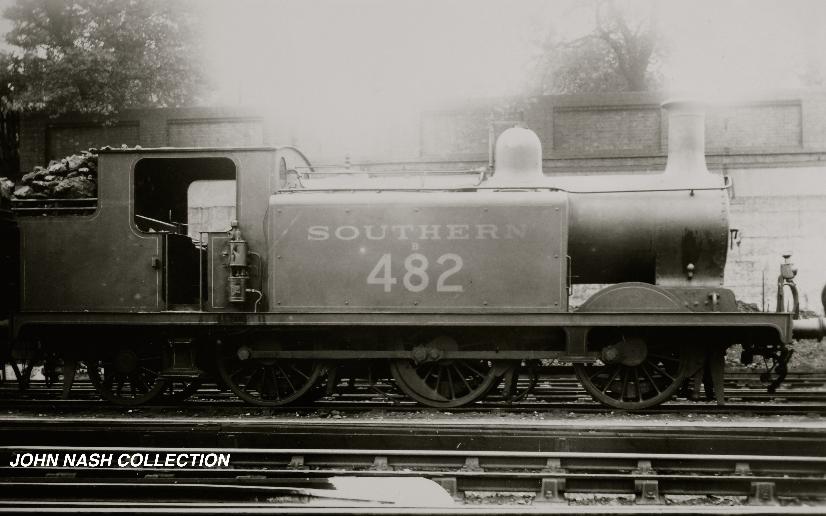
Minutes of the Newhaven Annual Branch Meeting
held at the White Hart on Sunday 25th Nov 1923
Bro. W. Goldsmith in the Chair
Members present
Bros. D. Boyle, W. Goldsmith, L. Lower, P. Reed, C. Barrow, A. Pearce, A. Charman, C. Jenner, B. Piddlesden,
G. Bollen, C. Wilson, C. Dotterill, F. Wilmshurst, F. Sherwin & H. Bowden
Minutes of 28th Oct meeting read and discussed, proposed by Bro. C. Barrow and seconded by Bro. W. Brown. That they be accepted as a true record. Carried
Matters arising out of the minutes of Oct. 28th. Bro. P. Reed’s motion of Sept. 30th, Secretary reported that as clothing was dealt with annually now and not monthly. Bro. H. Hamblin would receive his arrears with his next issue.
Correspondence read and noted.
Minutes of special meeting 18th Nov 23, moved by Bro. A. Pearce & Sec. By Bro. W. Brown. That they accepted as a true record. Carried.
Matters arising out of above minutes, Bro F. Wilmshurst called the branch in not electing Shed Committee to interview Foreman. Bro. F. Sherwin backed Bro. F. Wilmshurst and spoke on the report floating around to the effect that it was only possible for spare drivers to obtain a hearing Bro. Bollen referred to the N.U.R. Slander of our Branch.
Bro. F. Wilmshurst asked Secretary for report of his interview with the Foreman re Bro W. Goldsmith being employed cleaning on a Sunday, as he believed there had been an interview.
The secretary stated the case as presented by the Foreman, which was to the effect, that he could not see any reason why this man should not be so employed, otherwise he had nothing to do and seeing that he received his proper rate of pay, instead of a Cleaners rare, he considered there to be no case.
Pro Bro F. Wilmshurst & Sec. Bro. A. Pearce. That the Shed Committee take the matter up. Carried.
Bro. C. Barrow complained of propelling vehicles from Newhaven Town to Newhaven Harbour and moved that the matter be put in the hands on Shed Committee, Seconded by Bro. A. Pearce.
Bro. Bollen presents his report and schedule of proposed Cleaners duty and considers 1.0 p.m. to 10.0 p.m. Unnecessary, but agrees to withdraw for further consideration.
Election of Officers for 1924
Proposed by Bro. F. Harris and seconded by Bro. H. Bowden thatBro. F. Wilmshurst take the Chair. Carried.
Proposed by Bro. H. Bowden and seconded by Bro. A. Pearce. That Bro. W. Goldsmith take Vice Chair. Carried.
Proposed by Bro. F. Harris and seconded by Bro. A Pearce. That Bro. F. Sherwin take the Secretaryship. Carried.
Proposed by Bro. C. Barrow and seconded by Bro. L. Lower. That Bro. W. Brown be Assistant Secretary, and that Bros. C. Jenner, C. Dotterill, L. Lower, C. Barrow, G. Bollen Trustee & A. Pearce Trustee Constitute Committee
Trades & Labour Delegates be Bros W. Goldsmith & G. Bollen Carried
Good Friday Dinner held over till next meeting.
Minutes of the Newhaven Special Branch Meeting
held at the White Hart on Sunday 2nd Dec 1923
Bro. W. Goldsmith in the Chair
Members present
Bros. C. Barrow, L. Lower, C. Wilson, B. Piddlesden, W. Brown, F. Sherwin, A. Pearce, M. Smith, W. Smith,
W. Goldsmith, A. Charman, E. Hillman & D. Boyle
The above meeting being called in accordance with Rule 39 Clause 8.
The minutes of the annual meeting held on the Nov. 25th were not read. This special meeting being called for requested for the purpose of recinding the said minutes, because some members left the room without properly requesting the Chair to do so, before the business of the Branch was complete, and so causing confusion.
Bro. F. Sherwin, briefly summarised the event which lead to this ultimate confusion.
Moved Bro. A. Pearce & seconded by Bro. F. Sherwin. That the minutes of the annual meeting be recinded. Carried.
Proposed by Bro. F. Sherwin and seconded by Bro. C. Barrow. That the Branch proceed with the re election of Officers. Carried.
Proposed by Bro. C. Barrow and seconded Bro. L. Lower. That Bro. W. Goldsmith be re-elected, not carried.
Proposed by Bro. G. Bollen and seconded by Bro. W. Brown. That Bro. A. Pearce take the Chair. Carried.
Minutes of the Newhaven Branch Meeting
held at the White Hart on Sunday 30th Dec 1923
Bro. G. Bollen in the Chair
Members present
Bros C. Wilson, C. Barrow, E. Brooker, J. Green, P. Reed, G. Bollen A. Charman & W. Smith
Minutes of last meeting read and accepted as a true record.
Correspondence read and discussed, Executive Committee Report and minutes for period between October 1st and 27th presented.
Bro. W. Smith reported that the Chairman of the N.U.R. was awaiting an audience which was received with a rather mixed feeling and owning to a misunderstanding the meeting dispersed before it was discovered that the he had bee waiting for over an hour.
Minutes of the Newhaven Special Branch Meeting
held at the White Hart on Sunday 2nd Dec 1923
Bro. W. Goldsmith in the Chair
The above meeting being called in accordance with Rule 39 Clause 8.
The minutes of the annual meeting held on the Nov. 25th were not read. This special meeting being called for requested for the purpose of recinding the said minutes, because some members left the room without properly requesting the Chair to do so, before the business of the Branch was complete, and so causing confusion.
Bro. F. Sherwin, briefly summarised the event which lead to this ultimate confusion.
Moved Bro. A. Pearce & seconded by Bro. F. Sherwin. That the minutes of the annual meeting be recinded. Carried.
Proposed by Bro. F. Sherwin and seconded by Bro. C. Barrow. That the Branch proceed with the re election of Officers. Carried.
NEWHAVEN
BRANCH
OFFICERS
192 4
Chairman Bro. A. Pearce
Vice Chair Bro. G. Bollen
Secretary D. Boyle
Ass Secretary Bro. W. Brown
Proposed by Bro. C. Barrow and seconded Bro. L. Lower. That Bro. W. Goldsmith be re-elected, not carried.
Proposed by Bro. G. Bollen and seconded by Bro. W. Brown. That Bro. A. Pearce take the Chair. Carried.
Minutes of the Newhaven Branch Meeting
held at the White Hart on Sunday January 30th 1924
8 Members present
Bros. C. Wilson, C. Barrow, E. Brooker, J. Green,
P. Reed, G. Bollen, A. Charman & W. Smith.
Bro. W. Smith reported that the Chairman of the N.U.R. Was awaiting an audience which was received with a rather mixed feeling and owning to a misunderstanding the meeting dispersed before it was discovered that he had been waiting for over an hour.
Minutes of the Newhaven Branch Meeting for January
held at the White Hart on Sunday Feb. 3rd 1924
Bro. A. Pearce in the Chair
Minutes of 30 Dec 1923 read and discussed, also Special Meeting at Loden Hut on Sunday 20th at 10.30 a.m., moved by Bro. C. Collins and seconded Bro. E. Brooker. That they be accepted as a true record. Caried
Minutes of Strike Committee meeting held at the White Hart on Sunday evening at 7.0 p.m. On the 20th Jan. 1924 read moved by W. Goldsmith & seconded by Bro. C. Collins. That they be accepted. Carried.
Arising out of Strike Committee minutes Proposed by Brother F. Sherwin & Seconded by Brother W. Smith. That the minute re Bro. Rookley being expelled be deleted. Carried Unanimously.
Correspondence read and discussed.
Arising out of minutes of Dec. 30th 1923 re Bro. W. Smith report of J. Browning the N.U.R. Chairman awaiting an audience for a discussion on Shed matter presumably Shed representation was further discussed, when he expressed opinion concerning their desire for a meeting, was very much against having anything to do with them, in the view if their actions during the strike, which attitude was considered to have altered any tendency of this Branch to have met them.
Bro. J. Denman reports discrepancies in connection with time allowance for disposal of engines, around which considerable discussion took place.
Agreed that Shed Representative to take the matter up with the Loco Foreman.
Other Business
The following were elected as Good Friday Social Committee
Bros. A. Pearce, A. Rookley, L. Lower, F. Sherwin, F. Harris, G. Bollen, F. Wilmshurst, W. Goldsmith, C. Dotteril, W. Brown, H. Christmas, P. Reed & D. Boyle, with power to add
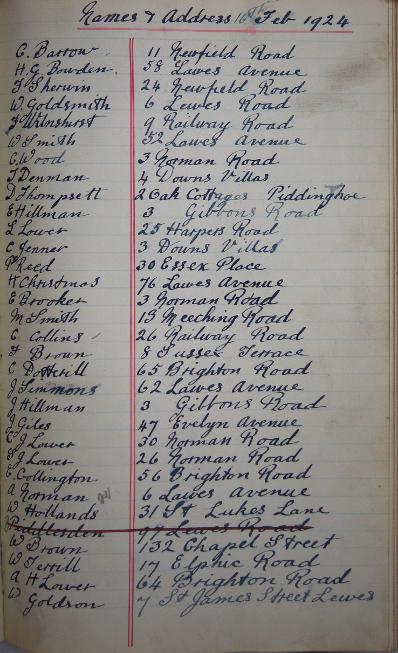

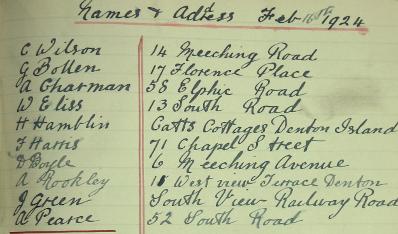
Proposed by Bro. A. Pearce and seconded by Bro. F. Harris. That a meeting of the Social Committee be fixed for February 10th to make arrangements. Carried
Proposed by Bro. D. Thompsett & sec. by Bro. C. Barrow. That Mr Coker be given for of the Loder Hut during the Strike. Carried.
Proposed by Bro. L. Lower & sec. by Bro. W. Smith. That Bro. C. Dotterill be paid his wages for 29th Jan. as it was necessary that he should be in attendance when the Hut was handed over after the strike.
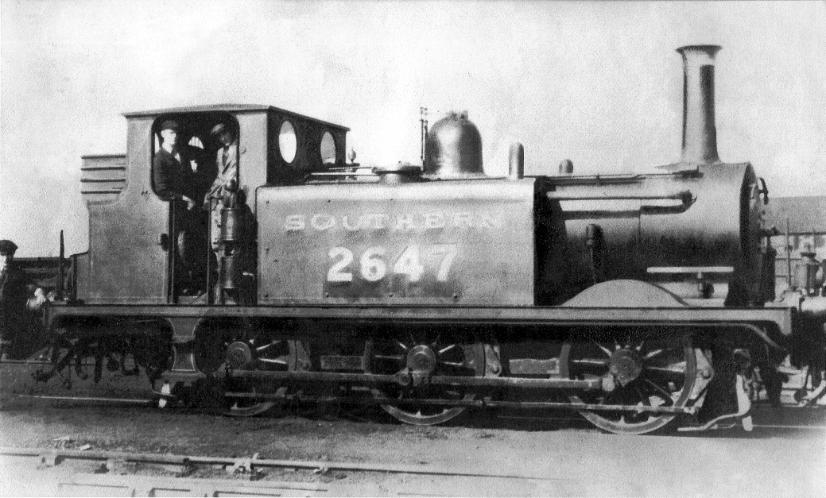
Ron Terrill Collection
Bill Terrill & Alf Charman
Minutes of the Newhaven Branch Meeting
held at the White Hart on Sunday February 24th 1924
Bro. A. Pearce in the Chair
Minutes of Feb, 3rd read and discussed, moved by Bro. L. Lower and seconded by Bro. W. Brown. That they will be accepted as a true record. Carried.
Correspondence read and discussed
Shed representatives requested to take up with the Foreman in connection with several matters including the following.
Passing more men, engine disposal allowance, re-arrangement of working, H. Hamblin's uniform not yet received yet
Minutes of the Newhaven Branch Meeting
held at the White Hart on Sunday March 30th 1924
Bro. A. Pearce in the Chair
Minutes of last meet read and discussed, accepted as a true record.
Arising out of minutes of Feb 24: Secretary reported interview of Shed Representatives with Foreman which was to the effect that, in connection with rearrangement of the duty list he was waiting to hear from the N.U.R.
He had asked for two more firemen to be passed, four more cleaners & taking on four more cleaners.
Correspondence read and discussed
Also Bro. W. Brown's request for back pay for acting as Stores man from October 7th 1919 - to March 8th 1921, which the Foreman disputed.
Minutes of the Newhaven Branch Meeting
held at the White Hart on Sunday April 27th 1924
Bro. A. Pearce in the Chair
9 Members present
Bros. F. Brown, F. Sherwin, P. Reed, M. Smith, W. Brown, L. Lower, C. Dotterill, A. Pearce & D. Boyle.
Minutes of last meeting read and discussed, moved by Bro. L. Lower and seconded by Bro. W. Brown. That they be accepted as a true record.
Arising out of minutes of march 30th questions of duty list and need for the passing of more men was further discussed at considerable length, and seeing that the Foreman would be retiring, it was agreed that these questions should be remain in abeyance. Also agreed that Bro. W. Brown's case should be proceeded with.
Correspondence read and discussed.
Any Other Business
Questions of Shed Representation was debated at some length and also the N.U.R. Loco-men should be approached with the view to calling an open meeting in connection with same which eventually led to a proposition by Bro F. Sherwin & seconded by Bro F. Brown. That a letter be sent to the N.U.R. Asking if they will be in favour of calling an open meeting for Loco-men for the purposed of considering the business of selecting Shed Representatives. Carried.
Minutes of the Newhaven Branch Special Meeting
held at the White Hart on Sunday May 18th 1924
Bro. A. Pearce in the Chair
14 Members present
Bros. H. Christmas, A. Pearce, F. Wilmshurst,
L. Lower, W. Brown, J . Green, E. Brooker,
B. Peddlesden, C. Barrow, F. Sherwin, H. Bowden, C. Wilson, G. Bollen & C. Jenner.
The Chairman opened with a few remarks upon how this Special Meeting was arranged, and the necessity which was considered to render it desirable.
He then read the correspondence between ourselves and the N.U.R. Whose reply was considered as hardly courteous.
Bro. F. Sherwin briefly referred to the position created here by the advice of B. Wild upon which considerable discussion ensued. Pro. Bro. F. Wilmshurst & seconded
Bro. F. Sherwin. That the letter from the N.U.R. Be replied to, pointing out that our communication contained no reference to an open meeting and ask for the names of their nominees if they should desire to appoint any by May 31st.
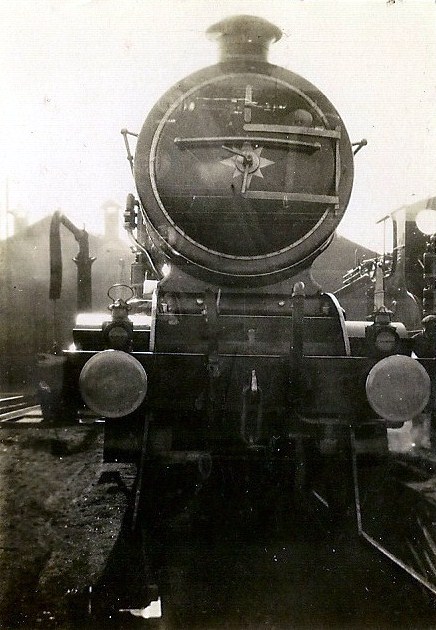
Ron Terrill Collection
Pro by L. Lower & sec by Bro. B. Peddlesden. That Bros. F. Sherwin & F. Wilmshurst be appointed. Carried.
It was the agreed that the May meeting be held upon June 1st instead of My 25th.
Minutes of the Newhaven Branch May Meeting
held at the White Hart on Sunday June 1st 1924
Bro. A. Pearce in the Chair
12 Members present
Bros. A. Pearce, P. Reed, E. Brooker, F. Wilmshurst, C. Barrow, C. Wilson, W. Brown,
L. Lower, G. Bollen, H. Bowden, G. Christmas & D. Boyle
Chairman read minutes of April 27th, proposed by Bro. P. Reed that they be accepted as a true record seconded by Bro. L. Lower. carried
Proposed by Bro. F. Wilmshurst & Seconded by Bro. H. Christmas. That the minutes of the Special Meeting of May 18th be accepted as a true record. Carried
Proposed by Bro. F. Wilmshurst & Seconded by Bro. H. Christmas. That Bros. Boyle & Pearce interview the Foreman, (Brown), in connection with Shed representation, and place all correspondence concerning the same between ourselves and the N.U.R. before him.
Any Other Business
The Secretary reprimanded for not aquaisiting the Branch with the developments in the local Labour Party in the endeavour to secure premisses for a Working Men's Club. The Secretary's reply being, that owning to the very limited interest taken in the past in affairs of Trades Council and local Labour Party by this Branch, there had hardly been sufficent support to keep in touch with such of any other developments. The Secretary apologised for such a lapse of memory, in connection with such an important item.
Minutes of the Newhaven Branch Meeting
held at the White Hart on Sunday June 29th 1924
Bro. A. Pearce in the Chair
10 Members present
Bros. F. Wilmshurst, A. Pearce, L. lower, B. Piddlesden, W. Brown, C. Barrow, G. Bollen, A. Charman,
P. Reed & D. Thompsett.
Minutes of previous meeting read and discussed, proposed by Bro. L. Lower and seconded by Bro. W. Brown. That they be accepted as a true record. Carried.
Arising out of the minutes. The minutes re shed representation discussed at some length. The Secretary reprimanded for not having made it convenient to interview the foreman on the matter, when it was further agreed that the resolution be given effect to.
Chairman leaves the Chair and voice the unfairness of the present position in relation to the of promotion at some other Depots:- supported by Bro. L. Lower.
Bro. F. Wilmshurst informed the Branch that the acting Foreman Brown, had written to ask to come and have a discussion upon the matter of shortage of men with a view to passing of more.
Agreed that Bro. A. Pearce & A. Charman be appointed to interview the Foreman in respect of promotion at this Depot.
It was also generally agreed that the situation here in connection with promotion, and shortage of men to properly caver any special working and illness was entirely due to the late Foreman reporting that he had a redundancy of men after the war.
New member proposed by Bro F. Harris & sec. by Bro. C. Wilson. That T. Potter be admitted. Carried.
Minutes of the Newhaven Branch Meeting
held at the White Hart on Sunday July 27th 1924
Bro. A. Pearce in the Chair
10 Members present
Bros. A. Pearce, L. Lower, B. Piddlesden, A. Charman, W. Brown, C. Wilson, C. Barrow,
F. Sherwin, J. Giles & D. Thompsett
Minutes of previous meeting read and discussed, adopted as a true record on the motion of Bro. B. Piddlesden and seconded by Bro. A. Charman.
Arising out of previous minute re interview with Brown the then acting Foreman upon which Bro. A. Pearce gave a report, in the course of which fact that Brown rather inclined to the view that the N.U.R. should be equally represented upon the L.D.C.
The Secretary (being requested by Bro A. Charman to deputised for him) and Bro. A. Pearce then asked for his (Brown’s) interpretation re “L.D.C.'s” and after a little discussion upon the point he agreed to make further enquires.
In connection with promotion here he remarked that “we had only Holten to thank , this was followed by a very animated controversy as to how the question of setting the Shed Representation upon a constitutional basis should be proceeded with.”
With the following result that. Bro. C. Barrow proposed and Bro. F. Sherwin seconded. That Secretary be instructed to write the N.U.R. With a view to making arrangements for an open meeting for Loco-men being held. After further discussion upon the resolution;
Bro. L. Lower moved and Bro. C. Wilson seconded as an amendment. That seeing (as some of our members were well aware) according to their several conversations, that the N.U.R. Element would he satisfied with one representative, that arrangements be made accordingly instead of an open meeting.
The amendment being lost, the resolution was declared carried.
Bro. F. Sherwin withdrew from his nomination, Br. L. Lower nominated in his place.
Agreed that the recently approved Drivers be given their positions on the motors as soon as possible.
Also agreed that Bro. Ryder of Plastow Branch be nominated for the position of additional organiser.
Bro. B. Piddlesden complained of having to clean half an engine, call 6 or 7 pair of men which often entailed walking distance such as from East side to Norman R.2 in addition to coaling.
Minutes of the Newhaven Branch Meeting
held at the White Hart on Sunday Aug. 31st 1924
Bro. A. Pearce in the Chair
Minutes read and discussed, which were accepted as a true record on the motion of Bro. L. Lower and seconded by Bro. C. Wilson
Matters arising out of the minutes.
Re Open Meeting, over which there was considerable debate all letters in connection with same being read. Bro. C. Barrow proposed & Bro. W. Smith seconded. That Bros. A. Pearce & C. Wilson be elected as delegates to meet those of the N.U.R. with a view to the making of all necessary arrangements for the meeting as evinced in their last communication to us.
Amendment moved by Bro. L. Lower & seconded by Bro. H. Hamblin. That Bros. A. Pearce & C. Barrow be elected as delegates. The amendments being carried, the resolution therefore lost.
Agreed that meeting be held on a Sunday morning, place & time of meeting to be respectively Loder Hut at 10.30
Pro. by Bro. Hamblin & sec. Bro. A. Charman. That Bros. W. Smith & F. Wilmshurst be nominated to stand for election at such Open Meeting. Further agreed that Bro. A. Pearce be nominated for the Chair. Secretary was instructed to reply to letter received.
Bro. A Pearce had to leave the Chair for duty at 8.15 p.m., agreed that Bro. C. Barrow take the Chair.
Correspondence read and discussed
Other Business
Bro. C. Wilson proposed & Bro. E. Brooker. that Secretary & Bro. F. Sherwin interview the Foreman re engine disposal allowance to give effect to the letter from Sectional Council, Secretary which was read. Also to endeavour to draw Foreman attention our recently appointed Foreman confirming in the Shed.
Agreed that should the Secretary not be able to secure the assistance of Bro. F. Sherwin for the interview to get whom ever were available.
Minutes of the Newhaven Branch Meeting
held at the White Hart on Sunday Sept. 28th 1924
Bro. L. Lower in the Chair
Bro. A. Pearce, Chairman, not being present, it was agreed that Bro. L. Lower take the Chair.
Minutes of the meeting of Aug. 31st read and discussed, and on the motion of Bro. W. Brown and seconded by Bro. P. Reed. Accepted as a true record.
Arising out of the minutes
Mins re Open Meeting 2nd paragraph of mins of Aug. 31st.
Motion by Bro. C. Barrow and seconded by Bro. C. Wilson. That the above paragraph be recinded, owing to the Secretaries negligence in failing to I’ve affect of the matter contained therein. Carried, with Bro. P. Reed as the only discentient.
Agreed that Bro. C. Barrow and Bro. L. Lower be given plenary powers to meet Mr. Browning and Mr. Wise of the N.U.R. to deal with the matter of Shed spokesmen.
Further agreed that Bro. F. Brown be appointed as representative of this Branch for the purpose of giving affect of the Railways Act 1921.
Correspondence read and noted
A letter read from Eastbourne calling our attention to the employment of the S.R. of Firemen on the stead of appointed Drivers and therefore requesting our support. agreed that Branch support Eastbourne.
The question of additional lockers deferred.
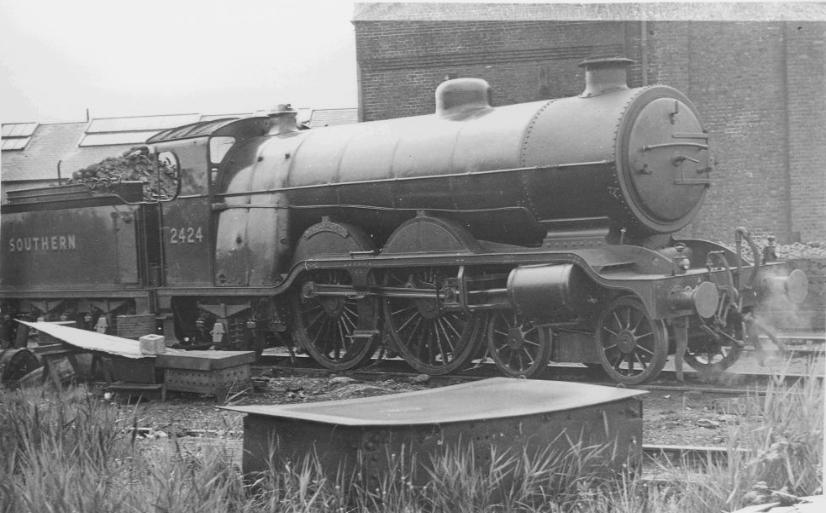
PHOTOGRAPHER UNKNOWN
Bros C. Barrow, W. Brown, L. Lowe, C. Wilson & D. Boyle
Waited outside of White Hart until 7.20 p.m.,
where it was decided to cancel the meeting. meeting canceled 7.20. p.m., November 2nd
- - - - - - - - - - - -
Minutes of the Newhaven Branch Meeting
held at the White Hart on Sunday Nov. 30th 1924
Bro. F. Brown in the Chair
Minutes of Sunday Sept. 23rd read and discussed, proposed that they be accepted as a tee record by Bro. L. Lower and seconded by Bro. C. Wilson.
Letter read from N.U.R. re paragraph 5 of mins of Sept. 28th. Bro. C. Barrow reports that above letter was in accordance with their, (Bros. C. Barrow & L. Lower meeting with Messrs J. Browning & A. Wise)
Letter read from Bro. J.H. Potts of Brighton requesting facilities for transfer to this Branch. Bro. F. Sherwin proposed & Bro. H.G. Bowden seconded. That they he be granted. Carried.
Bro. F. Sherwin proposed & Bro. C. Wilson seconded. That the committee of the Labour Club be approached for facilities to hold the Branch meetings in the Reading & Card Room.
Agreed that a special meeting be held on Sunday December 14th, 7.0.p.m. at the White Hart Hotel for purpose of election of officers for the ensuing year, delegate to the Trades & Labour council, and Secretary to endeavour to report upon. bro. F. Sherwin proposal re Labour Club.
Bro. W. Brown again requests that his claim for arrears of pay be forwarded to the Sectional Council as from Oct. 19th 1919 to March 7th 1921.
Minutes of the Newhaven Branch Meeting
held at the White Hart on Sunday Dec 14th 1924.
21 Members present
Bros. W. Brown, F. Wilmshurst, P. Reed, J. Potter, C. Wilson, C. Barrow, F. Sherwin, M. Smith, B. Piddlesden, F. Brown, C. Jenner, A. Norman, D. Boyle, W. Smith, A. Pearce, L. Lower, W. Terril, E. Brooker, C. Dotterill, A. Charman & H. Bowden.
Chairman reads minutes of November 30th, covering the Special Meeting for Election of Officers.
Election of Officers for 1925
Bro. A. Pearce nominated for the Secretary, but declines. Bro. F. Sherwin nominated for Secretary, but declines. After further discussion the Chair again calls for nomination for Secretary.
Bro. F. Wilmshust nominated, but declined because he could not conscientiously carry out the wishes of the Branch after what was said about the N.U.R. in January last and recent developments.
Bro. C. Barrows proposed & Bro. W. Smith seconded. That Bro. W, Brown be elected.
Chairman in a few remarks pointed out in his opinion, Bro. W. Brown was too young for the position, where upon he declined.
Bros. C. Dotterill & F. Brown where nominated and both declined. Bro. F. Sherwin at this stage endeavoured to point out how regrettable the difficulties of electing the officers were the more especially as a number of the younger members were present.
Chairman calls for nominations for Chair.
Bro. E. Brooker proposed & Bro. L. Lower seconded. That Bro. F. Sherwin be Chairman for the ensuing year. Carried Unam. Bro. C. Barrow Vice.
The Chair again calls for nominations for Secretaryship.
Bro. P. Reed nominates Bro. C. Barrow, but he declines. Bro. W. Smith moves present Secretary. Chair call for a show of hands, 14 against & 5 in favour.
NEWHAVEN
BRANCH
OFFICERS
1925
Chairman Bro. F. Sherwin
Vice Chair Bro. C. Barrow
Secretary Bro. W. Brown
Bro. W. Smith moves present Secretary. Chair call for a show of hands, 14 against & 5 in favour.
Chairman appeals to Bro. F. Wilmshurst to accept the position, to which he agreed providing it was confirmed by a ballot of the whole of the members.
Chair suggests that Bro. F. Wilmshurst, Bro. W. Brown & Bro. D. Boyle be balloted where upon F. Wilmshurst declines. Chair then asks if Bros. W. Brown & D. Boyle will agree upon that course Bro. D. Boyle declines. Bro. W. Brown asked if he will now accept and he agrees, Bro. W. Brown thereby becomes elected for the ensuing year.
Proposed by Bro. W. Smith and seconded by Bro. H. Bowden. That Bro. A. Pearce be Assistant Secretary. Carried Unanimously.
It was further unanimously agreed that the following constitute the Committee.
Bros. A. Pearce, C. Jenner, L. Lower, C. Dotterill, F. Brown, W. Smith & F. Wilmshurst.
Trustees Bros. W. Smith & F. Wilmshurst (D. Boyle) January 14th, 1925, Trustees should be Branch Stewards & Collectors.
Delegates to Trades & Labour Council
Bros. F. Sherwin & W. Brown
Agreement to walking time allowance for Firemen in Loco Yards read and agreed, that Secretary should sign same and return to J.P. Maitland, agreement dated Dec. 13th 1924.
Minutes of the Newhaven Branch Meeting
held at the White Hart on Sunday Dec 28th 1924
Bro. A. Pearce in the Chair
8 Members present
Bros. A. Pearce, D. Boyle, C. Wilson, L. Lower, W. Brown, H. Christmas, W. Smith & E. Brooker.
Minutes of Annual and Special Annual meetings read and discussed,proposed by H. Christmas and seconded by Bro. W. Brown. That they be accepted as a true record. Carried.
Correspondence read and discussed i.e. Passes for widows.
Secretary instructed to advise Bro. F. Brown to take the necessary steps to arrange a meeting of the L.D.C. to point out the aggravation occasioned by the irregular bookings for duty during the Christmas vacation, and to request, thqt if possible, an endeavour be made to avoid a recurrence
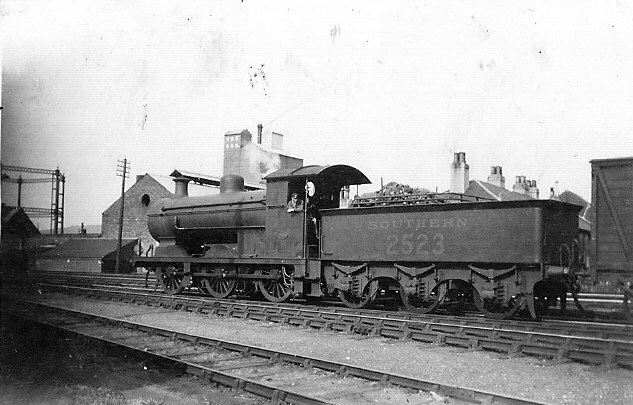
Ron Terrill Collection
Bill Terrill
Minutes of the Newhaven Branch Meeting
held at the Labour Club on Sunday 25th January 1925
Bro. F. Sherwin in the Chair
14 members present
Bros. W. Brown, F Sherwin, A. Pearce, W. Smith, C. Wilson, A. Norman, B. Peddleston, L. Lower, D. Boyle,
A. Charman, H. G. Bowden, H. Christmas, F. Brown & P. Reed.
Minutes of December meeting read and discussed, proposed by Bro. L. Lower and seconded by Bro. W. Smith. That they be accepted as a true record.
Arising from December's minutes, re Brother Christmas complaint re 'back turn' on Boxing Day. Brother F. Brown asked to report of meeting with Mr. Maitland over this matter. He there upon explained all that took place at this meeting Mr. Maitland saying it would not occur again. Brother Christmas satisfied with report.
Correspondence re Army Reserve and Insurance Fund for Signalman, read and discussed.
Correspondence re Bro. Goldsmith Assurance money, read and discussed.
Bro. A. Pearce, nominated as delegate for Assurance Fund for this Branch.
Bro. F. Brown mentioned that Mr. Maitland wished that all Drivers when making overtime to ask for relief as he was afraid that if they did not, we should lose some of our work.
Minutes of the Newhaven Branch Meeting
held at the Labour Club on Sunday 22nd Feb 1925
12 members present
Bros. W. Brown, F. Sherwin, A. Pearce, P. Reed, C. Dotterill, L. Lower, W. Smith, F. Brown, H. Bowden,
D. Boyle, C. Wilson & A. Charman.
Minutes of January meeting read and discussed, proposed by Bro. P. reed nd seconded by Bro. D. Boyle. that they be accepted as a true record.
Correspondence re coupling of engines by Firemen at station and re Bro. C. Wilson’s case of higher duty pay, re nominee for Trades Union Congress read and discussed.
Much discussion arose from Bro. C. Wilson's case, he was willing to accept amount £35, but after much talk of money he has lost, he was advised not to accept it. Secretary was to write to Bro. J.T. Long and give him full particulars.
A new member was enrolled in the person of F.E. Wilde, proposed by Bro. C. Wilson & seconded by Bro. A. Pearce.
Bro. F. Brown was called upon to report of the meeting with Mr. Maitland with his fellow two delegates from N.U.R. The question of trying to obtain men's pay from under a better routine was brought up. Mr. Maitland said he has seen Mr. Dewaney about it and he suggested, a man be at Loco-Shed from 1.0 p.m. To 7.0 p.m. Thursday & from 10 a.m. till 5.0 p.m. Friday but after more suggestion nothing was definitely arranged, Mr. Maitland saying he would let delegates know anything that transpires over this question.
Question óf more lockers for drivers, Mr. Maitland said he was trying to get 23 lockers for 'Regular Drivers', but could not promise any for 'Spare Drivers'. He had taken measurements of lobby space and was arranging for lockers to be placed all round the walls.
Much discussion over Firemen being rated and no driving. Mr. Maitland looking into matter.
More discussion over Walking Times, but no further developments
Minutes of the Newhaven Branch Meeting
held at the Labour Club on Sunday March 29th 1925
Bro. F. Sherwin in the Chair
11 members present
Bros. F. Sherwin, W. Brown, A. Pearce, F. Brown, L. Lower, H. Bowden, P. Reed, G. Barrow, D. Barrow,
E. Brooker & C. Wilson
Minutes of February meeting read and discussed, proposed by Bro. H. Bowden and seconded by Bro. P. Reed. That they be accepted as a true record.
Arising from the minutes of the previous meeting re Bro. C. Wilson's case, all letters to and from Head Office were read and this showed to all present that something was being done in this man's case at last.
Correspondence, re. N.U.R. Programme and Company's proposed reduction read and discussed also correspondence re vaccination of members passing for driving. Members advised by Head Office to refused to be vaccinated if even they were asked to prior to being passed to higher-grade.
Bro. F. Brown asked Secretary if he had written to Bro. J.T. Long to see if we could have Sectional Council report sent to this Branch earlier. Secretary had not written, so was instructed to do so.
Bro. F. Brown reported meetings with Mr. Maitland on following subjects.
Payment of men, matter was taken entirely of Mr. Maitlland hands. Mr. Walker, manager now had charge of this case. One suggestion had been forwarded re payment at Harbour Booking Office, from 2.0 p.m. to 8.30 p.m. Thursday and 9.0 a.m. To 8.0 p.m. Friday.
Lockers for Drivers, this matter in hand, a man has been down and taken all particulars, but the lockers cannot be placed around the wall, owing to bad state of walls, to be placed between window and door upright one above the other, 24 in all.
Three Drivers rates, paper had been sent down requiring turns of firing done by these men this last year no firing done by either. These men expected to be rated shortly.
Much discussion of seniority of Drivers H. Christmas & Browning. Mr. Maitland being under impression that Browning was senior to Christmas. The matter was bought owning to Browning being given Motorman’s job instead of Christmas. Everyting squared up now and Christmas has since worked Motorman, vice F. Masley.
Bro. F. Brown reported that in future all cases by L.D.C. to be sent by letter to Mr. Maitland. He will forward same to Mr. A.D. Jones for his sanction for these case to brought up with Mr. Maitland.
Minutes of the Newhaven Branch Meeting
held at the Labour Club on Sunday 26th April 1925
Bro. F. Sherwin in the Chair
12 members present
Bros. W. Brown, F. Sherwin, A. Pearce, M. Smith, W. Smith, L. Lower, C. Barrow, H.G. Bowden, D. Boyle,
J. Denman, C. Wilson & P. Reed
Minutes read and discussed and proposed by Bro.C. Barrow and seconded by Bro. L. Lower. That they be accepted as a true record.
Bro. F. Brown called upon to report of meeting with Mr. Maitland & Mr. Fuller: Owing to more work being expected and to save any inconvenience to men, it was suggested by Mr. Maitland that he should have an alteration in the 'Links'. He suggested the 'Pilot Link' be a link of its own, three rated Drivers re H. G. Bowden, D. Boyle & G. Woolgar to have three approved Drivers re G. Collins, L. Lower & J. Denham, booked with them as mates. For this way at would save considerable changing about in the turns all round. There was much discussion over this and it was sometime before anything was settled. In the end however Bro. D. Boyle proposed and seconded by Bro. F. Brown that Mr. Maitland's suggestion be accepted. This was carried unanimously.
Next came the question: who should work the 'Specials'. Pro. By Bro. H. Bowden & sec. by Bro. P. Reed. That senior man work the 'Specials'. Carried.
Pro. F. Brown & sec by L. Lower. That the 8.10 p.m. Pilot turn of a Sunday by worked by Approved Drivers and app. Fireman in turn. Carried.
Proposed by D. Boyle & sec by L. Lower. That F. Brown be congratulated on his report.
Minutes of the Newhaven Branch Meeting
held at the Labour Club on Sunday 31st May 1925
Bro. F. Sherwin in the Chair
6 Members present Bros. F. Sherwin, W. Brown, A. Pearce, D. Boyle, F. Brown & H. Bowden
Owing to small attendance, minutes of April meeting were not read.
Correspondence read and discussed.
Meeting closed at 8.0 p.m.
Minutes of the Newhaven Branch Meeting
held at the Labour Club on Sunday 28th June 1925
Bros. W. Brown, A. Pearce, F. Sherwin, L. Lower, P. Reed, W. Smith, G. Barrow, D. Thompsett & A Charman
Minuts of April and May read and discussed and proposed by Bro. L. Lower and seconded by Bro. P. Reed. That they be accept as a true record. Carried.
Arising from the minutes of April meeting, re working of 8.10 p.m. Pilot Turn Sundays, Bro. W. Brown did not think Mr. Maitland was working as per arrangements, that the six youngest Firemen should have a turn firing. Bro. W. Brown advised to see Mr. Maitland.
Correspondence re “Defaulting Secretaries” read.
Minutes of the Newhaven Branch Meeting
held at the Labour Club on Sunday 26th July 1925
Bro. F. Sherwin in the Chair
12 members present
Bros. W. Brown, P. Reed, E. Brooker, A. Norman, F. Sherwin, W. Smith, A. Charman, H. Bowden,
A. Pearce, C. Wilson, F. Brown & G. Dortrill
Minutes of June meeting read and discussed and passed as a true record, Proposed by Bro. H. Bowden and seconded by Bro. W. Smith.
Arising from these minutes re Bro. W. Brown's compliant re 8.10 p.m. Turn Sunday, he explained meeting with Mr. Maitland and this turn is now being worked as per arrangement.
Correspondence re 5% of mens wages, deduction from holidays through illness & Chinese Workers Union plea for help read and discussed.
Pro. By Bro. E. Dotterill & sec by Bro. A. Pearce.
That Mr. Maitland be asked if more cleaners could be passed firing and firemen passed drivers, so as to alleviate the excessive Lewes worked at present. Also that a gas ring could be installed in lobby for heating tea & food of the staff. Also that a light be fitted in sand-hole. The case of more lockers for drivers was also brought up and the L..D.C delegate was instructed to mentioned this to Mr. Maitland.
Minutes of the Newhaven Branch Meeting
held at the Labour Club on Sunday 30th August 1925
Bro. A. Pearce in the Chair in the absence of Bro. F. Sherwin
6 members present
Bros. W. Brown, F. Brown, H. Bowden, A. Pearce, A. Norman & P. Reed
Minutes of July meeting read and discussed and passed as a true record, proposed by A. Norman and seconded by Bro. F. Brown.
Arising from the minutes, re passing of more men. Bro. F. Brown said that when he approached the N.U.R. Delegate to make arrangements for meeting Mr. Maitland on the above subject he was ignored and in consiquence nothing was done in the matter, but the N.U.R. were holding a meeting on this Sunday. It was proposed that Bro. F. Brown find out what their decision was regarding passing of more men, and if of same opinion as us to carry on with the proposition of the July meeting.
Correspondence re – Strike Committee, Transfer of Staff and L.D.C. Conference read and discussion.
Bro. G. Bollen, sent a letter regarding his arrears and asked if he could have time to pay up. There was some discussion over this man's case, and it was decided to give him time, but Secretary instructed not to less than one quarter's subscription as first payment.
Newhaven Loco Department in July 1925
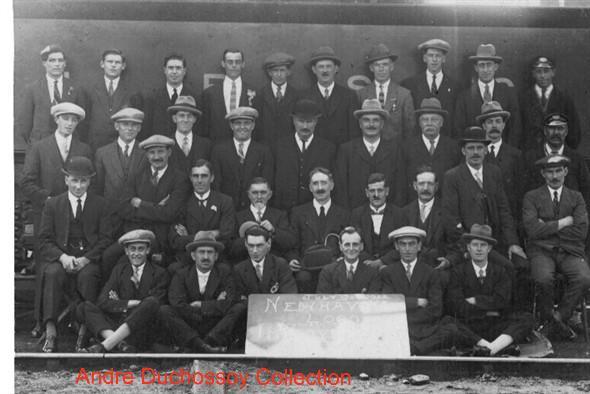
Andre Duchossoy Collection
Loco-men known in this photo are
Back Row L~R Unknown (1), William Terrill, Maurice Smith, Jack Hillman, Unknown (2), Unknown (3), Unknown (4) Unknown (5), Unknown (6) & Walter Ware,
Third Row 3rd from the right James Browning
Second Row first Alf Charman
Front Row 2nd from the left Jack Simmons, Arthur Rookley third from the right.
Info from Our Newhaven website
John Pelham Maitland was the Running Foreman (Shed Master) in charge at Newhaven Shed between 1924-1929 and is thought to be featured in this photo.
After John Pelham Maitland left Newhaven, he went to become the Running Foreman at Littlehampton & Bognor Sheds (1929-1935), and with the opening of new Loco shed at Norwood in 1935, he become the first Running Foreman where remained until 1939. In 1939 he was transferred to Nine Elms Loco Shed where remained until his retirement in 1950.
At this time, Newhaven had about 17 engines based at the shed of various classes, and therefore this photo may only feature Newhaven Managers/Foremen, Drivers and Firemen. Only two loco-men are seen to be dressed in their uniform whilst the others are in their 'Sunday's Best'.
You will also notice the letters of the L.B.S.C.R in the background and no there is no mentioned of the Southern Railway
Other Newhaven Loco men at the shed around this date are:-
Ernie King, A.H. Pearce, D.Boyle, L. Lower, Sam Lower, Ernie Collington, Earn Eacott, W. Brown, A. Leonard, C. Barrow, F. Sherwin, Fred Wilmshurst, E.P. Ettridge, H.G. Bowden, F. Smith, A.G. Wise, Ben Piddlesden
Minutes of the Newhaven Branch Meeting
held at the Labour Club on Sunday 30th August 1925
Bro. A. Pearce in the Chair in the absence of Bro. F. Sherwin
6 members present
Bros. W. Brown, F. Brown, H. Bowden, A. Pearce, A. Norman & P. Reed
Minutes of July meeting read and discussed and passed as a true record, proposed by A. Norman and seconded by Bro. F. Brown.
Arising from the minutes, re passing of more men. Bro. F. Brown said that when he approached the N.U.R. Delegate to make arrangements for meeting Mr. Maitland on the above subject he was ignored and in consiquence nothing was done in the matter, but the N.U.R. were holding a meeting on this Sunday. It was proposed that Bro. F. Brown find out what their decision was regarding passing of more men, and if of same opinion as us to carry on with the proposition of the July meeting.
Correspondence re – Strike Committee, Transfer of Staff and L.D.C. Conference read and discussion.
Bro. G. Bollen, sent a letter regarding his arrears and asked if he could have time to pay up. There was some discussion over this man's case, and it was decided to give him time, but Secretary instructed not to less than one quarter's subscription as first payment.
Minutes of the Newhaven Branch Meeting for January
held at the Labour Club on Sunday Oct 4th 1925
(deferred from Sept 27th)
Bro. F. Sherwin in the Chair.
16 members present
Bros. F. Sherwin, W, Smith, P. Reed, E. Brooker, J. Potter, A. Pearce, H. Bowden, D. Boyle, C. Lower,
F. Brown, W. Brown, J. Green, C. Jenner, W. Terrill, H. Christmas, A. Norman & A. Rookley.
Minutes of August meeting read and discusses and passed as a true record, Proposed by Bro. P. Reed and seconded by Bro. H. Bowden.
Correspondence re L.D.C. Conference read and discussed and arising from this, Secretary was instructed to write Head Office concerning the pamphlets recently received, but having no signature on same.
Arising from August minutes, Bro F. Brown was called upon to report meeting with Mr. Fuller of Brighton four subjects. Three of the subjects re gas-ring in lobby, light in sand hole and light over lower notice case would be taken to Waterloo by Mr. Fuller. The 4th subject re passing of more men, etc. was next dealt with. With regard to seniority with Brighton, Newhaven stands on its own and has nothing to do with Brighton. Work can only be sent from Brighton. Mr. Fuller said he could not make another motor train at Newhaven. Hard job to keep present one. If Newhaven could work Boat Train more economically than Brighton, they would have to work it. By having fireman with a shed man, a driver would be done out of a job. Mr. Fuller said as a first word, that if the men could make any suggestions which would make more work, he would only be too pleased to meet the L.D.C. Delegate and discuss same.
Pro by Bro. A. Rookley that specified time should be made for walking from Lewes station to Shunter's lobby at Lewes Gas yard. It was decided that men could arrange that between themselves.
Pro. By Bro. F. Brown & Sec by Bro. A. Rookley. That Secretary write Mr. Bromley, with regards to promotion for Cleaners and rated Firemen.
Pro by A. Pearce & sec by W. Smith. That Mr. Love be approach and asked of new lockers could be distributed to men entitled to them.
Pro. By W. Smith & sec by A. Rookley that the 'Pilot Link' be put into ordinary link as before. Amendment to this by Bro. F. Brown. That Pilot Link stop as it is. On the vote the amendment was carried.
Pro by A. Pearce & sec by W. Smith. That Sunday night pilot working be restored: an app. Firemen working with a Driver every six weeks. Bro. F. Brown was asked to mentioned this to Foreman also.
Bro. W. Smith brought up another case, this being the working of Drivers in shed on Sunday afternoons. This caused much discussion and it was agreed to defer it to next meeting.
Minutes of the Newhaven Branch Meeting
held at the Labour Club on Sunday 25th Oct. 1925
11 members present
Bros. W. Brown, F. Sherwin, A. Pearce, N. Bowden, W. Smith, C. Collins, F. Brown, P. Reed, A. Norman, W. Ellis & C. Dotterill
Minutes of September meeting read and discussed and passed to be a true record, proposed by Bro. F. Brown and seconded by Bro. A. Norman.
Arising from the minutes, Bro F. Brown asked what replies he had to his letters concerning the transfer of rated men and cleaners and the subject of 'cleaning engines after 8 hrs'. These letters were read. Several members was dissatisfied with reply from Bro. J.T. Long, with regard to transfer of men. Pro. by Bro. F. Brown & sec by C. Dotterill. That Secretary write, long and see if cleaners can transfer to other Depots as Cleaners.
Bro. F. Brown reported meeting with Mr. Love regarding different subjects, two of these having been settled since last meeting re 8.10 pilot on Sunday and men lockers.
Correspondence re 'Retiring Age' & Pension Scheme, read and discussed and Secretary told to send in Branch resolution concerning Retiring Age and adoption of A.S.L.E. & F. Superannuation Scheme.
Secretary instructed to write Long with reference to W. Ellis transfer to Fratton in August 1923, also to enquire if Newhaven come under Brighton in seniority.
Bro. W. Smith proposed that L.D.C. Delegate go to Foreman regarding Sunday Working if Shed Man and Branch Turn.
Minutes of the Newhaven Branch Meeting
held at the Railway Hotel on Sunday 29th Nov. 1925
13 members present
Bros. F. Sherwin, W. Brown, A. Pearce, P. Reed, W. Smith, D. Boyle, J. Denman, C. Barrow, H. Bowden,
A. Rookley, F. Brown & W. Ellis.
Minutes of October meeting read and discussed and passed as a true, proposed by Bro. H. Bowden and seconded by Bro. F. Brown.
Arising from minutes, Secretary was asked what replies he had from Long. These letters were read and seemed satisfactory to those concerned.
Correspondence re L.D.C. Conference read.
Letter from Bro. T. Goodyear, Eastbourne read, asking to support his nomination for 1926 A.A.D.
Bro. F. Brown reported meeting with Mr. Maitland with regard to gas rig in lobby, this cannot be installed. Lowering of light over lower notice case, several members mentioned that they though this had been done. Light in sand-hole, this is being complied with.
Mr. Maitland suggestion on the Sunday working seemed to meet with the approval of all concerned barring W. Smith. He stat that he would see Mr. Maitland on the Sunday Shed turn himself.
The next item on the list for the members to fight out was - suitable room for next year's meetings. Pro. by Bro. F. Brown and sec. by Bro. W. Smith. That the Railway Hotel be accepted on the terms stated by the proprieter - 1/9 per meeting. Carried.
Nominations for Branch Secretary
Bros. W. Brown, C. Dotteril & A. Pearce were nominated in turn, the two first named refused to accept the post, therefore Bro. A. Pearce was proposed by Bro. C. Barrow and seconded by Bro. L. Lower, and this was carried. Thus Bro. A. Pearce will be Secretary from 1926.
Nominations for Ass. Secretary
Bro.W. Brown was proposed by Bro. A. Pearce and seconded by Bro. H. Bowden and he accepted.
Nominations for Chairman
Bros. C. Dotterill, P. Reed, L. Lower, H. Bowden & F. Sherwin were all proposed and seconded for the post, but after much discussion and rumpus Bro. F. Sherwin was urged to take on the office again. Proposed by Bro. A. Pearce and seconded by Bro. P. Reed, he accepted.
Vice Chairman, C. Dotteril was proposed and he accepted.
The following will constitute the Committee
Bros. A. Pearce, L. Lower, W. Smith, C. Dotteril, H. Bowden, C. Barrow & W. Ellis.
The Delegates for Trades & Labour Council were omitted also were the Trustees for 1926. This will probably be executed at next meeting.
on Sunday 27th Dec. 1925
7 members present
Bros. W. Brown, P. Reed, L. Lower, A. Pearce,
C. Barrow, F. Sherwin & D. Boyle.
Minutes of November meeting was read and discussed and passed as a true record, proposed by Bro. L. Lower and seconded by Bro. C. Barrow.
Correspondence re ‘Wages Board’ and L.D.C.
Conferences at Head Office read and discussed.
Two items that were omitted from November meeting were duly executed these being two Trustees for 1926 and two delegates for Trade and Labour Council.
Bros. C. Barrow and L. Lower were elected as the Trustees.
Bros. A. Pearce and F. Sherwin to be Trades and Labour Council delegates for 1926
NEWHAVEN
BRANCH
OFFICERS
1926
Chairman Bro. F. Sherwin
Vice Chair Bro. C. Dotterill
Secretary A. Pearce
Ass. Secretary Bro. H. Bowden
Bro. C. Barrow as the L.D.C. Spokesman reported of meeting with Mr. Maitland regarding Rule Books for spare firemen. Mr. Maitland informed him, that the steps required in the Rule Books were out of print and that was the reason why he hadn't given them to the men entitled to them. New Rule Books were in print and would undoubtedly soon be issues.
Bro. C. Barrow bought a complaint regarding to points at Seaford no dummy is being fixed, Drivers only knowing that point are alright by a ring of a bell and Shunter's tip. The Secretary unfortunately had to leave for work at this point. This case would be seen into undoubtedly.
Minutes of the Newhaven Branch Meeting
held at the Railway Hotel on Sunday 31st Jan. 1926
14 members present
A. Pearce, H. Bowden, W. Eelis, A. Charman, W. Brown, P. Reed, W. Goldson, B. Peddlesden, F. Sherwin,
C. Barrow, S. Lower, C. Wilson, F. Brown & L. Lower.
Minutes of December read and discussed and proposed by Bro. P. Reed and seconded by Bro. L. Lower. That they be accepted as a true record.
Arising from the minutes re “the dummy attached to Seaford points”, Bro. C. Barrow gave his report of his meeting with Mr. Maitland. It was mentioned that Shunters would take the responsibility of the points being on proper position , but it was mentioned that eventually this matter would be seen into.
Another item was bought up by the N.U.R. Delegate re sheets to be provided for Tender Engines. Mr. Fuller was also present at this meeting said that as engines come out of the shops they were being fitted with hooks, to which sheets could be adjusted.
Correspondence re ’Seniority’ from Ramsgate read and discussed.
Correespondence from Lewes Divisional Lbour Party read and discussed, on the question of being affiliated to his party. it was mentioned that this could not be done, as provision for only one affiliation was granted, this being with the Trades and Labour Council.
Letter from Minority Movement was read and discussed.
Bro Ellis brought up the question of Seniority with other depots where men with less service are passed and getting their rate 9/6 per day. He also mentioned transfer paper he and W. Goldson had signed and accepted but h ad heard nothing more about them, it was mentioned, the this seniority question is a very knotty problem, which men with great experience cannot solve yet. W. Goldson proposed the L.D.C. Delegate should see Mr. Maitland regarding their transfers, but both men were advised to the Foreman themselves first.
Proposed by Bro. A. Norman and seconded by Bro. W. Ellis. That the Shed Staff hold a dinner on Good Friday. Bro. A. Rookly put forward an amendment to this, saying that it should be a loco and traffic dinner. On the vote the amendment was lost, therefore it was arranged that a diner for Shed Staff only should be held on this day.
A Dinner Committee was formed and Bro. W. Brown elected as Secretary of this Committee. The Committee are
Bros. W. Brown (Sec.), F. Sherwin, H. Bowden, C. Dotteril, W. Ellis, A. Charman, A. Norman & C. Barrow.
Secretary was instructed to get names of those who intended going before Sunday Feb. 7th, 1926, when a Dinner Committee meeting would be held.
Minutes of the Newhaven Branch Meeting
held at the Railway Hotel on Sunday 28th Feb. 1926
19 members present
Minutes of January red and discussed and proposed by Bro. P. Reed and seconded by Bro. W. Smith. That they be accepted as a true record.
Arising from the minutes re “no dummy on points to points at Seaford”. Bro Barrow shed spokesman did not attend but informed Secretary that final instruction from Mr. Fuller were when Shunter or porter saw points were over and gave hand signal. They accepted responsibility also in respect of sheets for Tender Engines each depot would be supplied with name of depot on them.
Correspondence from Head Office re Conference of Cleaners to be held at Head Office in May, pro. by Bro. W. Brown and sec. by Bro. P. Reed. That Bro. W. Ellis be candidate, Pro. by Bro. S. Lower and sec. by Bro. L. Lower that Bro. A. Lower be candidate, put to the vote and Bro. A. Lower was elected.
Letter from Bro. Goodyear of Eastbourne, read and discussed.
Correspondence re Salvage dispute read and discussed.
Letter from Secretary of N.U.R.,asking for co operation on respect to a show a card week, beginning on March 8th. A lively discussion arose: the Secretary stated, that he had been asked particulars and was informed that every member with a clear card would wear a flag and had informed the Secretary of N.U.R.,that all our members paid quarterly, so if our members agreed to co operate he would be given sufficient flags for each member. Pro. By Bro. F. Brown & sec. By S. Lower. That we cooperate. Pro. W. Godson & sec by P. Reed as an amendment that we ignore them, put to the vote, the proposition was carried.
Nomination for membership,
Pro. by Bro. W. Smith & sec by Bro. A. Charman. That A.C. Dell become a member of this Society.
Pro. by Bro. W. Brown & sec. by Bro. C. Wilson. That G. Bullon become a member of the Society.
Both nominations were carried.
Correspondence from Secretary of Sectional Council Circulars re medical test and turning light engines
out station areas to count for main line turn for 15/- rate, also supervision of shed drivers read and discussed.
Bro. Lower spoke on notice in Shed for positions of permanently appointed Drivers at different depots. Pro. By Secretary. That he & Bro. Lower being the two senior spare Drivers at this Depot that they see Foreman to see if they could make application for the two positions at this depot as stated on notice.
The following was proposed to be placed on the agenda of Shed Spokesmen VIZ.
Pro. by Bro. A. Pearce. That hose pipe be placed on coal stage.
Pro. by Bro. H. Bowden. That men working in Shed on Sunday early turn as well as middle.
Pro. by Bro. W. Ellis. That cleaners work a turn Firing on Sundays.
Pro. by A. Charman. That of any extra work come along on Sundays, that spare men work it .
Pro. by Bro. F. Brown. That spray caps be placed on injectors for the operation of sprays & spray cocks be made workable.
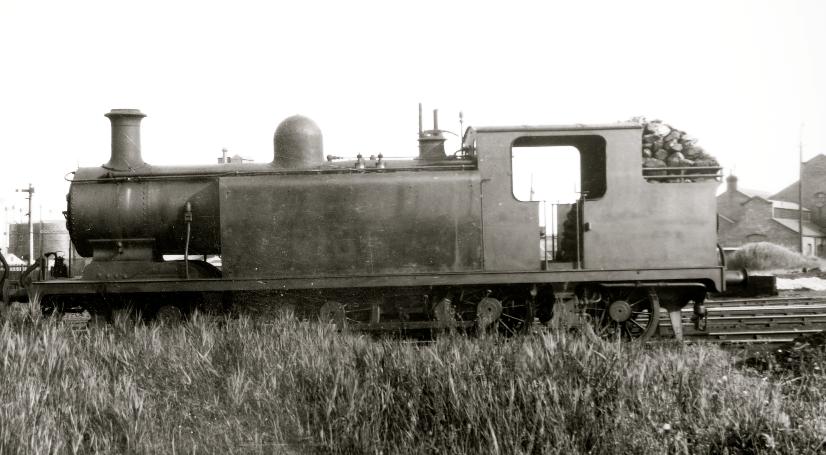
PHOTOGRAPHER UNKNOWN
Minutes of the Newhaven Branch Meeting
held at the Railway Hotel on Sunday 28th March 1926
Bro. C. Dotteril in the Chair
12 members present
minutes of February read and discussed, proposed by Bro. L. Lower and seconded by Bro. P. Reed. That they be accepted s a true record.
Arising from minutes re notice in shed for two permanently appointed drivers, Secretary explained that he and Bro. Lower saw Foreman and he advised them to make application for same and he would give them his fullest backing.
Correspondence from Head Office re circular from General Secretary asking for particulars of long hours worked by enginemen, so as he could forward same on to Ministry of Transport.
Circular re suspension of Shed enginemen read and discussed.
Letter from Ashford Branch asking for support of Bro. Bumstead in forthcoming election for vacancy of Bro. Cordrey on the Executive Committee
Ballot papers for Conference of Cleaners at Head Office issued and signed.
Bros. Ellis & Lower discussed their position with other depots as they said that at other depots junior men than them were firing and they were still cleaning and they would like a transfer to another depot. Secretary advice both to see Foreman before summer serviced started.
Bro. Clarke, asked if it was not the practice to take an hour on last engine. Secretary looked up conditions of Service, but it did not state if such was case in the disposal of engines.
Minutes of the Newhaven Branch Meeting
held at the Railway Hotel on Sunday 25th April 1926
Bro. F. Sherwin in the Chair
14 members present
Minutes of March read and discussed, proposed by Bro. D. Boyle and seconded by Bro. E. Brooker. That they be accepted as a true record.
Arising from the minutes re Secretary advising Bros. Lower & Ellis to see Foreman regarding transferring to another depot, Bro. Lower reported seeing the Foreman and he advised them to make an application and he would send them on.
Correspondence re Cleaners rate of pay from Head Office was read and discussed.
Minutes of No.5 District Council read and discussed.
Letter from Barrow Labour Party asking for funds to provide uniforms for Barrow Labour Band. Bro. D. Boyle advised Secretary to go to members and asked them to contribute to same.
Pro. By F. Brown & sec by D. Boyle. That Secretary write to Organizating Secretary Bro. Barton Wild asking him to pay us a visit with an idea of holding a meeting.
Bro. C. Barrow Shed spokesman gave his report of meeting with Mr. Fuller on agenda of Feb. meeting re
water spike on coal stage, spray in injectors, early turn for Drivers working on Shed on Sundays & Sunday duty all worked.
Proposed. That spare Drivers work on Shed on Sundays and Motor spare Drivers work on motors and spare work to distributed between both links. Proposed by D. Boyle & seconded By L. Lower. That Sunday work be accepted.
Considerable discussion arose owing to the action of N.U.R. Representative, out delegate said it did not think that the delegate of the N.U.R. Had acted in a straight forward manner and hoped that out members would make as little possible for him to deal with until October when we hoped to elect two of our members to stand for the she representation, all member present expressed their disgust at N.U.R. Representative manner and gave full support of our representatives action.
Pro. By F. Harris sec by F. Brown. That shed representative approach Foreman with an idea of having, discussions arrived it being parted in shed for all concerned to see.
Minutes of the Newhaven Special Branch Meeting
held at the Loder Hut on Monday 3rd May 1926
Bro. C. Barrow was voted in the Chair
Correspondence from Head office i.e. Strike in support of the Miners read and discussed.
Election of two representatives for local joint strike committee.
Proposed By F. Harris & seconded by A. Norman.
That secretary & Chairman Bros. A. Pearce & F. Sherwin elected on same. Carried.
Accommodation during strike.
Pro. By D. Boyle. That we have Loder Hut* during period of strike. Carried.
The Secretary spoke on Bro. Boyle's proposition as a very good one and said our members could co-operate with members of other unions in sports and games.
The Secretary then gave a speech in which he urged member to stand by their Executive in the fight for the miners because if the miners went down in wages and conditions it was the railwaymen’s turn next.
Secretary then gave notice of roll call for 9.30. a.m.
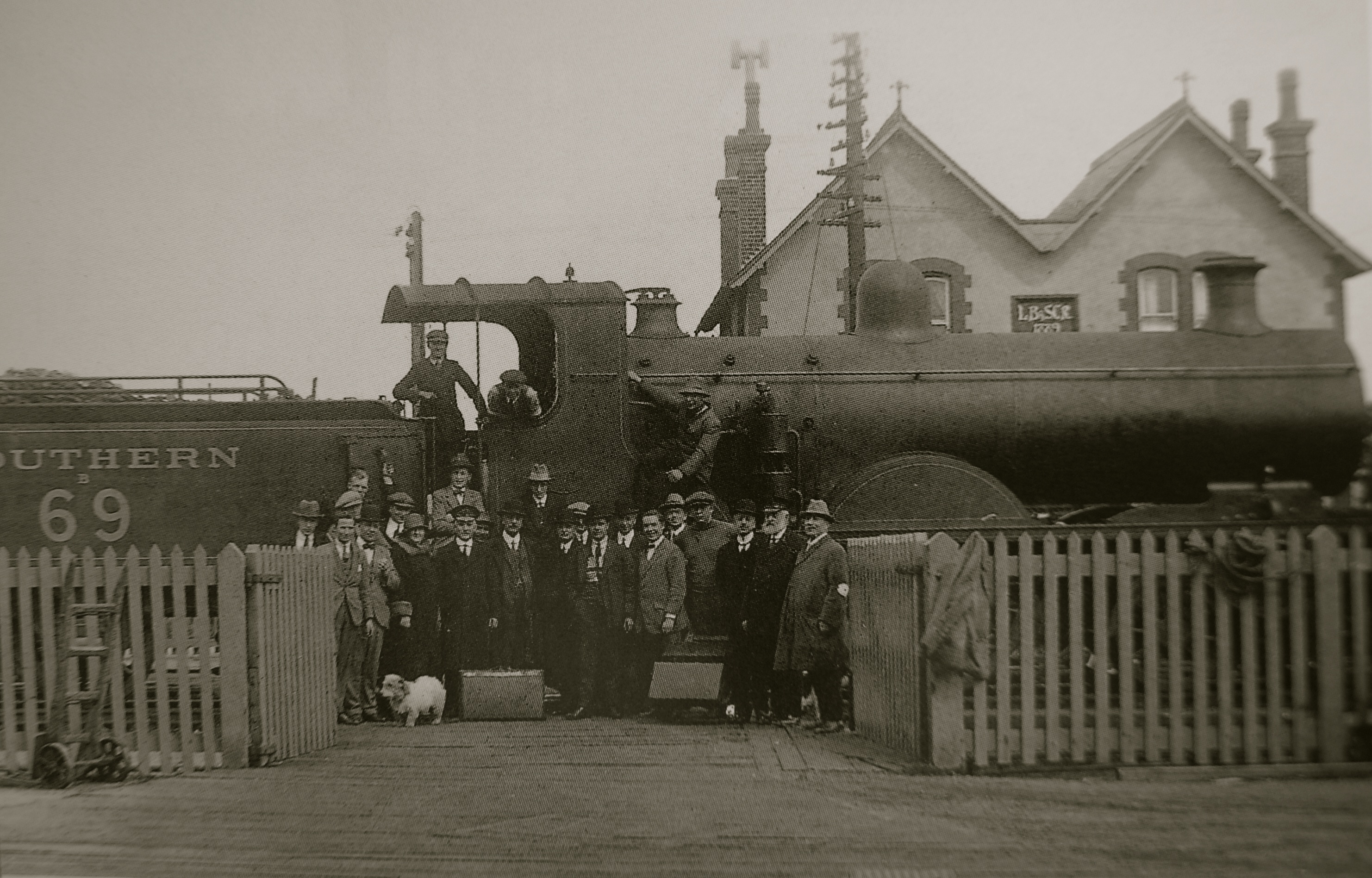
PHOTOGRAPHER UNKNOWN
NEWHAVEN 13th May 1926
B4 Class No. 69 ‘Bagshot’ with Newhaven ‘SCAB’ Enginemen (names not known) who did not strike during the General Strike. With the help of members of the general public volunteering and worked with scab enginemen to help to break the strike.
Newhaven Locomotive Running Foreman John Pelham Maitland (1924 - 1929), carried out driving duties during the General Strike. Whilst he was working a boat train from Newhaven to London Victoria in the Keymer area his engine dropped its plug (His fireman is not know). This meant that the enginemen had allowed the water in the boiler to fall below a dangerous level, and this allowed the heat of fire to melt a copper plug and cause major damage to the engine. This cause major disruption whilst they waited for assisting engine to arrive (from the rear or from the front) with very few engines available on the L.B.S.C.R. to come to their rescue.
Minutes of the Newhaven Branch Meeting
held at the Railway Hotel on the 30th May 1926
15 members present
Minutes of April meeting read and discussed and were proposed by Bro. L. Lower and seconded by Bro. J. Green. That they be accepted as a true record.
Minutes of Special Strike meeting held on May 3rd, 1926, were read and accepted as a true record, proposed by Bro. L. Lower and seconded by Bro. by J. Green.
Correspondence re turns of settlement of strike read and discussed.
Letter re Unions officials meeting with Companies regarding reinstatements and working of minimum of 3 days work at ordinary rate of pay read and discussed.
Letter from Ashford re Bro. Bumstead’s nomination for E. C. read, asking this branch to support him.
Circular read from Head Office re financial position of union read and stead that the greater economy that exist in future with regards to Staff salaries and “Fancy Prices”, etc, and the Branch was asked to forward a resolution to the A.A.D., through its delegate agreeing with this move.
Much discussion took place over this matter and Bro. Wilmshurst pointed out that he would not move a resolution to the effect that it would lower any salaries of the staff if they were being paid at Trade Union rate. More discussion followed and at last it was moved
'That this Branch is agreeable to strictest economy in future in every thing possible, so long as it does not effect staff salaries.' seconded by F. Wilmshurst.
Bro. A. Pearce reported of meeting with Mr. E. J. Coxes on the matter of charges for loan of the Loder Hut during the recent strike. Mr. Coxes said he would leave matter in Secretary's hands and whatever charge members thought should be be made, should be sent to the Miner's Distress Fund, or to the Local Distress Fund. Pro. By C. Barrow& sec by P. Reed. That £2 would be reasonable.
An amendment was moved by Bro. F. Wilmshurst
That £3 should be charged providing the Dockers Union paid half and if any difficultly in obtaining their share, the charge should stand at £2.
The members voted and the amendments was carried.
Bro. A. Charman brought up about the working of special traffic the following week with spare firemen and only one spare Driver and it was state that very likely Brighton men worked them owing to Brighton being on short time and Newhaven all in. Bro. Charman said he would let the matter drop as he said those men who tell, most never came to the meeting room. When the miner's crisis was over, to do his best for the younger men.
Minutes of the Newhaven Branch Meeting
held at the Railway Hotel on the 20th June 1926
Bro. F. Sherwin in the Chair
Minutes of last meeting read and discussed, proposed by Bro. f. Wilmshurst and seconded by Bro. P. Reed. That they accepted as a true record.
Arising from minutes, Bro. Wilmshurst asked what had been done regarding the rent for Loder Hut during the strike. Secretary explained that he had paid 30/- to Mr Coxes and he sent it on to Lady Slesser for the fund for feeding Miners children.
Pro. By F. Sherwin. That Secretary write to Head Office and find out which promotion was in force service or area as there seemed to be a misunderstanding.
Correspondence read and discussed.
Bro. W. Brown asked Secretary to write to Head Office re sliding scale rate and see if cleaners were entitled to any rate retrospective.
Bro. W. Brown asked if shed spokesman could see Foreman re coaling rate of man when performing coaling work 52/-.
Bro. Peddlesden asked what calling up job was and he was advised to see Foreman failing satisfaction to place it in the hands of shed spokesman.
Bro. Peddlesden also remarked that Bro. Wilde was performing work that senior men should be doing.
Bro. Wilmshurst suggested that a spare Fireman should be appointed on the shed with shed Drivers.
Minutes of the Newhaven Branch Meeting
held at the Railway Hotel on the 25th July 1926
Bro. F. Wilmshurst in the Chair
15 members present
Minutes of June meeting read and discussed, proposed by Bro. L. Lower and seconded by Bro. P. Reed. That they be accepted as a true record.
Correspondence re Cleaners rate read also of Promotion of Footplatemen.
Proposed by W. Ellis.
That she spokesman approach Foreman on the subject of spare Fireman acting on the Shed with each shed Driver, seconded by Bro. A. Lower.
Amendment by C. Wood.
That this lay on the table until after the coal strike and times were normal.
seconded by Bro. L. Lower.
Amendment was carried.
Letter from Bro. Goodyear of Eastbourne, concerning his visit to give report on this years A.A.D. and asking Secretary to state a date when he would be pleased to come.
Proposed by Bro. P. Reed and seconded by Bro. C. Barrow. That he should come on Sunday August 8th.
Proposed. That the Loder Hut be acquired for this Special Meeting. Proposed by Bro. C. Barrow and seconded by Bro. W. Smith. That the meeting start at 6 p.m.
Correspondence from Head Office re L.D.C. agreed to leave this over until Bro. Goodyear had attended, when some information on the subject might be given.
Letter from Secretary of Woman's Branch at Brighton asking for members wives of this join their Branch.
Later in the evening Bro. Harris attended and some advice was given re spare Fireman with shed Drivers, another vote was taken on the subject and the votes for proposition and amendment were equal. Chairman gave the casting vote in favour of proposition.
Minutes of the Newhaven Branch Meeting
held at the Railway Hotel on the 25th Aug 1926
Bro. F. Wilmshurst in the Chair
15 members present
Minutes of July meeting read and discussed, proposed by Bro. P. Reed and seconded by Bro. W. Brown. That they be accepted as a true record.
Proposed by Bro. W. Smith and seconded by Bro. P. Reed. That the minutes re Spare Firemen working with Shedmen and shed, lay on table until future date
Correspondence read re Wages Board, discussion and A.A.D. Conference and letter of appeal from General Secretary re Financial Position of Society.
Minutes of the Newhaven Branch Meeting
held at the Railway Hotel on the 1st Oct. 1926
Bro. F. Wilmshurst in the Chair
11 members present
Minutes of August meeting read and discussed, proposed by Bro. L. Lower and seconded by Bro. C. Lower. That they be accepted as a true record.
Arising from minutes re spare Fireman working with Shed Drivers, much discussion arose and in the end Bro Shedman proposed & sec. By S. Lower. That it lay on table until an opportune time.
Correspondence re sliding scale for Cleaners read, also letter from Head Office announcing nominations for next year’s A.A.D., proposed by Bro. H. Stedman and seconded by Bro, S. Lower. That Bro. Wilmshurst be nominated, Bro. Wilmshurst said he could rather some one else be nominated.
Proposed by Bro. F. Wilmshurst nd seconded by Bro. L. Lower. That Bro. Stedman be nominated. Bro. Stedman agreed to stand.
Correspondence announcing a competition in Aid of Assurance and Orphan Funds.
The shed delegate gave his report of meeting with Mr. Fuller ie Lobby accommodation, Mr. Fuller reported the matter to Waterloo and they stated that owing to improvements at Newhaven could be done, but he would have the place swept out each day and scrubbed out twice a week, and he also stated that a sanitary bin was being placed in lobby to place rubbish in.
Bro. Barrow handed in his resignation as shed representative.
Pro. By F. Wilmshurst. That Secretary take up with N.U.R. Secretary with the idea of forming a L.D.C. Bro. C. Barrow seconded. Carried.
Bro. H. Stedman asked Secretary to state fully in his letter to the N.U.R. Secretary the object of an L.D.C. And to call an open meeting of all Loco-men at this Depot to form the same and also to state that an L,D.C. Comprises four representative we were agreeable to nominate two from each union.
Bro. H. Stedmen asked Chairman to as Bro. Barrow to continue as Shed Representative until L.D.C. Was formed, Bro. Barrow said he was agreeable.
Pro. by L. Lower & sec by C. Barrow that H. Hamblin be readmitted to the Society. Carried.
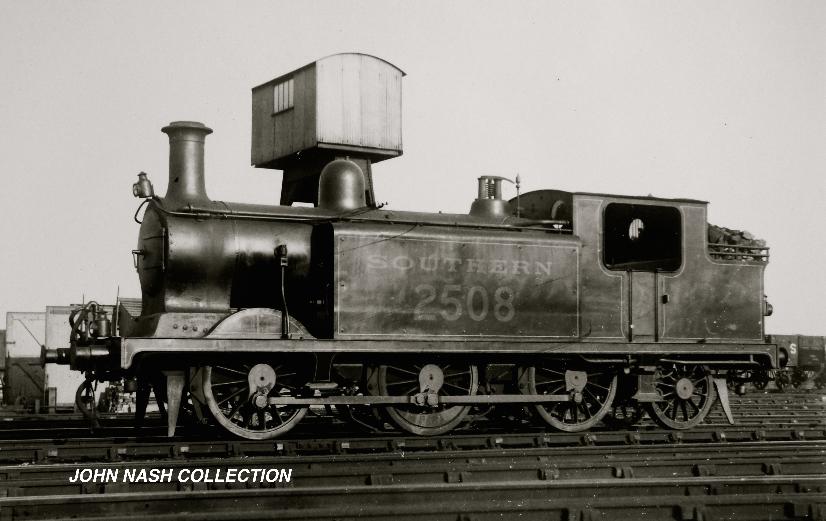
Minutes of the Newhaven Branch Open Meeting
held at the Railway Hotel on Sunday 7th Nov. 1926
The meeting for all grades in the Loco Depot for the idea of forming a L.D.C. At this Depot.
Bro. H. Stedman in the Chair
15 members present
Proposed by Bro. F. Sherwin and seconded by Bro. W. Smith that Bro. H. Stedman take the Chair. Carried Unan
Chairman opened with a few remarks on the benefits of a L.D.C.
Pro. By F. Browning sec by F. Sherwin. That we make application to be formal. Carried.
Agreed that joint application be made. Nominations for Representatives was next called it being a general view.
That it was as opportune time to elect them as there was a good attendance.
Pro. by H Musgrove & sec by P. Lower. That F. Browning be elected,
Pro F. Sherwin & sec. By F. Wilmshurst. That H. Stedman,
Pro. By F. Wilmshurst & sec. By E. Brooker. That M. Smith be elected.
Pro by F. Wilmshurst & Sec C. Woolger. That nominations be elected in Block. Carried unam.
Pro by M. Smith and seconded by Bro. P. Lower. That nominees be elected in block. Carried unanimous
Secretary of N.U.R. stated that they could find a representative for shed staff.
Minutes of the Newhaven Branch Meeting
held at the Railway Hotel on Sunday 28th Nov. 1926
Bro. H. Stedman in the Chair
8 members present
Minutes of October meeting read and discussed, proposed by Bro. W. Smith and seconded by Bro. C. Barrow. That they be accepted as a true record.
Correspondence letter from Secretary of Sectional Council re transferred Drivers firing when a unions were Driving.
Letter read from Chairman of Executive, Bro. Cordrey re recent strike on behalf of miners and report of monies paid out as benefits in strikes since 1919.
Business of Election of Officers for onsuing year be left over till next meeting as it was a general opinion that there was a poor representation of the members here being only 8 present and Bro. Stedmen pro. That election of officer would take place, the Secretary also stated that he made it quite clear that, he assure need it was Annual Meeting, on this meeting notice and also that next meeting take place on December 19th.
Bro. Brown pro. That Shed Spokesman see Foreman to see if better coal could be placed on boat engines.
Minutes of Special Meeting of both Unions to consider application for L.D.C. read and discussed. Proposed by Bro. C. Barrow and seconded by Bro. W. Brown. That they be accepted as a true record.
Secretary stated that he and Secretary of N.U.R. had drafted a letter to Mr. Maitland asking for formation of same and had received reply to the effect that he had forwarded it on to proper quarter.
Minutes of the Newhaven Branch Meeting
held at the Railway Hotel on Sunday 19th Dec. 1926
Bro. F. Sherwin in the Chair
Minutes of November meeting read and discussed, proposed by Bro. F. Brown and seconded by Bro. W. Brown. That they be accepted as a true record.
Correspondence, letter from Head Office re contribution to Miners Wife & Children by the A.S.L.E. & F. read and discussed.
Letter read reporting the Death of Assistant General Secretary Mr. Moore.
Proposed by Bro. H. Stedman and seconded by Bro. F. Wilmshurst. That Secretary send a letter of condolence to Widow and Family.
Bro. C. Barrow gave his report of meeting with Foreman re better coal for engines working boat trains.
Election of Officers
Proposed by Bro. H. Bowden and seconded by Bro. C. Barrow. That Bro. F. Wilmshurst be Chairman for 1927.
Proposed by Bro. E. Brooker and seconded by Bro. F. Brown. That Bro. H. Stedman be Vice Chairman.
Proposed by Bro. A. Rookley and seconded by Bro. H. Bowden. That Bro. A. Pearce, still remain as Secretary.
Proposed by Bro. J. Giles and seconded by Bro. F. Brown. That Bro. W. Brown remain as Assistant Secretary.
The election of the Committee was taken en bloc the following members to constitute the same.
Bros. H. Bowden, J. Giles, C. Barrow, J. Hillman, F. Brown & L. Lower.
Auditors
Proposed by Bro. F. Wilmshurst and seconded by Bro. F. Brown that Bros. C. Wilson and F. Sherwin be auditors for 1927.
Representatives for Trades and Labour Council.
Proposed by Bro. C. Wood and seconded by Bro. J. Giles. That Bros. H. Stedman and F. Sherwin serve on same.
Bro. H. Stedman spoke highly of Secretary's work in the Branch for the past year and hoped he would continue for many years to come, he also spoke highly of Bro. F. Sherwin as Chairman and he said that the past year had been a real test of endurance for Officers and Members alike.
Proposed by Bro. F. Wilmshurst and seconded by Bro. C. Barrow. That meetings be held on Sunday mornings instead evenings at 11 a.m. Carried Unanm
Minutes of the Newhaven Branch Meeting
held at the Railway Hotel on the 30th Jan. 1927
Bro. C. Barrow in the Chair
Minutes of December meeting read and discussed, proposed and seconded by Bro. J. Giles. That they be accepted as a true record.
Correspondence, letter from Head Office re Mr. Moore’s death and branches asked to nominate for position of Assistant General Secretary.
Circulars from Bro. Gregory of Cardiff and Bro. Sweeney of Birmingham asking for their nominations.
Proposed by Bro. F. Sherwin and seconded by Bro. J. Giles. That we nominate Bro. Sweeney. Carried.
Letter from H. O. re County Donegal Railway working Motor Train or Bus with men out of the line promotion. After several meetings of the representatives of the Society & Company in question an agreement was reached, that these trains or Buses be discontinued.
Bro. H. Stedman gave his report on the advancing of the L.D.C. And also read a letter from Mr. Fuller giving names of those elected for Company sides as follows.
Mr. Fuller (Chairman), Mr. Maitland, Mr Rampton & Mr. Manning (Secretary).
NEWHAVEN
BRANCH
OFFICERS
1927
Chairman Bro. F. Wilmshurst
Vice Chair Bro. H. Stedman
Secretary A. Pearce
Ass. Secretary Bro. W. Brown
That a meeting held in Drivers Room on Sun. Jan. 23. 1927 of the men’s side, the following were elected as act as officer for 1927
Pro. By P. Fenner. That H. Stedman act as Secretary, Pro. By M. Smith that F. Browning act as Chairman.
Bro. H. Stedman spoke of the courtesy of Mr. Fuller in writing and giving the names of those on the companies side and also asking if the were satisfied. Bro. Stedman explaining that he thought it was step in the right direction for amicable working of both sides, he also gave full details of how he intended to proceed now he was elected as Secretary and asked if any member had any question to ask on the procedures.
Secretary gave his opinion of Bro. Stedman's procedure and said he thought much more could be gained by peaceful methods than by rush, Bro. F. Sherwin endorsed his remarks.
Any Other Business,
Bro Ellis asked meeting, if the National Agreement was going to be achieved to during the Summer in respect to overtime, also if we could say that there should be any special rate in respect to calling up.
Minutes of the Newhaven Branch Meeting
held at the Railway Hotel on Sunday 27th Feb. 1927
10 members present
Minutes of January meeting read and discussed, proposed by Bro. L. Lower and seconded by Bro. A. Lower. That they be accepted as a true record.
Correspondence, Guaranteed week circular from H. O. outlining the conditions for the resumption of the guaranteed week to start on and from April 11th 1927.
Personal Circular from General Secretary re state of affairs of Society’s Financial and suggestions for economics to bet Society on Financial footing.
Any Other Business, Bro. Brown gave his report on a interview with the Foreman on the question of placing Bro. A. Lower in turn for Sunday Duty with other spare Fireman, also the question of Cleaners re Sunday Duty for the coming summer.
Minutes of the Newhaven Branch Meeting
held at the Railway Hotel on Sun March 27th 1927
Bro. H. Stedman in the Chair
9 members present
Minutes of February meeting read and discussed, proposed by Bro. F. Sherwin and seconded by Bro. C. Lower. That they be accepted as a true record.
Correspondence, circular from Bro. Gregory asking for support for position of Assistant General Secretary. Chairman spoke on behalf of Bro. Squance and asked members to support him for position as Bro. Squance had been a worker for the Society for the Society’s casual and had suffered imprisonment through standing by his principles.
Any Other Business.
Bro. C. Lower moved & sec. By C. Barrow. That short goods link & goods link be placed into one. This led to a lengthy debate and in the end it was agreed to be on the agenda for the next meeting as it was thought that something might happen in the mean time to alter things.
Bro. Ellis asked if Secretary could say if good Friday coming on a man holiday counted in.
Bro. Ellis also brought up the position of cleaners regarding firing duties on Sundays and it was agreed, place item on agenda for next meeting as it was thought that it would be better to go into matter after resumption of the guaranteed week.
Minutes of the Newhaven Branch Meeting
held at the Railway Hotel on Sun April 24th 1927
Bro. H. Stedman in the Chair.
7 members present
Minutes of March read and discussed, proposed by Bro. C. Barrow and seconded by Bro. H. Stedman. That they be accepted as a true record.
Owing to very poor attendance Bro. C. Barrow moved that minutes be referred back to if attendance increased.
Correspondence re Executive Personal Circular and re Pro of Firelighters in the Line of Promotion for Fireman at New Cross read and discussed.
Any Other Business, a complaint was brought forward re Shedman Fenner ordering Bro. Potter to inspect engine B436 on Friday April 10th to ascertian if there were any defects. a lengthy discussion took place and in the end it was moves by C. Barrows Sec by H. Clarke 'That LDC be called together to deal with case in dispute.
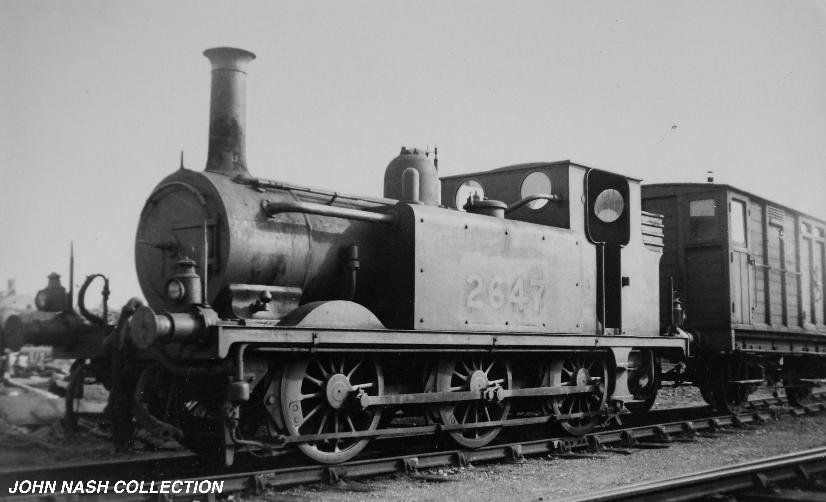
Minutes of the Newhaven Branch Meeting
held at the Railway Hotel on Sun May 29th 1927
Bro. F. Wilmshurst in the Chair
10 members present
Minutes of April read and discussed, proposed by Bro. C. Barrow and seconded by Bro. F. Sherwin. That they be accepted as a true record.
Correspondence from Head Office re Trades Union Bill read and discussed.
Circular from Secretary of Sectional Council re Coupling and uncoupling of engines on passenger trains. Pro. by F. Sherwin & sec. by J. Giles. ‘ hat this meeting is against the practice of coupling and uncoupling of engines and instruct Branch Secretary to interview each member not present and get opinions and forward resolution to Secretary of Member side of Sectional Council.
Minutes of March meeting which were deferred owing to poor attendance read and discussed, proposed by Bro. F. Sherwin. That Bro. C. Lower proposition regarding of both goods links be placed on the agenda of Secretary of men’s side L.D.C. seconded by Bro. J. Giles.
Pro. by F. Brown 'That LDC also look into the matter of Sunday turns of firing of B. Peddlesden, Goldson & Ellis.
Ballot papers for position of Assistant General Secretary distributed and filled in.
Minutes of the Newhaven Branch Meeting
held at the Railway Hotel on Sun June 26th 1927
Bro. F. Wilmshurst in the Chair
10 members present
Minutes of May meeting read and discussed, proposed by Bro. F. Chiles and seconded by Bro. J. Giles. That they be accepted as a true record.
Arising from the minutes re coupling and uncoupling engines on trains by enginemen. Secretary reported that he had been to each member and all were unanimous against, also Secretary for enginemen N.U.R. had also signed circular for his members against it.
Bro. Stedman reported his interview with Foreman re merging both goods link into one, also firing turns of duty for Bros. Goldston, Ellis and Piddlesden, and Foreman said if spare Fireman agreeable he would bring them into line with others. Bro. Brown gave his report on canvass with other five Fireman and all were unamonios against it.
Pro. by E. Collington & sec. by J. Hillman. 'That goods link stay as they are.' Carried.
H. Hamblin wished to become a member. Pro. by C. Collins & sec. by A. Pearce. Carried unanmious. Bro. Stedman pro and E. Collington seconded. ‘That a welcome be given to Hamblin into the Society'.
Secretary reported that Bros. Bridger and Bollen had lapsed in payment of contributions and
that he had sent a letter to Bro. Bridger aquainting him of his position.
Pro. by C. Barrow. 'That Secretary action be ordered and that a letter be sent to Bro. Bollen'. Seconded by E. King.
Correspondence Circular R.N.T.C. read and discussed.
Letter of appeal for late Mr. Moore’s widow, read and discussed.
Letter from Head Office re include contributions read and discussed.
Minutes of the Newhaven Branch Meeting
held at the Railway Hotel on Sun July 31st 1927
Bro. F. Wilmshurst in the Chair
6 members
Minutes of June read and discussed, proposed by Bro. L. Lower and seconded by Bro. F. Sherwin. That they be accepted as a true record.
Arising from minutes re Bro. Bridger lapsing in contributions. Pro by Bro. F. Wilmshurst and sec. by L. Lower. 'That he be given one month to pay sufficent contribitutions to bring him into benefit.' Secretary also reported interview with Bro. Bollen and he promised to pay, but had not done so up to this date.
Bro. Andrews (Brighton Branch) A.A.D. delegae gave his report on this years meeting of the Annula Assembley of Delegates. Bro. Andrews gave an able and interesting report of the whole proceedings and said he would like this Branch to send this resolution to H.O.
'That this Branch wants to know when this year's A.A.D. resolutions are going to be put into operation'. Pro. by F. Sherwin & sec by L. Lower. That Secretary send this resolution to H. O.'
Bro Sherwin proposed a vote of thanks to Bro. Andrews for coming here and giving us such an able report.
Bro. Wilmshurst also thanked Bro. Andrews and said that since he had been a member of the Society he had never heard such an able report and also that this years A.A.D. have done great work regarding the Society Financially.
The Secretary also thanked Bro. Andrews and also apologised for such a small attendance, it was not because it was not advertised, he was sure that those members not present had missed an interesting morning and he was rather surrised as some had said that thery were looking forward to Bro. Andrews coming over as they had several questions to ask.
Bro Andrews said it gave him great pleasure to come over and he also said it before ever member to take a deep interest in the Society's affairs as these were troublesome ahead
Minutes of the Newhaven Branch Meeting
held at the Railway Hotel on Sun August 28th 1927
Bro. F. Wilmshurst in the Chair
10 members
Minutes of previous meeting read and discussed, proposed by Bro. L. Lower and seconded by Bro. J. Green. That they be accepted as a true record.
Arising from the minutes re Bro. Bridger, secretary gave a report on interview with Bro. Bridger, who said he would pay 10/- this month and rest of contributions next month. Agreed that it stand over till next meeting to see if Bro. Bridger paid up.
Correspondence letter from Head Office re rebate to enginemen on income tax read and discussed.
Letter from Lincoln branch urging Sectional Councils and L.D.C.s to take action regarding seniority question, read and discussed.
Letter from General Secretary asking for support in tickets in an estimating competition in aid of Orpham Funds.
Letter from Bro Watson E.C. Member asking for the calling of meeting on Sunday 25th, on the Propaganda Campain to get lapse members in Society again. Considerable discussion arose over this and it was agreed in the interests of economy, that we should go to Brighton and save speaker coming here, agreed that the matter be left in Secretary's hands and that he write to speaker to arrange for us to to Brighton to hear him.
Any Other Business, Bro. Ellis asked if anything was going to be done regarding the claims at this depot and how we stand regarding seniority with Brighton, as he thought there were Junior men to him with regular job firing. Secretary explained that according letter he had received from Secretary of Sectional Council, we stood on our own and Secretary also referred to minutes of a earlier date of an interview of a shed representatives on the same question with Mr. Fuller and he said we were only under Brighton for administration.
Considerable discussion arose, Bro. Elliss saying that on several occassions he had made applications for transfer and he had never heard any more of them. It was agreed that as Bro. Boyle was going to see Foreman on his position with Brighton to letter the matter stand over till next meeting.
Minutes of the Newhaven Branch Meeting
held at the Railway Hotel on Sun Oct. 2nd 1927
Bro. F. Wilmshurst in the Chair
8 members present
Minutes of Sept meeting read and discussed, proposed by Bro. L. Lower and seconded by Bro. H. Bowden. That they be accepted as a true record.
Arising from minutes re Bro. Bridger contributions, Pro. by F. Sherwin and sec by H. Bowden. 'That Secretary serve final summonds on Bro. Bridger and telling him that he would have to come into benefit or his name would be erased from books.
Letter from Secretary of Labour Club asking for delegates from this branch to attend a special meeting on October 12th of all interested bodies with an idea of getting more commodious premises at Newhaven.
Letter from Head Office announcing result of second ballot for Assistant General Secretary, Bro. Squance being successful.
Letter from Bro Andrews of Brighton, asking members of this L.D.C. to attend a conference on Sunday Oct 23rd at Labour Club at 3 p.m., with an idea of getting into touch with different shed's working and procedures.
Circular from H.O. re proposal from managers of the Irish Railways for drastic cuts in locomens wages of that Country. Considerable discussion arose, and the General Secretary advising all lapsed members to pay up their contributions and become 100% strong as the English Railway managers were watching this and it might have strong reprecussions in this Country.
Any Other Business, Bro. Charman moved and seconded by Bro. Clark. 'That Secretary of L.D.C. see Foreman re certain actions of foreman on business apertaining to Cleaners and asking him if he would communicate with him and that Bro. Brown be asked to attend next meeting.
Missed from minutes
Proposed that Bros. H. Bowden and L. Lower attend meeting at Labour Club re more commodious premises.
Minutes of the Newhaven Branch Meeting
held at the Railway Hotel on Sun Oct. 30th 1927
Bro. H. Stedman in the Chair.
10 members present
Minutes of previous meeting read and discussed, proposed by Bro. F. Sherwin and seconded by Bro. L. Lower. That they be accepted as a true record.
Arising from minutes, Chairman asked if Bro. Bridger had answered final summonds re contribuations. Secretary explain that Bro. Bridger brought himself into benefit this week.
Correspondence from Head Office re new rules and scales of contributions read and discussed
Nomination Forms for 1928 A.A.D. and also Sectional Council for this area, it was decided not to nominate for A.A.D., but to support Bro. Andrews of Brighton who was standing again.
Another Other business Pro by C. Barrow. ‘ hat Secretary of L.D.C. to see Foreman re dating of Privilege Tickets as it was that present method very inconvenience.
Minutes of the Newhaven Branch Meeting
held at the Railway Hotel on Sun Nov. 27th 1927
Bro. F. Wilmshurst in the Chair
12 members present
Minutes of previous meeting read and discussed, proposed by Bro. J. Giles and seconded by Bro. E. Brooker. That they be accepted as a true recorded.
Arising from minutes asked if Secretary L.D.C. had given report on interview with Foreman re Privilege Tickets, he being absent it was deferred till next meeting.
Correspondence from Head Office re forms for Political Levy, also circular from General Secretary re Executive ignoring the amended rule No.12 reducing their number from twelve to nine, made by the 1927 A.A.D. also jeopardising the General Secretary and the constitution of the Society. Considerable discussion arose and in the end it was moved by Bro. F. Sherwin and seconded by Bro. H. Bowden. That in the event of this year’s A.A.D. having to reassemble, that the Secretary forward this resolution on to our delegate Bro. Andrews. That the amendment of Rule No.12 be strictly enforced ad that
NEWHAVEN
BRANCH
OFFICERS
1928
Chairman Bro. F. Wilmshurst
Vice Chair Bro. W. Elliss
Secretary Bro. A. Pearce
General Secretary suspend payment to Executive Committee until has been put into operation.
Any Other Business, Bro. Potter asked if Branch could move for link owning to his dismissal, he said he was quite willing to go into any grade and he did not mind where he wanted resolved. 'That Secretary see foreman on his behalf, also Secretary write to Bro. Andrews asking information re the nine Cleaners dismissed at Brighton their terms of service etc.
Bro. Goldstone asked if he was in order in making out application claiming seniority with Brighton as he knew their were Junior men to him doing firing duties.
Bro. Goldstone was advised to in application and report at meeting any answer he might receive.
General Secretary suspend payment to Executive Committee until has been put into operation.
Election of Officers
Proposed by Bro. F. Sherwin and seconded Bro. H. Bowden. That Bro. F. Wilmshurst remain as Chairman.
Proposed by Bro. W. Goldstone and seconded by Bro. A. Lower. That Bro. Ellis be Charman.
The amendment was lost and Bro. Wilmsurst was elected as Chairman
Proposed by Bro. J. Giles and seconded by Bro. C. Barrow. That Bro. Pearce as Secretary.
Proposed by Bro. F. Sherwin and seconded by Bro. W. Gladstone. That Bro. Ellis be Vice Chairman .
Proposed b Bro. E. Collington and seconded by Bro. A. Lower. That Bro. Brown be Assistant Secretary.
Proposed by Bro. F. Wilmshurst and seconded by Bro. H. Bowden. That Bro. J. Giles be Assistant Secretary.
Bro. J. Giles was duly elected Assistant Secretary.
Auditors Bros F. Sherwin and C. Wilson
Committee
Bros A. Lower, W. Goldstone, E. Brooker, W. Brown, C. Barrow and H. Bowden, all elected en bloc.
Bros H. Stedman and F. Sherwin were elected as representative of Trades and Labour Council.
Any Other Business,
Moved by Bro. C. Barrow and seconded by Bro. F. Sherwin. That the date of next meeting be Sunday December 18th, owing to the Sunday after Christmas being the 1st of New Year.
Bro. Potter asked if Branch could move for link owning to his dismissal, he said he was quite willing to go into any grade and he did not mind where he wanted resolved. 'That Secretary see foreman on his behalf, also Secretary write to Bro. Andrews asking information re the nine Cleaners dismissed at Brighton their terms of service etc.
Bro. Goldstone asked if he was in order in making out application claiming seniority with Brighton as he knew their were Junior men to him doing firing duties.
Bro. Goldstone was advised to in application and report at meeting any answer he might receive.
Minutes of the Newhaven Branch Meeting
held at the Railway Hotel on Sun Dec. 18th 1927
Bro. H. Stedman in the Chair
10 members present
Minutes of Nov. meeting read and discussed, proposed by Bro. F. Sherwin and seconded by Bro. C. Barrow. That they be accepted as a true record.
Arising from October minutes re interview with Foreman on Privilege Tickets, Bro Steadman gave his report and said that the Foreman said he had no jurisdiction over the filling in of tickets it was his orders.
Correspondence read and discussed re Executive and General Secretary and Head Office asking for the new Executive.
Any Other Business,
Place of meeting, proposed by Bro. C. Barrow and seconded by Bro. W. Clarke. That we still hold them at the Railway Hotel. Carried
Pro. by H. Steadman & sec. by F. Sherwin. 'That Secretary's action be endorsed for paying Bro. Potter out of work pay from contributions owing to H. O not forwarding it on.
Pro C. Barrow & sec. by E. Collington. 'That Bro. Stedman interview Foreman re the state of the fire place in Driver’s and Fireman’s lobby.
Nominations for L.D.C.
Proposed by Bro. F. Sherwin and seconded by Bro. L. Lower. That Bro. H. Stedman and W. Smith stand.
Proposed by Bro. F. Sherwin. that Bro. Stedman stand and seconded by Bro. L. Lower.
Proposed by Bro. C. Barrow. That Bro. Clarke stand and seconded by Bro. H. Stedman
Bros H. Stedman and Clarke were duly elected
Voting papers for Sectional Council received and filled in.
Discussion arose re Good Friday Dinner, resolved that it stand over till next meeting
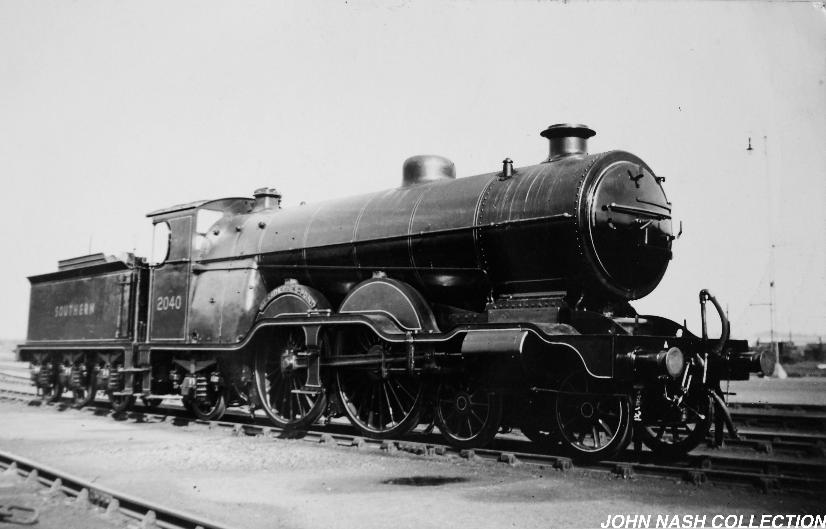
Minutes of the Newhaven Branch Meeting
held at the Railway Hotel on Sun Jan. 29th 1928
Bro. F. Wilmshurst in the Chair
7 members present
Minutes of Dec. meeting read and discussed, proposed by Bro. A. Lower and seconded by Bro. C. Barrow. That they be accepted as a true record.
Correspondence circular from Head Office announcing Official Candiates for forthcoming elections of Sectional Councils and General Secretary calling on all members to vote for Official Candiates.
Circular announcing representatives for 1928 A.A.D.
Nominations for Trades Union Congress, Labour Party Conference
Form from Head Office asking for agent for Insurance Section, proposed by Bro. C. Barrow and seconded by Bro. A. Lower. That Secretary be Agent. Caaried.
Secretary gave report of meeting of L.D.C. in Brighton on previous and also meeting Bro. Barton Wilde and his expressing a desire to come over to our Branch on sunday Feb. 26th. Considerable discussion arose, it was moved by C. Barrow & seconded by W. Elliss. 'That we hold a meeting at 2.30 p.m. sharp and Secretaryto post a notice in time so we get as members to attend as possible
Bro H. Steadman gave his report on interview with Foreman re condition of grate in Drivers and Fireman's lobby. The foreman saying he would not have a new put in but he would have it repaired.
Letter from from Bro. F. Sherwin Branch auditor giving his report on the Branch audit of the Branch books and explaining there correct and good order.
Minutes of the Newhaven Branch Meeting
held at the Railway Hotel on Sun Feb. 26th 1928
Bro. F. Wilmshurst in the Chair
Minutes of Jan. meeting read and discussed, proposed by Bro. H. Stedman and seconded by Bro. C. Barrow. That they be accepted as a true record.
Correspondence circular from Head Office re road transport bill before the House of Commons, giving Railway Companies process on the roads, read and discussed.
Bro. H .Steadman L.D.C. Secretary gave his report on interview with Foreman re disfunction of L.D.C. and reverting back to shed representation.
Chairman called for nominations
Proposed by Bro. F. Sherwin and seconded by Bro. C. Barrow. That Bro. H. Steadman stand
Proposed by Bro. W. Goldstone and seconded by M. Smith. That Bro. W. Clarke stand.
Bro. H. Stedman was elected.
Any Other business, Bro Clarke asked if Shed Representative could see Foreman on rostered turn 8 a.m. on Saturday's resolved, that shed Representative interview foreman on Matter.
Bro. Barton Wilde gave us a most interesting address on our present position as loco-men re electrification and also the 'Road Power Bill' for railways now before parliament, also present position of society.
Pro. By H.Stedman & sec. By W. Smith. That the best thanks of meeting be given to Bro. Barton Wilde for the interesting address he had given.
Secretary also thanked members for the good attendance as he said it it gave him encouragement as showed they took a keen interest in the organisating.
Pro. By C, Lower & sec. By E. Brooker. That a report of this meeting be sent to the Locomotive Journal for publication.
Minutes of the Newhaven Branch Meeting
held at the Railway Hotel on Sun March 26th 1928
Bro. F. Wilmshurst in the Chair
12 members present
Minutes of Feb meeting read and discussed, proposed by Bro. L. Lower and seconded by Bro. A. Rookley. That they be accepted as a true record.
Arising from the minutes re Bro. W. Clarke resolution Shed Reresentation interviewing Foreman on 8 a.m. turn on Saturday's. bro. Steadman gave an explanation as to why he did interview Foreman and Bro. clarke withdrew his resolution.
Correspondence letter from Secretary of Labour Club re adjourned conference of new building for Labour resolved, that Secretary attend.
Voting papers for Executive Committee, Secretary did a letter canvasing on behalf go Bro. Lewery of Brighton.
Any Other Business, bro Goldsden brought his case before the Branch re transfer to another Depot considerable discussion arose and it was moved by A. Rookley & Sec. by L. Lower. ‘ hat Shed Representative interview Foreman at the first opportunity.
Bro. Boyle brought his case forwarded re Driver Pearce altering holidays and doing running work that he should have being senior, Considerable discussion arose and it was moved by Bro. L. Lower and seconded by Bro. C. Barrow. That shed representative interview Foreman on the matter.
LOCOMOTIVE JOURNAL
APRIL 1928
NEWHAVEN BRANCH
A meeting was held on February 26th, with Bro. Wilmshurst in the chair, when we had a good attendance,
and the pleasure of our Organizer, Bro. Barton Wild. After our branch business was disposed of, Bro Wild
gave a very interesting address on the present position of our organisation, also the Bills now before
Parliament to give powers to Railways for road transport. Many questions were asked and satisfactorily
answered. The best thanks of the meeting were accorded to Bro. Wild for the interesting time he had given
us. I should like to thank all members for their attendance, as it shows they are taking a keen interest in our
organisation. Bro. Andrews*, our A.A.D. delegate also came to over to see us.
A.PEARCE, Branch Sec.
* Bro. Andrews of Brighton Branch
Minutes of the Newhaven Branch Meeting
held at the Railway Hotel on Sun March 26th 1928
Bro. F. Wilmshurst in the Chair
8 members present
Minutes of March meeting read and discussed, proposed by Bro. F. Sherwin and seconded by Bro. W. Clarke. That they be accepted as a true record. Proposed by Bro. F. Sherwin and seconded by Bro. W. Clarke. That minutes of March stand over till next meeting owing to Shed Representative not being present.
Chairman read a letter he has received from Head Office re defaulting secretaries and calling a meeting of the commmitte to see Branch Secretary carried out rules. Chairman said he did not think he had anything to fear at this Branch and so he did not think it necessary.
Minutes of the Newhaven Branch Meeting
held at the Railway Hotel on Sun May 27th 1928
Bro. F. Wilmshurst in the Chair
13 members present
Minutes of March and April read and discussed, proposed by Bro. L. Lower and seconded by Bro. W. Brown. That they be accepted as a true record.
Arising from March minutes re Bros. Boyle, Goldstone and Ellis. Bro. Stedman gave his report with Foreman, a lengthy discussion took place. Proposed by Bro. L. Lower and seconded by Bro. A. Norman. That the meeting was satisfied with Bro. Stedman’s report.
Correspondence read and discussed, letter from local Labour Party asking for delegates to attend a meeting in connection with a Flower Show in August. Proposed by Bro. L. Lower and seconded by Bro. J. Giles. That Bros. Clarke and Sherwin attend.
Any Other business, Branch Secretary brought to branch notice re Bro Bridger arrears. Pro. by M. Smith & sec. by Sherwin. That Secretary erease his name from books. Pro. by H. Steadman & Sec. by C. Barrow. 'That he not be re-addmitted for a period of over a 12 months.
A lengthy discussion next took place re the System of Seniority.
Voting papers were issued for delegates for Trade Union Congress and Labour Party Conference and also Society’s Balance Sheet.
Minutes of the Newhaven Branch Meeting
held at the Railway Hotel on Sun Nov. 25th 1928
Bro. F. Wilmshurst in the Chair
12 members present
Minutes of May minutes read and discuss, proposed by Bro. L. Lower and seconded by Bro. W. Clarke. That they be accepted as a true record.
Arising from minutes re Bro. Bridger not being allowed to join Society for 12 months. Secretary reported having talk with Bro. Bridger and he express a desire to rejoin. Pro. by A. Rookley & sec. L. Lower. ‘ hat he be allowed to join forthwith on the payment of the usual fee.
Correspondence re 2 1/2% read and discussed. Letter from Secretary of Local Trades Council asking this branch to still maintain affiliation to same. Secretary explained that he attended last meeting of the above and there was no meeting last month to get the sanction of members he paid affliction fee. Proposed by Bro. A. Rookley and seconded by Bro. C. Lower. That the Secretary’s actions be endorsed.
NEWHAVEN
BRANCH
OFFICERS
1929 -30
Chairman Bro. W. Clarke
Vice Chair Bro. F. Wilsmhurst
Secretary Bro. A. Pearce
Circular from General Secretary and phamplets re Non Unionist read and discussed.
Receipt for October returns read.
Election of Officers for 1929
Chairman
Proposed by Bro. C. Lower and seconded by Bro. W. Brown. That Bro. J. Giles be Chairman.
Proposed by Bro. F. Wilmshurst and seconded by Bro. A. Rookley. That Bro. W. Clarke be Chairman.
Bro. Clarke was duly elected.
Vice Chairman
Proposed by Bro. Rookley and seconded by Bro. C. Lower. That Bro. Wilmshurst be Vice Chairman.
Proposed by Bro. W. Brown and seconded by Bro. A. Lower. That Bro. J. Giles be Vice Chairman.
Bro. J. Giles was duly elected.
Nominations for Secretary was asked as present Secretary gave in his resignation, no one was nominated so Bro. A. Rookley moved & sec. by C. Lower.
‘That election of Secretary be held over until next meeting and Secretary summons members to same.
Assistant Secretay
Proposed by Bro. L. Lower and seconded by Bro. Goldsen. That Bro. A. Rookley be Assistant Secretary.
Bro. A. Rookley was duly elected.
Proposed by Bro. A. Rookley and seconded by Bro. Goldsden. That Bros. F. Wilmshurst and W. Brown be Auditors. Carried.
Committee
Bros A. Lower, C. Lower, C. Barrow, W. Brown, F. Wilmshurst and B. Piddlesden all elected en bloc
Proposed by Bro. F. Wilmshurst and second Bro. W. Goldsen. That Bros Rookley and Pearce be delegates to Trade Council. Carried.
Proposed by Bro. F. Wilmshurst and seconded by Bro. B. Piddlesden. That December meeting be held December 23rd. Carried.
Any other Business, Pro. By A. Rookley & sec. By C. Lower. That shed spokesman see Foreman on the question of coal seeing we have all Kent at this depot and other depot get nearly all hard and Welsh.
Pro. By F. Wilmshurst & sec. By A. Rookley. That shed spokesman also see Foreman on question of payment the present system being inadequate to mens turns of duty.
Pro. By C. Lower & sec. By A. Rookley. That darts be placed on engines.
Secretary brought before members Bro. Hamblins areas, Pro. by F. Wilmshurst & sec by J. Giles 'That Secretary send final notice through post to Bro. Hamblin’s private address. Carried
A.A.D. voting papers issued and filled in.
Minutes of the Newhaven Branch Meeting
held at the Railway Hotel on Sun Dec. 23th 1928
16 members present
Minutes of the Annual Meeting of November 25th were read and discussed, moved by Bro. F. Wilmshurst and seconded by Bro. W. Brown. That they be accepted as a true record.
Arising from the minutes, the Secretary reported, having wrote to Fireman H. Hamblin and also having a talk with him in respect to his arreas to the Society's funds. It was proposed to leave this matter in the Secretary’s hand untill Sunday December 30th 1928, in the hopes of retaining his membership.
Moved by Bro. Wilmshurst & Sec. by Bro. C. Lower. 'That after Dec. 30th the Society's rules must be enforced in respect of same. Carried.
The Secretary reported that Bro. P. Bridger had rejoined the Society, this being the outcome of the motion made at the November meeting.
Bro. H. Stedman now gave his report on the meeting of the Shed committee with Loco Foreman. After a long discussion the coal and payment of wages problem, it was moved by Bro. F. Sherwin & sec by Bro. Wilmshurst. 'That the Branch give a vote of thanks to Bro Stedman for his good work in respect of same.
Bro. Stedman responded, saying he was only glad to be of service to his mates.
It now come to the appointment of a Secretary, this being held over from the November meeting. moved by Bro. F. Sherwin & sec by Bro. Wilmshurst. 'That our present Secretary still stand.' This was carried unanimously after a few speeches by several Bros., Bro. A. Pearce again accepted the office.
Moved by Bro. Stedman & sec by Bro. Boyle.
‘That nominations be taken at this meeting for representatives on the Shed Committee, and that the Secretary notify the N.U.R. in respect to same.
This being carried. Bro. F. Sherwin proposed & Bro. Boyle seconded. 'That Bros. Stedman & Wilmshurst stand as represenatives.' Carried.
Other Business
A letter was read from Bourneville Branch in respect to our Brothers involved in the accident at Charfield. Both the Driver and Fireman are in ill health over the accident and the Bourneville Branch wishes to send them away for a holiday to recuperate and are asking for financially, a list being enclosed for subscriptions for same.
Our Secretary tok the list around ant was justly responded to it also being expressed that our two Brothers have a speedy recovery.
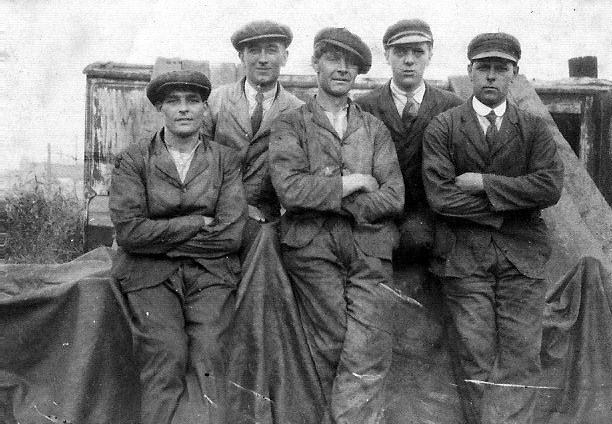
Ron Terrill Collection
Back Row L~R: Sam Lower (22.3.1918) & F. Wilde (29.1.1925)
Front Row L~R: Ben Piddlesden (9.02.1920), Charlie Green (13.7.1925) & Ernie Collington (18.5.1918).
Ernie Collington later transferred to Seaford's Motormen depot and retired in 1968
*Ben Piddlesden, is recorded in the Newhaven Branch minutes of 1941 he was still employed as a Cleaner, and
appears in the minutes in 1946, and was an ASLEF Representative on the Newhaven Loco Shed Committee. He along
with Seaford Motorman E.J. Watson perished at a train crash at London Bridge in 1948.
All loco-men in the above photographed were members of the Newhaven Branch of A.S.L.E.F.
Minutes of the Newhaven Branch Meeting
held at the Railway Hotel on Sun Jan. 27th 1929
Bro. J. Giles in the Chair
10 members present
Minutes of last meeting were read, moved by Bro. E. Eacott and seconded by Bro. W. Brown. That they be accepted as a true record.
Arising from the minutes from the last meeting, the Secretary reported having received 10/- in respect of Bro. H. Hamblin's arrears and has had a notification from him to the affect that he would endeavour to pay off the remainder and keep his card card in future.
The Secretary reported having an interview with Mr. J. Pargeter of the N.U.R. Re another delegate to stand on the Shed Committee in place of J. Browning. Bro. Pargeter said he would inform Bro. Pearce in the course of a day or so. This matter was left in the Secretary hands for him to settle.
The Secretary reported having sent 16s. 6d. to Bourneville Branch to help our Bros. involved in the Charfield accident.
Correspondence
A letter was read from the Newhaven Labour Party asking if this Branch would care to nominate anyone for the forthcoming election to the Urban District Council. Bros. Pearce and Stedman were asked but both refused.
A letter was read from Head Office in respect to new Contribution Cards coming into circulation on that they be charged 1d each.
The Secretary brought forward for inspection the receipt for this Branch’s funds to Head Office.
Letter was read asking for nominations for A.A.D. for districts 6, 8 & 9, also from the Labour Party asking for delegates to attend the Annual Conference and Congress. It was moved that both these lay on the table.
Letter was read from the Ashford Branch re Bro. Hopper’s dismissal from the Company for passing signals at danger at Cannon Street and asking for this Branch’s support in getting his reinstatement. Bro. H. Stedman moved and seconded L. Lower. That the Secretary write the Ashford Branch for further particulars.
Any Other Business.
Application for membership W. Ware, Fireman asks for membership to this Branch for Protection Benefit. Moved by Bro. E. Eacott and seconded by Bro. M. Smith. That he be accepted. Carried
Bro. B. Piddlesden asked why Bro. W. Hollands does not sign on or off in the book provided for that purpose in loco shed. This was left over till next meeting for Secretary to report if Bro. W. Hollands is still in the lines of promotion or is put upon the company's books as a labourer.
Bro. A. Charman asks for respirators to be found when working in Sand Hole. This matter was left over for Bro. Stedman to interview Foreman about.
Minutes of the Newhaven Branch Meeting
held at the Railway Hotel on Sun Feb. 24th 1929
Bro. W. Clarke in the Chair
18 members present
Minutes of last meeting were read, moved by Bro. L. Lower and seconded by Bro. W. Brown. That the be passed as a true record.
Arising from the minutes of the last meeting, Secretary reported that Bro, Hamblin has not paid up his arrears which now amounts to 16/-. This matter was left with the Secretary to see if he can pay up. Failing this, it was moved by Bro. F. Sherwin & sec by Bro. E. Collington. 'That the rules of the Society be enforced.'
The Secretary reports having received a letter from Bro. J. Pargeter of the N.U.R. In respect to the Shed Committee. He state that Bro. J. Browning is their choice an hoped that everything would be "A1" in the future. After a lengthy discussion it was put to the vote as to our acceptance of same voting in favour 8, voting against 3, absentees 6. Carried.
The local Labour Party wrote the Secretary re Bro. Stedman’s nomination for the U.D,G, and that it must be through the various unions concerned. Moved by Bro. F. Sherwin and seconded by Bro. C. Lower. That this Branch nominates Bro. H. Stedman for election to the N.U.D.G.
In respect to the dismissal of J. Hopper of Ashford. Bro. E. Eacott explained the matter and the letter was left on the table.
Bro. J. Lower moved & Bro. W. Brown sec. That we apply for more hard coal again. Bro. H. Stedman stated that he was waiting for Bro J. Browning to go and interview the Foreman in respect of same.
Correspondence
The Secretary reported and brought forward for inspection the receipt of this Branch’s funds to Head Office. Carried.
Letters were read from Head Office in respect to Clause 72 of appeals Jan 24th 1929, hoping that members will exercise great care in never to pass signals etc at danger and to be very careful whilst running during foggy weather.
Also all defects in the signalling apparatus and signals to be instantly reported.
A letter was read in respect to the Women Section of the Society hoping to see more branches open and all women asked to enrol.
Letters were read from Head Office in respect to Clause 72 of Appeals January 24th 1929, hoping that members will excerise great care care in never to pass signal etc at danger and to be very careful whilst running during foggy weather. also all defects in the signalling apparatus and signal to be instantly reported.
A letter was read in respect to the Women Section of the Society, hoping to see more branches opened and all Women asked to enrol.
A letter was read from the Bourneville Branch in respect to the magnificent response of members in helping our two Brothers involved at Charfield and sending £214. 18s 4d. after these two Brothers have been sent away for a fortnights holiday on being paid £55 in cash between them, it leaves £100, and the Bournevill Branch wishes to have it put to good use.
Bro. F. Sherwin moved and Bro. Goldson seconded that it be presented to the Orphan Fund.
As an amendment. Bro. W. Brown moved and Bro. E. King seconded. That it go to the Legal Fund.
Put to the vote, the amendment was carried.
Any other Business.
Bro. S. Lower asks information in respect to Driver W. Bishop & Bro. W. Ware working upon other engines and than their own. A discussion ensued and found it best to play a waiting game.
Bro. F. Sherwing moved and Bro. E. Collington seconded. That the next meeting be held on Sunday March 24th instead of the 31st as being Easter Sunday.
Minutes of the Newhaven Branch Meeting
held at the Railway Hotel on Sun March. 24th 1929
Bro. W. Clarke in the Chair
7 members present
Minutes of February meeting read and discussed, proposed by Bro. F. Wilmshurst and seconded by Bro. C. Barrow. That they be passed as a true record.
Matters arising Secretary read P.C. from Head Office re reply of our resolution on money over from Fund collected on behalf of our two members involved in the Charfield accident.
Correspondence, Secretary produced for inspection receipts for February contributions.
Owing to small attendance no business was transacted so a little discussion took place on the Charfield accident.
Minutes of the Newhaven Branch Meeting
held at the Railway Hotel on Sun April 28th 1929
Bro. W. Clarke in the Chair
9 members present
Minutes of March meeting read and discussed, proposed by Bro. L. Lower and seconded by Bro. P. Reed. That they be accepted as a true record.
Correspondence letter read from Bro. Squance re Bro. Wilmshurst accident.
Circular from General Secretary re alteration and date of A.A.D. owing to General Secretary.
Letter from Secretary of Newhaven Labour Party requesting assistance re Local Election, Secretary wrote to Head Office and received quota from Political, which was handed to Secretary of Local Labour Party.
Letter read from Bro. Godfrey of Guildford requiring support for Executive Committee.
Circular from Head Office re passing signals at danger, this was fully discussed from all points of view.
Any Other Business. Bro. Sherwin moved & Bro. Reed seconded. 'That letter be sent to Bro. Wilmshurst expressing regret over his recent accident and wishing him a speedy recovery and hoping he would be with us again in the near future.
Bro. Green brought his case forward re passing signal at danger on March 31st at Newhaven Harbour Station. This was fully discussed and Bro Green handed in his claim in writing.
Bro. L. Lower moved Bro. F. Sherwin seconded. 'That Branch Secretary pay Bro. Green three days suspension.'
Secretary brought before the notice of Bro. Hamblin arrears, moved by F. Sherwin & sec. by L. Lower. 'That he be given one week in which to bring himself into benefit.
Minutes of the Newhaven Branch Meeting
held at the Railway Hotel on Sun May 26th 1929
Bro. W. Clarke in the Chair
14 members present
Minutes of April meeting read and discussed, proposed by L. Lower and seconded by Bro. F. Sherwin. That they be accepted as a true record.
Arising from minutes from the last meeting, Bro. Wilmshurst, thanked Branch for sympathy shown to during his illness.
Correspondence read and discussed, Secretary read receipt for April returns also suggestions for this years A.A.D.
Arrising from suggestions of this year’s A.A.D. Exeter moves. That the coligny Welch distinguishing arrows were fitted to distant signals be enforced, and Brghton suggested that Mackintosh’s in lieu of over coats. The meeting moved the Secretary write to Bro. Andrew of Brighton , telling him to support the two suggestions mentioned.
Any Other Business. Bro. Peddlesden brought a call forward re the Foreman putting Bro. Elliss a junior to him out firing. Pro. by W. Elliss & sec by E. Eacott. ‘ That Bro. Stedman interview Foreman and asked Foreman when extra turns come would he strictly adhere to seniority.
Bro. Hamblin arrears Secretary reports that he had brought himself into benefit.
Minutes of the Newhaven Branch Meeting
held at the Railway Hotel on Sun Sept. 1st 1929
Bro. J. Giles in the Chair
10 members present
Minutes of May meeting were read, proposed by Bro. P. Reed and seconded by Bro. W. Ware. That they be accepted as a true record.
Discussion on minutes, moved by Bro. H. Stedman and seconded by Bro. T. Denman. That Bros. Andrews and Barton Wilde be asked to attend October meeting.
Correspondence read and discussed, also receipts for June and July read and inspected.
Any Other Business, letter from Bro. Denman which was copy of one handed to Foreman re booking of Driver Brighton on 936 turn on August Bank holiday, a lengthy discussion took place. Proposed by Bro. T. Denman and seconded by Bro. P. Read. That Shed Representative see Foreman on the matter. Carried
Proposed by Bro. Charman and seconded by Bro. Peddlesden. That Shed Representative see Foreman on state of lobby.
Moved. That Secretary write Secretary of Sectional Council re rates of pay and conditions for Bro. Ware and driver Bishop.
Minutes of the Newhaven Branch Meeting
held at the Railway Hotel on Sun Oct 27th 1929
Bro. W. Clarke in the Chair
9 members present
Minutes of the last meeting read and discussed, moved by Bro. J. Giles and seconded by Bro. P. Reed. That they be accepted as a true record. Carred.
Arising from the meeting, owing to a favourable reply from Sectional Council, Barton Wild Organiser was not asked to attend this meeting.
Bro. Andrews of Brighton also sent word to say, he was working on this day so would not be able to attend.
Letter was read from Mr. J.T. Long Secretary Sectional Council employees side, re our Bro .W. Ware’s and Driver W. Bishop rate of pay. Owning to us reply to Bro. Stedman's last letter to Mr. Long, it was moved that Bro. Stedman write again asking for a quick reply to same, re the above matter, so as to arrange a settlement.
State of Driver's lobby. This matter was reported to have been attend to and the Loco Foreman. Agreed to have it cleaned more regularly.
Correspondence
Receipt read re this Branch’s Funds to Society’s Head Office.
A letter was read from Head Office re A.A.D. decision in regards to the 2 1/2% reduction in wages.
A letter was read from Head Office in respect of men working on Sentinal Steam Wagons, Petrol Cars etc. It was pointed out that men other than Loco-men were being employed to drive these. But owing to our Head Office negotiations only Loco-men were to have this class of work in future.
A letter was read and discussed from our Head Office re Fireman J. Evans of Saltly L.M.S. in respect to his dismissal.
A letter was read from Head Office re Non Unionist on Irish Railways and fully discussed.
Books of draw tickets were received from Manor House Hospital, Golders Green and it was decided to entertain them.
A letter was read from our local shed representatives re the changing of links by Bro. Gifford and Driver Crulse. This matter has been settled with the Foreman.
Other Business
Application for membership, an application for membership to this Branch was received from Fireman G.S. Bollen, for Protection Benefit. After a lengthy discussion, Bro. J. Giles moved & Bro. C. Goldson seconded. 'That he be accepted.' Bro. J. Giles moved.
'That Fireman Bollen be warned as to the nature of keeping a clear card, on that this Branch will be compelled to refuse any further admission to this Society to him.' Carried.
Nominations for Shed Delegate, moved by Bro. J. Giles and seconded by Bro. Sherwin. That this matter lay on the table till next meeting.
Bro. J. giles moved and Bro. F. Sherwin seconded. That the meeting day be altered from the last Sunday to the 3rd Sunday of every month, and also the nomination of a Branch Collector to assist the Secretary. Carried.
Bro, M. Smith open a discussion on the coal supplied to this depot. Moved by Bro. M. Smith & seconded by Bro. P. Reed. 'That the Shed Delegate again ask for hard and other coal in equal proportions.
Minutes of the Newhaven Branch Meeting
held at the Railway Hotel on Sun Nov 24th 1929
Bro. W. Clarke in the Chair
16 members present
Minutes of last meeting read, moved by Bro. J. Giles and seconded by Bro. W. Ware. That they be accepted as a true record.
Discussion on the minutes, it was moved that Bro. M. Smith’s resolution re coal still stand.
Bro. H. Stedman next read his report in respect of Bro. W. Ware’s position from Bro. J.T. Long, Secretary, Sectional Council. All correspondence relating to his matter was read. Bro. Ware responding as to his present position. moved by Bro. A. Rookley and seconded by Bro. J. Hillman. That Bro. Stedman carry on with this matter.
Receipt was read from Manor House Hospital in respect to draw tickets sold.
Other Business
A letter was read from Head Office re our A.A.D. Conference in respect to the 2 1/2% reduction in wages held on October 1st, 1929, also Special Meeting held on the same date.
Election of Officer for 1930
Shed Representative, this being left from October meeting, Bro. P. Reed moved. That Bro. A. Rookley be representative for 1930, no seconder.
Bro. F. Sherwin moved and Bros M. Smith and A. Rookley seconded. That all Officer and Committee be as for 1929. This was carried unanimously.
Moved by Bro. H. Stedman and seconded by Bro. W. Ware. That Bro. A. Rookley be appointed a collector to assist the Secretary. Carried.
Moved by Bro. P. Reed and seconded by Bro. M. smith. That place of meeting be the same. Carried.
Bro. A. Pearce next spoke on the illness of Bro. C. Wilson who has had to go away for six months.
Bro. W. Brown moved & Bro. J. Giles seconded. 'That a list be taken around the shed and also that all men who care to give 3d per week towards this fund to give their names to Bro. D. Thompsett. Bro. H. Stedman added. ‘ hat all men feeling so disposed may subscribe to more than the said 3d.'
Bro. A. Pearce moved, 'On behalf of the Branch, the Branch's sympathy go to Bro. & Mrs. Wilson. Bro. H. Stedman moved. 'That the Secretary write to Bro. & Mrs Wilson to that effect. Carried.
Bro. H. Stedman next spoke about on the formation of a Mutual Aid Society. This matter was debated to a certain length, but was left over to a future date before forming one.
Minutes of the Newhaven Branch Meeting
held at the Railway Hotel on Sun Dec 22nd 1929
Bro. W. Clarke in the Chair
10 members present
Bros. W. Clarke, E. Eacott, C. Barrow, F. Sherwin, P. Reed, M. Smith, H. Steadman, A. Lower, A. Pearce
& A. Rookley.
Minutes of last meeting read, moved by Bro. H. Stedman and seconded by Bro. F. Sherwin. That they be accepted as a true record. Carried.
A discussion on minutes of the last meeting. In respect to the 3d per week contributed by member in aid of Bro. C. Wilson, it was moved by Bro. C. Barrow & seconded by Bro. P. Reed. ‘ That Secretary post a notice in Shed to the effect that an open meeting would be called to try and form a Mutual Aid Society, at the Railway Hotel on the following Sunday the 29th December 1929.
A reply was read from Bro. C. Wilson to Secretary's letter from the Branch wishing him a speedy recovery.
Correspondence, accident at Lewes East Sidings. The Secretary reported having informed Head Office of this accident which involved our Bro. F. Brown, also a reply was read from Head Office stating that if required a representative would be sent down to the inquiry.
A letter of a later was read was read stating the Southern Railway would hold an inquiry and not the Ministry of Transport.
Secretary receipt was read of this Branch’s return to Head Office
A letter was read from Head Office in respect to National Health Assurance
A letter was read from the 'Women Section'', Head Office re the Annual Reception and extending a hearty invitation to all.
Bro. H Stedman reported on his further inquiries into Bro. W. Ware's & Driver Bishop's case, and read a letter he had received from Bro. J.T. Long. This case was left over.
Bro. H. Stedman moved & Bros. Sherwin & Barrow seconded. 'That the Secretary write Mrs. R.T. Clarke a letter of condolence extending to her this Branch's deepest sympathy in the lost of her husband.
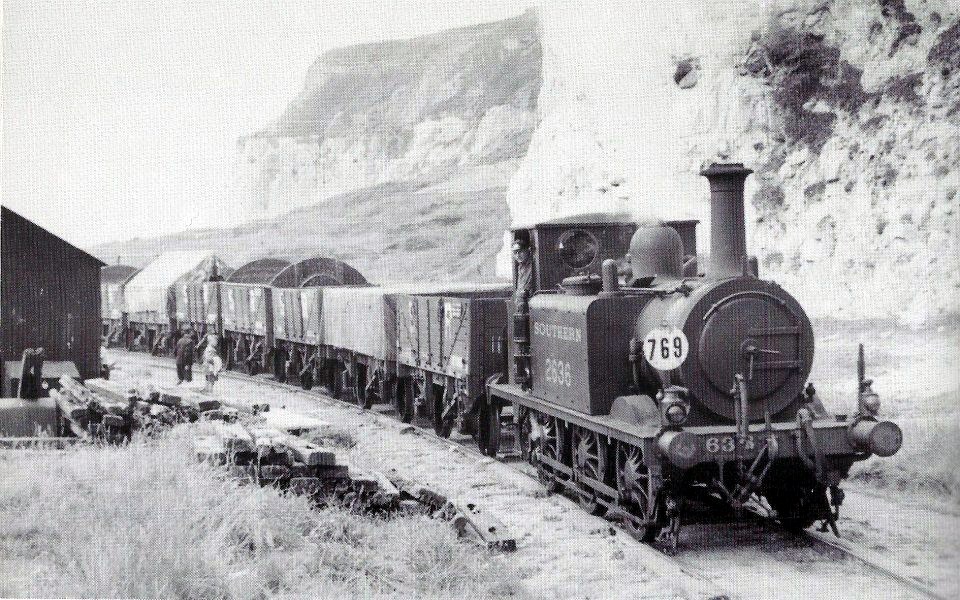
PHOTOGRAPHER UNKNOWN
Minutes of the Newhaven Branch Meeting
held at the Railway Hotel on Sun Jan. 26th 1930
Bro. W. Clarke in the Chair
14 members present being
Bros. W. Clarke, A. Pearce, J. Giles, A. Rookley, M. Smith, D. Boyle, W. Ware,
C. Lower, W. Brown, E. Collington, S. Lower, W. Ellis, E. King & H. Steadman.
Minutes of last meeting read and discussed as true record. Carried
Discussion on minutes of the last meeting. An open discussion ensued upon the case of Bro. W. Ware & Driver Bishop. This matter being left over again.
Correspondence, receipts for this Branch’s Funds to Head Office for the month of December 1929 were read.
A letter was read from Bro. Chiles stating that he had met with injuries to his throat and neck through coming into contact with broken telegraph wires at Southerham on Sunday evening January 19th.
A letter was read from Sectional Council No.2 in respect of men being booked up for Sunday duty and then being cancelled, these men to be paid 8 hours pay.
Also the 12 hours rest at Home Station being violated. There was no discussion upon this.
A letter was read from Head Office re delegates for the A.A.D. for 1930.
Any Other Business
Bro. J. Giles asked why turn 8 duty in link had been shifted around. Bro. H. Stedman replied as to why this had been done which proved satisfactory.
On the proposition of Bro. D. Boyle and seconded by Bro. E. Collington. The Secretary was asked to write for interpretation of paragraph 18 of the National Agreement in respect to preparing and disposal of engines. Carried.
Bro. C. Wilson's contributions, Bro. J. Giles moved & seconded by Bro. M. Smith.
‘ That the men present at Branch meeting meet this.
As an amendment, by Bro. S. Lower & Seconded by Bro. Stedman.
'That the men of this Branch be levied one penny per month to meet this, till Bro. Wilson resumes work. Amendment carried.
Bro. W. Ellis moved. That a rail be places along the shed above boilers for cleaners to hold to whilst cleaning tops of boilers.
Bro. W. Brown moved. That better and more torch lamps be supplied for use of cleaners.
Bro. J. Giles moved ‘That the Lavatory at the Running Shed be cleaned more often.
These three items were put into the Shed Delegates hands to try and remedy.
Much pleasure was felt through having one of our Bros. from St. Leonards with us in Bro. W. Gibbs.
Minutes of the Newhaven Branch Meeting
held at the Railway Hotel on Sun Feb. 16th 1930
Bro. W. Clarke in the Chair
12 members present
Bros W. Clark, J. Green, A. Rookley, A. Pearce, M. Smith, S. Lower, G. Dotterill, P. Reed, J. Giles,
C. Woods, D. Boyle & A. Charman.
Minutes of last meeting read, moved by Bro. J. Giles and seconded by Bro. M. Smith. That they be passed as a true record.
Arising from minutes of the last meeting, Bro. S. Lower asked for further information re seniority of Bro. W. Ware. Bro. S. Lower was informed as to the procedure he must take, this being through the Sectional Council.
Owing to the Shed Representative being absent the case of overhead rail, lamps and lavatory were left over.
Correpsondence
Receipt read for this Branch Fund’s to Head Office for this month of January.
Letter read from N.U.R. Newhaven Branch, asking for this Branch of the A.S.L.E. & F. & C. To try and send two representatives to sit on the Committee to try and arrange a bumper send off to Mr. Tom Pargeter in his retirement.
Moved Bro. J. Giles & sec. Bro. A. Rookley. That Bros. W. Clark & A. Pearce sit as our representatives.
Bro. D. Boyle moved & Bro. J. Giles seconded. 'That a letter be sent Bro. A. Norman in respect to his arrears of contributions to this Branch.
A letter was read from Head Office re agenda of suggestions for the forthcoming A.A.D. This was not discussed.
Bro. Boyle moved & Bros. J. Giles & S. Lower seconded. 'That if our General Secretary Mr. J. Bromley M.P. could come over on Sunday Feb. 23rd to address locomen. Bro. A. Pearce would post a notice in Shed.
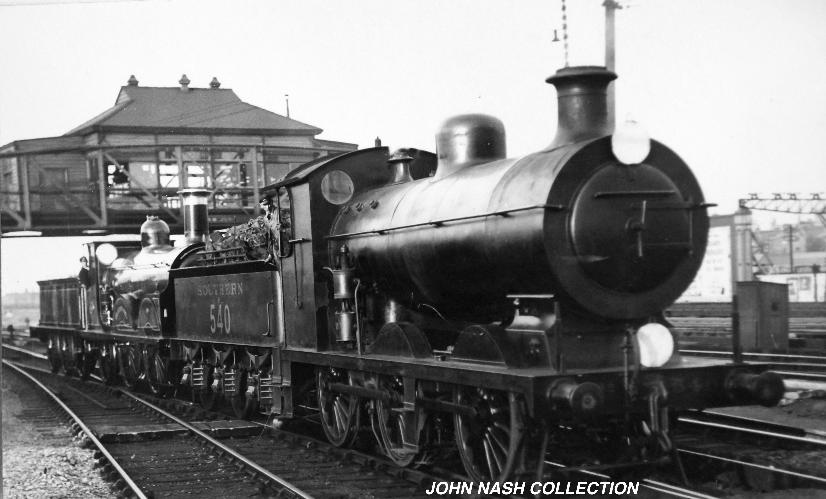
Minutes of the Newhaven Branch Meeting
held at the Railway Hotel on Sun March 16th 1930
Bro. W. Clarke in the Chair
15 members present
Bros W. Brown, C. Goldson, S. Lower, W. Ware, W. Terrill, A. Rookley, A. Pearce, W. Clarke, M. Smith,
D. Boyle, E. King, H. Stedman, J. Hillman & C. Barrow.
On the motion of Bro. D. Boyle and seconded by Bro. M. Smith. The minutes of last meeting were adopted.
Arising from the minutes from the last meeting, Bro. A. Norman arrears, the Secretary reported having sent two letters to Bro. A. Norman in respect to his arrears, one of Feb 16th and one of Marh 11th. No reply had been received from Bro. A. Norman. Moved by Bro. D. Boyle & seconded by Bro. W. Terrill.' That Bro. A. Norman's arears be left as it stands. Carried.
Our General Secretary Bro. J. Bromley M.P. intimated to our Secretary Bro. A Pearce.' That he would be down one Sunday during the Summer to address us.
Bro. S. Lower's query in respect to Bro. W. Ware's seniority. Bro. H. Stedman stated he had been given by the Secretary of the Sectional Council the date the Southern Railway had put forward for Bro W. Ware's seniority as August 14th 1918. Bro. W. Ware moved & Bro. W. Ellis seconded.'That Bro. H. Stedman write asking Bro. J.T. Long to come down to address the Branch re this matter. Being put to the vote this motion was quashed.
Correspondence
Receipt read for this Branch’s Funds to Head office for February.
Letter read from the Newhaven and District Labour Party, asking for names of members willing to stand for election at the forthcoming Urban District Council Election. This was left on table.
A pamphlet was read from Head Office entittled 'Non Unionist Dilemma'. Bro. ellis moved & Bro. E. King seconded. 'That our Secretary post this pamphlet in Loco Shed. Carried.
A letter was read from Head Office re Spare Firing turns Southern Railway from Section Council No.2. minute 4 This to be suspended.
Voting papers received for delegates to Labour Party Conference, October 1930. These for political members only.
Letter read from Bro. A. Pearce stating he wishing to resign from the position of Secretary. moved by Bro. D. Boyle & seconded by Bro. M. Smith. 'That this resignation not be accepted.' After discussion Bro. A. Pearce withdrew it.
Moved by Bro. E. King & seconded by Bro H. Stedman. 'That Secretary write Bro. W. Holland, thanking him for his kindness and help in collecting contributions.
Moved by Bro. Boyle & seconded by Bro. J. Hillman. ‘That a vote of confidence be given our Secrrtary. Carried.
Moved by Bro. Barrow & seconded by Bro. E. King. ‘ hat notice to all members be sent every quarter to notify them of their contributions.
Voting papers received for delegates to Trade Union Congress.
Minutes of the Newhaven Branch Meeting
held at the Railway Hotel on Sun April 13th 1930
Bro. J. Giles in the Chair
15 members present
Bros A. Pearce, A. Pearce, J. Giles, P. Bridger, B. Piddlesden, D. Boyle, W. Terrill, S. Lower, A. Charman,
G. Bollen, W. Ware, W. Ellis, E. Eacott, W. Clarke, F. Wilde & P. Reed.
Minutes of March meeting read, proposed by Bro. W. Brown and seconded by Bro. W. Terrill. That they be accepted as a true record.
No correspondence from Head Office only draw tickets for Golders Green Hospital and Hitchin Branch in aid of one of our members who is totally disabled from footplate duty, agreed that we try to sell tickets.
.
Bro. A. Rookley sent in his resignation as Assistant Secretary. Pro. by D. Boyle & Seconded by S. Lower. 'That his resignation be accepted.' Nominations for Assistant Secretary, Bros. W. Brown, E. Eacott & G. Bollen were nominated. Bros. Brown & Eacott declined and Bro. Bollen accepted. Carried.
Application for membership from F. Wilde, moved by W. Goldson & Seconded by H. Stedman. 'That he be admitted a member. Carried.
Any Other Business,
Bro. Ware came to the for again, arguments and discussions it being our Secretary’s duty to answer many questions, but owing to not having any correspondence on this matter and our Shed representative being absent, it was moved by H. Ellis & seconded by S. Lower.
'That Secretary or Shed Representative write to Secretary of Sectional Council Bro. J.T. Long and ask him to come down one Sunday and ask him to give an explanation of the case as it would only mean a repetition of what we have had for the last six Sundays.’
Minutes of the Newhaven Branch Meeting
held at the Railway Hotel on Sun May 18th 1930
Bro. W. Clarke in the Chair.
15 members present
Bros W. Clarke, A. Pearce, J. Giles, S. Lower, D. Boyle, W. Charman, W. Brown, B. Piddlesden, W. Terrill,
W. Ware, C. Dotterill, H. Stedman, E. Eacott, F. Wilde & W. Elliss
Minutes of April meeting read, proposed by Bro. J. Giles and seconded by Bro. W. Ware. That they be accepted as a true record.
Arising from minutes of last meeting re W. Ware case, Secretary read letter from Secretary of Sectional council in answer to letter for visit to Newhaven, to explain case, he stating that he would not attend unless permission from Head Office was granted. Bro. Charman asked if Shed Representative could read correspondence appertaining to case as he said he could not attend on occassions when it was read, a considerable amount of discussion and arguments arose and in the end it was moved. ‘ hat Secretary write to Head Office and ask permission for Bro. J. Long to attend and in the event of Head Office granting permission, Secretary write and ask Bro. Long to fix a date.
Correspondence receipts for Appeals returns read and also receipts for draw tickets from Hitchin Branch. letter re Washington Hours Convension, also agenda of 1930 A.A.D., also Wool Textile dispute and circular from Head Office re bringing paid officials salaries up to par with other railway trade unions. Proposed by Bro. H. Stedman and seconded by Bro. W. Brown. That Secretary write to A.A.D. delegate telling him that this Branch were not in agreeance with Organiser’s salaries be raised owing to small money some of our members were earning.
Any Other Business, owing to an unforeseen incident happening, nominations for Assistant Secretary were asked for by Chairman. Pro. A. Pearce & Seconded by B. Piddlesden. 'That Bro. Elliss be elected. Carried.
Minutes of the Newhaven Branch Meeting
held at the Railway Hotel on Sun June 22th 1930
Bro. J. Giles was in the Chair
17 members present
Bros E. King, C. Lower, E. Eacott, B. Piddlesden, D. Boyle, H. Stedman, J. Hillman, J. Giles, W. Ware,
W. Brown, W. Terrill, C. Wilson, G. Bollen, J. Green, S. Lower, A. Charman & A. Pearce.
Arising from the minutes of the last meeting, Bro. Bollen asked Secretary if he did not think that he was exempt from contributions whilst on active service. Secretary explained that the exemption was only for the period of war.
Correspondence from Head Office asking for nominations for Sectional Council for the two returning members.
Letter from H.O. retrospective pay for Bro. Ware and Driver Bishop.
Secretary also read replies from Bro. Long and H.O. re visit to this Branch. receipts for May returns read also receipts for draw tickets for Golder’s Green Hospital
Chairman next called on Bro. Long to state the case for Bro. Ware. Bro. Long explained everything apertaining to the case and asked all members present not to be to ask question. Several questiond were asked and satisfactory answers were given.
Chairman next asked Bro. Boyle to move a vote of thanks to Bro. Long for the able and interesting address he had given us regarding the case.
Bro. Boyle moved & Bro. S. Lower seconded. 'That the best thanks of the meeting be accorded Bro. Long for the able manner in which he had address us.'
Bro. C. Lower asked if the details of this meeting could not be placed in the journal. But Secretary and Bro. J. Long both declined as this was a meeting conveined for Sectional Council.
Secretary also thanked Bro. Long for his attendance as it had cleared the air and if he had not have been repertitions of the last several meetings.
Minutes of the Newhaven Branch Meeting
held at the Railway Hotel on Sun Aug. 17th 1930
Bro. J. Giles in the Chair
5 members present
Bros. J. Giles, A. Charman, A. Lower, B. Peddlesden & A. Pearce
Minutes of June meeting read and discussed, proposed by Bro. A. Charman and seconded by Bro. B. Peddlesden. That they be accepted as a true.
Receipts for June and July read.
Correspondence, letter from Bro. Stedman asking for suspension pay for one day. Pro. by A. Lower & seconded by Bro. Peddlesden. 'That Secretary pay Bro. Stedman same.
Letter from Bro. Stedman resigning from the office of Shed Representative. Pro. by A. Lower & seconded by B. Peddlesden. 'That we accept same.'
Letter from Head Office in answer to Secretary and Bro. Stedman’s report, read and discussed.
Letter from Head Office re alterations in payment of Political Levy, agreed that Secretary being this circular to next meeting there being a poor attendance at this one.
Letter from Secretary of Sectional Council re rating spare Fireman and Cleaners, to straighten matters out concerning promotion on the whole of the line basis.
Any Other Business. Nominations for Shed spokesman, moved by A. Lower & seconded by B. Peddlesden. 'That Secretary be asked to take over until next meeting, when a summons meeting be called as this meeting and the last were very poorly attended and they thought that a good representation should be present at the election of a Shed Representative.
Moved by Bro. Peddlesden & seconded by A. Charman. 'That the best thanks of this Branch be accorded Bro. Stedman for his past services as Shed Representative for this Branch.
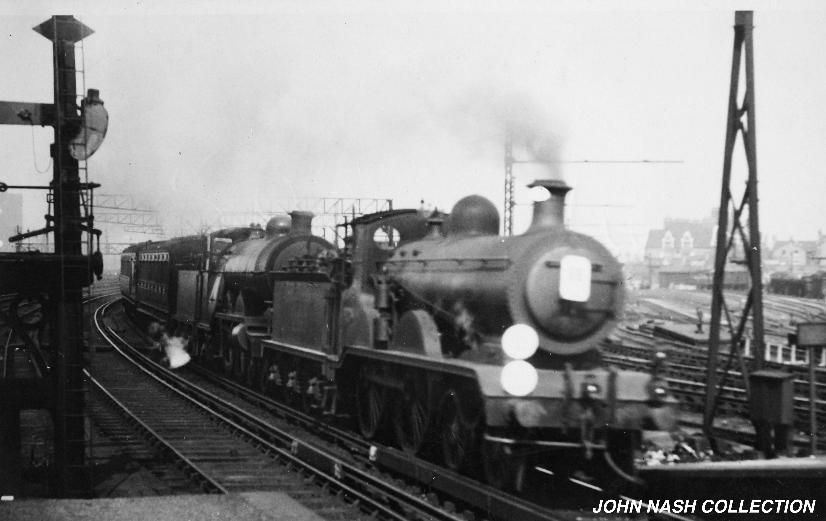
Minutes of the Newhaven Branch Meeting
held at the Railway Hotel on Sun Sept. 21st 1930
Bro. J. Giles in the Chair
9 members present
Bros. A. Rookley, J. Giles, S. Lower, E. Eacott, J. Giles, A. Lower, B. Peddlesden, M. Smith & A. Pearce.
Minutes of August meeting read, proposed by Bro. A. Lower and seconded by Bro. B. Peddlesden. That they be accepted as a true record.
Arising from minutes re proposition of the last meeting to summons members to this meeting for the purpose of electing a Shed Representative. Members asked Secretary why he had not carried out his duties in not issuing summons to members, Secretary apologised for not doing so, but he explained that it was not for the members not knowing as he had placed two notice in Shed drawing their notice to same.
Correspondence
Letter from Head Office re members paying Political Levy agreed to read same at next meeting.
Letter from Cooperative Society asking for delegate to attend one day school at Brighton, no action owing to school taking place on day before meeting.
Any Other Business. Chairman asked for nominations for Shed Representative, no nominations were put forward so it was moved, by A. Rookley & seconded by E. Eacott.
'That Secretary write and summons every member of this Branch to the next meeting for the purpose and also to decide if the meetings should be held on Sunday eve
nings instead of mornings during winter months to see if more members would attend.'
Minutes of the Newhaven Branch Meeting
held at the Railway Hotel on Sun Oct. 19th 1930
Bro. W. Clarke in the Chair
21 members present
Bros P. Reed, F. Wilde, J. Hillman, W. Clarke, A. Pearce, C. Wood, C. Barrow, W. Brown, C. Lower, G. Bollen,
C. Fenner, W. Terrill, W. Ellis, A. Rookley, H. Hamblin, W. Allison, F. Harris, D. Boyle, A. Charman,
A. Norman & S. Lower
Minutes of September read, moved by Bro. A. Lower and seconded by Bro. F. Wilde. That they be accepted as a true record.
Arising from minutes re circular urging members to pay the Political Levy a considerate discussion arose and finally it was moved by Bro. A. Rookley and seconded by Bro. J. Hillman. That it lay on table.
Correspondence receipts for quarter including September 30, 1930 read.
Letter from Head Office re nominations for 1931 A.A.D. moved by Bro. A. Pearce and seconded by Bro. W. Allison. That Bro. D. Boyle be nominated. Bro. Boyle accepted, Secretary promising to do canvasing to other Branches for Bro. Boyle.
Circular from Head Office urging all members to standby the Executive Committee when the truce with Railway Companies end on November 13, 1930.
Subscription list from Wadebridge asking for help for one odour members who is totally disabled from service on railway. Moved by Bro. H. Hamblin and seconded by Bro. W. Elliss. That it be taken round depot. Bro. Eliss kindly contending to take it round a book of tickets from Golder’s Green Hospital agreed that they be taken round. Bro. Norman consenting to sell them.
Circular from Head Office re unions demands at forthcoming truce with Railway Companies.
Any Other Business, Bro. Bollen moves & H. Hamblin seconds. 'That Branch meetings be held on Sunday evening
instead of the morning during winter months. Decision was taken 9 for and 10 against. so meetings will still be held at 11 a.m. Sunday Mornings.
Bro. Bollen asks if Shed Representative Secretary see Foreman re No.2 Roster, curtain adjustments being required to suit men. Secretary explained seen Shed Representative of N.U.R. Who wished to hold an open meeting for all loco-men at this depot to see if an agenda could be compiled to put before Foreman, Bro. Bollen agrees to leave same to that meeting.
Bro. Charman moves & Bro. Bollen seconds. 'That spokesman, see Foreman re spare Fireman loading ashes whilst labourer as are in shed doing Fireman's work, also to something could be done to the dumping ground as they have to throw into filick at a great height owing to continentally digging into ground.' Agreed that Shed Spokesman see Foreman.
Bro. Elliss asked if spokesman could mention to Foreman the state of flue at the top of No. 2 road as present one was broken and smoke immited down on them when at work also hand rails be placed round shed for them when cleaning Atlantic's boilers.
Secretary next asked if the members would agree to the annual meeting being held as he was pleased with the attendance and he was positive that he would not get a better meeting next month. considerable discussion arose and in the end it was moved by A. charman & seconded by W. Brown. 'That this meeting be closed and we start a special meeting for the election of Branch Officers. Carried Unam.
Meeting closed at 12.15 p.m.
Minutes of the Newhaven Special Branch Meeting
held at the Railway Hotel on Sun Oct. 19th 1930
for the purposed of electing officers for year 1931
21 Members present
Bros P. Reed, F. Wilde, J. Hillman, W. Clarke, A. Pearce, C. Wood, C. Barrow, W. Brown, C. Lower,
G. Bollen,
C. Fenner, W. Terrill, W. Ellis, A. Rookley, H. Hamblin, W. Allison, F. Harris, D. Boyle, A. Charman,
A. Norman & S. Lower
Chairman asked for nominations for
Chairman,
Moved by Bro. C. Wood and seconded by Bro. C. Barrow. That Bro. J. Giles.
Moved by Bro. G. Bollen and seconded by Bro. C. Lower. That Bro. J. Hillman stand.
Moved by Bro. A. norman and seconded by Bro. W. Brown. That Bro. G. Bollen stand.
Put to the vote, Bollen 4, Hillman 7, J. Giles 8. Bro. J. Giles elected as Chairman in his absence he agreeing before hand.
Vice Chair
Proposed by Bro. H. Hamblin and seconded by Bro. C. Lower. That Bro. J. Hillman.
Proposed by Bro. A. Lower and seconded by Bro. W. Brown. That Bro. G. Bollen stand.
Put to the vote Bollen 7, J. Hillman 8.
Secretary
Proposed by Bro. C. Lower and seconded by Bro. W. Terrill. That Bro. A. Pearce still stand.
Proposed by Bro. S. Lower and seconded by Bro. J. Hillman. That Bro. W. Brown stand.
Proposed by Bro. W. Brown and seconded by Bro. H. Hamblin. That Bro. G. Bollen.
Put to the vote Bro. A. Pearce unan.
Assistant Secretary
Proposed by Bro. G. Bollen and seconded by Bro. A. Charman. That Bro. W. Brown
Proposed by Bro. D. Boyle and seconded by Bro. C. Lower. That Bro. A. Rookley stand
Result of voting, Rookley 9, Brown 10
Committee
Bros A. Pearce, W. Clarke, C. Wood, W. Allison, G. bollen, W. Elliss, & A. Lower. Elected en bloc.
Representatives for Trades Council
Bros. A. Pearce & D. Boyle carried.
Auditors
Bros. W. Brown & C. Barrow were elected.
NEWHAVEN
BRANCH
OFFICERS
1931
Chairman Bro. J. Giles
Vice Chair Bro. J. Hillman
Secretary A. Pearce
Ass. Secretary Bro. W. Brown
Place of meeting, moved by Bro. A. Rookley and seconded by Bro. C. Fenner. That we still hold meeting at present place, namely Railway Hotel.
Minutes of the Newhaven Branch Meeting
held at the Railway Hotel on Sun Nov. 16th 1930
Bro. J. Giles in the Chair
10 members present
Bros. A. Pearce, J. Giles, W. Brown, A. Lower, A. Charman, W. Clarke, D. Boyle, J. Brock, B. Peddlesden
& J. Hillman.
Minutes of October read, proposed by A. Charman and seconded by Bro. D. Boyle. That they be accepted as a true record.
Arising from minutes,Shed Spokesman gave a report upon his interview with Foreman re flue at the top of No. 2 road, also hand rails for cleaning boilers but he forgot to mention ashes, a favourable decision was arrived at.
Correspondence, reply to Bro. D. Boyle nomination for A.A.D., receipt from Wadebridge Branch for list for one of our colleagues permanently incapacitated in the Company’s service. Receipt for October returns read.
Any Other Business Secretary was asked if he had heard from N.U.R. re open meeting, considerable discussion arose and it was moved by W. Clarke & sec by B. Peddlesden. That Secretary be given proceed to call open meeting of N.U.R. So decides.
Pro. By W. Clarke & sec. By A. Lower. That the open be held on a Sunday morning.
Pro. By A. Charman & sec. By W. Brown. That Shed Spokesman see Foreman on the question of Cleaner's lobby as it had come our knowledge that coal-men had made application for one and we of this Branch thought that a Cleaner's lobby could be built at same time.
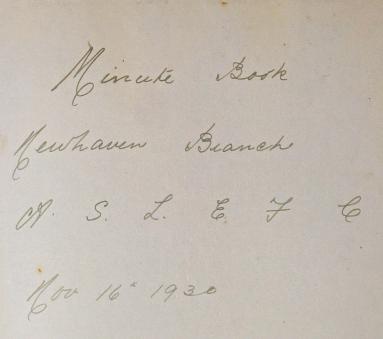
Minutes of the Newhaven Branch Meeting
held at the Railway Hotel on Sun Dec. 21st 1930
Bro. J. Giles in the Chair
10 members present
Bros M. Smith, W. Brown, H. Allison, C. Lower, E. Eacott, F. Wilde, G. Bollen, E. King, J. Giles
& A. Pearce.
November minutes read, proposed by Bro. W. Brown and seconded by Bro. G. Bollen. That they be accepted as a true record.
Arising from minutes re open meeting at this depot Secretary stated interview with Branch Secretary of N.U.R. He explaining that he had instructions from his H.O. That he was to keep interviews and correspondence down to a minimum while the unions and Companies were negotiating over the present crisis a considerable discussion took place and it was thought that we ougt to get our an agenda of revisions of working at this depot to hand to the Foreman as soon as the National crisis was over.
Pro. By G. Bollen & sec. By H. Allison. ‘ That Secretary sees Secretary of N.U.R. to see if a friendly meeting could be arranged.
Nominations for National Insurance Agent, proposed by Bro. E. king and seconded by Bro. F. Wilde. That Secretary be Insurance Agent for 1931. Carried
Correspondence from Head Office re Non Unionist read and discussed, Circular re Company’s proposals to union re conditions and wages read and discussed, receipt for draw tickets for Golder’s Green Hospital read.
Any other Business. Bro. H. Allison asked what constitutes the pilot link, he was informed that was one of the turns was going to be dealt with at the open meeting.
Secretary next brought to the notice of the Branch a remark that had been used concerning him and Bro. Boyle, it being said that if Bro. Boyle and himself had put in an application for vacancies at other depots instead of hanging round here until we had got regular job perhaps other people would have had job, Secretary said he resented such stories as if it had been the right thing for him to have done he would have made an application long ago, but he would let the Branch know that he and Bro. Boyle were permanently appointed in 1927. Secretary passed chit round to members to inspect.
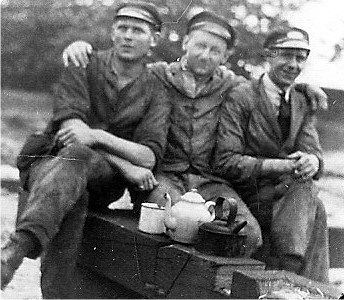
Ron Terrill Collection
Bill Terrill, Unknown, & Unknown
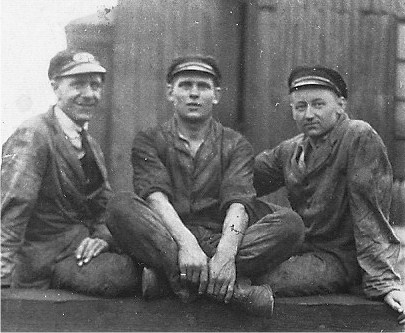
Ron Terrill Collection
Unknown, Bill Terrill & Unknown
Minutes of the Newhaven Branch Meeting
held at the Railway Hotel on Sun Jan. 18th 1931
Bro. J. Hillman in the Chair
10 members present
Bros. W. Brown, E. Eacott, G. Bollen, C. Dotterill, B. Peddlesden, J. Hillman, C. Lower, J. Brock, F. Harris,
& A. Pearce.
Minutes of December meeting read, proposed by Bro. E. Eacott and seconded by C. Dotterill. They be accepted as a true record.
Arising from minutes re open meeting, Secretary stated that he had an interview with Driver J. Browning Shed Representative of N.U.R. And he stated that he could not get a meeting of his members so if Secretary did not hear from him in due course our Branch were to hold one it was agreed that Secretary call one as soon as we knew that discussions of National Wages Board were favourable to us.
Correspondence, letter from Head Office re accident to plate layer at Southerham, on December 19th, 1930, in which one of our members, Bro. M. Smith, unduce first aid, owing to a little misunderstanding between the driver of train that knock the platelayer down. Secretary reported matter to H.O.
Letter from Organiser Barton Wilde re reforming a District Council, read and discussed. Pro. by E. Eacott and seconded by G. Bollen that it lay on table.
Receipts for December read, Secretary explained that he had sent in clear books of year 1930.
Any Other Business Bro. Brock asked if Secretary could give any statement re Sunday duty, Secretary explained that had seen Loco Foreman about why he had been placed in shed on Sunday and Foreman explained it was to equalise the shed turns and the pilot link. Bro. Brook asked if shed representative could see Foreman on the matter as he was still of the opinion it could be improved, Bro. Brock gave Secretary an outline of his idea on the matter to hand to Bro. Boyle as a guidance when he saw Foreman Secretary stated that if the findings of the Wages Board were satisfactory by the end of present week he would call an open meeting for Sunday Feb. 2nd .
Minutes of the Newhaven Branch Meeting
held at the Railway Hotel on Sun Feb. 22nd 1931
Bro. J. Giles in the Chair
13 members present
Bros. W. Clarke, W. Brown, F. Wilde, M. Smith, W. Ellis, D. Boyle, J. Giles, A. Charman, C. Wilson,
A. Norman, C. Lower, G. Bollen & A. Pearce.
Minutes of January meeting read, moved by Bro. C. Lower and seconded by Bro. J. Brock. That they be accepted as a true record.
Arising from minutes from the last meeting re Bro. Brock's suggestion on Sunday duty, Secretary explained that he had explained to Shed Representative Bro. Boyle the suggestion as Bro. Brock had outlined it, Bro. Boyle was asked to give his report on the matter a good discussion took place and it was decided to leave it to the open meeting when it was held.
Correspondence
Letter was read from Secretary of District Labour Party asking us to affiliate to the Party, Secretary explained that we were only allowed funds from General Funds to affiliate to one party and if we did to this one each member would have to pay 2d per year individually, no action was taken, but Secretary asked all members present to join Labour Party which was 1/- per year and he would collect their money and give then a card.
Letter from Local Secretary from League of Nations asking members to attend a meeting in March.
Letter from Secretary of local Labour Party asking for nominations for Local Council Elections, no one to stand.
Circular from Head Office re list of members elected for 1931 A.A.D.
Letter from H.O. explaining that no inquiry would be held re accident to Ganger Stevens at Lewes on 19.12.30.
Letter era re resignation of Official Auditor, receipts for January read, suggestion for 1931 A.A.D. read and discussed.
Any Other Business Bro. Charman said he was not satisfied that Bro. Ware was in his right place he thinking that if Bro. Collington was doing turns of firing duty in front of Ware he was of the opinion that Shed Spokesman find out for sure where Bro. Ware stood regarding his seniority, a very lengthy discussion arose over this case moved by G. Bollen & sec. A. Norman. 'That Bro. Boyle see Foreman on the matter.'
Secretary next handed in his resignation as Secretary of the Newhaven Branch he explaining that he would like a rest, Bro. Brown was asked to take the position but he declined, a considerable discussion ensued and Bro. Boyle moved & Bro. Norman sec. That Secretary be asked to remain in office until after the findings of the National Wages Board had been given Secretary agreed to adopt this carried.
A considerable discussion came up regarding the procedure at Branch meetings it being thought that a time limit should be placed in items as they came forward. Moved by G. Bollen & sec. By W. Brown. That members give their items to Chairman before meeting to be placed on his agenda.
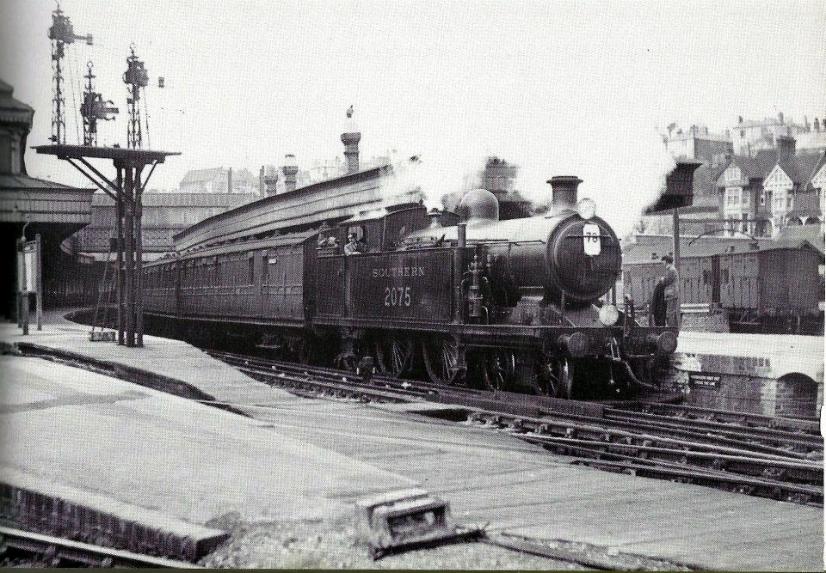
PHOTOGRAPHER UNKNOWN
Down Newhaven Boat Train passing through Lewes
Minutes of the Newhaven Branch Meeting
held at the Railway Hotel on Sun March 15th 1931
Bro. J. Giles in the Chair.
21 members present
Bros. F. Wilde, W. Ellis, E. Hillman, E. Eacott, D. Boyle, C. Wilson, E. King, A. Charman, J. Hillman,
H. Bowden, W. Clarke, C. Barrow, W. Brown, M. Smith, B. Peddlesden, G. Bollen, J. Giles, A. Pearce,
H. Allison, F. Harris & C. Dotterill
Minutes of February meeting read, proposed by Bro. W. Clarke and seconded by Bro. G. Bollen. That they be accepted as a true record.
Arising from minutes Secretary said that he still willing to relinquish his position as Branch Secretary a considerable amount of discussion was given to this matter. Secretary stated several instances had happened that he thought a change was dutiable. Bro. Boyle said he did not think it was and moved a vote of confidence sec. By C. Dotterill. Secretary decided to stay on till end of year.
Correspondence from Head Office re resignation of General Secretary from Parliament and asking for nominations to fill the vacancy, no nominations was forthcoming.
Circular from H.O. re findings of the N.W.B. And Executive asking members to accept it under circumstances. This was thoroughly debated and it was moved by F. Harris & sec. By A. Clarke. That we reject the findings of the N.W.B. Bro Boyle moved as an amendment & sec. By C. Dotterill. That this Branch very greatly disapprove of the findings of the N.W.B. But in view of the circumstances we can do no other than stand by our Executive in any action they may think for to. Put to the vote the amendment was lost the resolution being carried unam. Secretary being instructed to forward resolution onto Bro. C. Wilson to place before the Special Assembly of Delegates to be held on March 24th 1931.
Correspondence from Bro. Long, he resigning his position as Secretary of Sectional Council and naming his successor as Bro. Jeans of Bournemouth, also thanking members for past assistance.
Any Other Business Bro. Boyle laid agenda of open meeting held on previous Sunday and asked if any further items was to be placed on it, Bro. Ellis asked for abolishion of meal hour when cleaning. Secretary stated that it was against the conditions of service and there was no case, Bro. Boyle said he would not do anything against conditions of service.
Minutes of the Newhaven Branch Meeting
held at the Railway Hotel on Sun April 19th 1931
Bro. J. Giles in the Chair
11 members present
Bros. A. Charman, J. Hillman, F. Harris, A. Rookley, A. Lower, W. Goldson, C. Lower, H. Allison,
W. Brown, J. Giles & A. Pearce.
Minutes of March meeting read, proposed by Bro. J. Hillman and seconded by Bro. A. Charman. That they be accepted as a true record.
Arising from minutes Secretary read correspondence that transpired between him and Bro. Tulett of Horsham re this Branch rejecting the findings of the N.W.B. Also acknowledgement of resolution from H.O.
Correspondence letter read from Organiser Bro. B. Wilde re instruction of No.5 District Council moved by A. Rookley sec. By H. Allison. That Secretary write to Bro. B. Wilde "That this Branch is in full accord of the Council being reconstructed." Carried unam.
Letter from Secretary of Divisional Labour Party still asking this Branch to become affiliated o the same. Secretary explained that he though he could he a quota from Political Levy from Head Office. Moved by Bro. A. Rookley and seconded by Bro. C. Lower. That secretary write to Head Office to see if we could claim a curtain amount from Political Levy. Carried Unan.
Circular from Manor House Hospital asking the Branch to sell draw tickets for Derby Sweep, to assist in building new wing. Bro. W. Brown and Bro. J. Giles taking the book of tickets to sell them.
Circulars from H.O. Re findings of N.W.B. Re acceptance by unions also pamphlet explaining deductions from wages earnt.
Any Other Business Bro. Charman brought up the case of Bros. Ware & Collington re their position in seniority, Secretary explained that he thought that Bro. Boyle had dealt with this matter but as he was not here to give his report he could give no information regarding this matter. Secretary read note that Bro.Boyle had handed to him from Mr. Winslow re ratification of agenda from Waterloo he stating that things would go on precisely the same until the ratification from Waterloo.
Minutes of the Newhaven Branch Meeting
held at the Railway Hotel on Sun May 17th 1931
Bro. J. Giles in the Chair
8 members present
Bros. F. Harris, E. Eacott, J. Giles, A. Charman, W. Brown, H. Allison, D. Boyle & A. Pearce.
Minutes of April meeting read, proposed by Bro. F. Harris and seconded by Bro. H. Allision. That they be accepted as a true record.
Arising from minutes, secretary read correspondence from Divisional Labour Party, also receipts for 14/7 the quota allocated from Political Levy, also sending credentials for two delegate to attend Divisional Meetings. Proposed by Bro. F. Harris and seconded by Bro. E. Eacott. That Bro. A. Pearce be elected.
Proposed by Bro. E. Eacott and seconded by Bro. D. Boyle. That Bro. H. Allison stand, elected Unan.
Arising from minutes re Bros. Ware and Collington position, Secretary stated he would interview Foreman on matter.
Correspondence from Sheffield Branch with list asking for support for one of their members permanently incapacitated, considerable discussion arose and it was agreed to lay on table.
Correspondence from Bro. Barton Wilde Resuscitation of Divisional Council No.5, he stating he would let us know result of voting.
Agenda of Annual Assembly of Delegates read.
Bro. Boyle gave his report on meeting with Company's side on agenda formed. This was thoroughly debate and many question were asked and it was though that was very unsatisfactory.
Receipts for April returns read by Chairman
Any Other Business, Secretary said it he had a very unpleasant business to do to lay before the Branch concerning several members arrears. Secretary was asked if had sent summons to them, he explained that he had interviewed members as well agreed that nothing could be done.
Minutes of the Newhaven Branch Meeting
held at the Railway Hotel on Sun June 21st 1931
Bro. J. Hillman in the Chair
5 members present
Bros. J. Hillman F. Harris, J. Brock, H. Allison & A. Pearce
Minutes of May meeting read, proposed by Bro.J. Hillman and seconded by Bro. F.. Harris. That they be accepted as a true record.
Receipts for May returns also receipts for draw tickets for Golder’s Green Hospital.
There being no correspondence and only five members present the Chairman gave permission for a formal discussion.
Minutes of the Newhaven Branch Meeting
held at the Railway Hotel on Sun July 19th 1931
Bro. J. Giles in the Chair
7 members present
Bros. J. Hillman F. Harris, J. Brock, C. Lower, H. Allison, J. Giles & A. Pearce
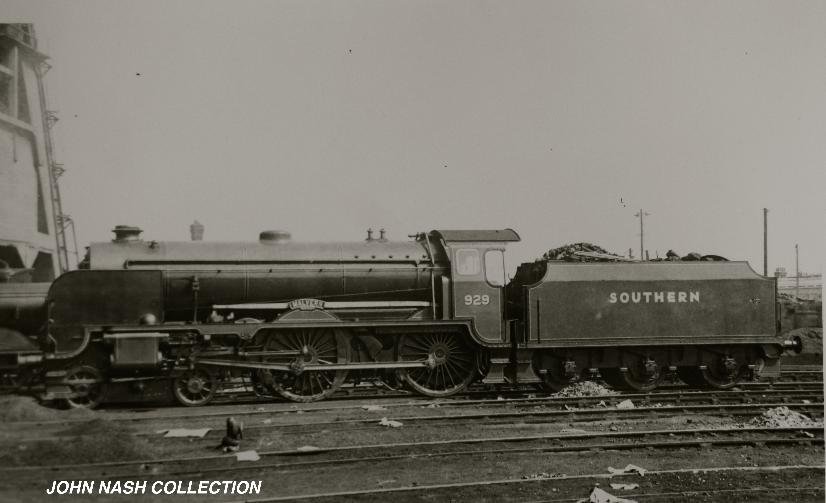
Minutes of the Newhaven Branch Meeting
held at the Railway Hotel on Sun Sept. 12th 1931
Bro. J. Giles in the Chair
7 members present
Bros. A. charman, B. Piddlesden, F. Harris, W. Brown, J. Brock, J. Hillman & A. Pearce
Minutes of July meeting read, proposed by Bro. F. Harris and seconded by Bro. J. Brock. That they be accepted as a true record.
Arising from the minutes of the last meeting, Secretary explained that he had interviewed Foreman re state of lavatory at shed and he had promised to put matter right also oiling regulators.
Correspondence
Circular from General Secretary re Union’s Finance read
Circular from re recruiting members from outside the organisation into the N.H.S. Section
Circular from General Secretary re rises in Parliamnet also resolution of Executive to stand by him in supporting the Labour Party to oppose the present Government.
Letter from Head office re Resuscitation of No. 5 District Council and also asking for delegate to attend a meeting at Head Office on Sunday October 11th, at 11.30 a.m.
Proposed by Bro. Peddlesden and seconded by Bro. A. Charman. That Bro. A. Pearce attend same.
Any Other Business, Bro. Peddlesden moved & Bro Charman seconded. 'That Secretary write to Bro. Boyle asking to please state why he had not attended meetings, why he had not posted results of findings of the recent agenda in Shed.
Secretary brought before notice of Branch convening a room at Labour Club for holding meetings, several questions were asked re the price. Secretary stated he thought the price would be the same. Proposed by A. Charman & seconded by W. Brown. 'That we hold meetings at Labour Club, our first meeting being Jan. 1931.'
Bro. Charman asked Secretary if he could see Foreman to get his seniority with Bro. W. Ware, Secretary advised him to see Foreman himself and then go through the usual course of seeing Shed Spokesman.
held at the Railway Hotel on Sun Oct. 18th 1931
Bro. J. Hillman in the Chair
7 members present
Bros. F. Harris, D. Boyle, E. Brooker, C. Lower, W. Lower, H. Allison & A. Pearce.
Minutes of September meeting read, moved by Bro. H. Allison and seconded by Bro. D. Boyle. That they be accepted as a true record.
Arising from the minutes of the last meeting, Secretary gave a report of meeting which he attended as delegate from this Branch, on reforming of Southern Council No. 5 and Secretary explained that he was only as delegate for that meeting and it was their duty to elect a delegate to attend meetings of Council now it was reformed, next meeting to be on Sunday November 6th, 1931. Moved by Bro. Allison & seconded by Bro. Harris. 'That Secretary still attend.' Carried.
Bro. D. Boyle gave his report on meeting with Company’s side on recent agenda, nothing on the said agenda being ratified.
Circular re nominations for 1932 A.A.D., moved by Bro. A. Pearce and seconded by Bro. A. Lower. That Bro. Boyle be nominated. Carried.
Receipts for September quarter read.
Circular from Head Office re political situation, General Secretary asking all members to vote Labour at the coming election.
Draw tickets for Manor House Hospital tickets by Bros. D. Boyle & Allison
Letter from Secretary of Labour party, all members of this Branch to assist on the coming General Election.
Any other business there not being many members present a general discussion took place.
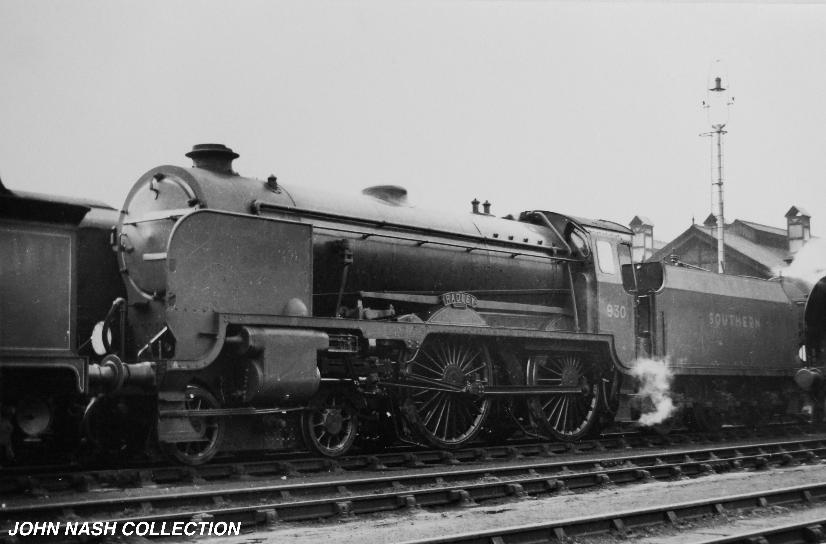
Minutes of the Newhaven Branch Meeting
held at the Railway Hotel on Sun Nov. 15th 1931
Bro. J. Giles in the Chair
15 members present
Bros. F. Harris, J. Brock, A. Pearce, J. Hillman, H. Allison, W. Brown, W. Ellis, J. Giles, S. Lower,
A. Lower, C. Dotterill, M. Smith, B. Peddlesden, F. Wilde & A. Charman.
Minutes of October meeting read, proposed by Bro. A. Lower and seconded by Bro. W. Brown. That they be accepted as true record.
Arising from minutes, Secretary gave a report of Southern Council meeting held at Head Office on Sunday November 8th 1931.
Correspondence
F.C. acknowledging Bro. Boyle’s nomination to 1932 A.A.D.
Circular from H.O. Re adoption of policy of Society to take and worsening our conditions and wages in the future moved by F. Harris & sec. By A. Lower. That this being a poor representation of members present it be left over until next meeting in the meeting in the meantime Secretary appeal to members to be present at the next meeting to be held second Sunday in December.
Letter from Secretary of Divisional Labour Party, also balance sheet of General Election.
Minutes of Resuscitation meeting of Southern Council No. 5 held on at Head Office, Sunday October 11th 1931 read.
Election of officers for 1932.
Chairman,
Bros. W. Brown & J. Giles were nomiated, but both declined. Pro. by B. Peddlesden & seconded by S. Lower.' That J. Hillman stand.' Carried.
Vice Chairman
Proposed by Bro.W. Brown and seconded by Bro. A. Pearce. That Bro. J. Brock stand, Carried.
Secretary
No nominations will put forward and Secretary explained that he was going to retire this year and nothing would alter his decision, after a good amount of discussion it was agreed to let the matter stand over until next meeting.
Assistant Secretary
Moved by Bro. F. Haris and seconded by Bro. S. Lower. That Bro. W. Brown stand, Carried.
Committee
Bros. W. Elliss, M. Smith, A. Lower, C. Dotterill, J. Brock and F. Harris were elected en bloc.
Shed Representative, Pro by J. Brock & seconded by J. Hillman. 'That Bro. H. Allison be elected.' Carried.
Bro. Allison thanked the members present for the confidendence they had placed in him and he would do everything possible that laid in his power, but he would not depart from the National Agreement.
Auditors
Bros. W. Brown & F. Wilde were elected.
Any Other Business Bro. Ellis asked if it was right if they should work turns of firing on Sundays with appointed Fireman as they had done in the past, Secretary pointed out that it controversial to the National agreement for Cleaners to work when appointed men were booked off a considerable amount of discussion over this business took place. Secretary advising two of them to see Foreman on matter re a job Cleaning on Sundays Bros. Elliss & Wilde agreeing to see Foreman and report back to Bro. Allison.
Bro Brock asked if anything could be done re meal time on 'Pilot'. This was debated Bro. Brock moved & seconded by Bro. M. Smith. That Shed Representative see Foreman on matter. he would wait until a junior man was placed in senior mans position and would place matter in Bro. Allison hands.
NEWHAVEN
BRANCH
OFFICERS
1932
Chairman Bro. J. Hillman
Vice Chair Bro. J. Brock
Secretary F. Wilde
Ass Secretary Bro. W. Brown
Minutes of the Newhaven Branch Meeting
held at the Railway Hotel on Sun Dec. 13th 1931
Bro. J. Hillman in the Chair
15 members present
Bros. A. Pearce, J. Hillman, H. Allison, C. Lower, J. Brock, W. Lower, W. Brown, C. Jenner, J. Giles,
W. Ellis, C. Wilson, F. Harris, C. Dotterill, F. Wilde & B. Peddlesden.
Minutes of November meeting read, proposed by Bro. A. Lower and seconded by Bro. W. Brown. That they accepted as a true record.
Arising form minutes re circular from H.O. Left over from last meeting re future cuts on wages and worsening of our conditions, much discussion took place Secretary explained that he had appealed to members by notice in shed but of no avail only 15 members being present. Bro. Allison moves & sec. By J. Giles. That we of this Branch stand by the Executive in any action they think fit to take.
Election of Secretary, much discussion took place Branch Secretary still adhering to his decision of last meeting. Bro. Harris appealed to Bro. Pearce to still serve. Bro. Brock moves & sec. By W. Ellis. That Bro. Wilde stand. Bro. Wilde said he would have a try and thanked the members present for the confidence they had placed in him put to the vote. Carried unam.
Bro. Brock asked shed spokesman for report on interview with Foreman re meal times on pilot turn. Bro. Allison read letter from Foreman on this matter also a lively discussion ensued re Sunday work for Cleaner. Bro. Brock moved & sec. By A. Lower. That National agreement be brought into operation re Sunday work put to the vote no one would vote so Bro. Brock said he would wait until a junior man was placed in senior man's position and would place matter in Bro. Allison hands.
Bro. Harris said he his name was on list for committee and he did not wish to stand. Moved by Bro. C. Dotterill and seconded by Bro. J. Giles. That his name be recinded, moved by and seconded by. That Bro. Pearce stand in his place. Carried, also Bro. Wilde was now Branch Secretary, he could not stand as Auditor, moved that Bro. A. Pearce.
Nominations for Insurance Agent, proposed by Bro. A .Pearce and seconded by Bro. J. Giles. That Bro. F. Wilde stand. Carried.
Correspondence
Report of mites of last Southern Council meeting era
Receipts for draw tickets of Golder’s Green Hospital read
Any other business
Bro. C. Lower asked Shed Spokesman if he would see Foreman re Tank Engine on 290 turn
Pro. By B. Peddlesden & sec. By C. Lower. "That Secretary write a letter to Bro. O' Dell conveying the best wishes of this Branch to him and his wife on his retirement from Company's service."
Minutes of the Newhaven Branch Meeting
held at the Labour Club on Sun January 17th 1932
Bro. J. Hillman in the Chair
9 members present
Bros. J. Hillman, W. Terrill, W. Brown, F. Wilde, C. Wilson, F. Harris, J. Giles, H. Allison & A. Lower.
Minutes of December meeting read, proposed by Bro. A. lower and seconded by Bro. W. Brown. They be accepted as a true record.
Arising from minutes, letter from Secretary to Bro. O’Dell on his retirement.
Letter read from Bromley re proposed propaganda meeting to be held at Newhaven 24th Jan.
Post card read from Brighton Secretary re Cleaners meal times.
Moved by W. Brown & sec by W. Terrill. "That Secretary write Bromley re propaganda meeting and arrange for same to be held at Labour Club 11.0 a.m. 24th Jan."
Pro. By F. Harris & sec. By J. Giles. "That H.O. Send hand bills also to Brighton & Eastbourne."
Pro. J. Giles & sec. A. Lower. "That Bro. J. Hillman be Chairman of propaganda meeting and Secretary asked to write Brighton & Eastbourne re this meeting."
Good deal discussion over Sunday work arose but nothing could be done so the subject was dropped.
Bro. J.Giles asked Shed Representative, men’s decission re holiday traffic at Brighton, he stated in reply company's proposals refused.
Bro. Harris also asked Bro. Allison if Foreman was doing anything re Tank Engine on 590 turn, reply B503 for turn when back from repairs at Brighton Shed.
Proposed by Bro C. Wilson & Sec. by W. Brown. "That Shed Representative see foreman re condition of roof and unsafe flues in shed and getting some improvement made. Bro. Harris also requested through Bro. Allison, "That taps in lobby and lavatory be renewed, great waste of water."
Minutes of the Newhaven Branch Meeting
held at the Labour Club on Sun February 14th 1932
Bro. W. Elliss in the Chair
9 members present
Bros. W. Ellis, W. Brown, A. Pearce, A. Lower, W. Terrill, H. Allison, J. Giles, A. Norman & F. Wilde.
Minutes of January meeting read and discussed, passed as true record. Proposed by Bro. J. Giles and seconded by Bro. W. Terrill.
Arising from minutes. Bro. Allison said water tap in lobby had been replaced but nothing could be said of flues and the shed roof.
Bro. A. Pearce moved that complaint re holiday arrangements be left over Sec. A. Lower. Carried.
Letter from Head Office read re nomination of E.C. delegate, proposed by Bro. A. Pearce and seconded by Bro. J. Giles. Matter lay on table.
Letter from F. Stevenson Brighton read re 'Rota' system for A.A.D. Elections and also minute of Southern Council meeting read for meeting held on January 10th 1932. Discussion of afore said 'Rota' system per A.A.D.
Letter from Stevenson, Brighton re Cleaners meal time read.
Bro. A. Pearce and Seconded by Bro. Allison, ‘See Foreman re abolition of meal allowance for Cleaners concerned.
Bro. Pearce proposed letter re candidate for Labour party in forthcoming Local Election, lay on table.
Secretary read letter from Bromley thanking Bro. A. Pearce for his six years service as Secretary and a vote of thanks to Bro. Pearce was moved by H. Allison & Seconded by A. Norman. Bro. Pearce said ably replying for appreciation of his services etc.
Some discussion was brought on by small attendance to branch meetings and as result Bro. Allison prop. Evening meetings and seconded by Bro. A. Pearce as temporary experiment. Bro. J. Giles put forward an amendment,
'That meetings stop as at present (Sunday mornings) seconded by A. Lower. Amendment Carried
Minutes of the Newhaven Branch Meeting
held at the Labour Club on Sun March 13th 1932
Bro. J. Hillman in the Chair
7 members present
Bros. J.Hillman, W. Clarke, A. Pearce, W. Brown, A. Lower, H. Allison & F. Wilde.
Minutes of February meeting read and passed as a true record. Proposed A. Pearce and seconded by Bro. A. Lower.
Arising from minutes
Proposed independent tap in shed for filling kettle and buckets. Bro. Allison said Foremen was making enquiries and seeing to same.
Bro. Allison had seen Foreman re abolition of Cleaner's meal-hour but Mr. Lelew had turned it down at Brighton but matter was not settle for here. Bro. Pearce thought he would be able to enlighten us more on subject after Southern Council meeting.
Other Business Bro. W. Clarke complained of coal not being damped before putting up on tenders etc. & Bro. Allison promised to see Foreman on the matter & Bros. Pearce & Clarke would both lodge a complaint with Foreman owing to the dust being detrimental to Enginemen’s sight.
Bro. Pearce proposed & W. Clarke seconded. That Bro. Allison press Foreman with regard to Coal man’s lobby as same was badly needed.
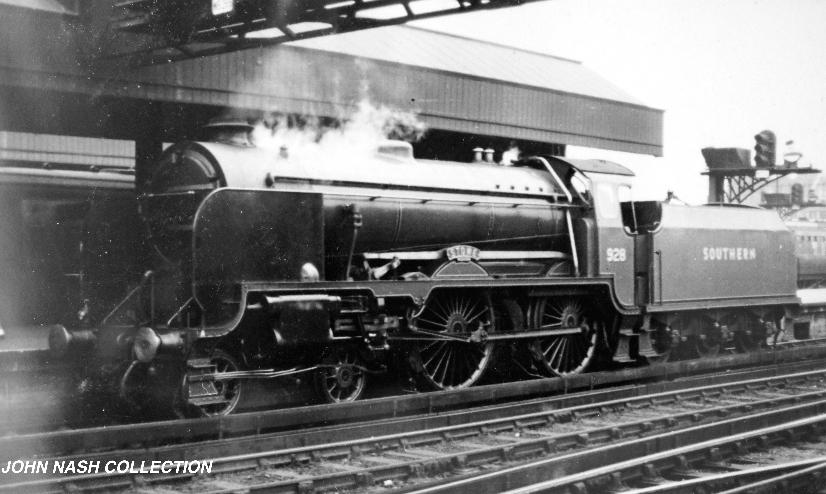
Minutes of the Newhaven Branch Meeting
held at the Labour Club on Sun April 17th 1932
Bro. J. Brock in the Chair
12 members present
Bros. J. Brock, W. Clarke, J. Thompsett, W. Brown, J. Giles, F. Wilde, H. Allison, A. Pearce, A. Lower,
W. Ellis, C. Lower & F. Harris.
Minutes of March meeting read and passed as a true record, proposed by Bro. A. Lower and seconded by Bro. Pearce.
Arising from minutes item re abolition of Cleaners meal-hour Bro. Pearce said that at Southern Council meeting it was ruled that it was a matter purely in the hands of L.D.C. & Foreman at Shed concerned.
Bro. Allison stated that if Cleaners affected so desire he would see Mr. Hollins and ask for interview with Mr. Lelew to deal with this matter. Agreed to same.
Damping of coal Bro. Pearce said he had forgotten to see Foreman in this matter, but Bro. Clarke state he had complained to Foreman as agreed or past meeting, but he seemed to think it entailed a great deal of work for coalmen etc so Bro. Clarke told Foreman he would work under protest until something was done, as we had lot of wet weather recently dust was quite so noticeable.
Correspondence
Appeal from Manor house Hospital and draw tickets enclosed. Bros. J. Giles and H. Allison took tickets for Secretary.
Nomination from for G. Bollen, read and he was accepted as a member.
Other Business
Bro. Pearce gave brief account of how Branches of this area stood regards membership & nons etc as given at last Sunday's S.D.C. Meeting. Bro. Pearce asked Secretary to S.D.C. Secretary know names of men willing to assist with cycles etc. in case of strike Bro. Allison informed members of proposed new and turn to be worked for this depot from May 1st. and asked for proposal re link working of new turn, a good deal of discussion arose and Bro. Harris proposed that Bro. Allison see Foreman re opinion of this meeting. That 1.8 p.m. turn be put in with Branch Link and 10.16 a.m. turn put in No.2 Link Agreed.
Bro. Pearce moved 'That if there should be any disagreement over this when meeting with Foreman & J. Browning etc. was held. Bro. Allison should tell Foreman he would refer it to open meeting to be called as required to discuss this agreement. Agreed.
Minutes of the Newhaven Branch Meeting
held at the Labour Club on Sun May 22nd 1932
Bro. J. Hillman in the Chair
11 members present
Bros. F. Harris, B. Peddlesden, F. Brown, E. Brooks, C. Wood, H. Christmas, J. Brock, J. Giles, H. Allison,
J. Hillman & F. Wilde
Minutes of April meeting read and passed accept as a true record, proposed by Bro. J. Giles and seconded by Bro. J. Brock.
Arising from minutes re Cleaners meal hour. The secretary read letter to Head Office and reply to same, and letter to Mr. Jeans and his reply also, after which Bro. Allison agreed to see Foreman again.
Bro. Allison said matter concerning water tap and coal damping was in Brighton hands. New turn working at Newhaven.
Bro. Allison had carried out Branch proposals and seen Foreman etc. Bro. woods asked why open meeting was not called re new turn and putting same into links, after which Bro. Wood proposed & Bro. Christmas seconded ' Open Meeting be called.' Amendment, Pro. F. Brown & Seconded by J. Brock. 'That proposed open meeting be rejected.' Amendment carried.
Correspondence
Secretary read letters re lapsed member and Labour research also appeals from Bros. Collick and Watson for support in E.C. election.
Other Business. A good deal of discussion arose re Sunday work, but matter was left over to next meeting for proposals and suggestions.
Minutes of the Newhaven Branch Meeting
held at the Labour Club on Sun June 19th 1932
Bro. J. Hillman in the Chair
12 members present
Bros. F. Harris, A. Pearce, C. Lower, H. Hamblin, C. Barrow, A. Charman, C. Wilson, A. Lower, J. Giles,
J. Hillman, H. Allison & F. Wilde.
Minutes of May meeting read and accepted as a true record, proposed by Bro. H. Allison and seconded by Bro. J. Giles.
Discussion of minutes
Cleaner's meal-hour. Bro. Allison had explained matter to Mr. Lelew and give case a recent special, having of fetch men's food etc for them, matter put forward to Waterloo. Bro. Allison also said Mr. Oxly was seeing about tap and damping gear for coal.
Correspondence,
Secretary read letter from H.O. re Temp. Cleaners, Pick up trains, Competence Pilot-men, also letter from Sectional Council Secretary and minutes of their last meeting and letter from Basset Law Labour Party.
Other Business
Sunday Boat Train working, Pro. C. Barrow, and Bro. H. Hamblins 'Bro. Allison see Foreman re keeping month and month about early and late.' Carried
Pro Charman, and sec. Barrow. ‘ hat Bro Allison see Foreman re Holiday Roster, that it be strictly carried out except in case of family illness.' Carried.
Pro Wilde and sec. Hamblin. 'Bro. Allison see Foreman to make pair of men when work warranted same rather than men making overtime.
Pro. Wilson and sec A. Lower. 'Senior Cleaners be brought forward to cover firing duties.' Carried
Minutes of the Newhaven Branch Meeting
held at the Labour Club on Sun July 24th 1932
Bro. J. Hillman in the Chair
6 members present
Bros. A. Pearce, J. Hillman, W. Brown, H. Allison, W. Clarke & P. Bridger
Minutes of June meeting read and discussed, proposed by Bro. A. Pearce and seconded by Bro. H. Allison as a true record.
Correspondence, letter read re re cleaners being dismissed and leaving line of promotion.
Arising from minutes,
Bro. Alison said Cleaners meal hour, business had been squashed, nothing more coud be done at this meeting owing to small attendance.
Much discussion arose over senior Cleaners being brought forwarded for firing duties, the point of Foreman using discretion arose.
A good deal of argument arose concerning Sunday Boat Train working.
Holiday Roster will be strongly adhered to.
Bro. Pearce gave brief report on South Council Meeting and advice received re Shed Representatives, namely submitting two names to Foreman and if N.U.R. put one, ballot to be arranged in October.
Question of Shed Representative arose, owing to Bro. Allison's resignation, and Bro. Pearce moved 'a vote of thanks to Bro. Allison for efficient manner he had performed his duties.' Sec. W. Clarke.
Minutes of the Newhaven Branch Meeting
held at the Labour Club on Sun Aug. 21st 1932
Bro. J. Hillman in the Chair.
7 members present
Bros. F. Harris, W. Brown, J. Giles, W. Clarke, H. Allison, J. Hillman, F. Wilde.
Minutes of July meeting read and accepted as a true record, proposed by Bro. W. Clarke and seconded by Bro. W. Brown.
Correspondence
Letter read from Lewes Divisional Labour Party, mites of District Council meeting read.
Arising from minutes, Pro. W. Brown and sec. J. Giles. 'That Secretary write Secretary of Sectional Council re Cleaners night shift, meal hour etc.
Proposed by Bro. J. giles and seconded by Bro. W. Clarke. That secretary retain draw tickets to National Trade Union Club and Basset Law Labour Party.
Other Business
Some discussion arose concerning W. Bishops preparing other than his own engine on Saturday's, but matter dropped, owing to small attendance and no Shed Representative.
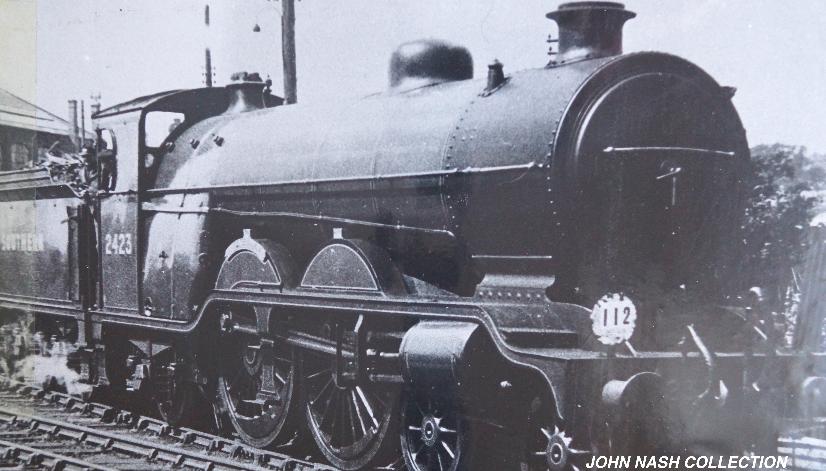
Minutes of the Newhaven Branch Meeting
held at the Labour Club on Sun Sept 1932
Bro. J. Hillman in the Chair
9 members present
Bros. F. Harris, C. Lower, F. Wilde, W. Brown, J. Giles, B. Peddlesden, J. Hillman, W. Clarke &
A. Charman
Minutes of August meeting read and disgust, proposed by Bro. W. Clarke and seconded by Bro. J. Giles.
Correspondence
Letter re retirement of Great Western Drivers and Cotton Operatives Strike read
Arising from minutes,
Cleaners meal hour, Secretary to write Mr. Jeans, urging reply to last letter. Pro. W. Clare and Sec. B. Piddlesden.
Other Business,
Discussion over seniority to stand over.
Pro. B. Piddlesden and Sec. W. Clarke. ‘Next meeting be by Summers Notice.'
Bro. Clarke to stand Shed Representative Pro. J. Giles and Sec. F. Harris. Bro. Clarke to see Foreman re small coal and inferior quality of same with a view to better quality for economy sake. Lights in shed and sand-hole need attention.
Minutes of the Newhaven Branch Meeting
held at the Labour Club on Sun October 23rd 1932
Bro. J. Hillman in the Chair
21 members present
Bros. W. Brown, A. Pearce, J. Simmons, S. Lower, F. Wilde, A. Lower, C. Wood, C. Lower, A. Charman,
J. Hillman, Christmas, F. Brown, C. Wilson, J. Giles, W. Terrill, B. Peddlesden, C. Collins, J. Green,
W. Goldson, W. Clarke, E. King, Brock, H. Allison, E. Ellis, Harris.
Minutes of September meeting read and discussed and passed as a true record, proposed by Bro. C. lower and seconded by Bro. A. Pearce.
Arising from minutes, Bro. Clarke interviewed Foreman re bad coal at depot and bad lighting of shed. He said lighting of shed has been remedied, and the case re bad coal is under consideration.
Bro. Charman interviewed Foreman re Bro. Ware's seniority. Foreman informed him that Ware takes his seniority from Aug.3rd 1917.
16/- receipt read from Cotton Fund
Letter from Bro. Jeans re Cleaners meal hour read. This item is on next agenda of Sectional Council.
Letter read re wage reductions read, also asking Branch to forward what action they wish the E.C. To take.
Bro. Allison proposed that this Branch will support the E. C. In any action they proposed to take. Sec. By W. Clarke.
It was stated by the Secretary that Bro. Collington was six months in arrears. A. Pearce pro and W. Clarke sec. ‘ hat Secretary write him on this matter.
Bro. Allison proposed that Secretary write Mr. Woods, Secretary, Local Labour Party, stating we are unable to contribute anymore to the Cotton Fund.
Bro. Brock brought forward the case of W. Bishop going to Seaford without Pilotman. He asked if it was in order.
Much discussion more from this case, and to terminate it, Bro Brock proposed that Foreman be asked to write Waterloo, for conditions under which W. Bishop works. Sec. W. Clarke. Proposed that W. Clarke see Foreman on this matter as early as possible.
Re new turn that has come to this depot. Bro. Clarke stated that Foreman asked him to get the members at this meeting to decide in which link this turn is to be placed. After much discussion, it was proposed by J. Giles and seconded by A. Charman. 'That this turn re 9.45 a.m. be placed in motor link and the 3.55 p.m. turn in pilot link. ‘ Carried.
Re new turn that has come to this depot. Bro. Clarke stated that Foreman asked him to get the members at this meeting to decide in which link this turn is to be placed. After much discussion, it was proposed by J. Giles and seconded by A. Charman. ‘ hat this turn re 9.45 a.m. be placed in Motor Link and the 3.55 p.m. turn in Pilot Link.’ Carried.
Proposed by Bro. C. Wilson and seconded by Bro. B. Piddlesden. ‘ hat 12.15 Monday turn be classed as a firing turn.
Proposed Bro. J. Giles proposed and A. Pearce seconded ' That as we have a good attendance at this meting, it would be advisable to have election of officers for 1933.' Carried
NEWHAVEN
BRANCH
OFFICERS
1933 - 34
Chairman Bro. A. Pearce
Vice Chair Bro. J. Giles
Secretary Bro. F. Wilde
Proposed by Bro. W. Clarke. That Bro. A. Pearce act as Chairman, seconded by Bro. H. Christmas. Carried.
Bros. W. Clarke, H. Allison and A. Pearce were nominated as Shed Representatives, Bro. A. Pearce refused. proposed by Bro. A. Charman. Bros. W. Clarke and H. Allison act as Representatives for 1933, seconded by Bro. W. Brown. Carried.
Proposed by Bro. C. Wilson and seconded by Bro. A. Pearce. That Bro. J. Giles act as Vice Chairman. Carried
Proposed by Bro. B. Peddlesden and seconded by Bro. W. Brown. That Bro. F. Wilde act as Secretary. Carried
Proposed by Bro. F. Wilde and seconded by Bro. A. Pearce. That Bro. W. Brown act as Assistant Secretary. Carried
Proposed by Bro. B. Peddlesden and seconded by Bro. W. Clarke. That Bros. C. Wilson and E. King take place of Bros. C. Dotteril and A. Pearce on Committee, others elected en-bloc
Committee Bros. C. Wilson, E. King, W. Terrill, M. Smith, A. Lower and J. Brock.
Trade Council members
Proposed by Bro. A. Pearce and seconded Bro. W. Clarke. That Bro. S. Lower be elected in place by Bro. D. Boyle as a member of Trades Council. Bros A. Pearce and S. Lower were elected members 1933.
Bro. Pearce gave his report District Council Meeting.
Pro. by S. Lower and sec by J. Giles. 'That Secretary should state in his letter to Head Office re wage reduction. That working to rule would be the best policy to adopt.
Minutes of the Newhaven Branch Meeting
held at the Labour Club on Sun Nov. 20th 1932
Bro. J. Hillman in the Chair
15 members present
Bros. F. Wilde, W. Brown, H. Allison, Ellis, Bridger, C.Wilson, J. Hillman, J. Brock, C. Lower,
B. Peddlesden, M. Smith, A. Pearce, W. Clarke, W. Ware & A. Charman.
Minutes of October meeting read and discussed, proposed by Bro. C. Lower and seconded by Bro. A. Pearce. They be passed as a true record.
Arising from minutes, Bro. Wilde said he had written Bro. Collington, re his arrears, but he had had no reply.
Much discussion arose, and to terminate it. Bro. Brock pro. 'That Bro. Pearce interview Bro. Collington on the matter.' Bro. Pearce said he would also see G. Bollen on the same subject.
Bro. Wilde gave a report on his meeting with Lelew & J. Browning re Shed Representatives, much discussion arose. Bro. A. Charman & sec. By W. Ellis. That two members of this Branch act as Shed Representatives. Bro. Wilde to report to Mr. Lelew on Tuesday the decision of the Branch.
Bro. Clarke gave a report on his interview with Foreman re W. Bishop working conditions. Foreman said that Bishop must not run over main line, other than that which he works over during his own working. He must not dispose of any main line engine unless it is a case of emergency, especially if Walshart valve gear.
Bro. Clarke also stated that Foreman cannot grant 12.15 a.m. Cleaners turn Mondays as a Firing turn.
Letter read re Railway Companies Claims. The nature of this letter did not refer to this depot, as no Senior app: Driver, fireman or Cleaner had been reduced for any long period.
Letter read from Lewes Divisional Labour Party re affiliation.
Letter re Railway Company's claims. The nature of this letter did not refer to this depot, as no senior app: Driver, Fireman or Cleaner had been reduced for any long period.
Bro. Charman again brought forward the case of Bro. Ware's seniority. The usual discussion and turmoil arose. Bro. Ware said he to put an end to the whole matter he would take the matter up himself and have his seniority placed from 11.4.17.
Minutes of the Newhaven Branch Meeting
held at the Labour Club on Sun Dec. 18th 1932
Bro. A. Pearce in the Chair
21 members present
Bros. A. Pearce, J. Giles, W. Ware, A. Charman, W. Brown, W. Clarke, C. Lower, A. Lower, F. Wilde,
A. Rookly, C. Dotterill & J. Brock.
Minutes of November meeting read and discussed, proposed a true record by Bro. W. Clarke and seconded by Bro. W. Ware.
Arising from minutes, Bro. Pearce stated that he had not seen E. Collington since the last meeting re his arrears, so he would write him on the matter. He had not spoken to G. Bollen re his arrears, as he was under the impression that he had paid them, or intended to pay them.
Bro. Wilde stated that he had had another interview with Mr. Lelew & J. Browning re Shed Representative. Mr. Lelew said that this case must be settled between the two Branches.
Bro. Wilde suggested that the three members who were to attend committee meeting with other unions representation re experience of recent mass meeting, should have an additional meeting with N.U.R. Members on the above case. This suggestion of Bro.Wilde's was carried, and Bro Clarke proposed that Bros. Pearce, W. Brown & F. Wilde should be the members from this Branch. Sec. By J. Giles. Carried.
Bro. Pearce asked for suggestions on which above committee could work. Proposed by A. Rookley & seconded By W. Ware. That there should be one from each union, one condition being that Bro. J. Browning should not be N.U.R. Representative. Amendment to this was put by Bro.Charman. He proposed that their should be two from this Branch and one from N.U.R. When put to the vote amendment was carried.
Bro. Pearce asked Bro. Ware if he had approached anyone re his case of seniority. He had not. He had been to the clerk at the Harbour Works and had found out full particular from him first. He started on Company 11.4.17 worked as labourer for three months, and then placed on engine as Fireman. After ten or twelve months was rated and called a Fireman.
Bro. Pearce asked Secretary to write Head Office re this case of seniority, before Ware takes case forward on his own. Pro. By W. Clarke & sec. C. Lower.
Letter read re nominations for Organising Secretary.Circular read from Hornsey Branch urging this Branch to support Bro. Allen nominated as Organising Secretary. Proposed by Bro. J. Giles and seconded by Bro. C. lower. That this branch support this nomination.
Letter read from Jeans re Cleaners meal hour on nights. It was agreed at Sectional Council meeting, that Cleaners should work 8 hours on night duty.
Letter read from Secretary Lewes D.R.P. re dissatisfaction in “Daily Herald,” Bro. A. Pearce stated that he thought this had been remedied now.
Bro. Ware bought forward the case of money put in Companies bank by employees, and the way in which it had been used as a lever against us at recent Wages Board Meeting. He asked Chairman's advice on this matter as he was a contributor. Bro. Pearce advised him to draw it out and place elsewhere. After much discussion on this matter it was pro. By W. Ware & sec. By C. Lower . That Secretary write Head Office and tell them that this Branch is of the opinion that a circular should be sent to all Branches stating the case fully, and saying how this was being used as a lever against us in the fight to cut our own wages down. Carried.
Much discussion arose over the coal sent to this depot. Bro. Clarke said he would see Mr Lelew on this matter.
Minutes of the Newhaven Branch Meeting
held at the Labour Club on Sun Jan. 15th 1933
Bro. A. Pearce in the Chair
19 members present
Bros. A. Pearce, Brown, F. Wilde, J. Denman, Collins, A. Lower, J. Hillman, W. Ellis, C. Lower, M. Smith,
C. Wilson, A. Charman, B. Peddlesden, W. Goldson, F. Harris, H. Allison & W. Clarke.
Minutes of December meeting read and discussed and passed as a true record, proposed by Bro. J. Giles and seconded by Bro. J. Hillman.
Arising from the minutes, Bro. Pearce stated he had not seen Bro. Collington re his arrears. Much discussion arose over this man being so much in arrears, and not attempting to pay. Pro. B. Peddlesden. 'That the matter be dropped.' Carried.
The case re Bro. Ware's seniority could not be proceeded with owning to illness of Bro. Ware.
Bro. Clarke gave report of his meeting with J. Browning, with Mr. Lelew on various matters. With regards to coal question, Tilmanstone coal was not in future to be put on engines working 3.0 a.m. & 11.0 a.m. Goods. Crowborough & Bexhill engines to have curtain amount.
Watering coal, this is to still be done with hose pipe. Mr. Lelew said he had a hard job to maintain 4 Coalmen at this depot as on average the only shifted 7 ton of coal daily.
Sunday Work, Bro. Clark stated that Mr. Lelew ask him to get men's decision on the Sunday work and this depot, and how it should be worked. He said that the suggestion had reached him from the union that no spare Drivers or spare Fireman should work Driving or Firing turns respectively on Sundays.
Much discussion arose over this case and it was sometime before any definite decision could be reached. Finally Bro. Harris pro. & sec A. Charman sec. That Bro. Clarke was asked to give Mr. Lelew this decision of the Branch on this matter when they next met. 18 voted.
Pro. By W. Ellis & sec. By C. Wilson. That Secretary write H.O. Re this Sunday Working and give the decision of the Branch on this matter.
Pro. By W. Clarke & sec. By W. Goldson. That all spare Sunday work be worked equally among all men.
Pro. By W. Goldson & sec. By Peddlesden. That Mr. Lelew be asked if Cleaners can be issued with one clean sponge – cloth a week.
Pro. By A. Charman & sec. By H. Allison. That now we are very slack in shed as regards turns and many men having been put back in shed, that men who are not familiar certain routes be allowed to learn them.
The Shed Representative business cropped up again and the same discussion arose to terminate it. Bro. Clarke pro. J. Denman sec. That this Branch supply two representatives and the N.U.R. one. Secretary was instructed to write Pargeter and tell him decision of the meeting.
Bro. Brock asked Chairman if it was possible to get Coalman to place wheel barrows else where than under water crane when not in use. Bro. Pearce said he would see the Shedman and get then to have a wheel barrow put where they would not be dangerous.
Letter read re employees banking money in Companies banks. Mr. Bromley said he could not send out circulars as requested, but would leave it to the men’s common sense to know what to do.
Letter read re affiliation fee, secreted instructed what to do.
Minutes of the Newhaven Branch Meeting
held at the Labour Club on Sun Feb. 26th 1933
Bro. H. Allison in the Chair
5 members present
Bros. H. Allison C. Wilson, M. Smith, F. Harris & F. Wilde.
Minutes of January meeting read over and passed as true record, proposed by Bro. C. Wilson and seconded by Bro. M. Smith.
Owing to very small attendance it was decided to close meeting at 11.45 a.m.
E. Collington accepted for membership, proposed by Bro. H. Allison and seconded by Bro. M. Smith.
Minutes of the Newhaven Branch Meeting
held at the Labour Club on Sun March 19th 1933
Bros. A. Pearce in the Chair
10 members present
Bros. A. Pearce, Brock, C. Lower, W. Terrill, F. Wilde, H. Allison, A. Charman, W. Brown, J. Giles
& E. King.
Minutes of February meeting read, proposed by Bro. Allison as a true record and seconded by Bro. J. Giles.
Letter read from Bro. Squance re Brock’s mishap 13.3.33
receipt read from Head Office for £1-4-0 for Irish Appeal Fund. bro. Wilde said he was still open to receive further contributions for this deserving causes.
Circular and stop watch competition card read rom Bow Branch. This in aid of a Bow member who has had considerable illness and still on sick list. Bro. A. Pearce, said he would take the card to help the causes.
Crcular and a book of tickets from Basset Law Labour Party for funds to aid endeavours to get Bro Squance made M.P.
Bro. Pearce said that owning to anomalies rising in shed and amongst so called friends, he was forced to hand in his resignation as Chairman of this Branch and as delegate to S.D.C. Bro. King asked for his reason for such drastic action. He gave several, but in the end he was persuaded to stand by the Branch, despite all the bad feelings existing in shed. Pro. By J. Giles. 'That Bro. Pearce carry on for sake of younger members and the Branch. Bro. Pearce said he would remain in office for remainder of year.'
Pro. By Bro. Giles & sec by Bro. Allison. 'That Shedmen see official, who is acting as Foreman at Brighton to see that the past disposal of engines is not abused as this seems to be the case at present, also that men should not make overtime when other men available.'
Minutes of the Newhaven Branch Meeting
held at the Labour Club on
Sun April 9th 1933
Bro. J. Giles in the Chair
Minutes of March meeting read and discussed and passed as a true record, proposed by Bro. C. Lower and seconded by Bro. W. Lower.
Letter read from Dorchester hand urging support their member as Organising Secretary, as this Branch had already proposed Bro. Allen for this position, we could do nothing for Bro. Billet’s nomination.
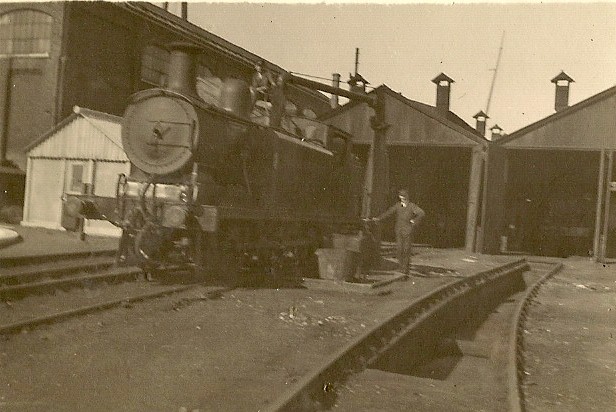
Ron Terrill Collection
Bill Terrill & Unknown 1933
Correspondence re Irish Railway Stoppage from Head Office.
Receipt for 16/- for Irish Appeal received.
Other Business
Much discussion was over past disposal of engines. Bro. Clarke took notes of several happenings on this subject, and was awaiting meeting with Mr. Urie, of Brighton on this subject and various other items which had been held over owing to absence of Loco Foreman. Pro. By C. Lower & sec. by H. Allison.
"That Bro. Clarke write to Urie and arrange this meeting".
Minutes of the Newhaven Branch Meeting
held at the Labour Club on Sun May 21st 1933
9 members present
Bro. A. Pearce in the Chair
Bros. F. Wilde, J. Giles, C. Lower, A. Pearce, C. Wilson, W. Ellis, W. Brown, E. King & A. Charman.
Minutes of April meeting read and discussed and passed as a true record, proposed by Bro. H. Allison and seconded by Bro. E. King
Correspondence re Assurance Fund read and discussed
Letter read from Bro. Allen thanking this Branch for its support to his nomination as Organising Secretary.
Correspondence re Sunday Work read and much discussion arose on this subject. This item is on Bro. Clarke's agenda for meeting with Mr. Urie.
Pro. J. Giles & sec. By Allison. That correspondence re 'German Relief Committee' appealing for assistance for German Workers lay on table. Carried.
Other Business
Bro. Allison asked Bro. Pearce if he was proceeding in his case, re merging of Pilot Link & No. 2 Link into one Link. Bro. Pearce said he had decided to drop this subject, but was taking forward an industrial grievance. He said he had written to Mr. Urie for a personal interview. Much discussion took place over this item.
Pro. By E. King & sec. By J. Giles. 'That 9 hours rest agreement be strictly adhered to.'
Minutes of the Newhaven Branch Meeting
held at the Labour Club on Sun July 23rd 1933
Bro. A. Pearce in the Chair
5 members present
Bros. A. Pearce, W. Brown, H. Allison, W. Clarke & J. Giles
Minutes of May meeting read and discussed and passed as a true, proposed by Bro. J. Giles and seconded by Bro. F. Harris
Correspondence re agenda of meeting on Shed Representative and Mr. Urie read and discussed.
Bro. Clarke said that there was two items form the other side for the next agenda meeting with Mr. Urie re Water spray pipes to be attached to coal stage & enginemen to be allowed more time when working a train away. 5 minutes being insufficient time. This time to be allowed on all booked turns and specials.
Correspondence and draw tickets from Basset Law read, proposed by Bro. J. Giles and seconded by Bro. W. Clarke. they lay on table.
Proposed by W. Clarke and seconded by Bro. J. Giles. That Secretary be commended in his article in July Journal.
Correspondence and dew tickets from Hewry Branch 5 books sent, Bros. Giles, Pearce, Clarke and Allison had one each, one left for Secretary.
Bro. A. Pearce read out District Council meeting report.
Bro. Allison brought forward the case of cleaners working 8 hrs continuous duty on all turns. Bro. Clarke said he would mention this to Mr. Urie at their next meeting.
Correspondence re Parliament Panel read, re Parent Shed and Sub depots.
Minutes of the Newhaven Branch Meeting
held at the Labour Club on Sun Aug. 20th 1933
Bro. A. Pearce in the Chair
7 members present
Bros. F. Wilde, H. Allson, J. Giles, W. Brown, W. Clarke, A. Pearce, A. Lower.
Minutes of July meeting read and discussed sand passed as true record, proposed by Bro. W. Clarke and seconded by Bro. J. Giles.
Arising from minutes Bro. Clarke gave account of his and Browning's meeting with Mr. Urie re items on agenda.
Water spray on coal stage, Mr. Urie agreed to have this installed.
Time allowance for engines working trains, Mr. Urie omitted this item but will come on next agenda.
Cleaners 8 hrs continuous duty, Bro. Clarke omitted this item but will come on next agenda.
Tank engines on back turn Crowborough & Grinstead turns, Mr. Urie said this could be arranged & Bro. Clarke gave a short account of how engines could be worked on these turns.
Bro. Clarke said he also brought forward a personal complaint re bad quality of Chislet coal at this depot. Mr. Urie said he wished enginemen who experience bad trips would send complaints to him re the coal, so that he could have good grounds for applying for better coal at Brighton & Newhaven.
Correspondence re alteration of rules read
Correspondence re rates of pay for men working on Sentinal Engines read and discussed
Letter read from Jeans re Shedman Robinson application for 15/- a day while acting as Shedman.
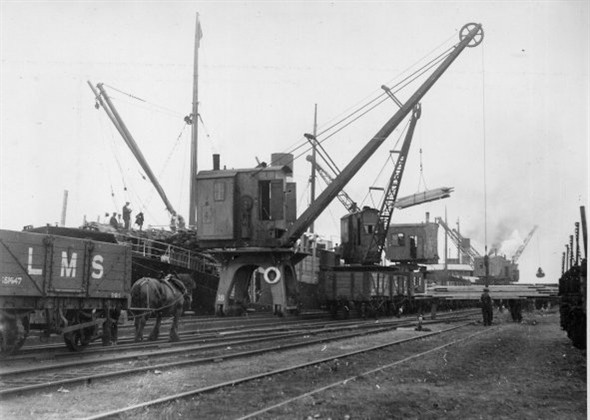
Newhaven Marine Museum
NEWHAVEN NORTH QUAY
Minutes of the Newhaven Branch Meeting
held at the Labour Club on Sun Oct. 22nd 1933
Bro. A. Pearce in the Chair
7 members present
Bros. E. King, A. Pearce. C. Lower, W. Clarke, F. Harris, F. Wilde & C. Wilson
Minutes of August meeting read and accepted as a true record, proposed by Bro. W. Clarke and seconded by Bro. E. King.
Arising from minutes
Correspondence read re
Inquiries - Ministry of Transport Enquiries,
Sunday Work - Southern Railway arrangements,
Nominations for A.A.D. etc
Parliamentery Panel
District Council Reports
It was agreed to continue present Sunday Working arrangements at this depot.
Bro. Pearce gave his report on Southern Council meeting and explained certain points.
Pro. W. Clarke and sec E. King. 'That November meeting be summons meeting as it was elections of officers etc for 1934
Minutes of the Newhaven Branch Meeting
held at the Labour Club on Sun Nov. 19th 1933
Bro. A. Pearce in the Chair
8 members present
Bros. W. Brown, A. Pearce, F. Wilde, W. Clarke, H. Allison, J. Brock, F. Harris & J. Giles.
Minutes of October meeting read and discussion and passed as a true record, proposed by Bro. W. Clarke and seconded by Bro. F. Harris.
Correspondence read re
W. Lawrence’s nomination for A.A.D.
Thanks for our support from Bro. Allen Organising Secretary
Labour Party meeting held 1.11.33 and expense of same
Shed Committee agenda’s re Shed improvements etc
It was proposed by W. Brown and it was seconded by Bro. W. Clarke. That this branch donate 10/- towards cost of meeting of Co-operative and Labour Party meeting held on 1.11.33. Secretary to write Head Office re same
Bro. Clarke brought forward complain about more Tillmanstone coal being sent to this depot. He was in favour of taking it forward to Mr. Urie, but after much discussion he was advised to let the matter drop, as there concerned with Tillmanstone coal were not present and were not complaining about losing any time.
Bro. Brock brought forward the case of W. Bishop driving on pilot engine Bank Holiday and displacing rostered men.
Bro. Clarke said he would see Mr. Urie on this matter when he interviews him re Cleaners 8 hours continuous duty.
November meeting being "Election of Officers" meeting, it was hoped to have a good attendance, but only 8 members present so Bro. W. Brown and seconded F. Harris. ‘ hat officer of 1933 be re-elected en-bloc for 1934, excepting Committee.
Chairman Bro. A. Pearce, Vice Chairman Bro. J. Giles, Secretary Bro. F. Wilde, Assistant Secretary Bro. W. Brown
Auditors Bros. W. Brown & H. H Allison, Trades Council delegate Bro. A. Pearce, Southern D.C. Bro. A. Pearce
Committee Bros. J. Brock, H. Allison, M. Smith, W. Clarke, C. Wilson & E. King
Minutes of the Newhaven Branch Meeting
held at the Labour Club on Sun Jan. 21st 1934
Bro. A. Pearce in the Chair
10 members present
Bros. A. Pearce, E. Hillman, C. Lower, H. Allison, W. Brown, W. Clarke, E. King, F. Wilde, M. Smith
& C. Jenner.
Minutes of November meeting read and discussed and passed as a true record, proposed by Bro. W. Clarke and second by Bro H. Allison
Bro. Clarke was called upon to give report on meeting with Mr. Urie.
Cleaners 8 hours duty, 2 senior cleaners of each shift to work 8 continuous duty.
Driver Bishop duites on bank Holiday, to prepare engines (boat engines) when not required by Harbour Works.
Tillmanstone coal at this depot, Mr. Urie said he would stop extra allotment of Tillmanstone coal to this depot. 3.0 a.m. Bridges engine not to have this coal.
Class of engine on 3.0 a.m. 3 Bridges turn, as far as possible shedmen to see that C2x engine to work on this turn.
Water spray on coal stage, this matter is being dealt with.
Cleaning of tube plates firebox end, tube plates on Boat Engines to be cleaned by C. Green, tube plates on W.O. Engines to be cleaned by A. Jones.
Bro. Clarke said the N.U.R. Had brought forward the case of holiday months being closed up from April to September. He wanted the decision of this Branch on the matter. Pro. By H. Allison & sec. by C. Lower. That holidays be worked at present excepting for the closing up of the months.
The Secretary said he had sent 2 tickets for dinner and social at Barton Wilde retirement presentation. After much discussion about member who would like to go and couldn’t it was, proposed by Bro. W. Clarke and seconded by Bro. C. Jenner. That the tickets be returned with the necessary accompanying letter
Receipt for 9/- from P. Collick re Barton Wilde presentation. Chairman remakes on the small amount collected.
Correspondence re S.R. Sectional Council No.2 Election 1934
Letter from Jeans read re Holiday Arrangement for August Holiday period.
Bro. Pearce said as he would soon be leaving the depot, a new Chairman would have to be elected at this meeting.
Bro. Clarke moved a vote of thanks to Bro. Pearce for his services to the Branch in the past and keeping the Branch together. Bro. Allison seconded. Carried.
Proposed by Bro. W. Clarke and seconded by Bro. M. Smith. That Bro. E. Hillman act as Chairman for 1934, not accepted.
Proposed by Bro. W. Brown and seconded by Bro. E. King. That Bro. H. Allison act as Chairman, Carried
Proposed by Bro. W. Clarke and seconded by Bro. E. King. That Bro. H. Allison be Trades Council delegate in place of Bro. A. Pearce. Bro. Allison refused. After much discussion on this matter Bro. Allison proposed that this matter be left over to the next meeting.
Proposed by Bro. A. Pearce and seconded by Bro. W. Clarke. That Bro. Allison act as delegate to S. D. Council. Carried
Bro M. Smith brought forward complaint re fire-irons on engines at this depot. Bro. Clarke said he would see shedman P. Fenner about this matter on the Monday (22.1.34) morning and if he could get no satisfaction, he would bring the matter up on Tuesday (23.1.34) when he met Mr. Urie.
Minutes of the Newhaven Branch Meeting
held at the Labour Club on Sun Feb 18th 1934
Bro. H. Allison in the Chair
6 members present
Bros. J. Brock, H. Allison, C. Lower, J. Giles W. Clarke & F. Wilde.
Minutes of january meeting read and accepted as a true record, proposed by Bro. W. Clarke and seconded by Bro. C. Lower.
Matters arising from minutes, much discussion over coal supplied at Newhaven Loco.
Correspondence rear re
Co Op Party Conference, Hunger Marchers Fund, Medical Examinations, Trades Council Report, Co Op receipt (10/-), Southern Council minutes, Letter from new Organiser Secretary, Circulars re Sectional Council matters. Clustrian Fund Delegate.
Other Business
Trades Council Delegate (Not Appointed)
Presentation to Bro. A. Pearce Collection arranged
*Bro. A. Pearce transferred to Three Bridges motormen’s depot and later moved to Brighton motormen’s depot and finally Seaford.
Minutes of the Newhaven Branch Meeting
held at the Labour Club on Sun March 18th 1934
Bro. H. Allison in the Chair
10 members present
Bros. F. Wilde, H. Allison, W. Brown, J. Brock, W. Clarke, J. Giles, H. Bowden, C. Jenner, E. Brooker
& E. Eacott.
Minutes of meeting held 18.2.34, read and discussed and passed as a true record, proposed by Bro. W. Clarke and seconded by Bro. J. Giles
Arising from the minutes, much discussion arose over election of delegate to Trades Council. No member present was anxious to table the position so Bro. Wilde said he would attend the next Trades Council meeting, but not in an official capacity. He would in the meantime approach Bro. E. King to see if he would act as delegate for this Branch for 1934.
Letter from Mrs Pargeter, re wreath from this Branch as last token of respect to her late husband, read.
Much discussion arose over G. Bollen arrears, Secretary said that he was marked “lapsed” on quarterly returns, but he was advised to accept money from Bollen if he offered it, but at the same time remind him that he was out of benefit until he had paid right up.
Correspondence re National Wages Board Machinery read and discussed.
Bro. Clarke brought to the notice if the Branch, that coal spray had not as yet been fitted to coal stage and he thought it was time something was done. Bro. H. Allison proposed. That W. Clarke ask for interview with Mr. Urie on this subject, also at same time remind him of the agreement made with Mr. Lelew re equalisation of Sunday work. Sec. W. Brown.
After the business of the Branch a pleasing ceremony took place when our late Secretary Bro. A. Pearce was presented with a barometer on his leaving the depot to take up his duties of Motorman at Three Bridges. Bro. F. Sherwin made the presentation and spoke lightly of our colleagues principles and conscientiousness during his various turns office in this Branch.
Bro. Browning of the N.U.R. Also spoke well of Bro. Pearce qualities.
Bro. Pearce suitably replied and said he was glad to think he was leaving this Branch with many friends and no enemies. He said he had always done his best in everything he attempted.
Minutes of the Newhaven Branch Meeting
held at the Labour Club on Sun June 24th 1934
Bro. H. Allison in the Chair
6 members present
Bros. W. Brown, H. Allison, F. Wilde, J. Brock, W. Terrill & W. Clarke.
Minutes of March meeting (No meetings April & May) read and discussed and passed as a true record, proposed by Bro. J. Brock and seconded by Bro. W. Clarke.
Bro. Clarke reported of meeting with Mr. Urie re coal spray for coal stage, and Sunday working. There was much discussion on equalisation of Sunday work again and it was pro. By J. Brock & sec W. Brown. 'That Bro. Clark arrange for another interview with Mr. Urie on this subject.'
Correspondence re
Abolition of 9 hours roster, District Council meeting, Fascist Violence No. 1&2. Read and discussed.
Bro. Clarke asked our District Council delegate, Bro. Allison to mention that where are still engines running about with no ash-pan cock fitted to them.
Bro. Clarke was asked to bring up the matter re Cleaner being claimed as Fireman to 9.0 p.m. Spare driver, must be claimed only when 5 hrs firing duties are likely. He was asked to find out from Mr. Urie where this ruling accrued. Proposed by Bro. H. Allison and seconded by Bro. W. Clarke.
Minutes of the Newhaven Branch Meeting
held at the Labour Club on Sun July 22nd 1934
8 members present
Bro. H. Allison in the Chair
W. Brown, H. Allison, J. Brock, W. Clarke, F. Wilde, E. Eacott, J. Giles & Jenner.
Minutes of June meeting read and discussed and passed as a true record.
Arising minutes from the minutes, Bro. Clarke gave report of meeting with Mr Urie on six subjects, but he said that owing to Mr. Urie only being available for about twenty minutes the business could not be carried out satisfactorily, so he wished someone to propose that another meeting arranged with Mr Urie on these 6 subjects.
Bro. Giles proposed. 'That Mr. Urie asked for another interview.' W. Brown seconded.
Correspondence re Insurance Section, Nomination for General Secretary, read and discussed.
Bro. Clarke proposed and Bro. Giles. 'That a list be placed in shed for those who wished to contribute, for the widow of late shunter W. Hills. A part of the will go towards a wreath and remainder to widow.
Minutes of the Newhaven Branch Meeting
held at the Labour Club on Sun Sept. 16th 1934
Bro. H. Allison in the Chair
6 members present
W. Brown, H. Allison, F. Wilde, H. Bowden, J. Giles & E. King.
Minutes of July meeting and discussed and passed as a true record, proposed by Bro. J. Giles and seconded by Bro. W. Brown.
Pro. by H. Bowden and sec. by J. Giles. 'That G. Bollen be allowed to pay up all arrears owing, and asked Secretary to write to Head Office and explain circumstances.
Shed Representatives business held over to next meeting owing to Bro. Clarke’s absence (Working).
Minutes of the Newhaven Branch Meeting
held at the Labour Club on Sun Oct. 28th 1934
Bro. H. Allison in the Chair
7 members present
M. Smith, B. Piddlesden, H. Allison, J. Brock, E. King, W. Clarke & F. Wilde.
Minutes of September meeting read, discussed and passed as a true record, proposed by Bro. E. King and seconded by Bro. B. Peddlesden.
Secretary said G. Bollen had not any payment.
Correspondence read re Fatal accident to Shunter W. Hills from Mr Allen Organising Secretary, T. U. recruitment week, Accident at work
Shed Representative business from previous meeting discussed and pro. M. Smith and sec E. King. 'Letter be written Mr. Urie retesting Bettshanger coal be sent here as instructed by Mr Shoppey, also inadequate firemen at present supplied to engines at Newhaven. Bro. Clarke to urge return from Brighton of agenda.
New business, letter of sympathy to Bro Thompsett from Branch and arrangements for list etc.
Shed drivers to be approached re odd shifts etc during preparing of engine.
Minutes of the Newhaven Branch Meeting
held at the Labour Club on Sun Jan. 26th 1935
Bro. H. Allison in the Chair
14 members present
Bros. H. Allison, W. Terrill, D. Boyle, A. Rookley, W. Brown, W. Clarke, E. Brooker, J. Brock, F. Wilde,
C. Lower, M. Smith, J. Green, J. Hillman & Chappell.
Minutes of October meeting read and discussed and passed as a true record.
Arising from minutes, Bro. Clarke said he had interviewed Mr Urie re coal. Mr Urie had given orders for no more than 10 C.W.T Tilmo to be put on tender engines to work pilot turns, in case they are wanted for running turns instead.
Complaint re Fire-irons was being looked into, Bro. Clarke said he thought there was an improvement in the Fire-irons recently.
Application for more than 5 minutes in between engines to be prepared. Mr. Urie said he didn’t think they would allowed anymore time.
Men applying for leave of duty to be notified if such leave is granted.
Complaint re state of Driver's lobby, suggested that lobby should be scrubbed out more. Since tis comlaint had been made, there had been an improvement.
Trade Union week. Secretary asked all members who are off duty to attend meeting to be held Thursday Jan 31st at Labour Club, as a preliminary meeting to big meeting to be held Feb. 4th 1935 at Church Room, for the purpose of enrolling non unionist.
General Secretary Voting, Bro. Squance had a clear majority over all other candidates.
G. Bollen arrears, much comment arose on this subject, it was proposed by a member. That he be enrolled as a new member. This could not be done as we did not know if he was willing to join or not, so W. Clarke said he would see Bollen during the week.
W. Holland position in union, Secretary said he asked him if he intended paying his arrears (5 months). He said no, and said he would pay no more. Thinking that he may not realise his position. Bro. Clarke pro. and C.Lower sec. 'That Secretary write Bro. Hollands and explain the position to him.
NEWHAVEN
BRANCH
OFFICERS
1935
Chairman Bro. H. Allision
Vice Chair Bro. J. Giles
Secretary Bro. F. Wilde
Letter read from Eastbourne Branch inviting our members to an open meeting to be held at Eastbourne on Feb. 10th, Bro. Jeans as speaker.
Election of Officers 1935
Chairman Bro. H. Allison, Vice Chairman Bro. J. Hillman, Secretary Bro. F. Wilde, Assistant Secretary Bro. W. Brown
Committee Bros. J. Giles, C. Lower, E. Brooker, M. Smith, W. Terrill & W. Clarke
Southern District Council delegates Bros. H. Allison & W. Clarke.
Trades Council Delegates Bros F. Wilde & W. Clarke.
Bro. Wilde took on Secretaryship again, when offering to help in collection moneys.
Minutes of the Newhaven Branch Meeting
held at the Labour Club on Sun Feb. 17th 1935
Bro. H. Allison in the Chair
9 members present
H. Allison, W. Clarke, F. Sherwin, W. Brown, J. Hillman, E. King, F. Wilde, G. Chappell & C. Lower
Minutes of January meeting read and discussed and passed as a true record.
Arising from the minutes, item re coal at our depot, Bro Clarke said that we are going to have a small supply of Betteshanger coal but for Boat Trains only.
Much discussion over Holiday list for 1935.
W. Holland arrears, Secretary wrote him letter as requested, but he said Hollands practically ignored letter.
G. Bollen arrears, Secretary said he gave Bollen necessary form to join again, through his mate and Bollen said he should have given them to him himself. Bro. Clarke said he would see him on this matter.
Pro. H. Allison 'That Bro. Clarke see Mr. Urie re G. Chappell working Sundays with other Cleaners.’
Minutes of the Newhaven Branch Meeting
held at the Labour Club on Sun March 17th 1935
Bro. H. Allison in the Chair
12 members present
W. Clarke, E. Hillman, J. Hillman, C. Jenner, W. Terrill, M. Smith, J. Brock, H. Allison, H. Bowden,
D. Boyle, E. King & F. Wilde.
Minutes of previous meeting read and discussed and passed as a true record.
(Coal, G. Bollen’s arrears & G. Chappell proposed Sunday work)
Holiday list for 1935, Driver Ware’s request to revert t original date. agreed to
Correspondence letters read concerning new machinery for dealing with Railway Servants disputes etc.,
Letter concerning G. Chappell’s arrears,
Letter from Sectional Council re Electric Extension Arrangements.
New Business
Proposed D. Boyle and sec H. Bowden. 'Secretary to write Mr. Jeans, protesting against unfair effect of present system of appointing ‘Motormen' in affected areas.'
Shed Committee to see Mr. Urie re Driver H Allison’s position in ‘Pilot Link’ with Driver F. Harris.
Hospital Committee meeting attended by Bro. W. Clarke on behalf of A.S.L.E.F. no further post to be taken as a branch.
Minutes of the Newhaven Branch Meeting
held at the Labour Club on Sun April 28th 1935
Bro. H. Allison
7 members present
Bros. F. Wilde, W. Brown, H. Allison, M. Smith, W. Clarke, J. Brock & A. Charman.
Minutes of March meeting read and discussed and passed as a true record
Letter re Electric extension and allocation of vacancies.
Bro. Clarke gave brief report on Trade Council meeting.
Bro. Allison gave brief report of Southern District Council meeting. The subject of temporary Cleaners joining the union was brought up and Bro. Wilde said he was instructed not to accept temporary cleaners, but Bro. Allison said that the union was going to accept them and get them to pay 2d per week for protection only.
Bro. Charman brought a complaint re unfair working of Sunday turns. Much discussion arose and Bro. Clarke was instructed to see Mr. Urie on this subject and also if possible to have a record posted in shed of Sunday turns worked by each man.
With regard to the long illness of Bro. Collins, Bro. Charman asked if it was possible for another list be subscribed to, for his benefit, and be kept open for a month or more and so much weekly be paid to him. All members at meeting were agreeable and it was proposed that Secretary make out list for this purpose.
Minutes of the Newhaven Branch Meeting
held at the Labour Club on Sun May. 19th 1935
Bro. J. Hillman in the Chair
9 members present
Bros. Wilde, J. Hillman, A. Charman, M. Smith, W. Brown, W. Terrill, J. Brock, W. Clarke & C. Wood.
Minutes of April meeting read and discussed and passed as a true record.
Arising from these minutes, Bro. Clarke said that Mr. Urie had not met them on various complaints brought forward during the April meeting
Bro. Wilde said he had had no more information re Electric Extension.
The Secretary said he had got D. Smith to fill in application form for membership. Bro. Clarke proposed and Bro. Terrill seconded his nomination.
Letter of thanks read from Bro. Allen for our support to his nomination for Assistant General Secretary.
Appeal letter read from National League of Blind.
Bro. Brock brought forward complaint re link promotion much discussion arose over this subject, and Bro. Clarke said he would mention the matter to Mr. Urie when he met them during the next week and he was also asked to ask Mr. Urie if he could give them any idea of the workings of the shed when the electrification starts in July.
Minutes of the Newhaven Branch Meeting
held at the Labour Club on Sun June 28st 1935
6 members present
W. Clarke, J. Hillman, W. Brown, C. Wood, A. Charman & F. Wilde
Minutes of previous meeting read and passed as a true record, proposed by Bro. W. Clarke and seconded by Bro. C. Wood.
No Correspondence
Shed Committee business report given by W. Clarke (Sunday worked to be posted in shed) etc
No other business owing to small attendance
Minutes of the Newhaven Branch Meeting
held at the Labour Club on Sun July. 21st 1935
Bro. H. Allison in the Chair.
8 members present
H. Allison, A. Charman, F. Wilde, J. Hillman, W. Brown, C. Jenner, E. King & M. Smith.
Minutes of June meeting read and discussed and passed as a true record.
Correspondence re result of voting for position of assistant General Secretary, second ballot to be taken by Bros. Allen and Collick.
Proposed by Bro. H. Allison and seconded by Bro. J. Hillman. 'That R. Cutler’s nomination be accepted.’
Bro. allison gave brief report on L.D.c. meeting of July 14th, 1935.
Bro. Charman asked if we could get a 9.0 p.m Fireman with Shedman, as this man had been excluded since Electrification started. After much discussion, it was decided not to press this further.
Bro. by A. Charman 'That application be made for smoke box rakes, as the one in use was not very suitable.
Minutes of the Newhaven Branch Meeting
held at the Labour Club on Sun Oct. 27th 1935
7 members present
H. Allison, W. Terrill, W. Clarke, F. Wide, J. Hillman, F. Brown & J. Brock
Minutes of July meeting read and discussed, proposed by Bro. J. Hillman and seconded by Bro. W. Terrill. That they be a true record.
Bro. Allison read a letter re General Secretary’s testimonial, subscription card enclosed for donations.
Letter re voting result for position of Assistnt General Secretary, Bro. W.P. Allen.
Report of L.D.C. meeting read and discussed arose on various subjects.
Pro. by W. Clarke and sec. by J. Hillman.'That P. Brdger & G. Bollen nomination be accepted.’
Pro. by W. Clarke and sec. by J. Hillman.'That Secretary write A. Rookley re his arrears.
Bro. Clarke spoke of bad state of lobby grate and wash basins. He was instructed to interview Mr. Urie on these subjects, also proposed carriage for Cleaners Lobby and also re brake adjustments by engine men
Minutes of the Newhaven Branch Meeting
held at the Labour Club on Sun Nov. 24th 1935
Bro. H. Allison in the Chair
8 members present
Bros. F. Wilde, W. Clarke, H. Allison, J. Brock, J. Hillman, G. Chappell, W. Brown & C. Jenner.
Minutes of October meeting read and discussed and passed as a true record, proposed by Bro. J. Hillman and seconded by Bro. W. Clarke.
Secretary read a letter from A. Rookley re his arrears he stated that he wished to become Protection member only, as at the present time he was not a member of this Society. Much discussion arose over this letter and the members thought, Bro. Rookley should re consider his decision. Bro. Allison & Bro. Clarke said they would try and see him and speak to him on the matter.
Bro. Clarke gave report of interview with Mr Urie on the following subjects. Lobby Stove, to be examined with view to repair, by all accounts this has been done. Lobby wash basins, 2 enamel bowls to be placed outside lobby by window and lockers for cleaners to be placed where wash basins are at present situated. Cleaner's lobby, not conceded. cleaners to use Driver's Lobby. Brake adjustments, suitable tools to be placed on all engines for adjusting brakes by engine men. Smoke box rakes, two more smoke box rakes to be supplied. Sunday work, list of all Sunday work to be posted in shed. All specials turns to be in red ink.
Bro. Clarke proposed and Bro. C. Jenner seconded. 'That hours for payment of wages should be 2.30 p.m. - 10.0 p.m. continuos Thursdays and 6.30 a.m. - 2.30 p.m. continuos Fridays.
Minutes of the Newhaven Branch Meeting
held at the Labour Club on Sun Dec. 18th 1935
Bro. H. Allison in the Chair
11 members present
Bros. W. Brown, W. Clarke, E. King, C. Dotterill,
F. Wilde, A. Charman, J. Hillman, M.Smith,
H. Allison, H. Bowden, & J. Brock
Minutes of November meeting read and discussed and passed as a true record.
Arising from the minute re Bro. Rookley arrears he states that he does not not wish to pay his arrears and remain a full benefit member, but he wishes to rejoin as a Protection member only. Proposed by Bro. W. Clarke and seconded by Bro. E. King.
'That Bro Rookley nomination be accepted.
Re payment of wages hours, nothing definite decided on yet.
Proposed by Bro. J. Hillman and seconded by Bro. H. Bowden. That holiday list arranged by W. Clarke for 1936 be accept and be forwarded to Brighton
NEWHAVEN
BRANCH
OFFICERS
1936
Chairman Bro. H. Allision
Vice Chair Bro. J. Hillman
Secretary Bro. F. Wilde
Correspondence re 100% membership read and discussed
Bro. A. Charman asked if he should apply for vacancy for Fireman at Newhaven. There was no need for him to apply as he was not redundant. Bro. Wilson should apply, as he is the next in order of seniority.
Election of Officers 1936
Chairman, Bro Allison, Vice Chairman Bro. J. Hillman, Secretary Bro. F. Wilde, Assistant Secretary Bro. W. Brown.
Committee Bros. M. Smith, A. Charman, W. Clarke, H. Bowden, D. Boyle, E. King & J. Brock
Trade Council Delegates Bros F. Wilde & W. Clarke
Southern District Council delegate Bro. H. Allison
L.D.C. delegate Bro. W. Clarke.
Bro. F. Wilde moved and Bro. W. Brown seconded a vote of thanks to Bro. Clarke for the efficient way he had carried out his duties as L.D.C. delegate for this Branch
Minutes of the Newhaven Branch Meeting
held at the Labour Club on Sun Jan 19th 1936
Bro. J. Hillman in the Chair
9 members present
Bros. J. Hillman, F. Wilde, W. Brown, J. Giles, E. Eacott, A. Charman, E. King, W. Terrill & W. Carke
Minutes of December meeting read and discussed and passed as a true record, proposed by Bro. W. Clarke and seconded by Bro. W. Terrill.
Arising from minutes, Bro. Wilde said he had received Bro. Rookley’s entrance fee and December money
Bro. Clarke gave a report of meeting with Mr. Urie on the following subjects.
Wages hours of payment, nothing settled yet. Lobby sinks, there are going to be attended to when new stores are being erected. Holiday List, Record of Sunday work, Temporary list to be sent down, white case is being made. Much discussion took place over various other subjects.
Correspondence re Working overtime read
Minutes of the Newhaven Branch Meeting
held at the Labour Club on Sun Feb 16th 1936
Bro. H. Allison in the Chair
13 members present
Bros. F. Wilde, W. Clarke, J. Hillman, C. Jenner, W. Ellis, H. Allison, F. Elmer, J. Cosburn, J. Giles,
W. Brown, M. Smith, J. Brock & E. Eacott
Minutes of January meeting read and discussed.
Arising from minutes, Bro Clarke gave account of interview with Mr. Urie on following subjects
Payment of wages hour, Thursday 2.30 p.m. - 5.0 p.m. 6.30 p.m. - 10.0 p.m. & Friday 6.0 a.m. - 12.0 noon. Bro. Clark said that he had had no reply from Mr. Urie on this subject.
Bro. Crosburn moved. 'That Mr. Urie be written to on this subject and failing a satisfactory reply, take matter to Sectional Council.' Secconded J. Hillman.
Lobby wash basin, owing to excessive cost of removal, wash basins to remain in lobby, but a larger waste pipe to be fitted.
Brake adjustments, no complaints from other depots re brae adjustment tools. Running Supt. can do nothing on the matter. Members advised when no suitable tools on engine to put it in the book for fitter to do.
766 turn Engine requirement, Request from N.U.R. members, the engine requirements on 767 turn to be between 9.15 - 10.o p.m. Matter to be submitted to running light.
Bro. Giles pro. and Bro. Brown Sec. ‘ That requirements should be done sometime during the day, as the engine on this turn is in traffic 24 hours.’
Letter read re Strike of General Office Staff. Bro. F. Elmer moved resolution. That this Branch endorses our E.C. action in this matter. Seconded by Bro. Clarke.
Bro. Clarke brought forward complaint re state of tools on engines. Bro. Cosburn proposed. 'That this matter be brought before Mr. Urie by Shed Representative.' sec. Giles, carried.
Bro. Ellis asked the Branch to define which turn was senior in pilot turn and E.P. turn. Much discussion arose and it was agreed that pilot turn was the senior turn, excepting Mondays.
Minutes of the Newhaven Branch Meeting
held at the Labour Club on Sun March 15th 1936
Bro. H. Allison in the Chair
11 members present
Bros. E. King, F. Elmer, J. Cosburn, W. Clarke, E. Eacott, C. Lower, J. Giles, M. Smith, H. Allison,
A. Charman & F. Wilde.
Minutes of February meeting read and discussed, accepted as a true record, proposed by Bro. C. Jenner and seconded by Bro. F. Elmer.
Arising from minutes, question of wages payment discussed ad left over awaiting reply from Mr. Urie. Tools for brake adjustments, Secretary stated bars are now ready for putting on engines.
Correspondence,
Letter from Head Office re Local Representation for shed
Letter from Sectional Council re Motormen of relief purposes at Seaford.
New Business,
Agreed to write Sectional Council failing reply form them re Dual - men.
Minutes of the Newhaven Branch Meeting
held at the Labour Club on Sun April 19th 1936
Bro. Allison in the Chair
13 members present
Bros. W. Brown, J. Giles, M. Smith, W. Terrill, J. Hillman, F. Wilde, J. Cossburn, W. Clarke, C. Jenner,
H. Allison, J. Brock, F. Elmer & E. King.
Minutes of March meeting read and discussed, proposed by Bro. J. Giles and seconded by Bro. C. Jenner. True record.
Receipt for “Bromley Testimonial” monies 13/3 received.
Result of ballot for post of Organising Secretary read, Bros. Mishel & Batty polled highest votes, but no clear majority. Ballot papers for these two men to be issued, for a second ballot.
Re the letter on wage negotiations, Bro. Clarke said he was not satisfied with the decision arrived at and would like to send a resolution to A.A.D. To this effect.
It was decided to send the following resolution.
This Branch considered "Wage Negotiations" circular from all angles and all of the opinion that the Company's offer is inadequant and considers that from the loco men's point of view, the rates for night duty, Sunday duty & overtime are of prior importance to the 2 ½% cut and therefore instructs the A.A.D. to thoroughly consider Company's proposals before committing themselves. Pro.W. Clarke & F. Elmer.
Bro. Cossburn put forward an amendment but this was defeated.
Bro. Clarke asked Secretary where the Sunday duty sheet was. Secretary read hat it was in a duty state and was making out a forth one
Payment of wages hours, Bro. Clarke said he had not had anything in writing from Mr. Urie on this subject. He would write again.
Bro. Cosburn asked when he was going to be booked a rostered Sunday. Much discussion arose over this subject and in the end no further progress had been made in the matter. Bro. Cossburn said he would like the Shed Representative to write Brighton on this matter.
Bro. Brock said his hat badge had been stolen from the lobby. Bro. Wilde said that to save a lot trouble, Mr. Urie was sending him a new one.
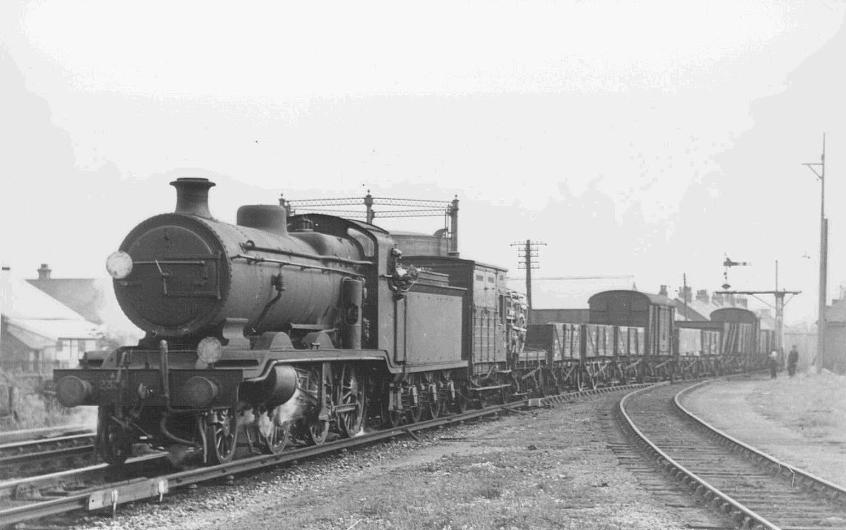
PHOTOGRAPHER UNKNOWN
Minutes of the Newhaven Branch Meeting
held at the Labour Club on Sun May 24th 1936
Bro. J. Hillman in the Chair
9 members present
Bros. W. Clarke, F. Wilde, W. Brown, J. Giles, E. King, C. Jenner, W. Terrill, H. Allison & J. Hillman
Minutes of April meeting read and accepted as a true record, proposed by Bro. W. Clarke and seconded by Bro. J. Giles.
Arising from minutes
Pilot Link, Sunday now rostered, wages payment no further action.
Correspondence
Letter read from Trades Council re Distress Fund and proposed by Bro. W. Clarke and seconded by Bro. E. King. That Secretary write to Head Office for grant for this.
Letter read from re Sectional Council nominees, matter left over till June meeting
New Business
Proposed E. King and seconded J. Giles. 'That Bro. Sifford be paid suspension benefit for two days off for passing signal at danger.
Agree to leave to next meeting anything concerning transfer of C. Pelham from Littlehampton.
Minutes of the Newhaven Branch Meeting
held at the Labour Club on Sun July 19th 1936
Bro. H. Allison in the Chair
6 members present
Bros. W. Clarke, E. Eacott, E. King, H. Allison, J. Giles & F. Wilde
Minutes of May meeting read and accepted a true record, proposed by Bro. E. King and seconded by Bro. W. Clarke
Arising from minutes, Secretary read reply to letter concerning Distress Fund agreed to come over for present.
Correspondence
Letters read from Faversham Branch conceding Sectional Council nominees, election of Organiser and wages negotiation circular.
New Business
Bro. W. Clarke moved and seconded by E. King.' That Shed Committee write Waterloo though Mr. Urie for additional roster turn in the view of Permanent Redundancy at Newhaven.
Minutes of the Newhaven Branch Meeting
held at the Labour Club on Sun August 23rd 1936
Bro. H. Allison in the Chair
11 members present
Bros. F. Wilde, W. Clarke, E. King, A. Charman, W. Brown, J. Hillman, E. Eacott, J. Brock, H. Allison,
W. Goldson & F. Elmer.
Minutes of July meeting read and discussed and passed as a true record, proposed by Bro. W. Clarke and seconded by Bro. J. Hillman.
Arising from minutes re asking for additional turn to cover redundancy at depot, bro. Clarke said he had not written yet, but after much discussion it was pro. By W. Goldson & sec. By F. Elmer. That Secretary and W. Clarke draft a letter to Waterloo on this subject.
Letter from Newhaven Trades Council which was held over from last meeting was read again, It contained an appeal to this Branch for assistance to the Distress Fund. Every member responded and the sum of 5/- was collected and Bro. Clarke said he was willing to take list round the shed to see if any other members wishes to contribute. Much discussion arose whether letter should be posted in the shed or not. In the end Bro. W. Brown proposed and Bro. W. Goldson seconded. That list should not be posted, but Bro. W. Clarke said he would take it and show those who he asked.
Letters read re Staffing of depots and Elimination of Overtime.
Bro. Charman complained that Sunday work of spare Fireman & Cleaners was not being work fairly. He said he wanted equalisation of Sunday work and turns, early & late to work alternately.
Minutes of the Newhaven Branch Meeting
held at the Labour Club on Sun September 27th 1936
Bro. H. Allison in the Chair
8 members present
Bros. W. Brown, W. Goldson, E. King, F. Wilde, J. Hillman, J. Giles, H. Allison & W. Clarke.
Minutes of August meeting read and discussed and passed as a true record, proposed by Bro. J. Hillman and seconded by Bro. W. Clarke.
Arising from minutes re item re additional turn to cope with redundancy at this depot, Bro. Clarke said they had not written the letter to Waterloo, owning to personal reasons.
Bro. Goldson proposed that Bro. Clarke & Bro. Wilde should draft this letter to Waterloo at earliest opportunity.
Bro. Clarke handed in 7/9 which he had collected for Trades Council Distress Fund. Bro. Wilde said he would hand over 12/9 as a result of this appeal. A vote of thanks to Bro. Clarke for his help in this deserving cause was proposed by Bro. Wilde and seconded by Bro. E. King.
Circular re Sectional Council No.2 ballot result read.
Minutes of the Newhaven Branch Meeting
held at the Labour Club on Sun Oct 25th 1936
Bro. H. Allison in the Chair
7 members present
Bros. H. Allison, W. Brown, F. Wilde, M. Smith, J. Hillman, W. Clarke & W. Goldson.
Minutes of September meeting read and passed as a true record.
Bro. Clarke gave report of interview with Mr. Urie on various subjects i.e.
Extra work to cope with redundancy: - nothing sorted yet.
Coalman's lobby, Cleaners not to have part of coalman's lobby, to use driver's lobby.
Tilmanstone Coal, amount alloted to this depot to be used. Three Bridges engine to have same in proportion with other coal. No time being lost on road with this coal.
Correspondence read, Society Diary 1937, 6d each, Mr. Marchbanks Testimonial Fund, Parliamentary Representation, Election of Sectional Council Delegates, Receipts for 12/9 Newhaven Trades Council received.
Bro. Allison gave report on meeting of Southern District Council.
Minutes of the Newhaven Branch Meeting
held at the Labour Club on Sun Nov. 22nd 1936
Bro. H. Allison in the Chair
10 members present
Bros. J. Cossburn, W. Clarke, M. Smith, F. Wilde, F. Elmer, G. Baker, W. Goldson, J. Giles, S. Lower
& H. Allison
Minutes of October meeting read and passed at true record, proposed by Bro. W. Goldson and seconded by Bro. M. Smith.
Arising from minutes, Bro. Clarke reports as business concerning Coalman's lobby and mentioned putting in letter to Mr. Urie for L.D.C. meeting.
Items, Removal of clock, Tank engine for 766 Duty (rear part), Rostering of engines to Drivers, Accommodation for booking on & off, Tool supply, Set work for E.P. men, lavatory seat & Card playing notice.
News business
Bro. Clarke reported at Trades Council meeting and requested for same to write Council re Belisha Crossings at given points in Newhaven
Election of Officers was postponed and Secretary order to call summon meeting for December 13, 1936. secretary also instructed to write Head Office for L.D.C. Headed Paper.
Secretary instructed to write Head Office for L.D.C. Headed Paper.
Bro. Cossburn brought forward complaint concerning claim for driving turns and advised to put claim forward.
Correspondence read from B.E.C.S., Political Council and Lewes Divisional Labour Party open meeting.
Minutes of the Newhaven Branch Meeting
held at the Labour Club on Sun Dec 13th 1936
Bro. H. Allison in the Chair
18 members present
Bros. J. Giles, C. Lower, E. King, J. Brook, E. Eacott, J. Cosburn, D. Smith, S. Lower, W. Clarke, M. Smith,
J. Hillman, W. Fenner, G. Chappell & W. Goldson.
Minutes of November meeting read and passed as a true record, proposed by Bro. W. Goldson and seconded Bro. W. Clarke.
Arising from minutes,
Bro. Clarke gave report of meeting with Mr. Urie on the following subjects
Removal of clock from driver's lobby, New clock to be in stores and old one put back out lobby.
Tank engine on back turn 766 duty,Tank engine to be supplied for this turn.
Improvement in booking on facilities, improvement made.
Engines tools and Fire to be over hauled, nothing done yet.
E.P. turns working, duties of E.P. and 7.30 p.m turn to be placed in case with other duties
Condition of Lavatory, seats to be placed on pan and lavatory to be kept clean.
Card playing complaint,Mr. Urie said the compliant came from one of the men, matter drop.
Letter read from Divisional Labour Party requesting affiliation fees 1936, Bro. Sherwin proposed that fee be paid, Bro Eacott seconded.
Letter read re vacancy for Organising Secretary
Letter from Newhaven Labour Party read re Harvest aid, request for assistance from this branch.
E. Collington nomination to become a member of this branch, Bro. Clarke proposed. 'He re accepted.' Bro Allison seconded.
Letter read from U.D.C. re pedestrian crossings. This item to be push to Surveyor of E.S.C.C. for consideration.
Election for Officer 1937
Chairman Bro. H. Allison
Vice Chairman
Bro. J. Giles proposed by Bro. J. Brock and seconded by Bro. W. Clarke.
Bro. J. Hillman proposed by Bro. W. Goldson and seconded Bro. M. Smith
When voted for Bro. J. Giles secured majority.
Secretary
Bro. E. King proposed by Bro. F. Wilde and seconded by Bro. M. Smith.
Bros F. Wilde and W. Brown were proposed but both refused.
Assistant Secretary
Bro. W. Brown proposed by Bro. C. Lower and seconded by Bro. J. Giles
Bro. F. Wilde proposed by Bro. W. Brown and seconded Bro. W. Goldson
Bro. W. Clarke proposed by Bro. F. Sherwin and seconded by Bro. W. Goldson
Bro. F. Wilde would not take Assistant office, so on voting W. Brown secured majority over Bro. W. Clarke.
NEWHAVEN
BRANCH
OFFICERS
1937
Chairman Bro. H. Allision
Vice Chair Bro. J. Giles
Secretary Bro. E. King
Committee
Bros F. Sherwin, W. Clarke, M. Smith, J. Hillman, E. Eacott, W. Goldson & F. Wilde.
Shed Representative
Bro Cosburn moved that 2 members should be put up from this branch and 2 members from the N.U.R. When this resolution was put to vote it was voted against. Bro. W. Clarke was again proposed for this office. Bro. F. Sherwin proposed and Bro. F. Wilde seconded.
District Council Delegate
Proposed by Bro. W. Clarke and seconded by Bro. M. Smith. That Bro. H. Allison take on this position for 1937. Bro F. Wilde said he would act for Bro. H. Allison when he was unable to go.
Bro. J. Giles moved vote of thanks to Bro. F. wilde for his services. Carried
Bro. H. Allison moved vote of thanks to Bro. Clarke for his services. Carried
Trade Council delegate Bros. F. Wilde and W. Clarke
Newhaven Labour Party delegate Bro. E. Eacott.
Minutes of the Newhaven Branch Meeting
held at the Labour Club on Sun Jan. 17th 1937
Bro. H. Allison in the Chair
9 members present
Bros. H. Allison, W. Clarke, W. Ellis, E. King, M. Smith, J. Hillman, W. Brown, D. Thompsett & E. Eacott.
Minutes of December meeting read and discussed and passed as a true record, proposed by Bro. W. Clarke and seconded by Bro. J. Hillman.
Bro. Clarke said he had made out the holiday list for 1937, but he said if they could get the "Sussex Fortnight" cut out he would be able to squeeze the weeks up and this would mean a 6 months cycle April to September not inclusive. This was agreeable to all this meeting.
Much discussion arose over "Special Work" at this depot and calling them in when others on duty at the time are available. Pro. H. Allison. That in the event of a "Special" being wanted, men who have been on duty not move the two hours, should be acquired for such special. W. Clarke seconded.
It was proposed that there should be 2 cleaners on at 12.15 a.m. Mondays and senior Cleaners on at 2.0 p.m. Should be brought forward to 10.0 a.m. To do shed work if necessary.
Letter read re National Wages Board Tribunal decision. Pro. By W. Clarke. That this Branch is dissatisfied with the decision of the Tribunal and ask the Executive to press for restoration of 1931 cuts and outstanding programme, and also this Branch will support any action our Executive feel fit to make.
Bro. Eacott seconded. Bro. Clarke pro. E, King as agent for National Health Insurance. Bro Eacott seconded.
Much discussion rose over complaint brought by W. Ellis re Cleaners doing shed labourers work. Eventually W. Clarke proposed. That we ask for another shed labourer and also some more Cleaners.
Minutes of the Newhaven Branch Meeting
held at the Labour Club on Sun Feb. 21st 1937
Bro. H. Allison in the Chair
15 members present
Bros. J. Brock, W. Brown, W. Ellis, E. Eacott, G. Chappell, H. Allison, J. Giles, M. Smith, J. Hillman,
W. Terrill, E. King, W. Goldson, W. Clarke, G. Baker & A. Charman.
Minutes of january meeting read and discussed and passed as a true record, proposed by Bro. J. Hillman and seconded by Bro. W. Clarke.
Arising from the minutes, Bro. Clarke gave report of meeting with Mr. Urie on forthcoming subjects
Men on duty less than 2 hours to be available for "Special" work. - Deferred.
New Shed Labourer and more cleaners - Shed Lab. granted Cleaners from Brighton.
Early turn wanted between 8.35 a.m. & 2.35 p.m.turns, No. 2 link - Granted.
Spare Drivers to learn roads they are not acquainted with - Granted.
Six more lockers to be placed in Drivers Lobby.
Bro. Wilde gave report of Southern District council meeting. This Branch was urged to work strictly to 12 hours rest. Pro. W. Clarke. That Bro. Allison make further enquiries re 12 hours rest clause, when he attends the next S.D.C. Meeting.
Pro. By W. Ellis. That this Branch adhere to 12 hours rest clause. Sec. W. Clarke. Amendment put to this by W. Brown. That this Branch carry on as at present. Sec. J. Giles.
When put to vote amendment was defeated 8 – 7.
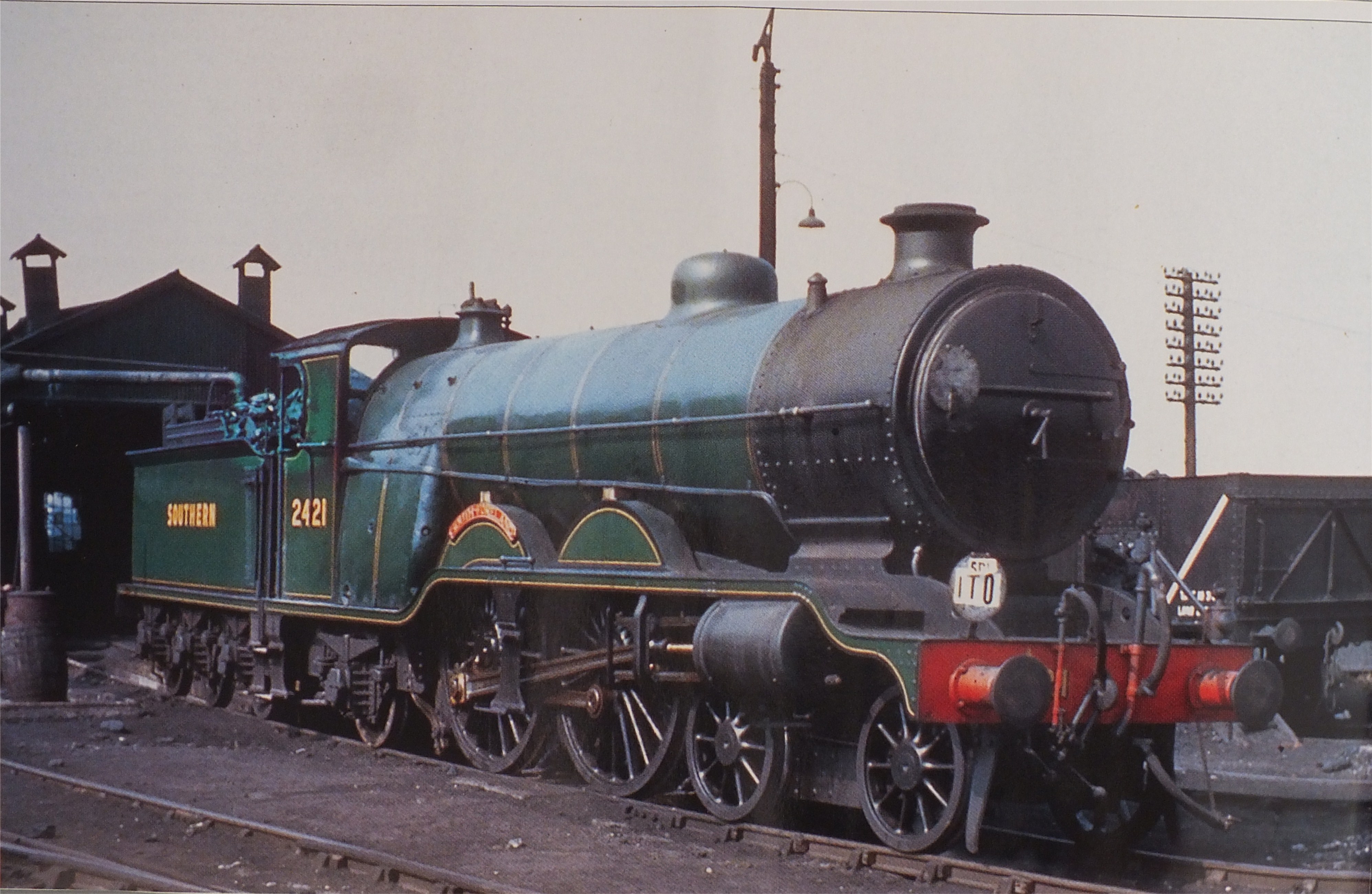
PHOTOGRAPHER UNKNOWN
Brighton Atlantic Class H2 No. 2421 South Foreland on Newhaven Shed
Minutes of the Newhaven Branch Meeting
held at the Labour Club on Sun March 21st 1937
Bro. J. Hillman in the Chair
8 members present
Bros. W. Clarke, E. Eacott, W. Goldson, J. Hillman, C. Wilson, S. Lower, M. Smith & G Chappell.
Minutes of February meeting read and it was proposed by Bro. E. Eacott and seconded by Bro. W. Goldson, they be accepted as a true record.
Items were discussed which were quoted in previous minutes resulting in Bro. Clarke reporting he had made no head way with obtaining agreement to work the 12 hours rest clause, stating he had heard much opposition outside Branch Meeting.
Bro. Clarke also stated, that Mr. Clack, at Brighton had intimated that no gain could accrue to Newhaven by the institution of 12 hours rest threat. Special work now worked here might be covered by other depots and the making of a pair of men to cover special work would incur the possibility of creating as vacancy.
On suggestion of Bro. Clarke it was proposed by Bro.W. Goldson & seconded by Bro. C. Wilson, depot to canvasseed for vote for or against 12 hours rest. Carried.
Proposed by Bro. Eacott seconded by Bro. Goldson. That previous resolutions regarding 12 hours rest be held in abeyance until after a vote had been taken in depot. This vote to be scrutinised by Branch Chairman. Carried.
Bro. Clarke reported no result so far with application that special work be worked by men booked on, if under 2 hour an the provision of a shed labourer & cleaners deferred for the time being. Bro. Cossburns application for driving turn credit was being attended to. Spare driver were to learn road when necessary.
Discussion on minutes then closed.
As this meeting was the last one of current quarter, Proposed by Bro. clarke, seconded by Bro. Goldson. "That Secretary write to Bro. P. Bridger acquainting him with his position as to arrears of contributions.
Bro. C. Wilson informed meeting that he had written Mr. Urie that a cleaners lobby could now be provided for cleaners by utilising part of coalmans lobby. He had received no reply from Mr. Urie and proposed that this matter be placed on Bro. Clarke's agenda for next meeting with Mr. Urie.
Question was raised by Bro. Goldson, that in the event of a man refusing senior duty on any one day such a man not to be given opportunity of senior duty on the following day if such man by working senior duty on preceding day, had, or would have, rendered himself unavailable to work such subsequent duty.
Men refusing a back turn firing job not to be used for an early turn on same day, until junior men are doing firing duties.
Minutes of the Newhaven Branch Meeting
held at the Labour Club on Sun April. 18th 1937
Bro. J. Giles in the Chair
9 members present
Bros. W. Brown, J. Brock, H. Allison, J. Giles, C. Wilson, F. Wilde, E. King, W. Goldson & W. Clarke
Minutes of March meeting read and discussed and proposed by Bro. W. Clarke and seconded by Bro. W. Goldson. That they be a true record.
Arising from the minutes Bro. Clarke gave report of L.D.C. Meeting with Mr. Urie on following subjects.
Cleaner use of Coalmen's lobby, Cleaners to use Coalmen's lobby and if they wish, can part it off if they can find wood to do it!
Refusing late turn of firing duty, any man refusing late turn if firing duty on any day, to forfeit any early turn that may come along on same day, until junior men are absorbed.
Clearners assisting in Brick arches, shed labourer to do this work. Matter to be taken up with Marine dept.
Light in Coal man's lobby, Mr. Urie said Waterloo refused to do this. Bro. clarke said he would write Waterloo himself, but Mr. Urie asked him not to. He would write himself and see if they would sanction it.
Sunday list & case, this to be completed and send down within a month. Also 6 more lockers to be placed in lobby.
Spare Drivers learning signals. 7 spare drivers to be allowed to learn road 7 signals to New X & B. Arms via Oxted.
Cleaner Chappell Sunday work. Chappell to work Sunday turns with other spare Fireman.
12 hours rest clause. Mr. Urie said he would work rostered men strictly to 12 hours but men wishing to change turns under 12 hours could make own arrangements.
Bro. Clarke said he had canvased most of the men at this report re 12 hrs rest and he said so far the majority was against it. Bro. Goldson pro. & Bro. Clarke sec that this depot work as it has done in the past for the time being.
More cleaners & shed labourers, shed labourer started but no Cleaners to be employed.
Re Bro. Bridger arrears, Secretary said he had got 17/7 from him, but he still owed one quarter 7/7.
Bro. Collington in arrears again out of benefit.
Fireman Walters requests to return to this depot owing to wife's ill health. Much discussion arose over this case and Secretary was advised to write to Mr. Jeans.
Bro. C, Wilson asked whether Walters transfer to this depot on a vacancy list on compassionate grounds could be contested? He was told it could be contested, and the Company doesn't like acceding to these requests.
Bro. Brock asked Bro. Clarke to see Mr. Urie re full complement of lamps on all engines. Bro. Allison said he would bring this matter up at next S.D.C. Meeting, if he was able to go. If not Bro. Wilde would so.
Minutes of the Newhaven Branch Meeting
held at the Labour Club on Sun May 23rd 1937
Bro. H. Allison in the Chair
The Reading of the minutes of April could not take place as Assistant Secretary who was temporally in possession of the minute book was absent.
Secretary read correspondence from Head Office detailing results and read out this names which received highest poll.Such results were as follows,
to fill Parliamentary Panel Bro. S.R. Lunniss King’s Cross,
Delegate to International Transport Workers Federation Congress 1938 Bro. W. Brown Pontypool.
Delegate Trade Union Congress September 1937 Bro. F.W. Llantrissant
Delegate Labour Party Conference Southern area Oct. 1937 Bro. S.R. Lunniss King’s Cross
Election of Organinsing Secretary A.S.of L.E.&F. Bro. J.G. Baty Newcastle
Secretary next read a letter from Bro. F. Jeans, Sectional Council Secretary, asking if there were any conditions under which Bro. Walter could re transfer to Newhaven i.e. even if he took his proper seniority behind the senior cleaner at Newhaven. Proposed by Bro. W. Clarke and seconded by Bro. W. Terrill. That under no circumstances will this Branch contertian the re transfer to Newhaven of Bro. J.O Walter, so this letter is not substantiated by any reliable medical evidence (that is by Doctor’s letter re certificate) and furthermore information that has come to the ears of various members of this Branch would appear to be in absolute contravention to the reasons stated in this letter. Carried.
Secretary was instruct to reply to Bro. Jeans in this strain. Bro. Wilde gave one or two notes on the Southern Council meeting which he attended last week, but no discussion took place thereon.
Minutes of the Newhaven Branch Meeting
held at the Labour Club on Sun Nov. 28th 1937
7 members present
Bros. F. Wilde, E. King, W. Brown, S. Lower, W. Clarke, M. Smith & J. Hillman
Minutes of May meeting read and discussed and passed as a true record, proposed by Bro. W. Clarke and seconded by Bro. W. Brown.
Correspondence
Xmas Day and Good Friday Holiday for Drivers and Firemen
re moving of engines in loco yards by unauthorised persons.
Re transfer of members to other depots, Secretary’s to send all details of members position beforehand to Secretary of new depot.
Re L.D.C. minutes to be sent to N.O. for future reference
Re meeting with S. R. representation at Waterloo. Bro. Terrill case re firing turn not credited with, was brought up at this meeting.
Bro. Clarke said he had not any interview with Mr Urie since May, so had nothing to report, but Bro. Browning had approached him re light in Coal man's lobby. Mr. Urie suggested hurricane lamp, but Bro. Clarke since heard that Mr. Urie had been down again to see about having electric light placed in same.
Proposed by Bro. J. Hillman and seconded by Bro. W. Clarke. That election of officers be held over till December meeting.
LOCOMOTIVE JOURNAL
JANUARY 1938
NEWHAVEN BRANCH
A meeting was held at the Labour Club on Sunday, November 28, 1937. We were pleased to welcome Organising
Secretary, Bro. J.V. Sweeney.
Those present were treated to an enlightening and interesting address, in which he gave us an historical survey of the
conditions in the railway industry during his lifetime. He reminded us of the conditions of service in bygone days and
pointed out that advances were only made when men were striving for something, and urged all locomotivemen to be
militant in their endevours if they, as a craft organisation, were to retain their position or advance in advance in the
future. To illustrate this, he read extracts from the R.S.N.T. Decission No. 3 Report, which were very enlightening, and
at times, almost humourous ! Questions were asked by members and suitable replies were given.
The meeting closed with a hearty vote of thanks to Bro. Sweeney, which was endorsed by all present.
BRANCH SECRETARY
Minutes of the Newhaven Branch Meeting
held at the Labour Club on Sun Jan. 15th 1938
7 members present
Bros. E. King, W. Clarke, F. Harris, J. Cossburn,
W. Terrill, W. Brown & C. Wilson.
Minutes of November 1937 read and discussed and passed as a true recorded, proposed by Bro. W. Clarke and seconded by Bro. W. Brown.
Much discussion arose over the holiday roster. Bro. Clarke said as thing were working the 7 year cycle could not be worked satisfactory to all concerned, and would be glad to have a fresh system to work on.
Bro. Cossburn made a suggestion, which he said was worked satisfactorily at B. Arms. After further discussion it was decided to work original roster for 1938, and call an open meeting for further discussion and suggestion, to take place at 12.0 noon on our next meeting Sunday. Bro. Clarke pro. That our meeting start at 10.45 a.m. On this day.
NEWHAVEN
BRANCH
OFFICERS
1938
Chairman Bro. J. Cosburn
Vice Chair Bro. F. Wilde
Secretary Bro. E. King
Letter read from Newhaven Hospital Committee asked for our support and a delegate to attend their meetings. Secretary was asked to write and tell them that nearly all our members belonged to the H.S.A. And that we our way clear to support them in any way.
Election of Officers 1938
Chairman Bro. J. Cosburn, Vice Chairman Bro. F. Wilde, Secretary Bro. E. King, Assistant Secretary W. Brown
Trades Council Delegates Bros. J. Cosburn & F. Wilde
As two member of the Committee for 1938 had left the depot, Bros. W. Terrill and C. Wilson were elected in their place. Full Committee Bros. F. Sherwin, W. Clarke, M. Smith J. Hillman, F. Wilde, W. Terrill & C. Wilson
Bro. E. Eacott was proposed to act as Labour Party Delegate
Bro. F. Wilde was proposed to act as District Council Delegate.
Minutes of the Newhaven Branch Meeting
held at the Labour Club on Sun February. 20th 1938
12 members present
Bros. W. Clarke, C. Wilson, E. Brooker, W. Terrill, J. Hillman, A. Charman, S. Lower, J. Lower, M. Smith,
J. Cossburn, E. King & F. Harris.
Meeting opened at 10.45 with Chairman Bro. J. Cosburn in the Chair. The meeting was convened 15 minutes earlier than usual to allow of joint meeting which followed to commence at 12.00 noon.
The minutes of January meeting were read and discussed and it was proposed by Bro. W. Clarke and seconded by Bro. C. Wilson. That minutes be passed as a true record. Carried.
A letter was read from Committee of the Labour Club asking us that our meeting conform more to the agreed times viz:- 11 a.m. 12.30 p.m.
The letter was discussed with a views to alternative arrangements being made, but it was decided to hold our meetings in Labour Club and it was proposed by Bro. C. Wilson and seconded by Bro. J. Lower. That Secretary write to Labour club Committee a suitable and reassuring reply.
A stop watch competition card was received by Secretary in favour of a member of Aberdeen Branch and after discussion on draws & competitions it was pro. By Bro. W. Clarke & seconded by Bro. W. Terrill. That this and any further similar things be returned with advice that this Branch does not now entertain same. Carried.
Of new local business pro. Bro. W. Clarke & seconded by Bro. C. Wilson. That Sunday turns of duty be equalised out between Drivers & spare Drivers, Firemen and spare Firemen, and that turns worked be recorded also Sundays forfeited by request also recorded.
This motion found favour with all present. While dealing with Sunday duty it was proposed by Bro. W. Clarke & seconded by Bro. J. Hillman. That as the administration were usually aware of traffic requirements on Friday morning – especially during Winter months – Sunday alteration list be posted with Saturday's alteration list on Fridays. Carried.
It was proposed by Bro. S, lower. That requests (in writing) for Sunday’s off be in Brighton by Thursday morning.
Due to time of Joint meeting with N.U.R. members drawing near the meeting was closed at 11.55 a.m.
Minutes of the Joint Newhaven Branch A.S.L.E.F. & N.U.R. Loco members Meeting
held at the Labour Club on Sun February 20th 1938
This meeting was convened to discuss the possibility of a more satisfactory system of holiday arrangement.
Bro. Cossburn maintained his position as Chairman and Mr. G. Wise assisted him from the N.U.R.
Notes were taken by Mr. W. Gander, assistant Branch Secretary N.U.R. Who was acting vice their Secretary Mr. J. Pagater.
Bro. W. Clarke when called on explained how every annual holiday roster was compiled from the 1934 roster and pointed out that this system still caused some men to get there holidays close to or unduly for away from their previous holiday. Bro. Clarke suggested that a better cycle of holidays could be arranged by holidays being arranged as on a six months roster n.b.:- April to July, to May to August to June to Sept.
As an alternative arrangement Bro. Cossburn suggested grouping the 24 weeks comprising the holiday into 3 groups of 8 concurrent weeks. The cycle to be separated by a moving round of both group complete. In this way anyone man would get the same holiday position again on any third year.
A further proposition was made by Bro. E. King thus: the holiday period to count as the sixteen weeks prior to and the eight weeks subsequent to the Sussex Fortnight. Each year, each man drops back 7 weeks until the bottom of the roster to reached when he returns to near the top. Always providing that there is only seven weeks between the two positions including any left on the bottom of the roster and again work through the cycle in 7 week intervals.
It was pointed out that, starting from the top of the roster a man would have 4 holiday with one year and seven weeks between them before returning to the top of the roster and similarly from any other position on the roster, thus everyman would have every available week on the holiday roster in the course of about 28 years.
It was proposed by Mr. Wise that this seemed the most satisfactory system on which to work and he proposed that this system be adopted to which all present agreed.
Minutes of the Newhaven Branch Meeting
held at the Labour Club on Sun March 20th 1938
13 members present
Bros. E. Brooker, A. Charman, W. Clarke, J. Cossburn, E. Eacott, J. Giles, F. Harris, S. Lower, J. Thompsett, F. Wilde, C. Wilson, C. Wood & E. King
Meeting commenced at 11.0 a.m. And immediately Bro. J. Cossburn left the Chair, which was taken by Bro. F. Wilde for the purpose of calling for a vote of closure on Branch Secretary for not calling a committee meeting, re proposition for joint meeting with N.U.R. Loco men to further discuss shed business. After much discussion vote closure was carried 6 members voting for the motion & 3 against.
Minutes of previous meeting were read then read and it was proposed by Bro. S. Lower and seconded by Bro. E. Brooker. same be passed as a true record.
Discussion on the minutes then followed, Bro. W. Clarke called Branch member attention to the fact that Branch business was talked about freely in various place outside the Branch room, to the extent that Branch business was known in the shed and very shortly after the Branch meeting, will members please vote this for future conduct.
A discussion on certain accusations were made and it was proved that much of these accusations were unfounded and this result of rumour. In future complaints of this nature and those against Branch Management must be tendered to the Branch meeting in writing.
After disposing of other messy matters arising out of the minutes it was pro. By Bro. J. Cossburn & sec. By J. Thompsett. That we go on with further business.
Bro. F. Wilde read a letter from Head Office, re the tw days additional holiday and its application. The outcome of this was that Bro. J. Cossburn proposed & Bro. C. Wilson seconded. That Secretary write to Mr. Jeans, Secretary of Sectional Council. That this Branch request that it he ut on the Autumn Session agenda of Sectional Council that in future 2 days additional Holiday be placed immediately before or immediately after the weeks annual leave. Carried.
The shed representative report was next called for and given by Bro. W. Clarke on a meeting with Mr. Urie on 10th March and is as follows
Item 1. Equalisation of Sunday work, Every endeavours will be made to secure fair division of Sunday work amongst all the men at the depot, all Sunday's applied for off duty will count as a turn of work and this will also apply to mutual changes.
Item 2. Record of Sundays worked to be brought up to date and 1937 record to be placed along side reference. This has been done.
Item 3. Daily alteration sheet to be roster on arrival from Brighton. The list is now posted on arrival from Brighton.
Item 4. Daily alteration list to be rostered on Friday, with Saturday's list and no leave of absence grant for Sunday's unless applied for by Thursday morning. Agreed.
Item 5. Alteration of annual holiday cycle for 1939. deferred (by employees side).
Item 6. Training of Dual Men in place of Driver J. Brock. This matter will be place before the Locomotive Running Superintendent.
Item 7. Rotary to be adopted for Good Friday & Christmas day. This matter be reviewed at Xmas in order to provide that men who have worked the previous Xmas will be off duty as far as possible.
Item 8. To discuss letter received from Driver J. Denman. Agreed that spare men will take up spare work on weekdays as well as on Sundays.
As regards item 8. It was further pointed out by Bro. Clarke that Mr. Urie could not guarantee to equalise Sunday work out to include that worked in 1937. but every endeavour would be made as far as possible. Also every endeavours would be made to equalise Sunday work between all loco men for spare work.
As regards to item 2. Sunday list was posted on Friday 18th list for Sunday 20th list.
As regards items 5. Discussion on the holiday roster, Bro. Reported that Mr. Urie would not accept this depot proposal if a 7 week roster, and offered a system of roster of 11 weeks drop back, which had the effect of a man going 1 year and 11 weeks between holidays, and gave Bro. Clarke the impression that holiday were worked on this system at Brighton and at Norwood. After much discussion it was pro. By Bro. J. Giles & sec. By Bro. C. Wilson. That this Branch insist on the 7 weeks drop back roster and that failing satisfaction being obtained, the matter be referred to the Sectional Council. Carried.
As regards item 8. a letter was received on February 21st (day following the last Branch meeting) by Bro. Clarke form Driver J. Denman asking in the main that spare men do spare work, extra work and altered duties on weekdays, as well as on Sundays, which same as forward by Mr. Urie on receipt, this letter also contained mention of alternative by working to the National agreement both on Sundays and on weekdays.
Discussion took place on this letter and it was proposed by Bro. J. Cossburn & seconded by Bro. A. Charman. That the National Agreement be worked to both Sundays and weekdays amendments to this was called for but one was not forth coming, and on a vote on Bro. Cossburn’s proposition being taken a large majority voted against the proposition this motion was therefore lost.
Bro. Charman asked if the 8.30 p.m. was to be the only turn worked by some dor an extra Sunday. Bro. Clarke gave Bro. Charman a reply. In explanation which was suitable.
Re the equalisation of Sunday work. The question arose who would be booked to work should a turn come along after the list was posted on Friday and the men available not being suitable for the additional turn.
It was proposed by Bro. J. Cossburn & seconded by by Bro. E. Brooker. Than a man already booked up on Sunday alteration list could be shifted to allow of equalisation being kept to in a satisfactory manner. Carried.
Minutes of the Newhaven Branch Meeting
held at the Labour Club on Sun October 23rd 1938
Bro. A. Rookley in the Chair
due to the absence of the Chairman Bro. J. Cossburn
7 members present
Bros. W. Clarke, M. Smith, C. Wilson, J. Hillman, A. Rookley, J. Thompsett & E. King
The minutes of the previous meeting were the read and it was proposed by Bro. W. Clarke and seconded by Bro. C. Wilson. That same was a true record.
Bro. Clarke read a letter from Mr. Urie intimating that as there was only one item on the agenda, that this be processed with. Bro. Clarke points out that this item comcerned the holiday roster and said that Mr. Urie intimated that if the procedure was similar to last year, same could soon be disposed of. Bro. Clarke said he was prepared to go forward with this Depot's proposal of the "7 weeks" roster for holidays and he was accorded the support of this meeting.
Bro. W. Clarke, proposed a resolution which was seconded by Bro. C. Wilson. That no man be allowed to change his holidays except that the man concerned be off duty by sickness. Carried.
Discussion took place on item 8, of February L.D.C. Agaenda and be allowed to fall into abeyance. Carried.
In respect of item 3 of this same agenda it was agreed that the Sunday roster was posted in a satisfactory manner constant with the expectations of the work to be performed.
A general feeling of member present was for the officers be elected for 1939, so this was proceeded with members absent who are absent who were delegated to officers in the Branch would be communicated with in writing and instructed to be present at the next Branch meeting to state their objects if they wished not to serve.
Chairman Bro. A. Rookley,
Vice Chairman Bro. J. Hillman
Secretary Bro. E. King
Assistant Secretary Bro. M. Smith
NEWHAVEN
BRANCH
OFFICERS
1939
Chairman Bro. A. rookley
Vice Chair Bro. J. Newman
Secretary Bro. E. King
The Committee elected were as follows, proposals being made and members seconding with the proviso as previous paragraph
Committee Bros J. Giles, W. Brown, M. Smith, W. Clarke, J. Thompsett, C. Wilson & C. Lower
Trades Council Delegate Bros Rookley and Clarke volunteered for this office, action which was endorsed by the meeting.
Proposed by Bro. W. Clarke and seconded by Bro. J. Hillman. That Bro. E. Eacott be delegated Labour Party & District Council Delegate.
Further discussion took place on Local Business the out come of which it was proposed by Bro. Wilson & seconded by Bro. Hillman. That action be taken to obtain a case to such printed of written Local Agreements as one in keeping in stores. Carried.
Secretary read various items of correspondence to members.
Item of correspondence re Bro. J. Walter (Feltham) was read together with sent by Secretary to Secretary, Feltham Branch, in view of resolution from Branch meeting was no branch meeting had taken place to discuss matter. For his action in this matter together with subject matter enclosed therein, it was proposed by Bro. J. Hillman and seconded by Bro. J. Thompsett. That Secretary’s action be endorsed. Carried.
Minutes of the Newhaven Branch Meeting
held at the Labour Club on Sun Dec. 18th 1938
Bro. A. Rookley in the Chair
Minutes of previous meeting were then read and it was proposed by Bro. C. Wilson and seconded by Bro. W. Clarke they be a true record.
Secretary then read letters from Loco Foreman Brighton and the from Local Branch Secretary N.U.R. Re proposals for Shed Representative as it was pointed out that this depot was entittled to only one representative under Machinery of Negotiation. Member debated these letters and it was proposed by Bro. J. Cossburn & sec. By Bro. W. Clarke. That this Branch are prepared to accept one representative from N.U.R. To deal with shed grades items of Conditions of Service only, and that we nominate Bro. W. Clarke ars representative of Loco-men for dealing with Loco-men's items and if the N.U.R. Wish to nominate a delegate for Loco-men a ballot to take place for position. Carried.
Secretary was instructed to write to Loco foreman (Brighton) and Mr. J. Pargeter to convey to them the substance of this motion.
Secretary read correspondence from Bro. E.H. Channing together with a copy of Bro. Channings report to Bro. Jeans (Section Council) re the case of Bro. J.O. Walter’s subsequent return to Newhaven.
Discussion took place on this correspondence and it was proposed by Bro. J. Cossburn & sec by Bro. W. Clarke. That Secretary write to Bro. Channing (Feltham Branch) also to Bro. f. Jeans (Sectional Council). The following resolution which was promoted by wording in Doctor’s report. Proposed that providing Bro. J. Walter applies for every seaside vacancy that is advertised, this Depot has no objection to Bro. Walter applying to return to Newhaven, if he is not previously successful elsewhere, on compassionate grounds.
An immersion having been made in the Election of Officers in October, this was corrected by Bro. W. clarke proposing and Bro. C. Wilson seconding. That Bro. A. Rookley attend Southern Council meetings as this Branch delegate. Carried.
Minutes of the Newhaven Branch Meeting
held at the Labour Club on Sun January 15th 1939
Bro. A. Rookley in the Chair
Minutes of previous meeting were read, proposed by Bro. C. Wilson and seconded by Bro. W. Clarke. That they be a true record.
Secretary read the correspondence and the chief items discussed coupled with items from minutes of previous meeting.
After discussion it was proposed by Bro. Rookley & seconded by Bro. W. Clarke. That Secretary write to Bro. Jeans, noting the facts, should Bro. J.O. Walter not be successful to fill a seaside vacancy and calling for information in the subject.
Secretary read a letter from Mr. J. Pargeter, Secretary of N.U.R. Branch re the constitution of Shed representation and it was proposed by Bro. W. Clarke & seconded by Bro. C. Wilson. That secretary write to Mr. Pargeter. That according to letter received from Brighton dated December 13th which states (statement to be inserted). This Branch has nominated our representative and that this man is taking up with Brighton such items as involve Loco-men and that this Branch were surprissed that he was not aquainted with the procedure for Shed Representation as pointed out in Loco Foreman's letter of Dec. 13th. Carried.
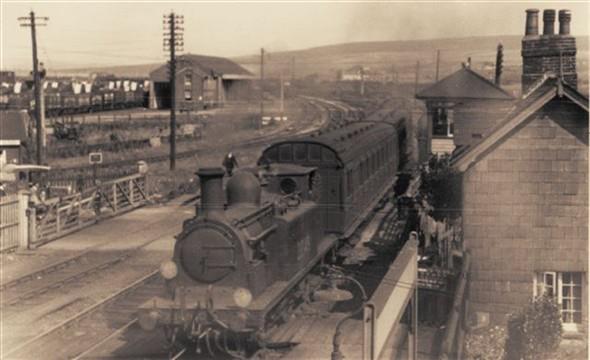
PHOTOGRAPHER UNKNOWN
Minutes of the Newhaven Branch Meeting
held at the Labour Club on Sun March 19th 1939
Bro. A. Rookley in the Chair
8 members present
Bros. J. Hillman, M. Smith, C.Wilson, R. Turner, A. Kearney, W. Clarke, A. Rookley & E. King
Secretary read minutes of the previous meeting and were discussed.
Arising out of the minutes, it was decided that the item as regarding Bro. J. Wlters, Feltham, be held in abeyance. At the conclusion of discussion, it was proposed by Bro. W. Clarke and seconded by Bro. A. Kearney. they be accepted as a true record. Carried.
Shed representative, W. Clarke then gave a report and included information of 2 day supplementary leave corparted to him by Loco Foreman. This information was to the effect that the 2 days supplementary leave could not be allowed in respect of Mondays, Fridays or Saturdays and it was not to be arranged to immediately preceded or follow the ordinary annual leave to make such annual holiday continous with the two days leave.
Bro. Clarke mentioned, that should it be possible to extend a long week-end, endeavours would be made to acceded to the request for Monday & Fridays leave should the circumstances of the traffic permit.
Prposed by Bro. J. Hillman & seconded by Bro. M. Smith. That the receiving if this report be accorded a vote of thanks to Bro. W. Clarke for his service. Carried.
Bro. Rookley then gave a report of Southern Council Meeting, held in London of February 12th 1939. in the course of his report Bro. Rookley to asked on the discussion which took place re minutes of Sectional Council no. 2 (minutes Nos. 38 & 42) and gave a very precided and enlightening report thereon.
With reference to the assurance fund Chair submitted by Bro. F. Sherwin. Bro. Rookley reported the discussion he had involved thereon and requested the Branch to grant him power to go to Bro. Harris of Brighton the district A.A.D. To press for settlement of Bro. Sherwin's case at the next meeting of the delegates. Ot was proposed by Bro. w. Clarke & sec by Bro. M. Smith. That this Branch give Bro. Rookley the necessary powers to accelerate the process of Bro. Sherwin's case. Carried unanimously.
The alloted time having been exhausted and the fact that only a small percentage prevented a discussion on, and a representative vote being taken on the findings of R.S.N.T. (Decission No.5).
Minutes of the Newhaven Branch Meeting
held at the Labour Club on Sun April 16th 1939
Bro. J. Hillman in the Chair
8 members present
Bros. J. Hillman, W. Clarke, R. Turner,
A. Kearney, W. Brown, M. Smith, A. Charman
& E. King.
Secretary read minutes of the previous meeting and same were discussed. It was pointed out by Bro. W. Clarke re the two days leave that Bro. D. Smith had been allowed to have Thursday & Friday instead of Tuesday & Wednesday and in this respect the days could be made to suit were not unreasonable to the Loco foreman and that sufficient notice be given.
Proposed by Bro. W. Clarke & seconded by Bro. A. Kearney. That a letter be sent to Bro. Jukes (Sectional Council Secretary) pointing out that disappointment is experienced at this Branch that in the light of Bro. J. Walter of Feltham requiring to come to Newhaven or other seaside Depot, on the grounds of his wife's health opportunity was not taken by Bro. Walter in getting a seaside vacancy on the last posted vacancy list. Carried.
Discussion arose re past records of the shed representative and it was proposed that Bro. W. Clarke bring any such records to the next Branch Meeting and it was also proposed by Bro. Kearney, next Branch Meeting by a summoned meeting.
Proposed by Bro. W. Clarke & sec. By Bro. A. Kearney. That secretary's action, re temporary cleaners be enrolled. Carried.
Secretary read a circular from Head Office asking nominations for members to be official candidates for Sectional Council No.2. To replace Bros. Ottoways & Crumpton, who are due to retire, but are open for re-election. It was proposed by Bro. A. Charman and seconded by R. Turner. "That Bro. W. Clarke be nominated as an official candidate for Sectional Council No.2. Carried. Proposed by Bro. A. Kearney and seconded
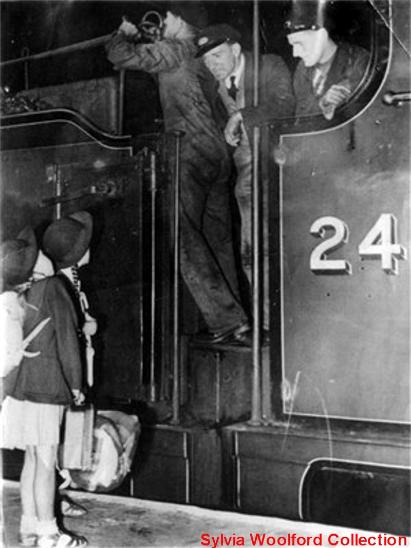
Sylvia Woolford Collection
Left ~ Right: Unknown, Driver Sydney Turner & Unknown
The photo was taken at Newhaven's Continental Station Sydney Turner is seen talking to some young ladies before departure of the boat train from Newhaven to Victoria London. These girls had been evacuated to Switzerland in 1939 as toddlers so that they were safe during the War and now that the war was over, they had now returned home as young girls.
Extracted from
'Our Newhaven' web sited
Sylvia Woolford Grand-daughter of Sydney Turner
by Bro. W. Brown. "Secretary write to neighbouring Branches re the nomination of Bro. W. Clarke as above. (Carried).
Minutes of the Newhaven Branch Meeting
held at the Labour Club on Sun August 13th 1939
Bro. A. Rookley in the Chair
7 members present
Bros. A. Rookley, R.Turner, S. Turner, A. Charman, M. Smith, W. Clarke & E. King.
Minutes of the previous meeting were read by Chairman and Bro. W. Clarke proposed and seconded by Bro. A. Charman. They be a true record.
Discussion arose out of the minutes and reference was made to the item re Bro. J.O. Water Feltham. Secretary read a letter from Bro. Jukes Secretary of Sectional Council which explained points raised in previous minutes to the satisfaction of members present. This matter was declared closed.
Shed Representative, Bro. W. Clarke explained re past records of Shed Committee that he brought down all correspondence on following meeting day, but there was no meeting, also Bro. Kearney was absent.
Correspondence was then dealt with and Secretary read resolution to call strike action failing satisfaction being ultimately obtained to this Society's programme and reference to R.S.N.T. Decision No. 5. the subject matter contained herein were discussed and in view of the E.C. Again meeting the Railway Managers. Shortly a resolution was proposed by Bro. A.W. Rookley & seconded by Bro. W. Clarke and carried by the members present. That this Branch placed its confidence in the E.C.
Local items Bro. Charman brought forward a motion. That the Sunday work was not being fairly equalised. Bro. Clarke replied to Bro Charman and after discussion on this subject. Bro. A. Charman proposed & Bro. R. Turner seconded. 'That this Branch put forward for a better equalisation of the Sunday work.'
A case in point which was discussed was that of Bro. R. Turner who although rostered on the weekly list in two places was rostered in no place for Sunday.
Shed man's duties, Bro. Clarke state that he had noted that Bro. E. Hillman had be rostered in the position of Shed man, vice Bro. F. Sherwin and had had an interview with Loco Foreman Mr. Urie re same who intimated that this procedure was not in his hands,as the initial order had come from Waterloo. Bro. Clarke pointed out that while this virtually resolved Bro. Hillman from the line of promotion (pro item). It would be policy for the time being not to set up trouble for the depot as many men could be the sufferers thereby notably the spare driver and furthermore Bro. Clarke, nor the Branch Officials had received any complaints from Bro. Hillman re his being rostered to Shed man’s duties.
Branch members present, again invited Bro. Clarke to carry on as he thought fit in this matter and this remark was endorsed by a vote of confidence in Bro. Clarke as Shed Representative.
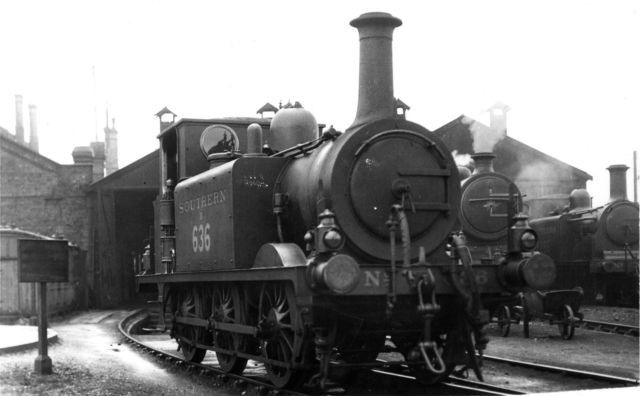
PHOTOGRAPHER UNKNOWN
Minutes of the Newhaven Branch Meeting
held at the Labour Club on Sun November 19th 1939
Bro. A. Rookley in the Chair
10 members present
Bros. A. Charman, J. Cossburn, M. Smith, W. Clarke, C. Lower, E. Collington, R. Turner, W. Brown,
A. Rookley & E. King.
Minutes of the previous meeting were then read and it was proposed by Bro. W. Clarke seconded by Bro. M. Smith. They be a true record. Carried
Discussion on the minutes then ensued and arising out of the minutes and question thereon. Bro. Clarke reported meeting Mr. Urie (Loco Foreman).
With regard to the item of equalisation of Sunday work the men affected were learn the road over which they were likely to be required to work.
The position of Bro. R. Turner was clarified by an agreement that during the time Fireman R. Barber was acting as a Shed man. Bro. Turner would have the position of Shed man for Sunday Duty and would be allowed the time and opportunity to learn the duties.
The case of Fireman R. Barber continues as Shed man in deference to an appointed Driver was disposed of by the claim that he was suitable for the job and accustomed to the work.
Whilst on the subject of Sunday work a point was raised on a Sunday with the he was accustomed to work with on weekdays. Bro . Clarke was classed as redundant at Brighton and therefore was not available for Sunday Duty apart from the practice of attempting equability amongst the whole staff. Bro. Charman instance a case wherein Bro. H, Hamblin had been booked for Sunday duty, on more occasions than Bro. Charman. Bro. Clarke promised to link into this instance case and report latter.
Lighting of the depot had been slightly improved by the provision of a light on the coal stage which may still be improved while on the subject of lights proposed by Bro. W. Clarke & seconded by Bro. J. Cossburn, that Secretary write to Head Office requesting the Society to take up with the Ministry of Transport or Admiral’s Officials the dangerous conditions of the lighting in the Loco Depot generally.
Bro. Clarke also called Mr. Urie attention to the condition of the Coalman's lobby and the bad state of the roof thereof. Attention was also called to the condition of the shed roof.
Proposed by J. Cossburn & seconded by Bro. W. Clarke. That this Branch decline to support the subscription list circulated on behalf of a testimonial to the retiring General Secretary Mr. W.J.R. Squance. Carried.
Proposed by Bro. J. Cossburn & seconded by Bro. R. Turner. That Secretary write to Head Office, also to District council No. 5 Secretary. That this Branch request the Society to open negotiations for the purpose of obtaining "cost of living" increased rates, on standard rates of payment to date from the commencement of the War. Carried.
NEWHAVEN
BRANCH
OFFICERS
1940
Chairman Bro. A. Rookley
Vice Chair Bro. E. Collington
Secretary Bro. E. King
Branch Officers for 1940
Chairman Bro. A. Rookley, Vice Chairman Bro. E. Collington, Secretary E. King, Assistant Secretary M. Smith.
Committee Bros. M. Smith, E. Collington, C. Lower, W. Brown, W. Clarke, R. Turner and J. Thompsett.
Trade Council Delegates Bros. W. Clarke and J. Cossburn, Volunteered.
Labour Party Delegates Bro. E. Eacott, be requested to continue on proposal of Bro. W. Clarke and seconded by Bro. M. Smith.
No.5 District Council Delegate Bro. A. Rookley again volunteered.
Shed Representative Bro. W. Clarke
All these nominations were carried in detail by members present. Recorded by Bro. E. King, Branch Secretary.
Minutes of the Newhaven Branch Meeting
held at the Labour Club on Sun December 17th 1939
Bro. A. Rookley in the Chair.
9 members present
Bros. E. Brooker, M. Smith, W. Clarke, R. Turner, J. Cossburn, W. Brown, E. Collington, A. Rookley
& E. King.
Minutes of the previous meetings were read and arising from the minutes, a point raised about a paragraph inserted therein, which was cleaners up by Secretary explaining the phraseology of same.
Paragraph as inserted altered, "Bro. Charman was classed as redundant in Brighton" which should have been inserted as "Bro. Charman was classed as redundant at Newhaven, by the Foreman or other officials at Brighton."
Secretary having clarified this matter it was proposed by Bro. J. Cossburn & seconded by Bro. M. Smith. That the minutes be passed as read. Carried.
Correspondence was then read Secretary reading the replied he had received regarding the lighting of the Shed yard, cost of wiring in War time etc.
With regard to this latter item, correspondence was read in the form of report of District Council No.5, which intimated that this item was receiving the attention of our E.C. to the foregoing a brief outline of our conditions of service in wartime were given as contained in Head Office circular. Discussion on this subject then took place and proposed by Bro. W. Clarke & seconded by Bro. E. Collington. That a letter be sent to Head Office to protest against the retention of men after 65 years of age where necessary, should this be necessary endeavours should be made by the Society that all men who suffer redundancy thereby should receive credit for, payment of terms for higher grade pay lost whether Driver, Fireman, or Cleaner. Carried.
An item of correspondence dealing with the National Conditions of Service book sent to the Secretary in error invoked a good discussion, the outcome was a proposals by Bro. J. Cossburn & seconded by Bro. R. Turner. That a letter be sent to Head Office demanding a National Conditions of Service book for Branch use, seeing that for many years no claim has been made from Branch Management Fund. Carried.
Proposed by Bro. W. Clarke & seconded by Bro. J. Cossburn. That a letter be sent to Head Office. That this Branch note that no member of Head Office staff paid a visit to Manor House Hospital during the stay therein, of our member, Bro. A. Robinson, and furthermore, the members take note that this member has been placed on the contributions sheet as lapsed member, after an illness of over 9 months. Considering that Bro. Robinson has been a continuous member of the Society service sine 1911. carried. Further proposal from Bro. Cossburn & seconded by Bro, W. Clarke. That Secretary write to Head Office an application that Bro. Robinson's card be cleared. Carried.
Nominations for Shed Representative were called for, but it was unanimously voted that Bro. W. Clarke serve again in this capacity for the coming year.
Secretary called for nominations for the position of National Health Section Agent, but it was proposed by Bro. J. Cossburn and seconded by Bro. E. Brooker. That Secretary continue to act as agent. Voting therein was confined to M.H. Insurance members.
Bro. J. Cossburn proposed a hearty vote of thanks be accorded to the Chairman which brought the meeting to a close at 12.40 p.m approx.
Minutes of the Newhaven Branch Meeting
held at the Labour Club on Sun November 17th 1940
Bro. A. Rookley in the Chair
8 members present
Bros. H. Hamblin, F. Cable, M. Smith, W.Brown, W.Terrill, A. Rookley & E. King.
Minutes of previous meeting were then read and it was proposed by Bro. W. Brown and seconded by Bro. M. Smith. They be regarded as a true record.
Secretary proceeded to explain one or two items of the minutes to the satisfaction of members present.
Correspondence was then read and discussed and it was proposed by Bro. Cable and seconded by Bro. W. Terrill. Correspondence be passed as read. Carried.
Short discussion on local matter ensued and election of officers for 1941 was then proceeded with.
Branch Officers for 1941
Chairman proposed by Bro. F. Cable and seceded by Bro. W. Brown, Bro. A. Rookley serve again. Bro. M. Smith moved the nominations closed and proposition was carried.
NEWHAVEN
BRANCH
OFFICERS
1941
Chairman Bro. A. Rookley
Vice Chair Bro. W. Brown
Secretary Bro. E. King
Vice Chairman
Proposed by Bro. M. smith and seconded by Bro. W. Terrill, Bro. W. Brown to be Vic Chairman, as there as no other nominations the motion was carried.
Secretary
Bro. E. King to continue to serve. Carried Unanimously.
Assistant Secretary
Proposed by Bro. H. Hamblin and seconded by Bro. F. Cable, Bro. W. Terrill serve as Assistant Secretary. Carried
Committee
It was recommended that Secretary communicate with members of existing committee with a view to them again serving a further period en bloc.
Delegate to No.5 District Council
Bro. A.. Rookley again volunteered to fill this office
Trade Council Delegate & Labour Party Delegate, no nominations.
Chairman asked for items of other business.
Bro. H. Hamblin entered a motion enquiring why Bro. Harris should work extra Sundays on the road when by his refusal of seniority he had explained himself to work on the pilot at all other times. This was discussed. Proposed by Bro. F. Cable & seconded by Bro. H. Hamblin. That shed representative be instruction to persue the matter with Mr. Urie at their next meeting with a view to its reciprocation.
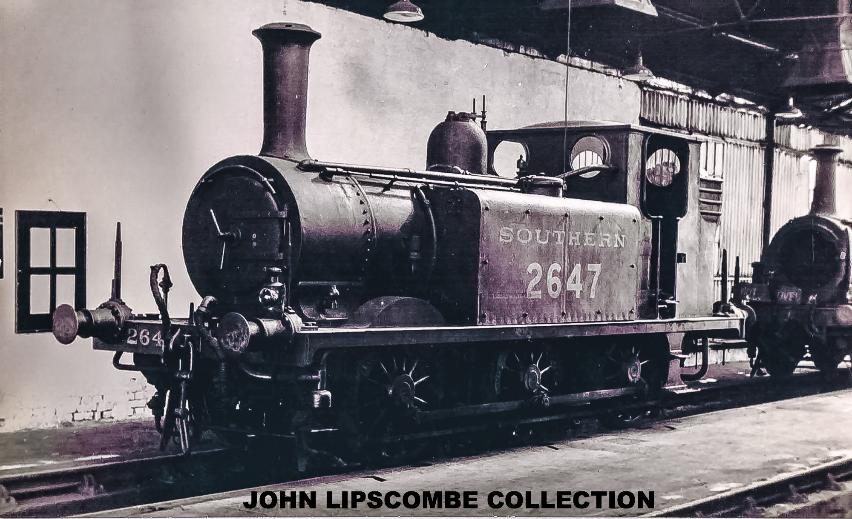
INSIDE NEWHAVEN LOCO SHED DURING THE SOUTHERN RAILWAY ERA
Minutes of the Newhaven Branch Meeting
held at the Labour Club on Sun December 15th 1940
Bro. A. Rookley in the Chair
10 members present
Bros. W. Clarke, F. Cable, H. Hamblin, J. Lower, J. Lipscombe, M. Smith, C. Wilson, E. Watson, A. Rookley
& E. King.
The minutes of the previous meeting were read and it was proposed by Bro. F. Cable and seconded by Bro. Hamblin. They be a true record. Carried.
A discussion on the minutes then took place and in response to a question by Bro. Clarke, Secretary stated that he had interviewed some members of Branch Committee.
Shed Representative Bro. W. Clarke then gave a report of business conducted and stated that discussion had taken place with Mr. Urie on condition of the lobby ceiling, the state of the shed general. The position and use of the air raid shelters and proposition to supply a surface shelter for Loco Staff.
The rostering of 557 Duty in the pilot link had caused complaint from men in No. 2 link who consider it should be put there, Bro. Clarke pointed out that it was a “Special Working” train so far as this depot was concerned and men could be booked to work any such turn as was convenient. Pressure wold be exerted, though, to have this turn rostered properly, should it become a turn permanently "Staffed" at Newhaven.
Discussion took place on a complaint from Bro. M. Smith that the back turn of 751 was not booked to spare drivers, as firing turn, and do same applied to you 760 Duty. Bro. Clarke was kept to time length to answer this question. The purport of Bro. Clarke answer was that Passed Fireman now work their Sunday off the 8.29 a.m. Turn and before the 11.0 a.m.we as special turn. The present system of rostering Passed Fireman maintained that each Passed Fireman worked on Sunday between these two turns any inclusion of more turns in the weekly roster would through out of working the present arrangement of working on the Sunday, as now no alteration has to be made to Mondays turns, for the Passed Fireman on duty on Sunday to obtain a turn of driving on the Monday. Bro. Clarke stressed the point that Mr, Urie would not agree than the existing seven Passed Firemen working in the Shed on Sunday. It was suggested that the 10 p.m. 751 duty be included in the firing turns pf Passed Fireman, or else a turn taken out of the pilot gang to adjust same. Bro. H. Hamblin proposed. That this be worked out to satisfaction and to harm no one. Bro. M. Smith then stated he was prepared to wait until New Year to see if Roster list was altered to make a convenient adjustment of turns in the meantime. Bro. M. Smith then proposed. That his complaint be held over for one month. Carried.
Bro. Clarke tendered his resignation as Shed Representative and nominations were called for a successor. Bro. H. Hamblin proposed & Bro. C. Wilson seconded. That Bro. F. Cable succeed Bro. Clarke. Bro. M. Smith proposed & Bro. J. Lower seconded that Bro. Clarke continue in office. Vote was taken of members present on these nominations and Bro. F. Cable was elected this Branch Shed Representative for 1941 by a vote of 4 to 3.
Bro. J. Lower asked a question re provision of lockers. Bro. A. Rookley asked , that the lockers were allotted by seniority and was assured that this was the case and that the actual allotting was the responsibility of the Shed Foreman.
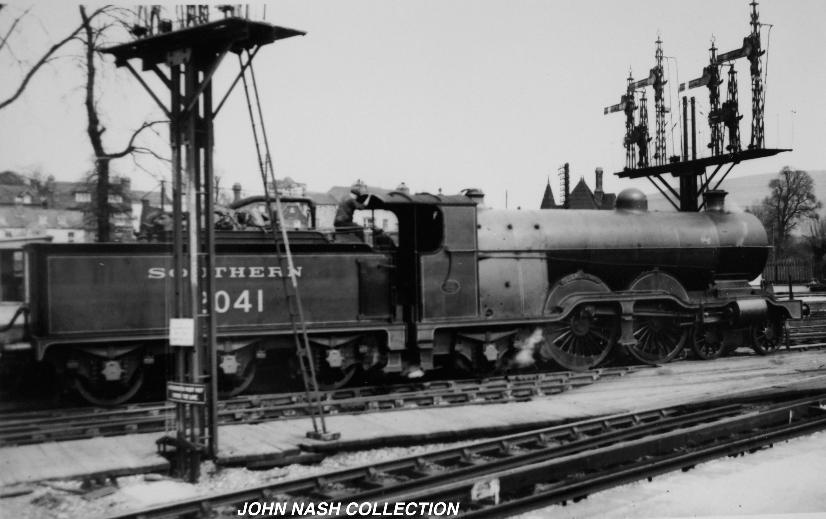
Brighton Atlantic Class H1 No. 2041 Peverill Point at Lewes
Minutes of the Newhaven Branch Meeting
held at the Labour Club on Sun January 19th 1941
Bro. A. Rookley in the Chair
11 members present
Bros. M. Smith, J. Lower, F. Cable, C. Wilson, W. Terrill, W. Clarke, H. Hamblin, J. Lipscombe,
A. Rookley, E. King & R. Turner.
Minutes of the previous meeting were read and it was proposed by Bro. F. Cable and seconded by Bro. W. Clarke. Minutes were a true record. Carried.
Discussion in the minutes then took place and one or two were explained for members present.
Secretary asked for delegates to Trade Council and it was proposed by Bro. W. Clarke and seconded by Bro. F. Cable. 2 delegates be elected to Trades Council for this year. Proposed by Bro. Turner and seconded by Bro. Terrill. That Bros. H. Hamblin be elected to attend with Bro. W. Clarke on this council. Bro. Clarke agreeing to continue. Carried
Secretary called attention to the facy that this branch was not officially affiliated to the Labour Party and in support thereof, read correspondence appertaining thereto, requesting affliction to be proceeded with. Proposed by Bro. W. Clarke and seconded by Bro. F. Cable. Proposal to affiliate with the Labour Party be left in abeyance for the time being. In reply to a question by Bro. W. Clarke, Secretary stated 22 members paid Political Fund. Chairman then read the correspondence.
Secretary called attention to correspondence from the Club re condition of tenancy and rental paid. This matter was discussed and the outcome was that Bro. W. Clarke proposed and Bro. H. Hamblin seconded. That this be held in abeyance for one week and that there after Secretary be empowered to interview Labour Club Secretary with a view to a reduction in rental.
Bro. W. Clarke asked if any explanation could be given why the Passed Fireman's link had been increased from seven to eight men without consulting men's representative. Bro. F. Cable replied that he had noticed this at men and had taken steps to get on to Brighton by telephone regard to this and was informed that Bro. J. Hillman and Bro. J. Giles had both applied to be put in this link, but Mr. Urie had only moved Bro. J. Hillman, and when he asked for an explanation Bro. Cable was informed by Brighton that Mr. Urie had done this himself and was now laid up and that nothing more can be done for the time being.
Bro. W. Clarke called to the attention to the case wherein he had tried some time ago, to get Bro. R. Turner included with the Passed Firemen for Sunday Shed duty without result and asked that, as a matter of principle Bro. Cable will take up this matter as it cast a slight on Bro. R. Turner whereas Bro. Hillman had been put into this link at his own request and without there being any discussion thereon with the shed Representative. Information on this last point would be welcome by members of the Branch.
Proposed by Bro. W. Clarke & seconded by Bro R. Turner. That this matter be left in the hand of the Shed Representative. Proposed by J. Lower & sec. By Bro. W. Terrill that Bro. Cable take up with Brighton re the conditions of the equipment of engines as regards will shovels, gauge lamps etc and the lack of them at Newhaven.
Bro. H. Hamblin asked that as his son was not rostered on the Cleaners
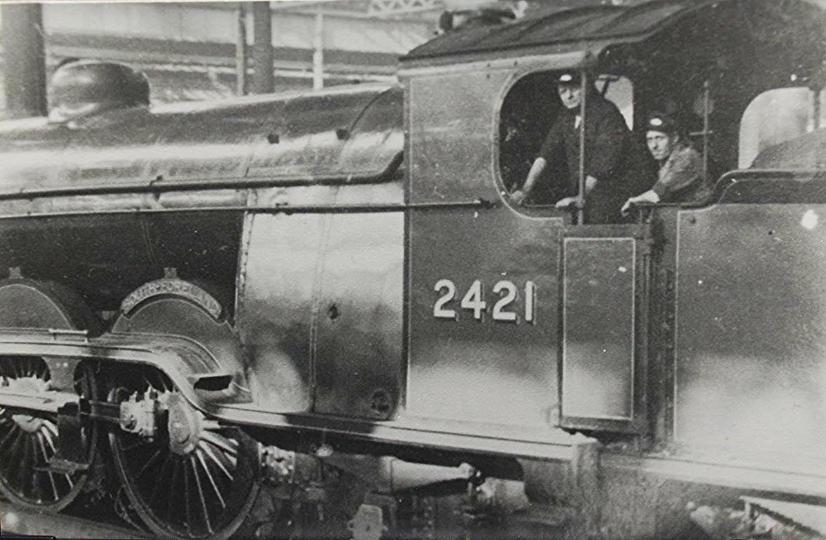
JOHN LIPSCOMBE COLLECTION
Driver Fred Packham & Fireman Bill Lipscombe
Brighton Atlantic Class H2, No. 2421 “South Foreland”
Driver Alf Charman (?)
Minutes of the Newhaven Branch Meeting
held at the Labour Club on Sun February 16th 1941
Bro. A. Rookley
8 members present
Bros. E. Watson, W. Clarke, J. Lipscombe, H. Hamblin Snr., F. Cable, R. Turner, E. Brooker, A. Rookley
& E. King.
Minutes of the previous meeting were read and it was proposed by Bro. W. Clarke and seconded by Bro. H. Hamblin. They be a true record. Carried
Discussion on the minutes then took place and it was proposed by Bro. W. Clarke and seconded by Bro. F. Cable. That the item re rent of room be held in abeyance for the time being. Carried.
With regard to the minute re "increase in the number of Passed Firemen in shed on Sundays." Bro. Cable stated that in reply to his enquiries on the subject, he had been informed that Bro. J. Hillman had made a personal application for inclusion and that his request had been acceded to. Bro. R. Turner state he too had made personal application on two occasions, without similar result at the time. Bro. Clarke stated he was very dissatisfied with this proceedings and proposed & seconded by Bro. H. Hamblin. That this matter be persued further and more information obtained. Carried.
With regards to the minute re the equipment of engines Bro. Cable said that when approached, Bro. Sherwin got on to Brighton by telephone and the reply from Brighton was "we have have none too." "there is a war on.”
The item re rostering of Cleaner H. Hamblin was now rectified and he was being rostered as the other cleaners were.
Correspondence was then read.
With regards to a circular from Head Office on the appointment of Fire-watchers.
Bro. Clarke pointed out that Mac's, Gum-boots & etc were supplied for the shed staff soon after the outbreak of the war and that shed staff grade and not footplate men should be recruited for fire-watching as any "as ordered" man, might also be classed as a Fire-watcher when not otherwise engaged.
Nomination form was received and circular letter read re Executive Committee representative. Proposed by bro. W. Clarke and seconded by Bro. F. Cable. Bro Rookley be nominated for this office. Proposed by Bro. F. Cable and seconded by Bro. H. Hamblin. That Bro. W. Clarke be nominated. On a vote being taken Bro. A. Rookley was nominated.
Bro. Clarke asked that the work of the labourer on duty on Sunday be defined, as the lobby was never swept out or ashes removed on Sunday. It was proposed by Bro. Clarke & seconded by Bro. H. Hamblin. That Shed Representative ask what was the position of the labourer and what were his duties on Sundays. Bro. E. Brooker rose at this point to tender his thanks to Branch Chairman for his endeavours on Bro. Brooker's behalf in a recent interview with Mr. Urie at Brighton. When asked Bro. Rookley gave a short explanation of the case as far as he knew.
Voting papers were received, whereby consent of members present held over until the next meeting
Bro. Clarke proposed. That the matter of the labourers on Sunday be held over for the time being and was agreed.
Bro. Cable brought up the case of Bro. Piddlesden not working on Sunday and asked Brighton why, he was informed by Brighton that it was because Bro. Piddlesden was a cleaner. Bro. Cable asked why the difference between Bro. Piddlesden & Bro. Turner and pointed out the sending of Junior Cleaners to Redhill on Sundays and questioned the working as regards to a rostered turn on Mondays. Secretary said Bro. Piddlesden had written to Brighton re him & Bro. Terrill but, up is Saturday had had no reply. Branch instructed Bro. Cable to see Foreman re this matter.
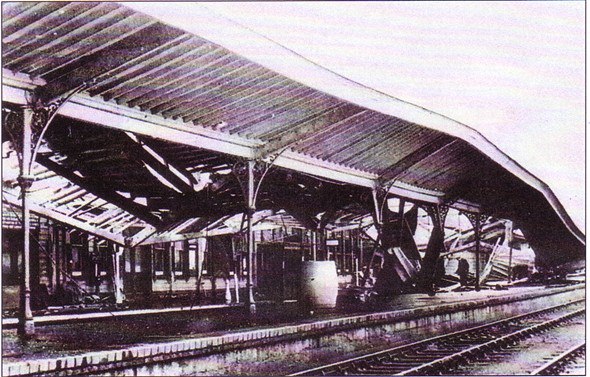
PHOTOGRAPHER UNKNOWN
Bomb damage at Newhaven Marine Station
Minutes of the Newhaven Branch Meeting
held at the Labour Club on Sun March 16th 1941
Bro. A. Rookley in the Chair
7 members present
Bros. Cossburn, W. Clarke, F. Cable, H. Hamblin, W. Terrill, E. King & A. Rookley.
Minutes of previous meeting were read and it was proposed by Bro. W. Clarke and seconded by Bro. H. Hamblin. They be a true record. Carried
Correspondence was read which included a circular relating to "fire-watching" which discussed to some length. Bro. Cable stated that, when he was discussing same with Mr. Cardy, he stated he was doing nothing in the matter.
Re the item of shed labourers duties on Sundays. Bro. Cable stated that Mr. Urie defined the labourers duties as labourer and messenger. Bro. Clarke proposed that Bro. Cable interview Mr. Urie again.
Bro. Cossburn proposed. That the agenda of the shed mans duties (other than the three regular shedman). Both weekdays & Sundays, also the labourers duties as regards to cleaning up the lobby & etc. Bro. W. Clarke seconding this and proposition was carried.
Bro. W. Clare proposed. That the case of Bro. J. Hillman be put on the agenda also as Bro. R. Lower was ignored in his application previously Bro. Clarke also request that the position of link working. Without the inclusion of the shed representative in the consultation be elavidated to include also the alteration of the ‘Boat Link' Sunday duties.
Bro. H. Hamblin proposed. That a decent lobby be provided for the cleaners and the pro's & con's of this was explained.
Minutes of the Newhaven Branch Meeting
held at the Labour Club on Sun December 21st 1941
Bro. A. Rookley in the Chair
7 members present
Bros. W. Clarke, F. Cable, H. Hamblin, M. Smith, C. Wilson, A. Rookley & E. King.
Secretary read the minutes of the previous meeting that of March 16th and it was proposed by Bro. W. Clarke and seconded by Bro. F. Cable. They be a true record. Carried.
Bro. F. Cable reported on items arising from the minutes in which he stated that a lobby for Cleaners was unobtainable during the war, because of the war.
Correspondence was then read, Bro. Clarke asked that Secretary write re the error concerning Newhaven published in the report of No.5 District Council, this motion was seconded by Bro. H. Hamblin and carried.
Secretary called attention to the fact that a certain amount of correspondence had been dealt with in the intervening time from March 16th, which had been attended to as far as Secretary's powers extended to the best of his abilities.
Bro. Clarke proposed & Bro. Cable seconded. That secretary's action in regard to such correspondence be endorsed.
The election of Branch Officers for 1942 was then proceeded with and are as follows
Chairman Bro. A. Rookley, Vice Chairman Bro. W. Clarke, Secretary Bro. E. King, Assistant Secretary. Bro. W. Clarke.
Committee
Bros. H. Hamblin, F. Cable, M. Smith, W. Clarke, C. Lower, R. Turner, C. Wilson, J. Lipscombe & W. Terrill.
No.5 District Council Delegate Bro. A. Rookley
Shed Representative Bro. A. Richly
Trades Council Delegates Bros. W. Clarke and H. Hamblin
Labour Party Delegate. This is not now filled pending proper affiliation to the Labour Party.
Any other business.
Bro.Cable stated that should a man require to be off duty on the Sunday following his annual holidays he must ask for same in writing and it was purported to be an agreement between the Society and the Railway Companies.
This was discussed and notice of same awaited from the Head Office of the Society proposed by Bro. W. Clarke & seconded by Bro. M. Smith. That this will be held over until the next meeting.
Chairman suggested that Branch Meeting day & time might be altered to fit in with Home Guard and othe war time activities and Bro. Clarke proposed & Bro. H. Hamblin seconded. That 7.p.m.on Thursday evening be attempted. Carried.
NEWHAVEN
BRANCH
OFFICERS
1942
Chairman Bro. A. Rookley
Vice Chair Bro. W. Clarke
Secretary Bro. E. King
Secretary undertook to try and conveniently arrange for a Thursday meeting time of same awaited from the Head Office of the Society proposed by Bro. W. Clarke & seconded by Bro. M. Smith. That this will be held over until the next meeting.
Chairman suggested that Branch Meeting day & time might be altered to fit in with Home Guard and other war time activities and Bro. Clarke proposed & Bro. H. Hamblin seconded. That 7.p.m.on Thursday evening be attempted. Carried.
Secretary undertook to try and conveniently arrange for a Thursday meeting time.
Minutes of the Newhaven Branch Meeting
held at the Labour Club on February 15th 1942
Bro. A. Rookley
8 members present
Bros. F. Cable, W. Clarke, J. Lower, M. Smith, H. Hamblin, J. Hillman, A. Rookley & E. King.
Secretary read minutes of previous meeting held December 21st, 1941, after which it was proposed by Bro F. Cable and seconded by Bro. W. Clarke. They be a true record.
During discussing on the minutes item re the change of meeting day, Secretary explained arrangements made with the Secretary of the Labour Club and it was moved, that NO change in day time of place of meeting be made at present. Mention was made of item re working on Sunday following holidays , Bro. Rookley stated that in the proceedings at Southern District Council meeting this matter was discussed and that arrangements had been made between Society & Railway Companies, that men can be booked to work Sunday following holidays upon written notice being given to the men concerned before hand. Bro. Rookley gave a report of the meeting of S.C.Council meeting of February 9th 1942. with regards to staff being retained after 65 years of age this matter laid with the L.D.C. And the conditions obtaining at Depots concerned, and instances were given of Depots where men had been retired at 65. later Bro. Clarke proposed. That Bro. Rookley takes up the retention of men over 65 with a view to the principle of retirement taking place when due as at certain other Depots, Bro. Clarke further proposed. That Bro. Rookley take up with Mr. Urie on the subject of retirements at 65 as effects this Depot and if possible report back to the next meeting. Bro. Rookley then went on to report on the concern being given to both the Society & the Company by the number of accidents, terminating fatally which have taken place recently, worst of which are caused by neglect and by inexperienced men and authorised persons moving engines in steam. With regard to a discussion which ensued on Fire-watching, Bro. Rookley stated that at many Depots, Fire-watching was not performed, except on a volunteer system, and a movement was being sponsored by the Society to obtain exception from Fire watching for all members of the Locomotive Staff if possible. During further stage of Bro. Rookley's report he stated that in response to a question he put on behalf of Bro. W. Terrill. Bro. Bedwell of the S.R. Sectional Council state that a similar case to Bro. Terrill's' seniority was credited to the men concerned, but not any arrears of wages and that according by Bro. Terrill was receiving the same treatment as other men similarly placed. Bro. Rookley stated that men on going to pass the Company's Doctor some where being sent home on account of blood pressure, and asked that before the meeting closed a resolution be sent to Head Office from the Branch re this matter, the feeling of the S. C. Meeting being that this ailment is on the increase due to war conditions and the extra strain caused thereby.
Dealing with the application made by Bro. King, for the temporarily vacant position in 760, Bro. Rookley stated he had sought guidance, and Bros. Bedwell & Corke of Sec. Council stated that link working be unappointed men is worked out by the L.D.C of the Depot concerned by local agreement and as exception was taken by the Railway Company or the Sectional council to such working being put into operation. In reply to a question Bro. Rookley stated that the Company had the right to elevate men in Link working due to the War emergency and at this Depot a temporily vacant position now existed in 760 Duty. It was proposed by Bro. W. Clarke & sec. By Bro. H. Hamblin. That Passed Firemen & Cleaners be booked Driving or Firing duties, nearest their rostered turn after any available job, where booked shall be filled by the senior men. Carried. Continuing his report, Bro. Rookley stated that Motormen at Victoria and Wimbledon had complained of rosters of 9, 9 ½ and 10 hours. The Company claimed that the men could not be supplied by the Loco Depts. The members of these two electric depots requested that it be taken up with the Company, that the staffing of the Electrical Depot be proceeded with. Bro. Rookley concluded by saying that Bro. Sweeney intimated that the Society would no doubt be taking up the question of the soap ration with a view to obtaining an increase of soap for the benefit of our members.
In response to the quest for any other business Bro. Clarke requested Bro. Rookley to take up with Mr. Urie when next they meet the question of the number of men using the Loco Lavatories, some of whom came from the Marine shops and other nearby departments. Bro. Rookley also quoted comments now being made of the Boiler Washer and Fitting Staff using the Enginemen's Lobby. As a final item to the business Bro. Rookley proposed & Bro. W. Clarke seconded. That a resolution be sent to Head Office. That should a men be sent off duty by reason of blood pressure, the Society endeavour by all means, to obtain fall payment of wages for any such men, whilst he is so indisposed. Carried.
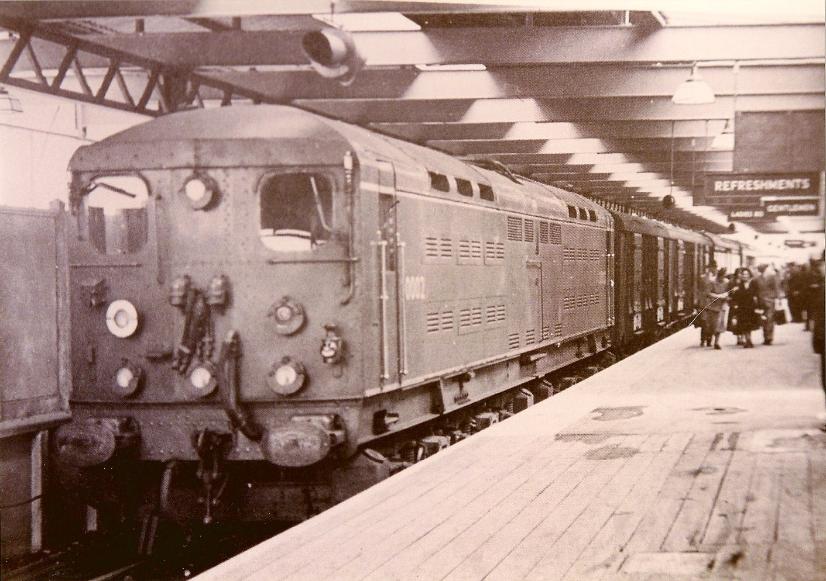
PHOTOGRAPHER UNKNOWN
LOCOMOTIVE JOURNAL
SOUTHERN RAILWAY ELECTRIC ENGINE C.C.1.
Arising from the policy which has been adopted in connection with the working of this engine, an agreement has now
been reached with the representatives of the Southern Railway Company, by which this engine will be confined to the
working of unbraked frieght trains, and it will by manned by two men, one a Motorman, and another an Assistant
Motorman, both of whom will be in the line of promotion. the agreement reached precludes this or any similar type of
engine from being worked with one man only, and will remain in operation during the period of hostilities.
Minutes of the Newhaven Branch Meeting
held at the Labour Club on Dec 20th 1942
Bro. A. Rookley
7 members present
Bros. H. Hamblin, W. Giles, M. Smith, J. Hillman, C. Lower, R. Turner & C. Wilson
Secretary read minutes of the last meeting held on 15th February, 1942, after which it was proposed by Bro. J. Lower and seconded by Bro. H. Hamblin. They be a true record. Carried.
During a discussion on items of previous minutes Bro. Rookley answer to questions, stated that men incapacitated by the lathe company's doctors by high blood pressure were paid the rate of workman's compensation, this also applied to dermatitis and silicroses.
Corresponce was then read by Secretary Circular letter No.59 dealing with the RSNT award No.9 and extracts from the of report of the RSNT were read and discussed and it was proposed by Bro. H. Hamblin and seconded by Bro. M. Smith 'That Secretary write to Head Office, that the Society do not accept the latest example of the Tribunals "Generosity." (Carried).
There being no other urgent business to hand the Election of Officers for 1943, was proceeded with and is as follows.
Chairman, Bro. A. Rookley, Vice Chairman Bro. W. Brown, Secretary Bro. E. King, Assistant Secretary M. Parsons
Committee, members proposed that this remain as now subject to each Committee men being willing to continue.
District Council Delegate bro. A Richly
Trades Council Delegates Bros H. Hamblin & E. King
Secretary reported that he hd accepted entrance fee and quarters contributions from A, Norman and his action was endorsed by members present.
Branch Committee as compiled by Secretary after date of meeting is as follows
Bros. H. Hamblin, J. Giles, M. Smith, J. Hillman, C. Lower, R. Turner & C. Wilson
There being no other urgent business to hand the Election of Officers for 1943, was proceeded with and is as follows.
NEWHAVEN
BRANCH
OFFICERS
1943 - 46
Chairman Bro. A. Rookley
Vice Chair Bro. W. Brown
Secretary Bro. E. King
Chairman, Bro. A. Rookley, Vice Chairman Bro. W. Brown, Secretary Bro. E. King, Assistant Secretary M. Parsons
Committee, members proposed that this remain as now subject to each Committee men being willing to continue.
District Council Delegate bro. A Rookley
Trades Council Delegates Bros H. Hamblin & E. King
Secretary reported that he hd accepted entrance fee and quarters contributions from A, Norman and his action was endorsed by members present.
Branch Committee as compiled by Secretary after date of meeting is as follow
Bros. H. Hamblin, J. Giles, M. Smith, J. Hillman, C. Lower, R. Turner & C. Wilson
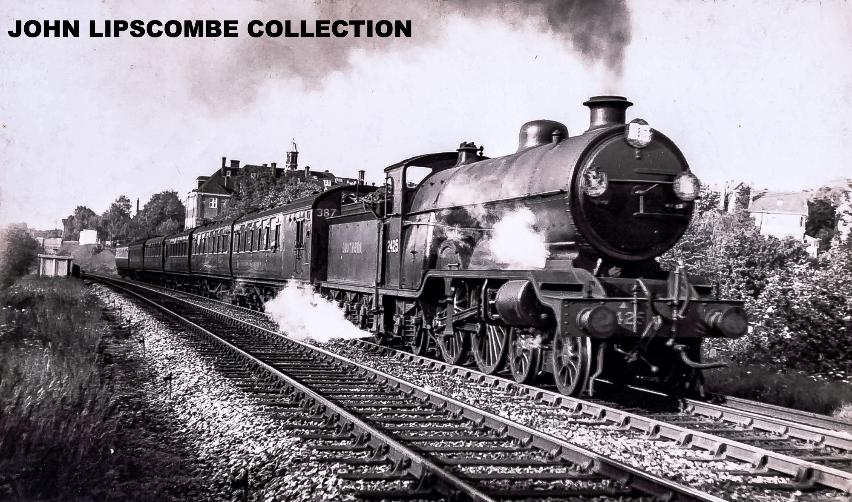
2426 WORKING THE 6.10 p.m. VICTORIA TO UCKFIELD NEAR SANDERSTEAD
DATE UNKNOWN
Minutes of the Newhaven Branch Special Meeting
held at the Labour Club on Sun January 31st 1943
Bro. A. Rookley in the Chair
8 members present
Bros. J. Hillman, M. Smith, R. Turner, W. Brown, M. Parsons, W. Mullett, A. Rookley & E. King.
Meeting was called to hear and discuss the contents of Head Office Circular No.11/1943.
This circular was read by Chairman who also added a few observation of his own, pointing out the anomaly caused by the increase of wages on a "War time" basis only. This had the effect, with “consegential adjustments” in rates of pay of increasing the wages of certain lower paid grades by as much as 26/- weekly.
Bro. M. Smith observed that the question of the dead-lock in the negotiations, and the likelihood of negotiations being resumed was under a cloud and in the absence of anything definite coming from Head Office or till such time as anything definite was received, little could be done.
The following motion was moved by Bro. Rookley & seconded by Bro. M. Smith.
Pending further advice from Head Office, we shall not call a meeting of members unless the situation is most serious; Should the situation not be most serious the Secretary, Ass. Secretary & Chairman' shall meet the Branch Committee and convey to the Committee any information received, who will be empowered to convey information to the General Membership: Should the situation become serious, a meeting of the member to be called as soon as possible. Carried.
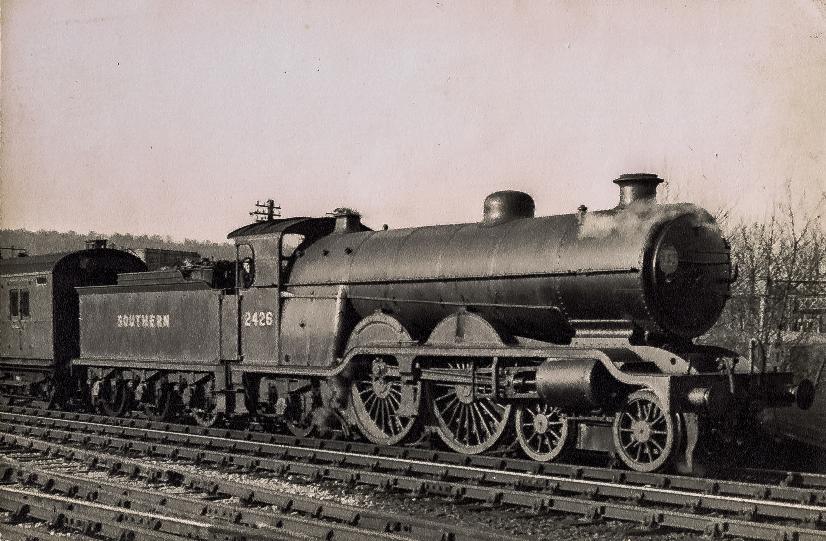
JOHN LIPSCOMBE COLLECTION
FIREMAN BILL LIPSCOMBE
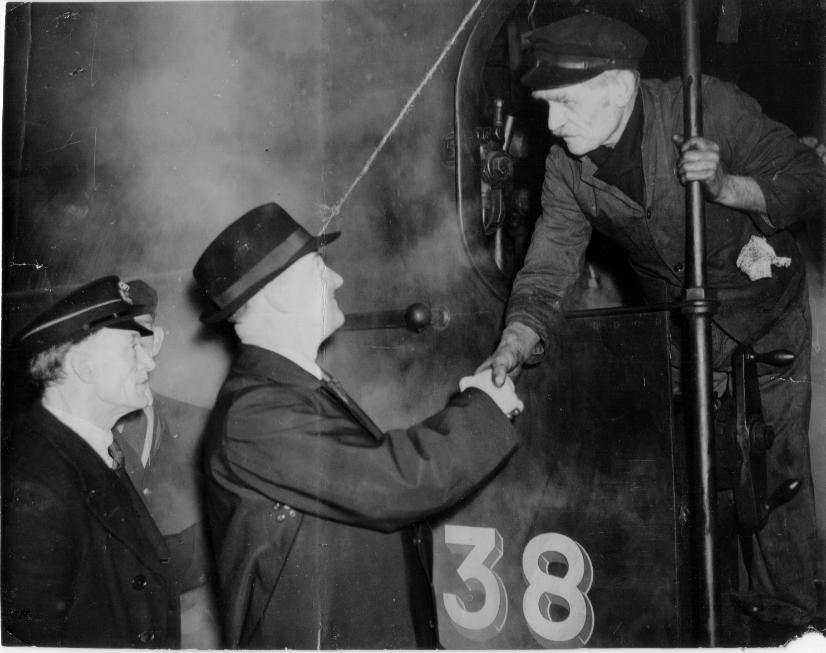
By Tony Tomlin Collection
Driver Thomas Moody working the first down Boat Train out of London after W.W.2 in January 1945
Thomas Moody 27/12/1879 – 19/6/1952
Minutes of the Newhaven Branch Meeting
held at the Labour Club on Sun May 16th 1943
Bro. A. Rookley
8 members present
Bros. S. Lower, J. Hillman, M. Smith, R. Barber,
J. Creasey, F. Cable, A. Rookley & E. King
Branch Secretary read minutes of previous meeting and Special meeting, proposed by Bro. M. Smith and seconded by Bro. S. Lower. They be a true record. Carried.
There being no discussion on the previous minutes as read. The correspondence was proceeded with. As the only items of correspondence also co-incided with item dealt with at No.5 District Council meeting, Bro. A. Rookley dealt with both matters together, especially the instructions as to Compulsory Enrolment in the Home Guard. The information of the compelling of the Societies new Parliamentary Panel, with which is coupled the propaganda; efforts on behalf of the Political Fund in which all member are asked to take part.
Bro. Rookley also made a statement of his endeavours and actions taken with regards to the failure of Bro. S. Lower to pass satisfactorily, the colour vision part of the eye sight test: Bro. S. Lower then stated that he had attended at Head Office a colour vision test, conducted by Organiser Bro. W.J. Cleaver the previous day and that although he had again been unsuccessful he had been advised to take treatment if possible, with a view to again taking a re-test before the Company's Med. Officer, for the purpose of returning to the line of promotion. With regards to Bro. Lower, Bro. Rookley stated that he could now let it be known that Bro. Lower had been offered a coalmans job at the usual composite rate of pay. But Bro. Rookley had requested that something better might be found for Bro. Lower in consideration of all the circumstances of the case, and a resultant reply was awaited.
Continuing, Bro. Rookley, stated he had made application for the passing of two more Firemen for driving, and had, had a reply that one more would be allowed, the man in question would go on Thursday 20th, request had also been entered for the recruitment of 6 more Cleaners and he had been told four more Cleaners would be started but the date of starting these Cleaners had not yet been decided.
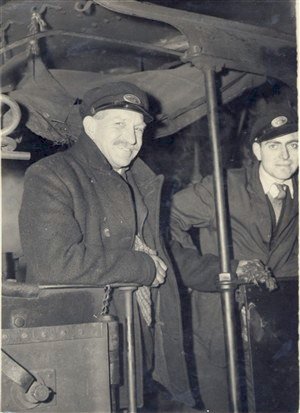
Peter Simmons Collection
Left ~ Right: Engineman Jack "Bogey" Simmons
and his Fireman Reg Hooker/George Hilton
(or John Nash).
Jack Simmons worked the last 'Boat Train' before the start of the Second World War and the first 'Boat Train' after the War on Wednesday 17th January 1945.
Jack Simmons later become the Running Foreman at Newhaven Shed, until his retirement in 1961.
Extracted from
'Our Newhaven' web site
When the Chairman called for any other business Bro. Smith asked for information of results of the meeting held in the Shed on Nov. 29th when it was proposed to combine certain links and vary certain workings. Bro. Rookley quoted the letter from Loco Foreman, Mr. Urie dated January 5th and this explained by discussion on the subsequent method of working adopted.
During the meeting, Bro. S. Lower conveyed to Branch Chairman and Secretary, his thanks for what they had done for him, minutes recorded by Branch Secretary.
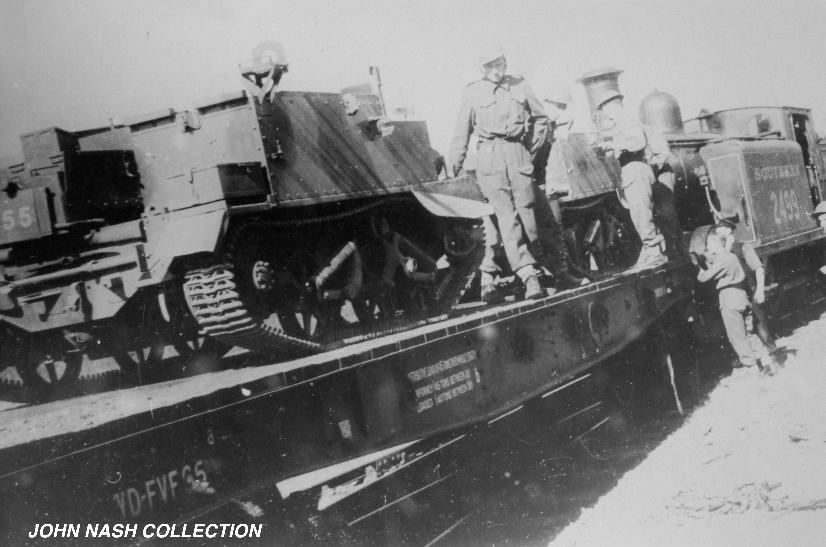
Munition Train at Seaford
Minutes of the Newhaven Branch Special Meeting
held at the Labour Club on Sun February 20th 1944
Bro. A. Rookley in the Chair
The meeting was opened at 7.15 p.m. By Bro. Rookley, who with a short few remarks from the Chair called upon the speaker Bro. W.J. Cleaver to address the meeting. Bro. Cleaver in his remarks spoke of the activities of our Society during the years of the war. Calling to our minds, the propaganda used by the Government to increase the war effort, in so doing he called to mind the pledge of "Equality of Sacrifice" necessary for the conduct of the war, but by so doing reminded as of the unequally as forthcoming from the Government.
Bro. Cleaver went on to explain how the Society endeavoured to safeguard our interests in these times of National Stress, and gave an outline if the proposed National Agreement, together with the proposals for a superannuation fund. Many and varied were the point touched on by Bro. Cleaver who made it plain to all present that as vast changes may take place in the Railway managements or some form of public ownership be evolved, together with other means of transport, it was more than ever necessary that we had parliamentary representation, and called upon member to pay the political fund to assist to this end.
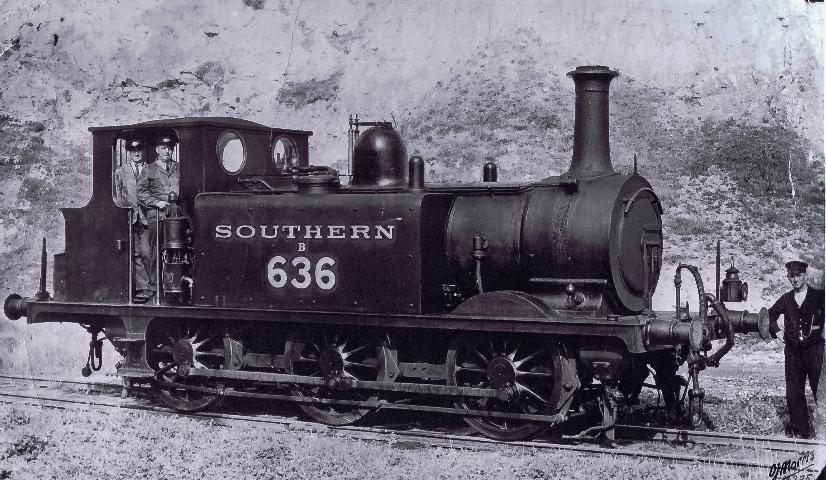
JOHN LIPSCOMBE COLLECTION
Driver Will Brown & Fireman Bill Lipscombe & Shunter Unkonwn
On the Newhaven Beach Branch
LOCOMOTIVE JOURNAL
MAY 1944
NEWHAVEN BRANCH
It is not often that we have to appear in print; indeed, our meetings are often few and far between, due largely to the war and the various war time activities in which everyone is involved in greater or lesser degree. An exception come on February 20th when a special meeting of the branch was attended and addressed by Organising Secretary, Bro. W.J. Cleaver. Those of our members, and those from Seaford Branch who attended at our invitation, received a fine tonic in the speech delivered by the speaker, who, only having an hour for same, had to be brief. Bro. Cleaver spoke on the situation to-day, and trend of events, and outlined our Society’s policy for the future, making special reference to our need for political representation in Parliament, and our need to support the Political Fund. We tender our grateful thanks to Bro. Cleaver for his visit and hope that next time he visits our branch still members will be present to hear his message
Branch Secretary
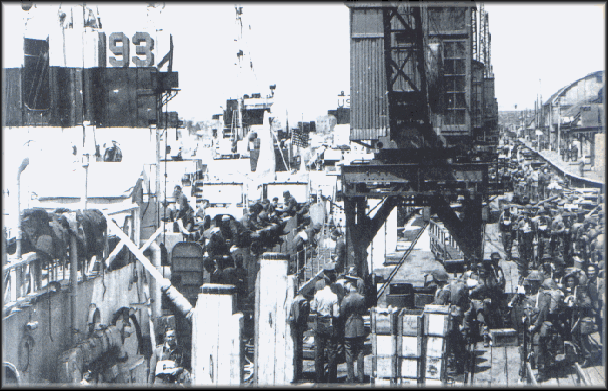
PHOTOGRAPHER UNKNOWN
Newhaven Harbour June 6th 1944
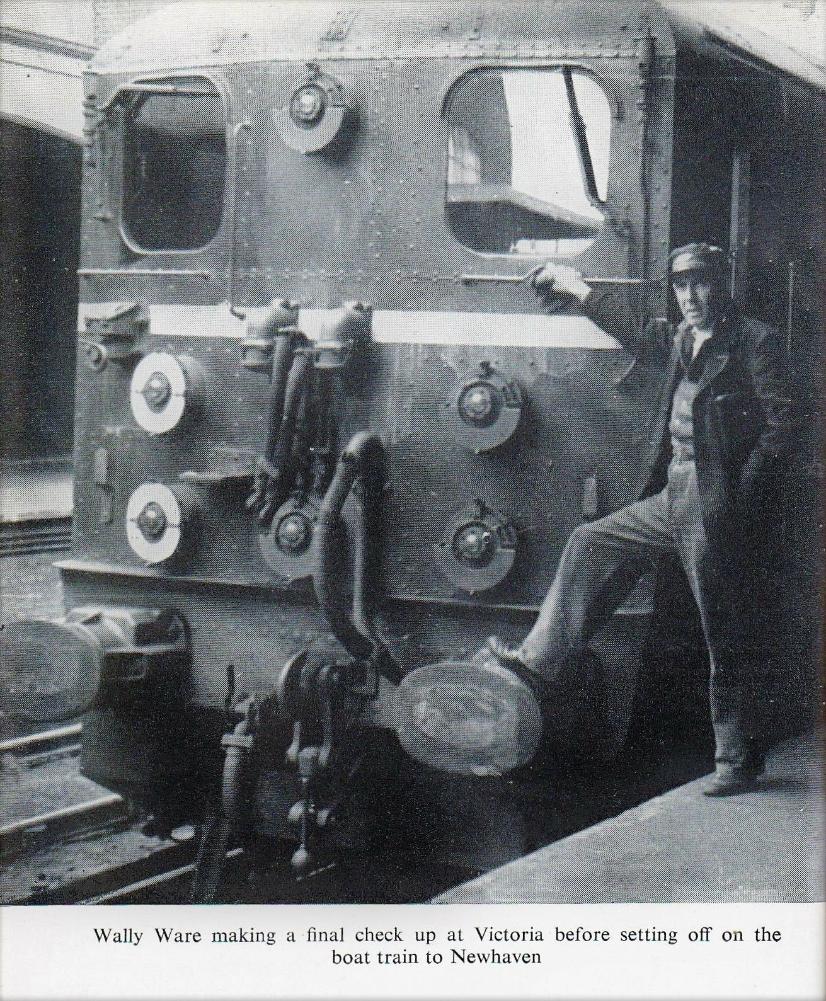
Photo by Norman McKillop, and taken from the book ’Top Link Locomotives’
Minutes of the Newhaven Branch Meeting
held at the Labour Club on Sun October 28th 1945
Bro. A. Rookley in the Chair
7 members present
Bros. A. Rookley, M. Smith, J. Hillman, B. Piddlesden, E. Collington, J. Cossburn & E. King.
The minutes of previous meeting were accepted.
Correspondence
A letter from the local Labour Party was read for nominations for prospective council members of Labour Party. the question of affliction and re-affiliation to the local Labour Party was raised and it was proposed by Bro. Cossburn. That the request for affiliation to Labour Party lay on the table.
Re the National Programme, its latest negotiations results had statement of items still to be negotiated were read. Proposed by Bro. Bro. Cossburn & seconded by Bro. M. Smith. That Secretary write to journal as "That owing to the great dissatisfaction among the members of the A.S.L.E & F. On the National Settlement. All Branches support a motion, through the Journal that before the final acceptance of the negotiations, ballot of members take place for the guidance of the Executive." Carried.
Letter was read re the Manning of the Electric Loco. Notes were given by Chairman on information he had received re proposals for other Railways etc. Proposed by Bro. J. Cossburn & seconded by Bro. E. Collington. That the question of Manning of the Electric Locomotive be made an item of the National Programme.
The Chairman gave an outline of the L.D.C. Report mention being made of the points such as Retention of Men over 65, and their possible effect on the annual leave for 1946. Reference was also made to the late issue of overalls and their lack of pockets etc. Also the item of substitution of repairs book for repair cards!
Any Other Bussiness. Bro. J. Cossburn moved. That the stand by turns be made used to booking on 2 ½ either way, that is up to 2 ½ before or back to 2 ½ after rostered time of duty. Bro. Cossburn also moved. That no member of the Branch holding office in the Branch shall sign any agreement with the officers of the Company, without the divisional vote of the members of the Branch.
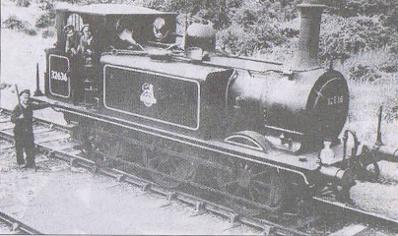
PHOTOGRAPHER UNKNOWN
Left to Right Shunter Harry Avis, Driver Alf Charman & Fireman Vic Harris
As insufficient members were present to proceed with the full panel of Branch Officer for 1946, and as such could not be proceeded with it was proposed with it was proposed by Bro. E. Collington and seconded by Bro. J. Hillman. 'That a special meeting be called for the next branch meeting, especially for electing a new Secretary. It was further proposed by Bro. Cossburn. 'That this meeting be called for the second Sunday in the month and that all members be summoned to attend. (Carried).
As insufficient members were present to proceed with fall panel of Branch Officers for 1946 and as such could not proceed with, it was proposed by Bro. E. Collington and seconded by Bro. J. Hillman. That a special meeting be called for the next Branch Meeting, especially for electing a new Secretary. It was further proposed by Bro. Cossburn. That the meeting be called for the second Sunday in the month and that all members be summoned to attend.
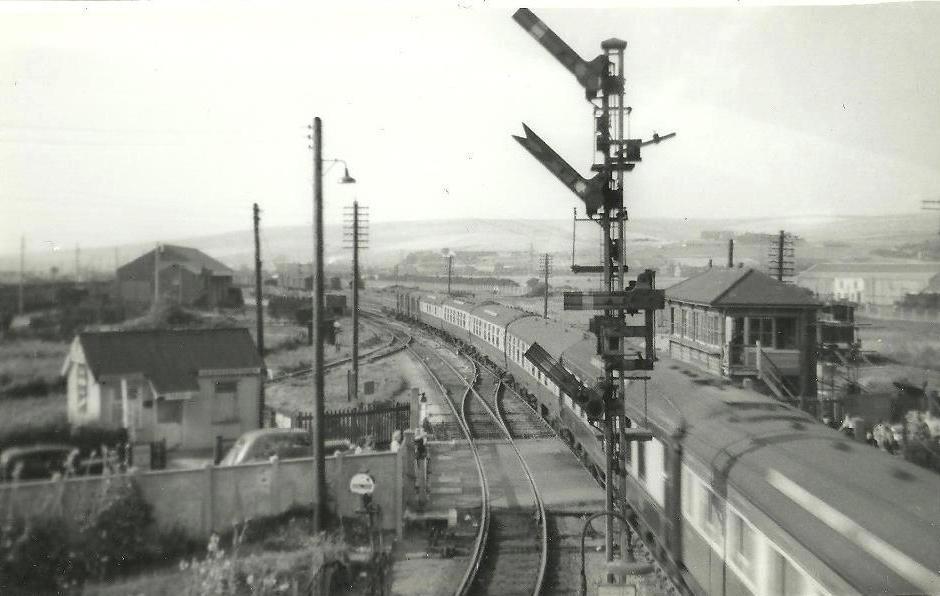
PHOTOGRAPHER UNKNOWN
Minutes of the Newhaven Branch Special Meeting
held at the Labour Club on Sun November 11th 1945
Bro. A. Rookley in the Chair
8 members present
Bros. A. Rookley, S. Turner, R. Turner, E. Collington, J. Cossburn, J. Hillman, M. Smith & E. King
Minutes of October meeting were read and discussed and passed as a true record on proposal by Bro.J. Hillman and seconded by Bro. E. Collington.
During discussion on the minutes query arose of minute re L.D.C. Procedure, and as Secretary had made wrong record, same was amended to read :- “No proposal from Company's side, in counteraction of proposal of the men shall be signed by representative of the men, without the divisional vote of the members of the Branch".
Questions were put to Chairman by Bro. M. Smith re link working arrangements being made without meeting of members.
Question put to Chairman by Bro. J. Cossburn re constitution or re-constitution of links, and both replied to by Chairman who gave the facts and claimed pressure of circumstances, but with regard to movement of men to work Boat Train. Chairman proposed to obtain further discussion on this matter and report back. Discussion took place on the time involved by 10.18 a.m. Man in No.3 Link, against the engine working diagram. Chairman proposed to enquire into this matter.
There being no further business, Election of Officer was again proceeded with.
Chairman called for endorsement of the proposal of Chairman and Vice Chairman, referred back from October meeting. This proposal was endorsed.
No nominations were forthcoming for position of Branch Secretary. Which matter was again referee back to next meeting.
Election of Officers for 1946
Chairman Bro. A. Rookley, Vice Chairman Bro. J. Hillman
Secretary & Assistant Secretary no nominations.
Committee as suggested Bros. C. Wilson, S. Turner, R. Turner, E. Collington, W. Mullett, W. Brown, M. Giles & J. Giles.
Trades Council Delegates Bros J. Cossburn & W. Mullett
No.5 District Council Delegate Bro. E. King (subject to revision)
Shed Representative and Labour Party Delegate No nominations.
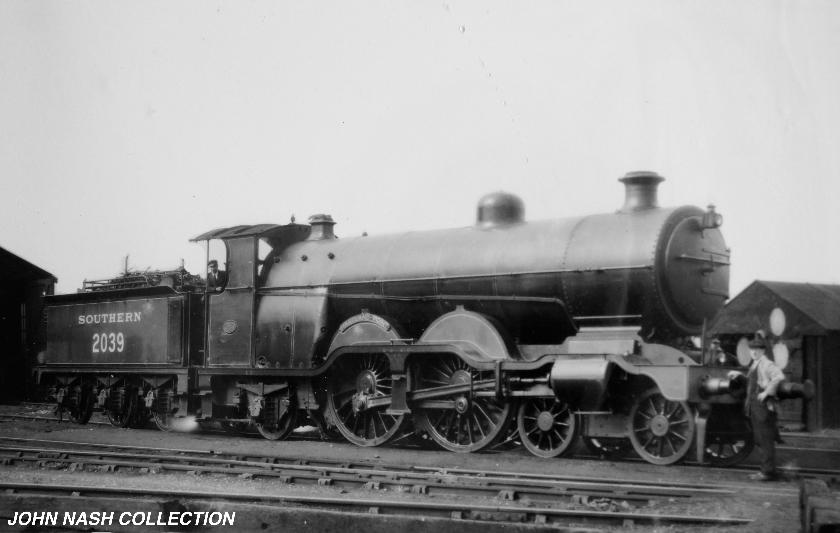
Brighton Atlantic Class H1 No. 2039 Hartland Point (La France) on Newhaven Shed
Minutes of the Newhaven Branch Special Meeting
held at the Labour Club on Sun March 17th 1946
Bro. A. Rookley in the Chair
7 members present
Bros. B. Piddlesden, D. Smith, W. Terrill, S. Turner, J. Hillman, A. Rookley & E. King.
Minutes of the last meeting were read and it was proposed by Bro. J. Hillman and seconded by Bro. S. Turner. They be a true record. Carried.
Correspondence was then read the first item was circular of March 7th informing Branches of the amended agreement which now gives the right of an L.D.C. To Depots and at of to or more personnel a further item give a particulars of alterations to the Society's Rules, which incorporate advantages to the members.
As the constitution of an L.D.C. Is now applicable to this Depot. Chairman called for names for nominations for Branch Candidates for Election to such L.D.C. nominations as follows (votes):- J. Giles (1st), C. Wilson (2nd), A. Rookley (3rd), E. Collington (4th) & E. King (5th).
All nominations were carried individually and it was then proposed after further discussion by Bro. Piddlesden & sec. By Bro. S. Turner. nominations now cease (carried) and that Secretary communicates with the N.U.R. That this Branch nominates 4 candidates and supply names thereof. Carried .
Any Other Business. Letter was read from Bro. E. Eacott requesting one days suspension benefit from the Society for the misfortune sustained by him for passing a signal at danger. Proposed by S. Turner & seconded by J. Hillman. After discussion that resolution be sent to Head Office to obtain this suspension benefit. Carried.
A further item was proposed by W. Terrill. That Shed Representative see the Foreman re-rostering of Sunday duties therefore it was proposed by Bro. W. Terrill & sec. By Bro. B. Piddlesden. That a complaint exists that Sunday duty is not equitably rostered between links and that the Sunday duty in Link 4 is rostered off the latest back turn. Carried.
Proposed by B. Piddlesden & seconded by W. Terrill. That due to engines being supplied with Tilmanstone coal, engines be properly disposed after taking duty, before again taking duty. It was suggested that engines be supplied with 50% good coal where Tillmanstone coal is used. A further item was raised of the quota of Tillmanstone used at Brighton.
A proposition was made by Bro. J. Hillman & seconded by Bro. B. Piddlesden. A letter of condolence be sent in the name of this Branch to our late colleague of the N.U.R.'s widow Mrs. Bestin. carried.
Letter to A.S.L.E.F. General Secretary
Mr. W. P. Allen, Dear Sir,
Herewith an application from Bro. E. Eacott for discretion of the Branch to advice for one days suspension benefit.
This matter, and the circumstance appertaining thereto, where discussed at our Branch Meeting held on Sunday 17th March, 1946, when it was ‘proposed by Bro. S. Turner seconded by Bo. J. Hillman’ “and carried by members that this suspension benefit be paid.”
Will you therefore endorse the resolution and advise me as to payment to Bro. E. Eacott.
Yours fraternally, Ernest A. King, Branch Secretary.
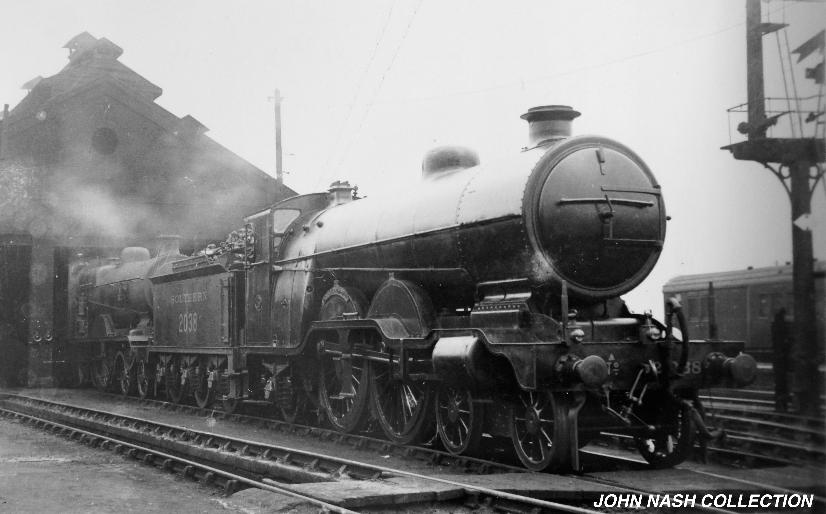
Brighton Atlantic Class H1 No. 2038 Portland Bill on Newhaven Shed
the Engine Cleaner's lobby coach can be seen to the right
Minutes of the Newhaven Branch Special Meeting
held at the Labour Club on Sun June 23rd 1946
Bro. A. Rookley
5 members present
Bros. J. Giles, D. Smith, W. Terrill, A. Rookley & E. King.
Minutes of the previous meeting were read and it was proposed by Bro. W. Terrill and seconded by Bro. D. Smith. Minutes if the previous meeting were a true record.
Correspondence was then read by Secretary, which contained item re National Health Insurance and letters from Branch Members.
Discussion followed, which also included item from previous meeting, proposed by Bro. Rookley & seconded by Bro. D. Smith. That we heartly welcome the 2 of the official candidates returned to the L.D.C. And tender to them heartiest congratulations on the result of the election, and that all Branch Members afford them every assistance.
Question raised by Bro. D. Smith. As he started in the Company's service in 1934, was made permanent in 1938 and was still paying unemployment assurance could he be told, how much longer this might apply before exemption from payment was obtained. Secretary could not give an absolute answer to this query and as other might be interested, would write H.O. for their advice.
Letter was read from Bro, J. Cossburn, asking that, with the permission of the Branch, he now be prepared to offer his services as a Branch Representative on L.D.C. For the benefit of the men. Discussion took place to some length on this letter and it was formally accepted by those present, that this letter from Bro. Cossburn be held over to the July meeting and be made a special item of such meeting and be notified on Branch Meeting Notice for Secretary.
Letter read from Bro. Rookley resigning from Branch Chairmanship and commented by himself to the effect that Chairmanship be taken over by Bro. J. Hillman, present vice Chairman and a vice Chairman be appointed.
Discussion took place on this matter to some length with differing item.
Proposed by Bro. J. Giles & seconded by Bro.A. Rookley. That question be now left over to the July meeting and be made a first and special item of business and previously notified.
Secretary mentioned the case of Bro. W. Ware being suspended for one day in his absence, and quoted procedure. Proposed by Bro. J. Giles & seconded by Bro. W. Terrill. That Secretary obtain details from Bro. Ware and write to Head Office with a view to obtaining suspension benefit. Carried.
Question was raised by L.D.C. Member Bro. J. Giles re seniority of men returning to Company’s service from the forces.
Secretary quoted from Ministry of Labour order and Bro. Rookley replied from the aspect of the Sectional Council ruling.
Proposal came from Bro. Terrill. That L.D.C. Request that passed firemen be re-instated in their former positions by re-introduction of links as before May 11th, as far as is possible.
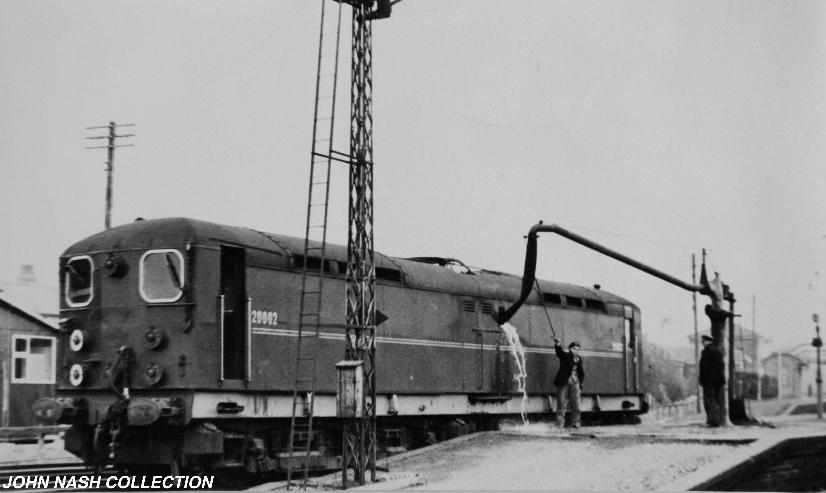
Left Fireman Freddie Goff taking water and
Driver A. Norman standing by the water crane at Newhaven Harbour station
Minutes of the Newhaven Branch Special Meeting
held at the Labour Club on Sun February 16th 1947
7 members present
Bros. J. Cossburn, P.Knight, A. Young, W. Mullett, J. Lipscombe, C. Evans & E. King.
The Chair was taken by Bro. J. Cossburn, on proposition by Bro. W. Mullett and seconded by Bro. J. Lipscombe.
Secretary read the minutes of the previous meeting and it was proposed by Bro. P. Knight and second by Bro. A. Young. Minutes be accepted as read. Carried.
Correspondence re National Coal Emergency & proposals for National Programme were read.
The former item was appreciated by all present and Bro. Young moved a comment. That the items listed were very satisfactory in general and the members agreed in their confidence in the E.C. Of the Society.
Proposed by Bro. P. Knight and seconded by Bro. C. Evans. Correspondence be accepted as read. Carried.
A discussion arose of the method of booking men to work this week and due partly to the National Fuel Emergency, the outcome of which was that, proposed by Bro. J. Lipscombe & seconded by Bro. W. Mullett. That Secretary see the L.D.C. Secretary and state to him that week end bookings for work in emergency be worked out between L.D.C. Sec. & Foreman. Carried.
The Secretary impressed on those present the need most urgent for a full panel of Branch officers
Bro. J. Lipscombe proposed and Bro. J. Cossburn to Chairman which was seconded By. Bro. W. Mullett.
NEWHAVEN
BRANCH
OFFICERS
1947
Chairman Bro. J. Cossburn
Vice Chair Bro. W. Mullett
Secretary Bro. E. King
Bro. J. Cossburn poposed Bro. W. Mullett for Vice Chairman, which was seconded by Bro. J. Lipscombe
Secretary volunteered to serve for another year. Bro. J. Cossburn proposed Secretary Bro. E. King to be No.4 District Council Delegate, seconded by Bro. C. Evans.
With regard to the Local Trades Council. Bro. J. Cossburn and seconded by Bro. W. Mullett. That this Branch dis-affiliate from the Trades Council.
In accordance of further business, the question of L.D.C. representation was brought up and although the present L.D.C. is in office until May. Propositions were put forward for the Branch official candidates for the next L.D.C. These are as follows.
Proposed by Bro. J. Cossburn and seconded by Bro. W. Mullett. Bro. C. Wilson
Proposed by Bro. J. Cossburn and seconded by Bro. A. Young, Bro. E. King
Proposed by Bro. P. Knight and seconded by Bro. C. Evans. Bro. J. Cossburn
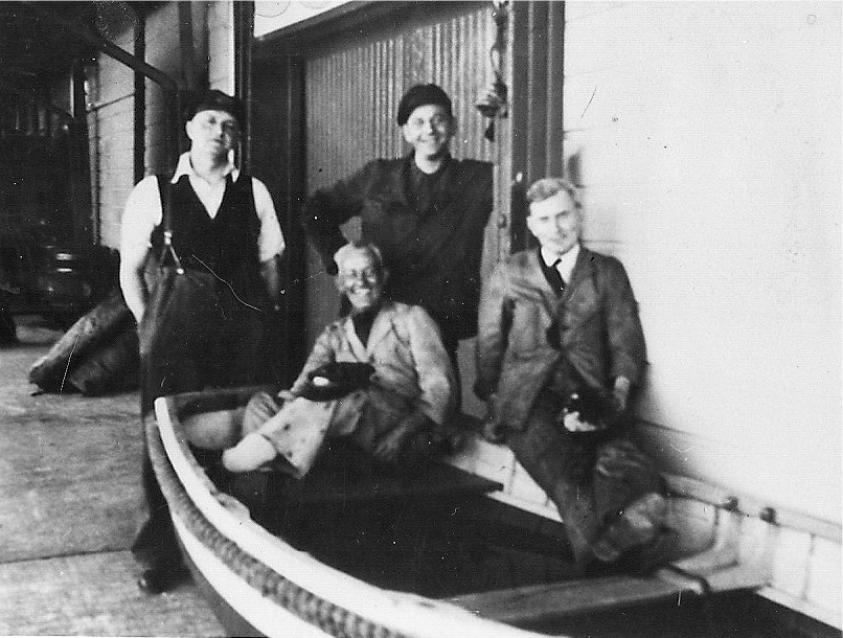
Ron Terrill Collection
L~ R: Driver Alf Charman (13.1918) & Fireman Charlie Evans,
Driver Earn Eacott (5.11.1917) & Fireman Tim Norman
photo taken at Newhaven Marine station
Minutes of the Newhaven Branch Special Meeting
held at the Labour Club on Sun April 20th 1947
Bro. J. Cossburn in the Chair
11 members present
Bros. B. Piddlesden, R. Turner, C. Wilson, W. Lipsombe, J. Lipscombe, R. Hooker, A. Rookley, C. Lower,
W. Mullett, J. Cossburn & E. King
Bro. W.J. Cleaver in attendance
Minutes of the previous meeting were read and it was proposed by Bro. C. Wilson and seconded by Bro. B. Pedlesden. Minutes be accepted as read. Carried.
Bro. A. Rookley asked a question as to the right of Secretary to vote.
Question was raised as to procedure on Standing Orders in Branch Meetings. Secretary pointed out that the procedure in Branch Meeting had since his period of office of ten years, been in accordance with past practice. To this was no further comment.
Correspondence was then read by Secretary of the must essential up to date items and it was. Moved by Bro. B. Peddlesden and seconded by Bro. J. Lower. Correspondence be accepted as read.
Further endeavour was made then to complete the panel of Branch officers and whilst this was in progress Bro. W.J. Cleaver arrived. The outcome of this attempt,w as that Bro. R. Hooker be Assistant Secretary. As regards the attempt to get 7 committee members. Bros. C. Wilson & R. Hooker were put forward, as it is as pointed out to Chairman by Bro. Cleaver that these members were ex-officers. Chairman suggested the members present of the previous meeting who nominated the chief Branch Officers be co-opted as committee.
Committee so formed comprises Bros.
C. Wilson, R. Hooker, P. Knight, A. Young, W. Mullett, J. Lipscombe & C. Evans.
That this arrangement apply was accepted on proposition of C. Wilson & seconded by J. Lower.
As regards the office of Branch Collectors Bro. J. Cossburn promised to assist Secretary when and where possible.
Question was asked by Bro. B. Piddlesden relating to link working and moving of men from one link to another for firing duties. From the discussion that arose, Bro. Cleaver also responded to the question to point out that such movements were governed by agreements and if L.D.C. Agreements on the matter were violated by the Company's representatives such should not be allowed where it related to appointed men. In all cases the L.D.C. Determined which was senior work and the disposition of the men. Bro. Piddlesden's second question was in relation to the number of Firemen loaned out to other Depots, whereas no men were sent to Newhaven to be worked to olviate
this.
A question arose regarding the proposal to merge the "Pilot Link", which proposal had not been put into affect from discussion there on it was moved by Bro. Piddlesden & seconded by Bro. J. Lower & Bro. J. Cossburn. All Firemen at an early opportunity to give effect to this merger. Carried. There being no further business of a local matter, Bro. Cleaver was invited to address the meeting, which he did and prefaced his remarks by notting that it was a great pity that it had got to the April meeting before a could elect all it's Branch Officers, and called for a different outlook to this.
The speaker
pointed out that it was apathy amongst the rank and file that really
caused the percentages reductions to take place in 1930-1931 and took
the Society until 1938 to recover that which they had lost, it took
until 1938 to really get that which had been won in 1920! Bro.
Cleaver pointed out that advances must be made there was no
standing still, and if advance was not made things went back, this was
retrograde and the aim and ambition of all was for advancement and it
was only by attendance at meeting that resolutions could be made and
forwarded to the Head Office for the guidance of the Executive
Committee, and the formulation of a programme.
This was a call to all members especially the younger members.
At the close of his address Bro. Crossburn asked for suggestions of any notice and so no member to ask any questions, Bro. Cossburn asked if any information was forthcoming re the proposed National Agreement and what Railway had been made. Bro. Cleaver replied that another meeting pending and he was no better informed than us.
Secretary asked Bro. Cleaver to give on the political fund which Bro. Cleaver did explaining the aim for political representation on and only the Government but all the originating bodies that will be involved in the National Railways etc.
Previous to terminating his address. Bro. Cleaver to the function that will be required of the L.D.C.s and Sectional Councils insofar as the Management of and operation of the Transport by rail of the National Transport system and pointed out that foresighted and systematized policy, will be required to make publicly owned railways a true success.
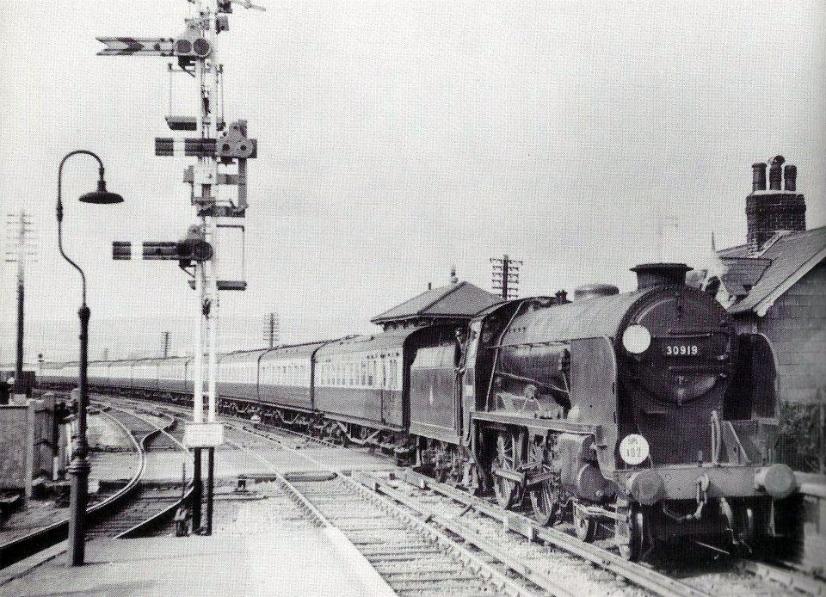
PHOTOGRAPHER UNKNOWN
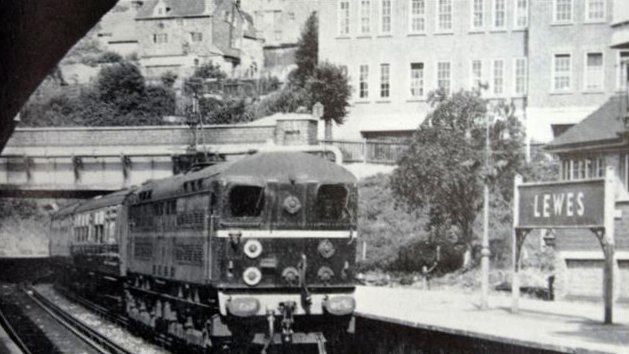 PHOTOGRAPHER UNKNOWN | The Marine platforms were opened to electric traction on 16th July, 1947, but no attempt was made was replace steam locomotives, on the main trains until the 15th May, 1949, when the three Bulleid/Raworth electric locomotives CC1, CC2 & CC3 (20001-3) took over working of the Newhaven Boat Train, with No. 20003 being the first electric locomotive to work the 9.35 am 'Boat Train' from London Victoria to Newhaven. This train reached Newhaven 15 minutes early. The Newhaven loco men gave these locomotives their nick-name "Hornbys" Left :-Bulleid's electric loco 20001 working the down Newhaven Boat Train on August 24th 1956 |
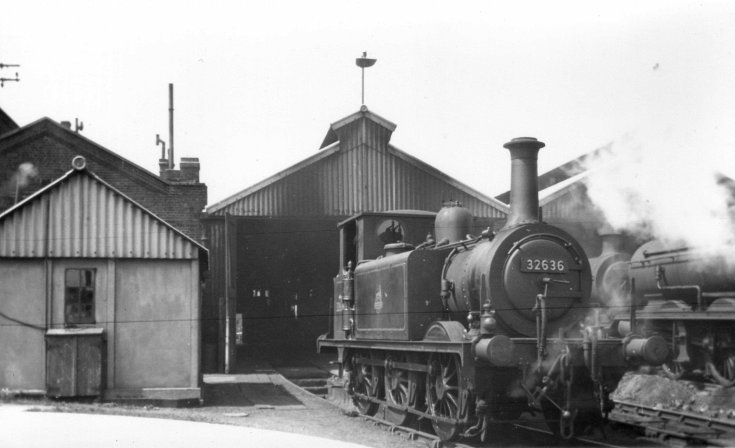
PHOTOGRAPHER UNKNOWN
The Tragic Loss Of Bro. Ben Piddlesden
On approached London Bridge station on the Up Through line, the train overran the Inner Home signal at Danger and collided at a speed of about 15 m.p.h. with an empty train standing at No. 14 platform, awaiting signals to leave for New Cross Gate. The Seaford Motorman E. J. Watson of the incoming train was killed, together with Newhaven Passed Fireman Ben Piddlesden, who was still in the cab with him, learning the route.
The full report can be seen on the Seaford sub page.
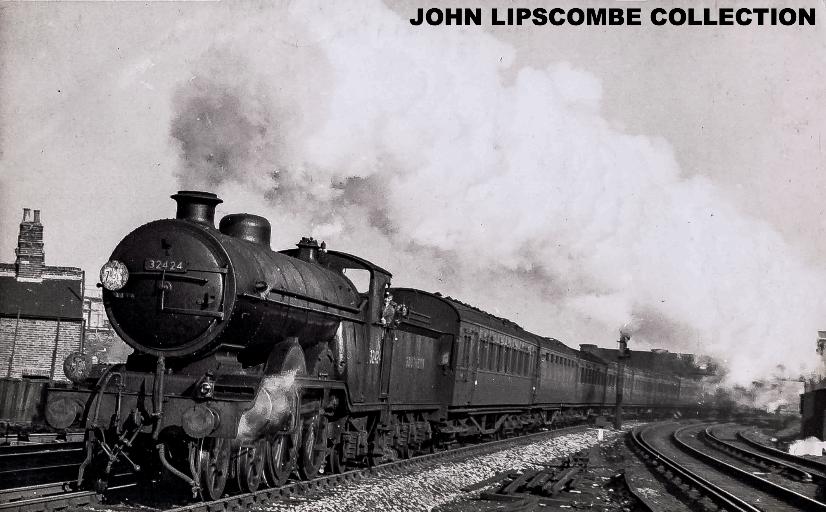
DRIVER BILL LIPSCOMBE
32424 WORKING THE 8.0 a.m. VICTORIA TO NEWHAVEN HARBOUR PASSING STREATHAM COMMON
6.04.1950
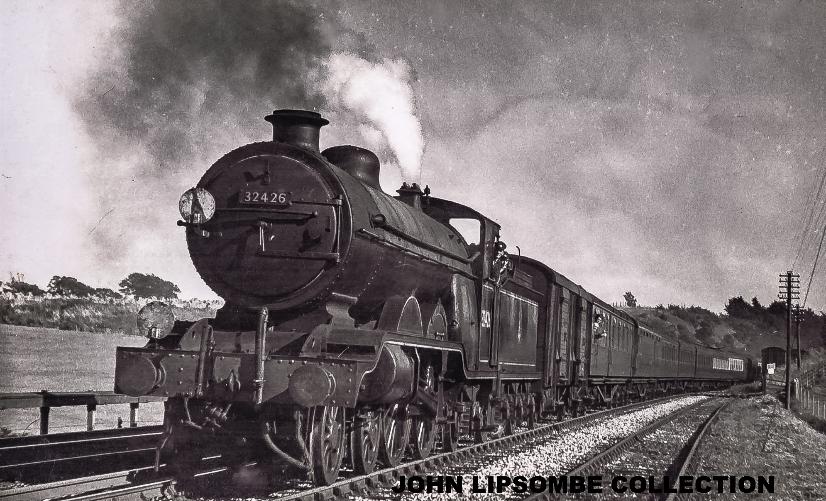
DRIVER BILL LIPSCOMBER
32426 WORKING THE 4.52 p.m.. NEWHAVEN HARBOUR TO VICTORIA APPROACHING COOKSBRIDGE ON THE 20/08/1950
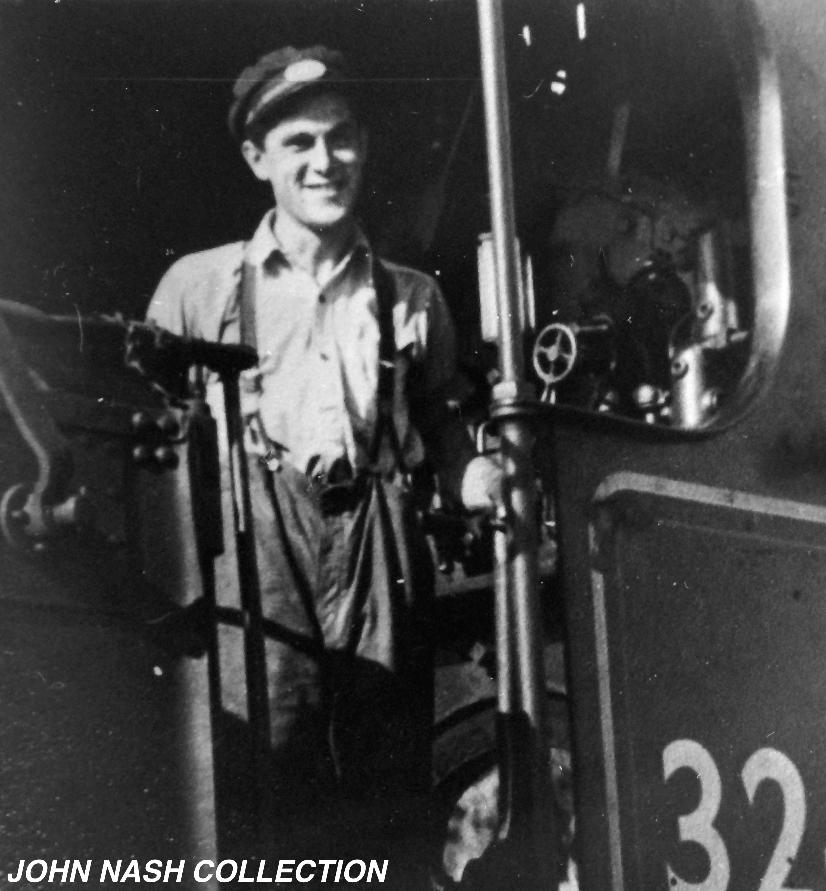
Bill Sherwin
Newhaven A.S.L.E.F. Branch Secretary 1952 - 1954
Minutes of the Newhaven Branch Meeting
held at the Labour Club on Sun June 8th 1952
11 members present
Bros. A. Newbegin (A.S.L.E.F. Organiser), W. Sherwin, D. Brady, R. Crouch, M. Freeman, E. Hillman,
J. Hillman, R. Hooker, J. Nash, J. Lower, R. Turner & E. King.
This meeting was held for the purpose of electing Branch Officers and re-constituting the Branch after a period of 5 years without Branch and was called by Organiser Bro. A. Newbegin for this purpose.
The chair was taken at 11.15 a.m. by Bro. W. Sherwin.
Minutes of last meeting of April 20th 1947 was read and as there was no questions asked concerning them it was proposed by Bro. J. Hillman and seconded by Bro. J. Lower. Minutes of the previous meeting be accepted as read.
Correspondences to date of most importance was read Secretary and as there was no discussion on correspondence it was proposed by Bro. J. Hillman and seconded by Bro. J. Nash. That correspondence be accepted as read. Carried.
Secretary then called attention to main business of this meeting which was the election of a panel of Branch Officers. At this stage Bro. A. Newbegin asked to say a few words.
Bro. A. Newbegin, called attention to this un-constitutional state which happened when there were no Branch Officers and called attention to the fact that Secretary had been carrying on alone more or less for many of 15 ½ years of service to the branch and invited all members present to try to arouse some interest in the Branch and assist the new officers in their appointment. Bro. Newbegin pointed out the fact that such apathy in branch meetings caused the members to lose touch with Head Office and so become out of touch with the Executive’s endeavours on our behalf as regards our Conditions of Service etc. He also pointed out that this loss of contact with membership was serious should it be necessary to close a Branch and rely on a Contributions Collector attached to another Branch. In this respect Bro. Newbegin was pleased to see a number of young members and called for all young members to take an interest in the affairs of their Branch.
The election of Branch Officers was then proceeded with and as Secretary was discussed of resignation from that position it was proposed by Bro. J. Hillman and seconded by Bro. J. Lower, Bro. E. King be Chairman of this Branch. Carried
Proposed by Bro. J. Hillman and seconded by Bro. R. Turner, to be Vice Chairman was (no nomination) to which all members present agreed Carried.
On an introduction by retiring Secretary, it was proposed by Bro. J. Hillman and seconded by J. Nash. That Bro. W. Sherwin be Branch Secretary. Carried.
Volunteered, Bro. R. hooker to be Assistant Secretary was seconded by Bro. J. Hillman, to which all members present agreed.
The Branch Committee was formed of those members who being present and not in office other wise as follows.
Bros R. turner, J. Lower, J. Nash, E. Hillman, M. Freeman, D. Brady & R. Crouch.
Proposed by Bro. E. King and seconded by Bro. J. Lower. Bro. E. Lucknott be Branch Stewart and collector as he had offered to collect for Bro. E. King previously. Carrie.
Proposed by Bro. J. Hillman and seconded by Bro. C. lower. That Bo. E. King be No.4 District Council delegate as he was still willing to attend.
Bro. A. Newbegin the addressed the Branch, on the Society’s Policy as mentioned on member circulars letters and outlined the Executive Committee’s claim now put forward with the other two Railway Unions for an increase of 10% on wages also a cleaner and definite system of Payment of increase for Saturday afternoon working. Further he pointed out that the principle already evolved by the Society was without the support of the N.U.R. and T.S.S.A. and pointed out also that although cost of living was continually rising any increase offered would not be easily got, in view of the fact that we now had a Tory government and Mr. R.A. Butler was trying to coerce the T.U.C. to agree to a wage freeze.
Railway trade unions would have a stiff task to achieve any increase in wages or alterations in Conditions of Service, which would make necessary the attention of every member of the unions concerned.
Bro Newbegin then announced that the Railway Executives reply to the wages claim made would be published on June 28th and it might or might not include an offer of some sort much depended on the policy of Mr. Butler.
NEWHAVEN
BRANCH
OFFICERS
1952 - 1955
Chairman Bro. E. King
Vice Chair Bro.
Secretary Bro. W. Sherwin
Bro. Newbegin then went on to speak about the society’s endeavours to formulate a pension scheme on the point that the salaried Staff have a superannuation fund of General application, but not the outdoor staffs and claim that what was as good for Clerks is equally good for other grades be further pointed out that whereas the Nat. Coal Board had now produced a pension scheme for the miners with a lump sum of £2,000 000 and even so the miner’s pension was not very big, but it was a pension. While the Railway Executive was formulating a pension fund financial structure it was apparently designed to be a voluntary nature, but the E.C. of the union considered any such scheme should be compulsory to ensure stability and satisfaction and in this way the pension could be higher.
At this year’s A.A.D. a resolution had been put forward for a Pension scheme to be formulated this year by the end of the year if no satisfaction is obtained a conference be called early in the New Year to consider matter further.
Some aspects and items of the Machinery of Negotiations had been amended, but the majority of the amendments would be accepted and some further negotiated. Nominations and elections of L.D.C. would come under this clause. Different arrangements were pending with regards to discipline cases, such as Form 1 charge sheets, more time than the 48 hours being allowed for a charged man to gather his evidence for an appeal and to interview or call witnesses. It has also been forward that the official of the Railway, hearing such as appeal, should not be the person who decided the request punishment; even should he not have signed the punishment order.
Bro. Newbegin further dealt with items being negotiated as to the holding of L.D.C. meetings, it being attempted to get L.D.C. meetings always held in on duty time, where this was not possible member who attend in their own off duty time should be paid for part of day or all day at ordinary rate for the time involved. Where L.D.C. member were asked to attend on Rest Days either a suitable day be given in lieu or payment made for 10hrs for such meeting.
The address was terminated by a short survey of matters being discussed or decisions reached of matters domestic to the Southern Region. Points also touched upon were the proposal for a standard eyesight test and its bearing on new entrants into the service.
As no questions were asked, a vote of thanks be accorded to Bro. Newbegin for his help, to which all members concurred.
The address was terminated by a short survey of matters being discussion reached of matters domestic to the Southern Region, points also reached upon were proposal for a standard eyesight test and its bearing on new entrants into the service. s no question were asked, Bro. Sherwin proposed and Bro. J. Lower seconded. 'A vote of thanks be recorded to Bro. Newbegin for his help to which all members concurred.
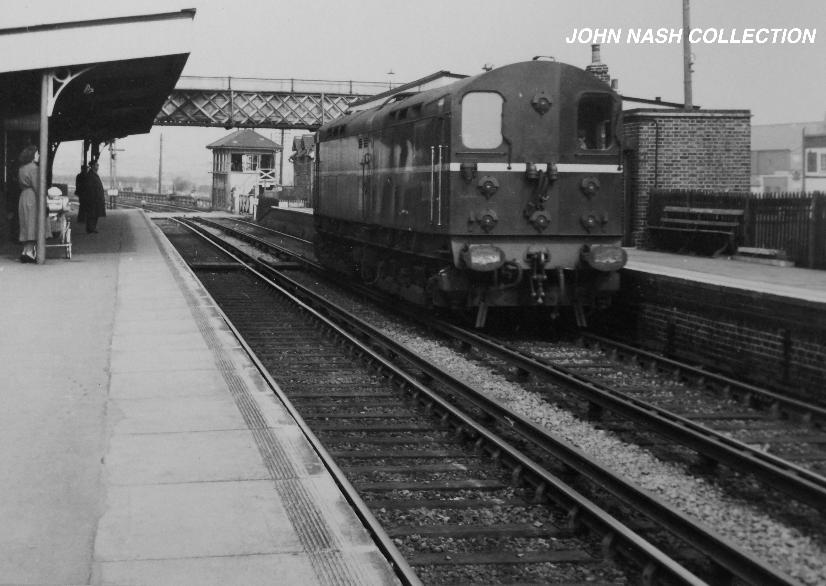
Minutes of the Newhaven Branch Meeting
held at the Labour Club on Sun Oct 26th 1952
6 members present
Bros. E. King, M. Smith, J. Lower, M. Freeman, J. Nash & W. Sherwin
Meeting was declared open at 11 a.m., minutes of last meeting accepted, proposed by Bro. M. Freeman and seconded by Bro. J. Nash.
Correspondence was dealt with to satisfaction of all concerned.
Several items were discussed as regards matters in the loco shed, but there were deemed L.D.C. matters, and were taken in hand by Bro. E. King who is Secretary.
Method of procedure when falling sick were explained as regards getting certificate for Union, Club and approved Societies.
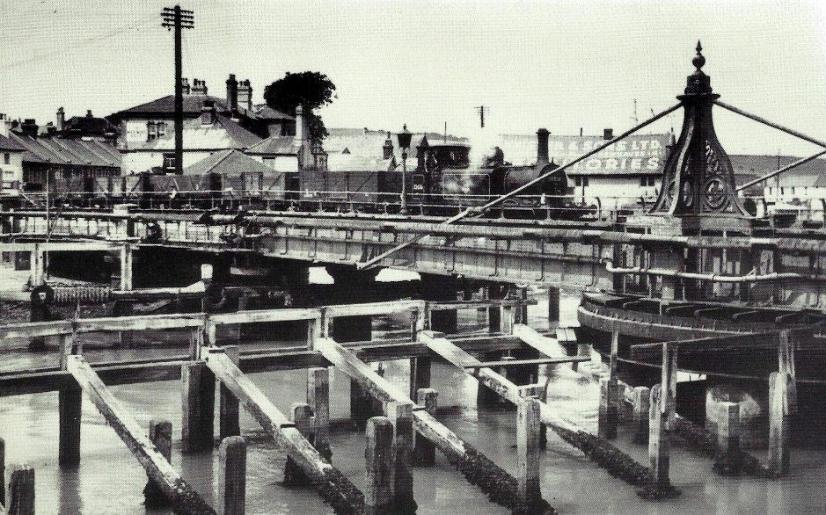
PHOTOGRAPHER UNKNOWN
Brighton Works Centenary Special train runs
To commemorate the centenary of "Brighton Locomotive Works, two Brighton Works Centenary Specials train run, on the 5th & 19th October 1952, when the "Railway Correspondence & Travel Society (R.C.T.S.), for the first time offered its members all-Pullman travel on fast schedules.
Both trains were hauled by H2 Atlantics, the first special on the 5th was hauled No.32424 "Beachy Head" , and worked by Newhaven locomen Driver Sydney Turner & Fireman Fred Stratton. On the 19th October, No. 32435 "Trevose Head" with Brighton locomen
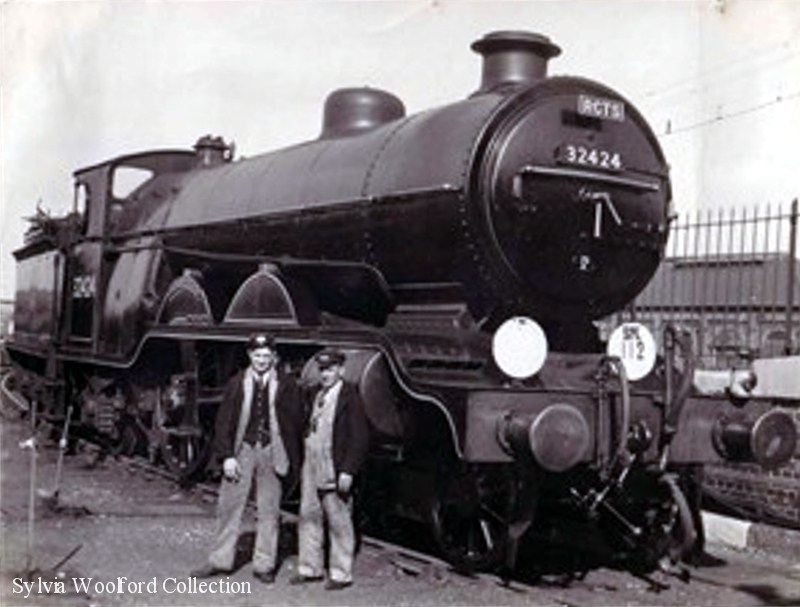
Left ~ Right: Fireman Fred Stratton & Driver Sydney Turner at Brighton Works
Sydney Turner was born in Deal in Kent (1896), he started off as an Engine Cleaner in 1914, later promoted to Fireman and eventually became an Engine Driver at Folkestone He moved to Newhaven in 1936 and was promoted to driving the main-line Boat Trains to Victoria, Sydney died in 1962.
Extracted from
'Our Newhaven' web sited
Sylvia Woolford Grand-daughter of Sydney Turner
*According to the 1925 Southern Railway footplate seniority list there are two footplatemen stating with same inital.
S.Turner 7.7.1914 & S.L. Turner 16.11.1914
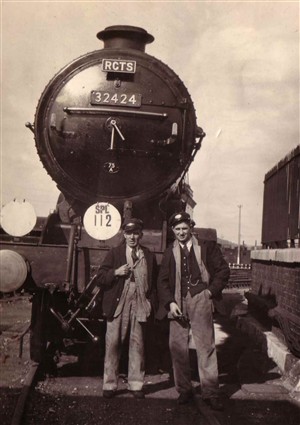
G.F. Bloxam/Sylvia Woolford Collection
Left ~ Right: Driver Sydney Turner & Fireman Fred Stratton standing in front of Atlantic Class H2 'Beachy Head' on "the Centenary of Brighton Locomotive Works"
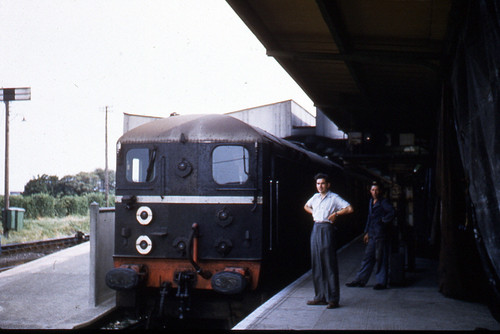
PHOTOGRAPHER UNKNOWN
Driver Maurice Giles & Fireman unknown
Minutes of the Newhaven Branch Meeting
held at the Labour Club on Sun Oct 6th 1953
.
Meeting was called premarily to discus payment suspension benefit to Bro. W. Ware, his position was explained also the result of his appeal which was unsuccessful. The following minute was then proposed .
Proposed by Bro. E. Hillman and seconded by Bro J. Bowden. 'In view of the fact that our member appeal against two suspension for passing Signal V.C. 200 at danger through an error of judgement are so still suffers a feeling of injustice this meeting propose that our member be paid paid suspension benefit according to rule.' (Carried)
Outline of proposed pension scheme was also dealt with payments to be received this death benefits.
Correspondence was read and other items discussed.
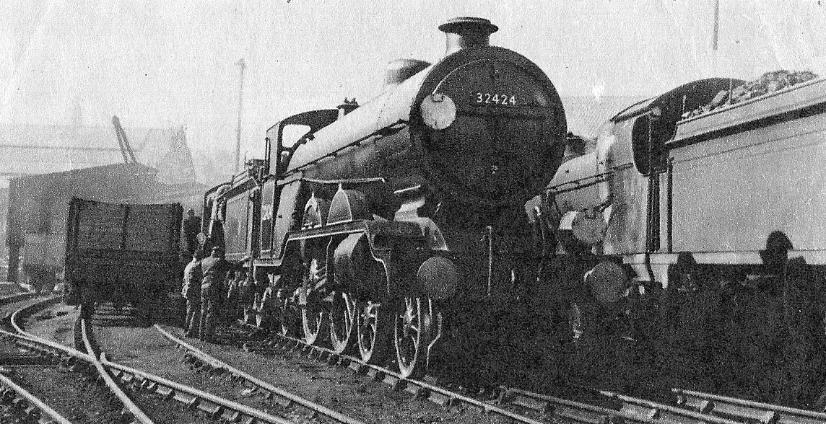
PHOTOGRAPHER UNKNOWN
Minutes of the Newhaven Branch Meeting
held at the Labour Club on Sun April 29th 1955
With respect to the implementation of the Head office instruction to withdraw our labour on May 1st, attempts were made to arrange meetings in consequence. Two thing were decide, one, that we hold no meetings until our delegate had attended the District Council meeting on April 25th, and two that if possible any action taken would be jointly with our neighbouring Motorman’s Branch at Seaford. This was arranged, and a meeting held on Wednesday April 28th at 10.45 a.m. and 7.0 p.m. for the benefit of the two shifts of men. Our Branch Chairman was able to be present at both meetings. To share the work and the interest it was agreed to draw up a Strike Committee from both these meetings and four strike committee members were elected included one from Seaford and this together with our Chairman made a total of nine. As we had had such a good response from our appeal for member of the non-union fraternity, the morning meeting decided that picketing, either at Seaford or at Newhaven would not be necessary, but the evening meeting revised this decision and a further meeting was agreed for Sunday Evening to draw up and arrange a picket rotor. As events have turned as far, this Sunday meeting has not been required, but the organising of our action had been completed. A despatch rider had been made. The possible total of those who would have worked at Newhaven, were two N.U.R. men, one non unionist, and one boy cleaner, who would of course not have been available for firing. Amongst other things, had the strike to be place, arrangements were made for members to attend the Labour Club between 10 a.m. and 12 noon daily, also suggestions were already raised for social activities to interest the members.
Strike Committee.
Chairman E. King,
C. Wilson, W. Mullett, W. Sharpe, R. Bush, J. Giles, D. Renville, R. Hooker & J. Hillman.
Minutes of the Newhaven Special Branch Meeting
held at the Labour Club on May 27th & 28th 1955
Joint meetings were held with the Seaford Branch at the Labour Club, Newhaven, to finalise arrangements for the strike.
It was agreed to have pickets on the Gate on Sunday morning 29th May 1955 at Newhaven Loco. and that no further pickets would be necessary. Members would then meet daily at Labour Club, between 10 a.m. and 12 noon except Whit Monday.
Pickets were.
Bros. J. Lower, W. Lipscombe, J. Giles & C. Wickenden.
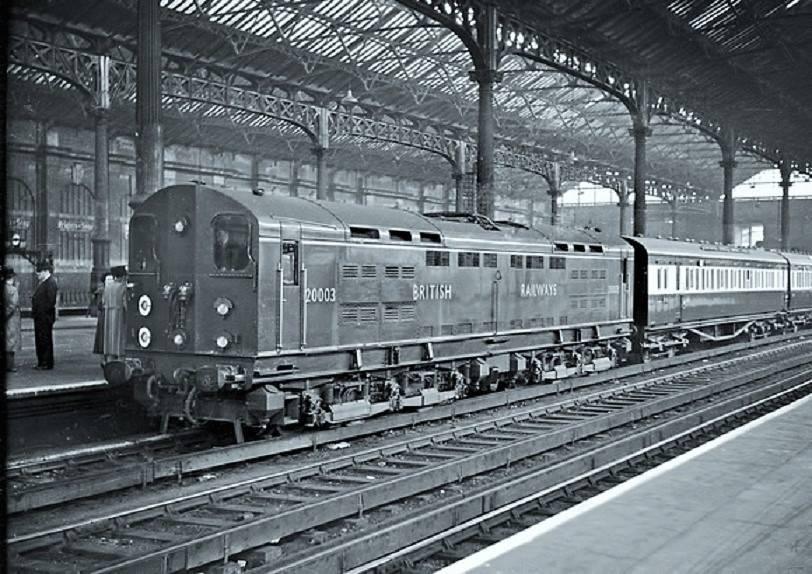
PHOTOGRAPHER UNKNOWN
Newhaven Boat Train raring at London Victoria
Minutes of the Newhaven Branch Meeting
held at the Labour Club on Sun March 18th 1956
Bro. E. King in the Chair
9 Members present
Bros :- H. Allen, W. Mullett, M. Giles, D. Goatcher, D. Smith, W. Ware, V. Morris, E. King &
C. Wickenden.
Minutes were read of previous meeting and passed as a true record. Proposed by Bro. W. Ware and seconded by Bro. D. Smith.
A circular was read from Head Office concerning Physical and Visual examinations for Footplate Grades, and a discussion followed.
A discussion then took place on Sunday Work at the Depot and a resolution was passed, proposed by H. Allen and Seconded by W. Mullett, ‘That a steam Sunday be placed in the ‘Dual Link’, and that this be finalised by at the next Branch meeting.
NEWHAVEN
BRANCH
OFFICERS
1955 - 1958
Chairman Bro. E. King
Vice Chair Bro.
Secretary Bro. C. Wickenden
It was, proposed by H. Allen and Seconded by C. Wickenden that a protest be registered with Head Office in respect of the new restrictions on Continental and Channel Island Steamers, and that the Secretary be instructed to write at once.
Another discussion took place on the position of the senior Passed Firemen, a complaint being made that the two senior men were on the same shift, it was , proposed by H. Allen and Seconded by V. Morris that the L.D.C. get one of the men involved, moved on the other shift.
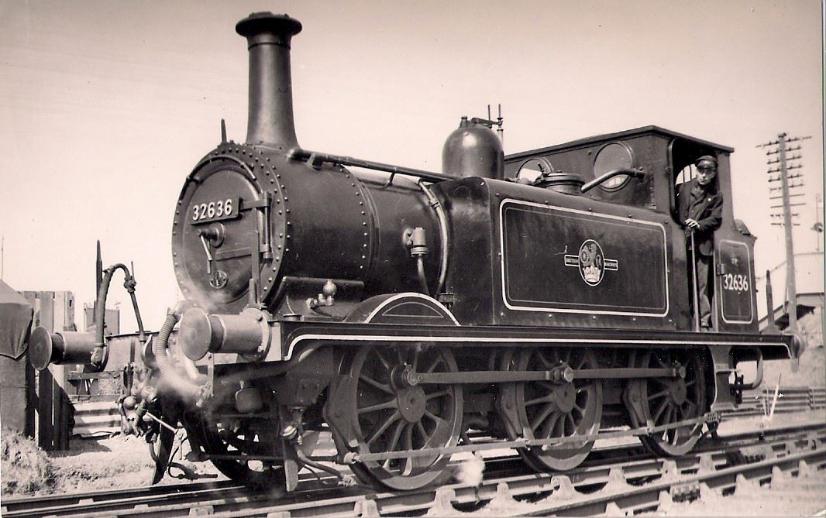
PHOTOGRAPHER UNKNOWN
Colin Wickenden Newhaven A.S.L.E.F. Branch Secretary 1955 - 1958
Newhaven Loco on the 13th April 1958
Minutes of the Newhaven Branch Meeting
held at the Labour Club on Sun May 11th 1956
9 Members present
Bros : J. Giles, M. Giles, W. Mullett, R. Morris, D. Renville, F. Goff, J. Lower, D. Goatcher &
C. Wickenden
The meeting opened at 11.00 a.m. and in the absence of Branch Chairman (on duty) it was proposed be Bro. J. Lower and seconded by Bro. W. Mullett. That Bro. J. Giles be Chairman.
The minutes were read of previous meeting and passed as a true record by Bro. R. Morriss and seconded by Bro. D. Goatcher.
Discussion then took place in Sunday work and it was to leave the position of Sunday work as at present until the Winter working and a meeting be held in August for this purpose. Proposed by Bro. W. Mullett and seconded by D. Renville.
A new Rest Day Roster was reviewed as proposed by Management, it was proposed by Bro. W. Mullett and seconded by Bro. M. Giles. 'That the new roster be excepted.
Complaint was made by Bro. R. Morris, that spare drivers were over looked for driving on Sunday's, it proposed by Bro. J. Lower and seconded by Bro. F. Goff. ‘That the L.D.C. take this matter up with the management.
For the forthcoming E.C. election it was proposed by Bro. J. Lower and seconded by Bro. W. Mullett. That the Branch support Bro. P.G. Hockling. The above proposals were all carried.
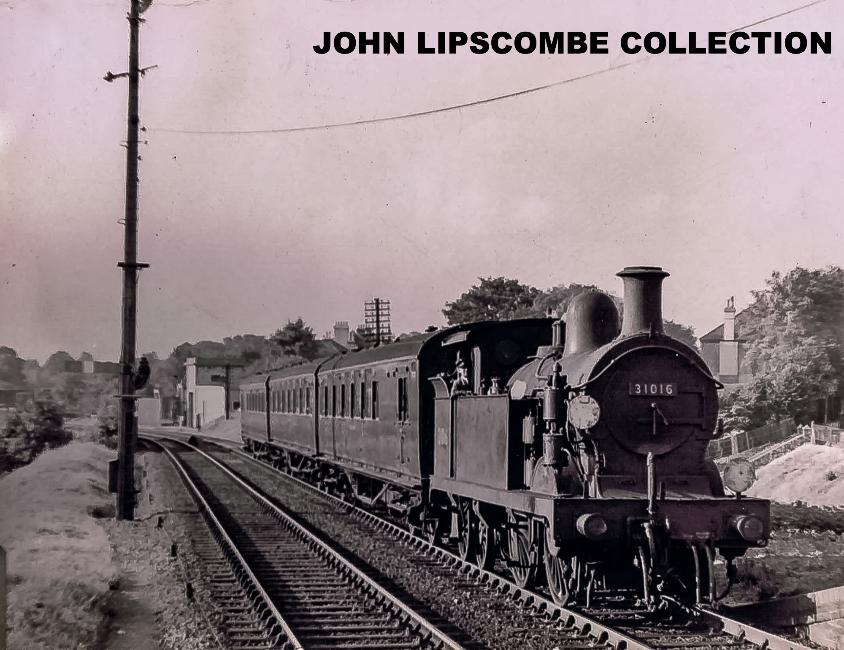
Driver Bill Lipscombe
6.36 p.m. East Croydon to Tunbridge Wells West at Selsdon
Date not known
Minutes of the Newhaven Branch Meeting
held at the Labour Club on
Sun Jan. 13th 1957
Bro. E. King in the Chair
15 Members present
Bros : E. King, D. Goatcher, M. Giles, S. Cheal, J. Lower, R. Turner, M. Smith, D. Renville, F. Goff, W. Lipscombe,
V. Morris, J. Nash, T. Sprague & C. Wickenden
Corresondence, a letter from St. Leonards Branch in respect of Bro. S.J.G. Cheal's transfer to this branch was read.
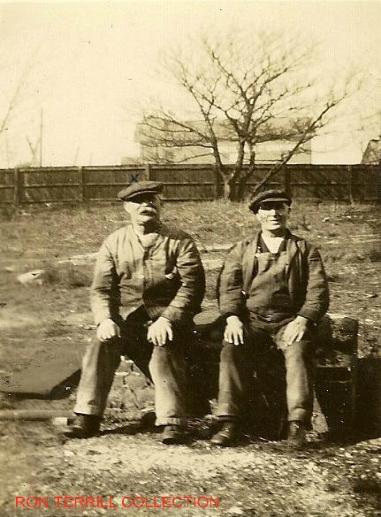
left -right Jock Hawkins who was the firelighter & on the right Fred Catlin fitters mate.
Jock had two sons Dave & John Hawkins. Dave was on the footplate and John was a platelayer for the rest of his days.
Ernie King & Jack 'Bogey' Simmons
Above Bill Terrill in Brighton, 1957
Circulars, acceptances of the 3% pay award, exemption of footplate staff from military service and traffic arrangements of the railways due to petrol rationing - staff position were read
A discussion took place on the circular re the working of rest days and the meeting rejected this, and instructed the Secretary to write endorsing a letter written to the management on the 22nd April 1951. Proposed by Bro. S. Cheal and second by Bro. J. Nash.
Branch register, with a view to making a branch register details of members were obtained from Head Office, some of which appear to be incorrect, and it was proposed by Bro. S. Cheal and seconded by Bro. T. Sprague. ‘ That a notice be posted requesting the Secretary might tie this matter up with Head Office.
A.A.D. 1957. It was proposed by Bro. J. Lower and seconded by Bro. S. Cheal. That the Branch support Bro. Lennard as delegate for the 1957 A.A.D. Carried Unanimously.
T.U.C. 1957, it was proposed by Bro. J. Lower and seconded by Bro. J. Nash. That the Branch support Bro. Lennard as delegate for the 1957 T.U.C., Carried.
Sunday work, a discussion followed on Sunday work. It was proposed by Bro. S. Cheal. 'That Bro. M. Smith be allocated a Sunday Duty.' seconded by Bro. R. Turner (Carried).
L.D.C. were instructed to look into the matter of Shedman's Sunday Duty, being always covered by Shed labourer , and to have this matter rectified. Proposed by Bro. T. Sprague and seconded by Bro. J. Nash (Carried).
RON TERRILL COLLECTION
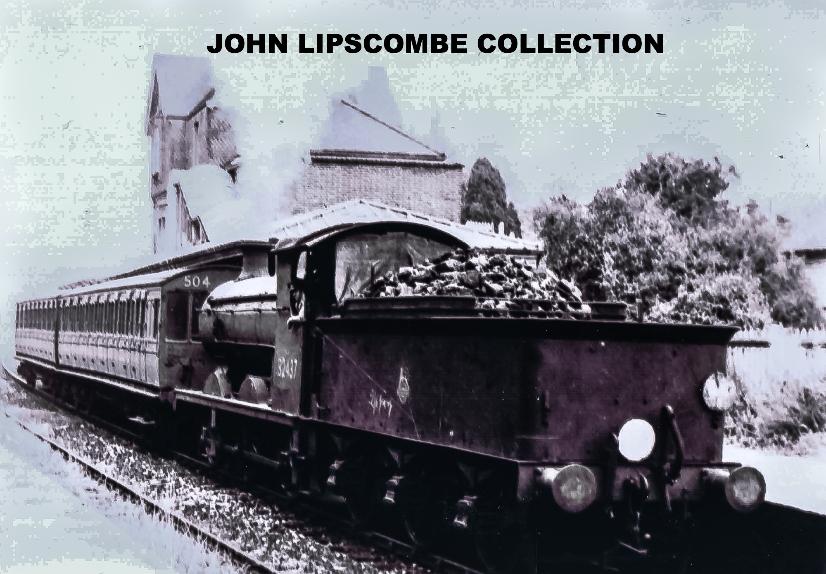
DRIVER BILL LIPSCOMBE AT NEWICK & CHAILEY STATION
DATE UNKNOWN
Minutes of the Newhaven Branch Meeting
held at the Labour Club on Sun February 10th 1957
15 Members present
Bros : R. Turner, J. Lower, R. Morris, R. Terrill, D. Renville, F. Wheeler, W. Mullett,
W. Lipscombe, T. Sprague, T. Norman, F. Goff, D. Goatcher, B. Simpson, C. Wickenden & S. Cheal.
The meeting opened at 11.0 a.m. and in the absence of the Chairman, Bro. E. King, Bro. S. Cheal was elected to the Chair.
The minutes were read of the previous meeting and passed as a true record. Proposed by Bro. T. Sprauge and seconded by Bro. F. Goff.
Correspondence, acknowledgement of voting papers in respect of A.A.D. 1957 and T.U.C. 1957 and the results of the elections were read. Mention was made of circular re restriction of the use of free and privilege tickets 1957 - Continental and Channel Island Steamers.
Letters from Head Office and Sectional Council No.2 were read, re rest day working. A discussion followed, and the general felling of the meeting was not to work rest days, and to condemn any member who do.
A reply to Bro. J. Knott's letter to Head Office was read, re accommodation transfer, and the Secretary was instructed to write to Head Office expressing dissatisfaction with their reply. Proposed by Bro. F. Wheeler and seconded by by Bro. W. Mullett.
LDC , a report of the meeting held on the 31st January 1957 was given by Bro, D. Goatcher (Chairman) and questions were answered. Cleaners Rest Room, the LDC were instructed to have this item place on the next agenda. Proposed by Bro. J. Lower and seconded by Bro. W. Lipscpmbe. If no satisfaction be obtained from the management, a 'Failed to Agree' sholud be obtained and minuted. (Carried).
A disccusion tookplace re Sunday work, and it was decided that the LDC be allowed to formulate the roster with the management. Propsed by Bro. T. Norman and seconded by Bro. T. Sprague. That the L.D.C. also place on the next agenda item with regard item 20 which has bern violated. Proposed by Bro. W. Mullett and seconded by Bro. F. Goff.
The L.D.C. Secretary was instructed to write to sectional Council No. 2 for a ruling on the position of appointed men being sent to Brighton on loan Proposed by T. Norman and Seconded by D. Goatcher.
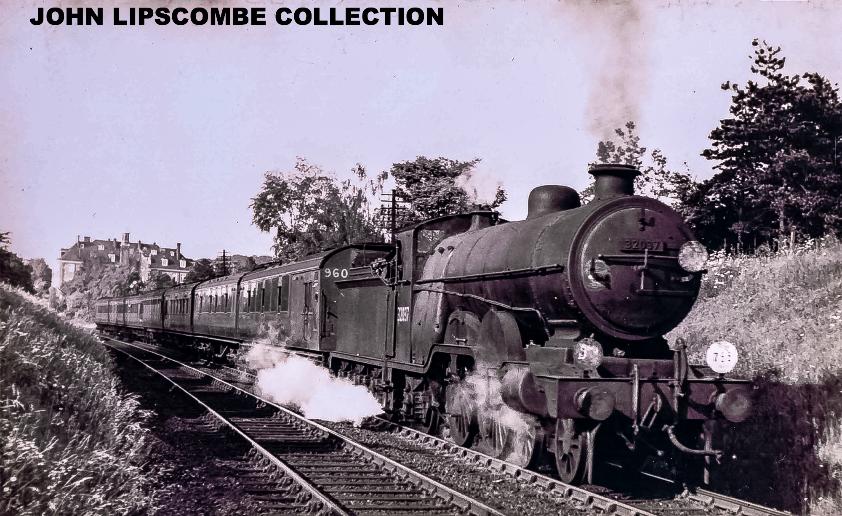
32037 WORKING THE 5.40 p.m. LONDON BRIDGE EAST GRINSTEAD NEAR SANDERSTEAD
DATE UNKNOWN
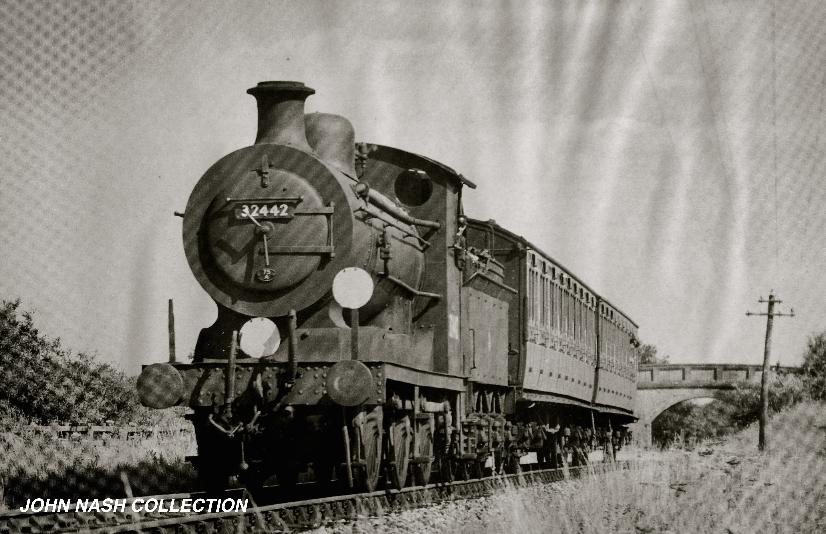
John Nash Collection
Driver Tim Norman
Leaving Culver Jn for Barcombe Cross Station
Minutes of the Newhaven Branch Meeting
held at the Labour Club on Sun May 18th 1957
7 Members present
Bros. F. Goff, M. Smith, M. Giles, R. Turner, T. Sprague, S. Cheal, & C. Wickenden.
The meeting opened at 10.45 a.m. and in the continued of the Branch Chairman, Bro. E. King owing to illness, it was proposed by Bro. F. Goff and seconded by Bro. T. Spraque. That Bro. S. Cheal be elected to the Chair, this was carried unanimously.
The minutes were read of the previous meeting and passed as a true record. Proposed by Bro. T. Spraque and seconded by Bro. F. Goff. Carried Unanimously.
L.D.C. Report was given by the Secretary, and information was given to the Branch that a Drewary Diesel Shunting Loco. was to be introduced at Newhaven. The secretary had been also trying to obtain information about these locomotives, and was proposed by Bro M. Smith that the secretary write to the Branch secretary at Tonbridge, as it was that one had been in service there.
Proposed Holiday Roster was put forward for future years, and a discussion followed, it was proposed by Bro. F. Goff and seconded by Bro. T. Spraque. That this roster be accepted for future years. Carried Unanimously.
It was agreed that a notice be posted with a view to forming a Branch Committee.
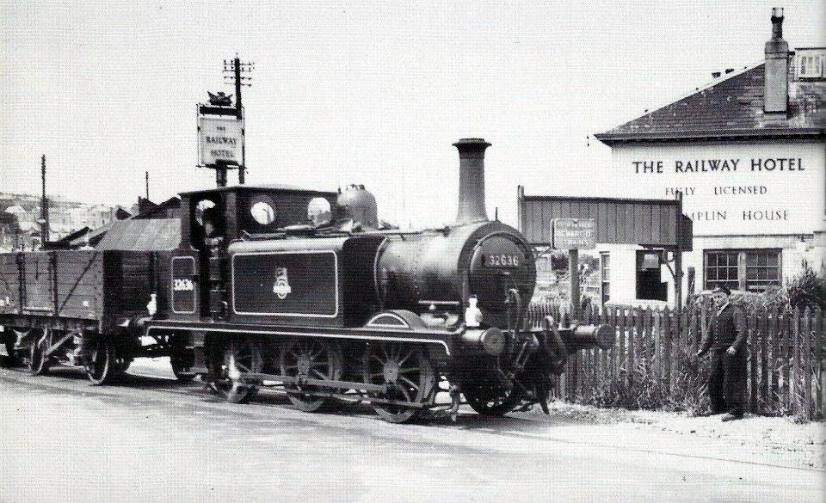
PHOTOGRAPHER UNKNOWN
Minutes of the Newhaven Branch Meeting
held at the Labour Club on Sun Oct 27th 1957
12 Members present
Bros - S. Turner, R. Turner, T. Sprague, T. Holder, C. Evans, S. Cheal, F. Goff, B. Simpson, W. Mullett,
V. Morris, T. Norman & C. Wickenden.
The meeting opened at 11.0 a.m. with Bro. A. Norman in the Chair in the continued absence of the Branch Chairman.
The minutes were read of the previous meeting and passed as a true record, proposed by Bro. S. Cheal and seconded by Bro. R. Turner.
Correspondence was read including a reply from Branch Secretary at Tonbridge.
The Branch Secretary announced that he was residing at the end of the year, so it would be necessary to have an election of Branch Officers at this meeting, after a discussion it was agreed to call another meeting for this purpose.
L.D.C. Report was given by the Secretary who stated the L.D.C. were interviewed by Mr. Urie A.D.M.P.S. at Brighton on22.10.57. prior to attending and L.D.C. meeting, the reason for the interview being the refusal of the L.D.C. Chairman & Secretary to sign the minutes of the previous meeting held 28.5.57. which then turned into a personal attack on the secretary. A letter then being read out and signed by the Chairman & secretary which had been sent to Bro Hallworth, and copies to Bro. Channing Sec. Council secretary and E.C. member Bro. Hockling.
The L.D.C. meeting was for First Aid Classes, Mr. Perry asked the L.D.C. to bring this to the notice of members at the depot, hoping that some of them would join the class.
Newhaven Dual Link Rest Day Relief was then discussed and the L.D.C. felt that other links may become involved, it was proposed by Bro. Mullett, Seconded Bro. Goff that a special meeting be called next week to deal with elections of Officers and Rest Days.
L.D.C. nominations, as there were no nominations, it was proposed by Bro. S. Turner and seconded by Bro. T. Spraque. That Bro. D. Goatcher be asked if he would carry on fr a further period of office..
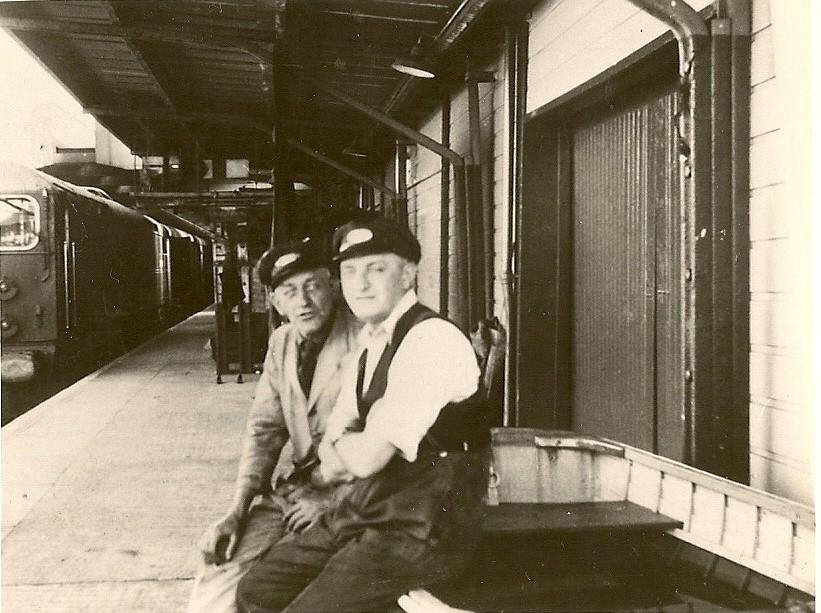
Ron Terrill Collection
Alf Charman & Tim Norman
Photo taken at Newhaven Marine Station and a Hornby loco No. 2001? is seen in the background awaiting departure
Minutes of the Newhaven Special Branch Meeting
held at the Labour Club on Sun Nov. 3rd 1957
Bro. T. Norman in the Chair.
15 Members present
Bros F. Goff, B. Simpson, M. Giles, W. Ware,
W. Mullett, A. White, D. Renville, T. Sprague,
T. Holder, C. Evans, A. Norman, R. Turner,
W. Folwell, S. Cheal, J. Lower, & C. Wickenden.
The minutes were read of the previous meeting and passed as a true record, proposed by Bro. R. Turner and seconded by Bro. W. Mullett.
Correspondence was then read.
The election of Branch Officers then took place and were as follows
Branch Chairman Bro. E. King
Vice Chairman Bro. A. Norman
Branch Secretary Bro. M. Spencer be approached to see if he would accept Secretaryship.
NEWHAVEN
BRANCH
OFFICERS
1958
Chairman Bro. E. King
Vice Chair Bro. A. Norman
Secretary Bro. R. Morris
Assistance Secretary not filled
District Council Delegate, Branch Secretary or Bro. C. Wickenden
Branch Committee
Bros F. Goff, T. Spraque, A. White, J. Lower & W. Ware.
A discussion took place on the Rest Day relief in the Dual Link, it was proposed by Bro. W. Mullett, and Seconded by Bro. S. Cheal that the Rest Days be taken on early turn. Carried.
Rest Days in other Links then came up for discussion, it was proposed by Bro. F. Goff and Seconded by C. Evans that their Rest Days be taken on early turn.
Complaints were made by Bro. Ware on the conditions of the Drivers' mess room.
Bro. S. Cheal proposed. ‘That the Sunday alteration sheet be posted on Thursday, so the men would have advance notice of their being on duty to be altered.’ It was proposed by Bro. S. Cheal and seconded by Bro. F. Goff. That the L.D.C. be left to decided the alteration to Sunday duties.
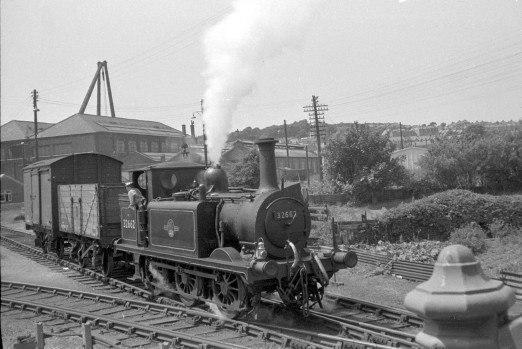
PHOTOGRAPHER UNKNOWN
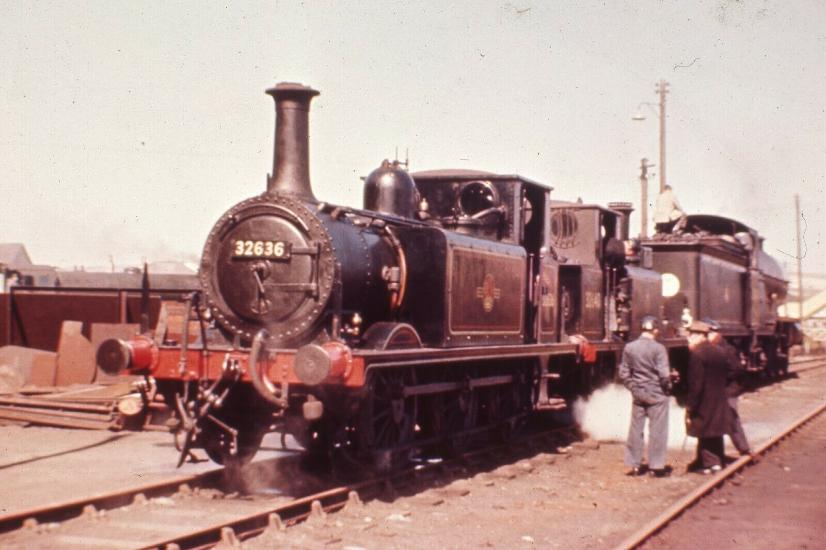
PHOTOGRAPHER UNKNOWN
Minutes of the Newhaven Branch Meeting
held at the Labour Club on Sun December 8th 1957
Bro. E. King in the Chair
6 Members present
Bros. T. Sprague, D. Renville, F. Goff, S. Cheal, E. King & C. Wickenden.
The minutes were of the previous meeting and passed as a true record, proposed by Bro. T. Spraque and seconded by Bro. F. Goff.
Arising out of a discussion on the minutes it was proposed by Bro. Renville and seconded by Bro. Cheal. 'That Organiser W. Cleaver be invited to attend the next Branch meeting for the purpose of electing a Secretary, it was also requested that the present Secretary carry on until that meeting.
Correspondence was read including circulars on Penetrating Lines and Privilege Season Ticket Rates
An L.D.C. Report was then given by the L.D.C. Secretary. It was proposed by Bro. S. Cheal and seconded by Bro. T. Spraque. That this branch support Bro. Bowsher of Eastliegh in the forthcoming election for a delegate to attend I.T.F. Bienmial Congress 1958.
It was unamimously agreed the Secretary write to Head Office, for the E.C. Award to the Branch Chairman after holding office over five years, which it was hoped Organiser Cleaver would be able to present at the next meeting.
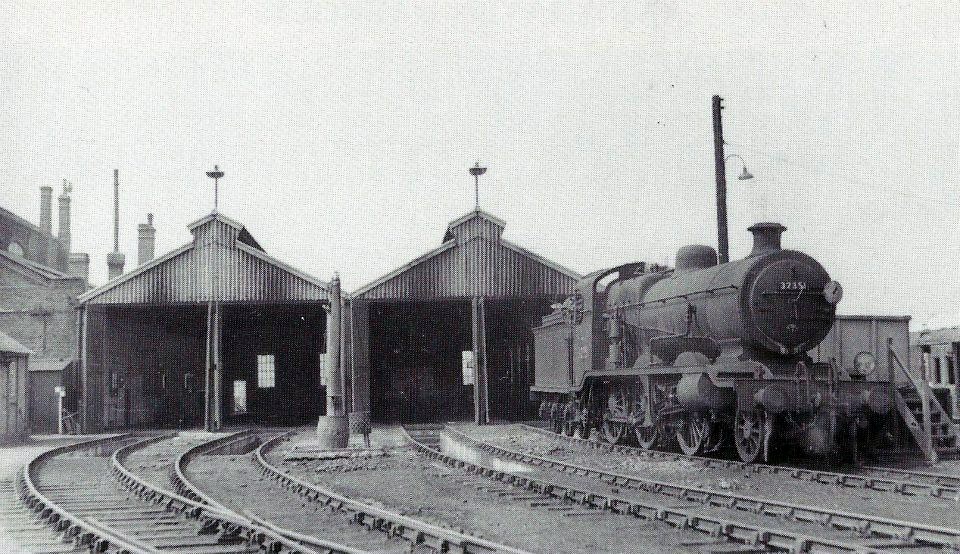
PHOTOGRAPHER UNKNOWN
Minutes of the Newhaven Branch Meeting
held at the Labour Club on Sun January 5th 1958
Bro. E. King in the Chair
13 Members present
Bros : W. Ware, J. Knott, M. Smith, E. King, J. Nash, J. Lower, G. Hilton, V. Harris, D. Creasey,
S. Cheal, M. Giles, D. Renville C. Wickenden & W. Cleaver (District Organiser)
The minutes of the previous meeting and passed as a true record. Proposed by Bro. S. Cheal and seconded by Bro. E. King.
Correspondence was reading including the full details of the memorandum of agreement in regard to the manning of Diesel & Electric Locomotives and multiple units.
A.A.D. 1958. It was proposed by Bro. S. Cheal and seconded by Bro. J. Knott. That the Branch support Lennard as delegate for 1958 A.A.D.
T.U.C. 1958, It was proposed by Bro. J. Knott and seconded by Bro. S. Cheal. That the Branch support Brother Musk as delegate for the 1958 T.U.C.
Organiser W. Cleaver then addressed the meeting, stating that the main reason for his visit was to find a Secretary for the Branch, in view of Brother Wickenden retirement. He was informed that no secretary had yet been found.
He then said that he had the happy task of presenting three 40 year badges, one to Brother J. Lower, One to Brother M. G. Smith, and one to Brother J. Giles who unfortunately was on duty and was unable to attend. He then spoke of how they must have found conditions improved today, to when they first joined, and could look forward to even better times.
He then presented Brother E. King with the E.C. Award for being Chairman of the Branch for 5 consecutive years, and congratulated him on the good work he had done, not only as Chairman, but before when he was Secretary, and how he hoped he would continue to so. Brother E. King then replied that he was very pleased with the presentation set and how he deeply appreciated the fact the he had been elected in the chair in spite of been absence so much due to illness.
Organiser Cleaver then asked if anyone was willing to take over the Secretaryship, but received no response from those present. He then stated that he was unable to force anyone to tale the post, and it was up to the members to decide for themselves, if no one was willing to do so, it might result in the Branch being closing down.
Brother Cheal then addressed Organiser Cleaver, saying that in his opening speech he remarked about improved conditions to come, but that at Newhaven the present conditions were not being observed, such as the 12 hour clause. Organiser Cleaver replied that if evidence of this was supplied he would take the matter up with the management at an L.D.C. meeting on Wednesday.
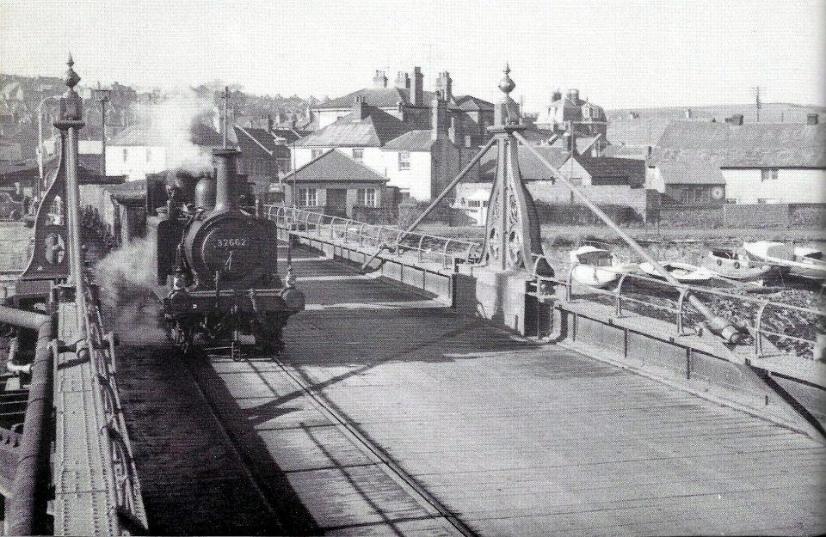
PHOTOGRAPHER UNKNOWN
Minutes of the Newhaven Branch Meeting
held at the Labour Club on Sun February 16th 1958
Bro. M. Smith in the Chair
11 Members present
Bros. M. Smith, R. Turner, S. Cheal, F. Goff, W. Mullett, M. Giles, V. Harris, G. Hilton,
D. Goatcher, C. Wickenden & R. Morris,
The minutes were of the previous meeting and passed as a true record. Proposed by Bro. S. Cheal and seconded by Bro. G. Hilton.
Bro. Cheal then stated that he been asked the Branch Chairman to call this meeting, with a view to him offering to undertake the Branch Secretaryship, if proposed, thereby stopping the Branch from disbanding, it was then by Brother Harris, Seconded by Bro. Goatcher. "That Brother Cheal be Secretary." It was then proposed by Brother Mullett and Seconded by Bro. Goff. "That Brother R. Morris be Secretary." Voting then took place and Brother R. Morris was elected. It was moved by Brother Cheal and Seconded by Brother Hilton that Organiser Cleaver be asked to come and instruct the new Secretary in his duties. It was moved by Brother Cheal and seconded by Brother Wickenden that Brother R. Morris be District Council Delegate.
Correspondence was then including a circular on safety on British Railway, and T.U.C. Gold Badge Award. It was the proposed by Brother Goff and seconded by Brother Mullett that Brother E. King be nominated for this award.
Election of Organising Secretary. It was proposed by Bro. S. Cheal and seconded by Bro.D. Goatcher. That the Branch support Bro. M. Renshaw of Wimbledon.
L.D.C. report was given by the Secretary and a discussion followed on the new Rest Day Rosters, to be introduced on 24.2.58, and certain Sunday Duties would have to be altered.
It was proposed by Bro. S. Cheal and seconded by Bro. F. Goff. That the L.D.C. be left to decide the alterations to Sunday duties
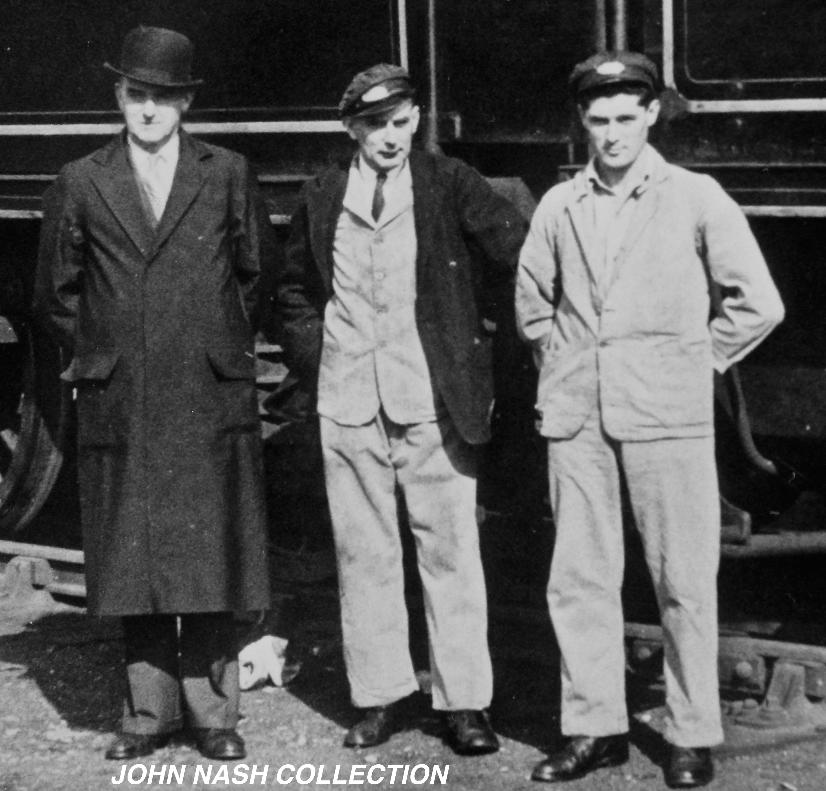
Left - Right Inspect J. McCarthy, Driver Ernie Eacott & Fireman Bill Sherwin
Railway Correspondence and Travel Society
“The Sussex Coast Ltd”
from London Victoria - Newhaven Harbour April 13th, 1958,
worked by Newhaven driver Ernie Eacott & Fireman W. Sherwin
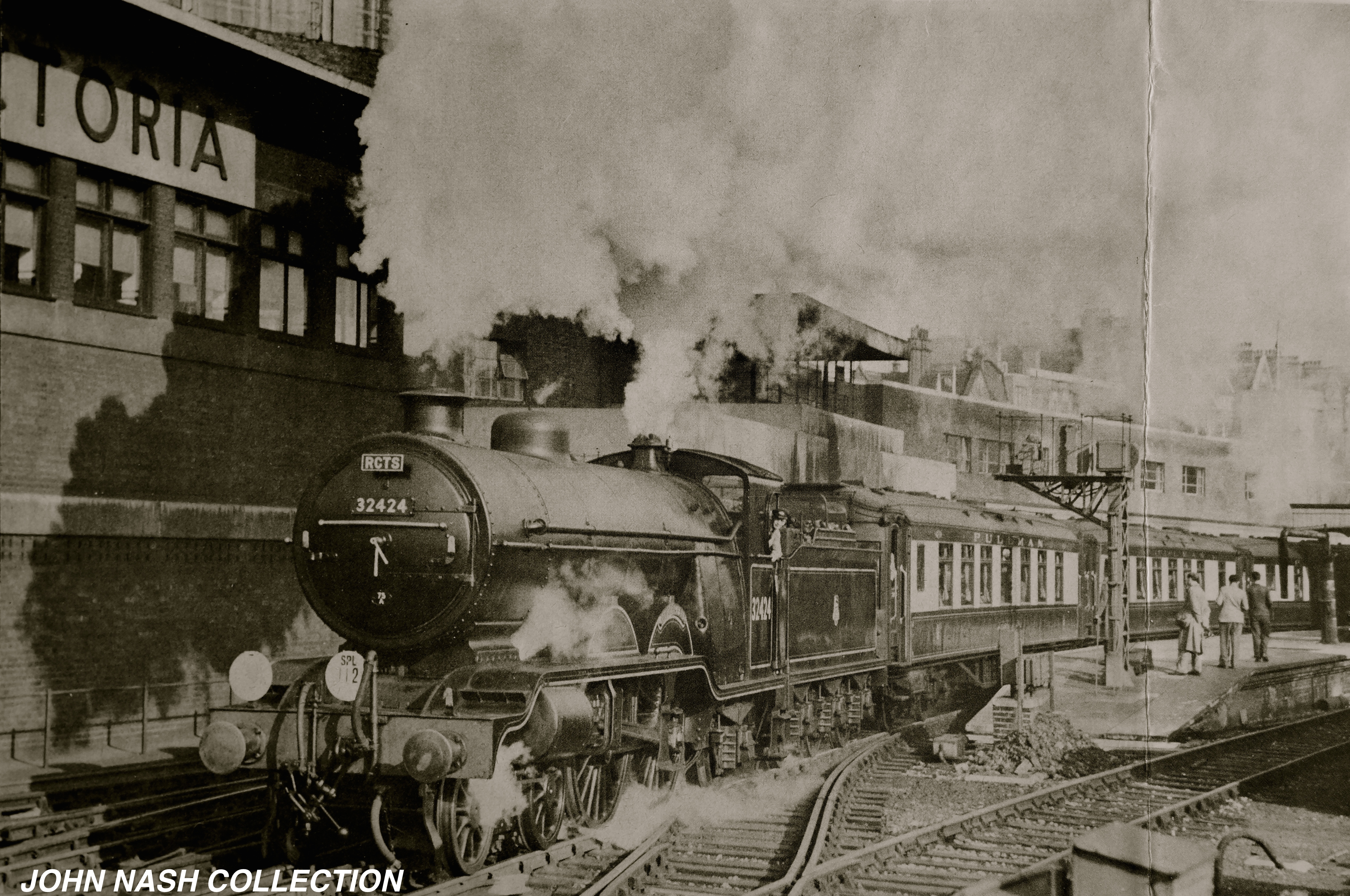
Brighton Atlantic Class H2
Beachy Head was built at Brighton works in October 1911 and was one of six of this class.
Beachy Head’s final revenue earning run was April 13th 1958 when she worked a Rail Tour Special (RTCS). “ The Sussex coast Ltd” from London Victoria - Newhaven Harbour, hauling 7 Pullman Coaches (255 tons gross).The train was driven was by Newhaven Enginemen Driver Ernie Eacott & Fireman Bill Sherwin. The 56.8 miles took 81 mins and 11 secs.taking in 2 signal stops, 2 signal checks and a long 15 M.P.H. P. Way slack net time 70 mins.
The locomotive’s final steamed run was at Brighton on April 24th 1958, light engine to Lancing Works, empty stock train from Lancing to Mitcheldever. Then light engine to Easleigh Works for breaking up. After breaking up one of her large brass name plates was ceremonially present to the Mayor of Eastbourne.
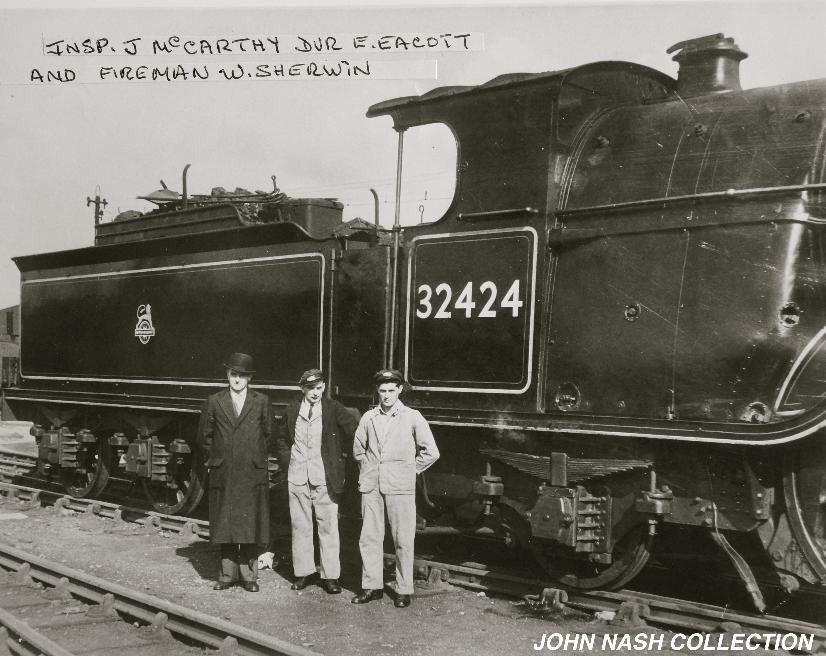
Inspect J. McCarthy, Driver Ernie Eacott & Fireman Bill Sherwin
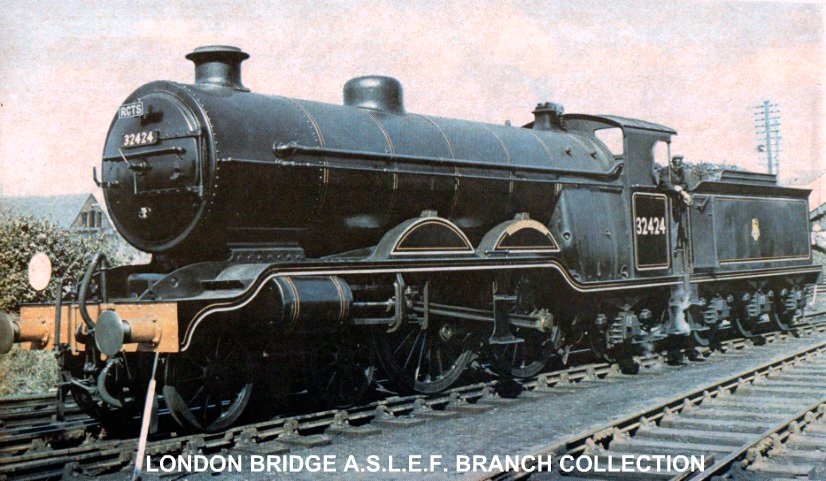
This photo is taken at Newhaven loco Engineman Ernie Eacott & Fireman W. Sherwin Stratton one of whom may be seen in this photo.
April 13th 1958 L.B.S.C.R. Atlantic Class H2 " BEACHY HEAD"
PHOTOGRAPHERS UNKNOWN IN GALLERY ABOVE
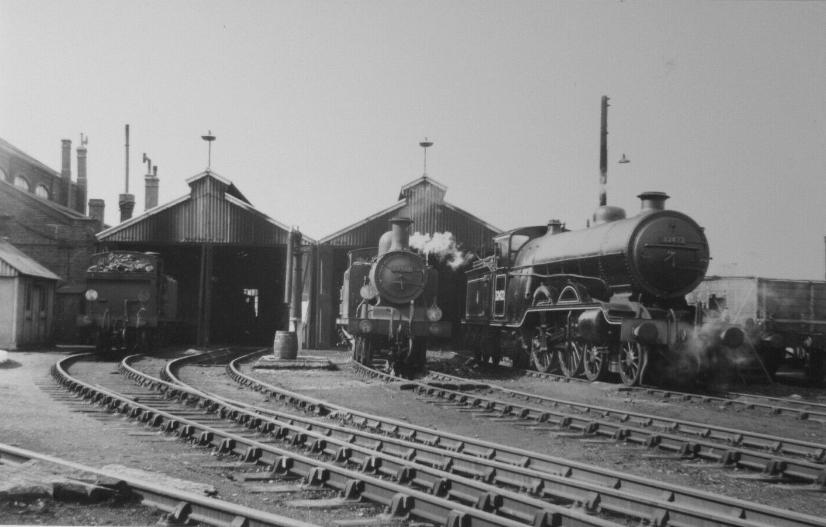
PHOTOGRAPHERS UNKNOWN
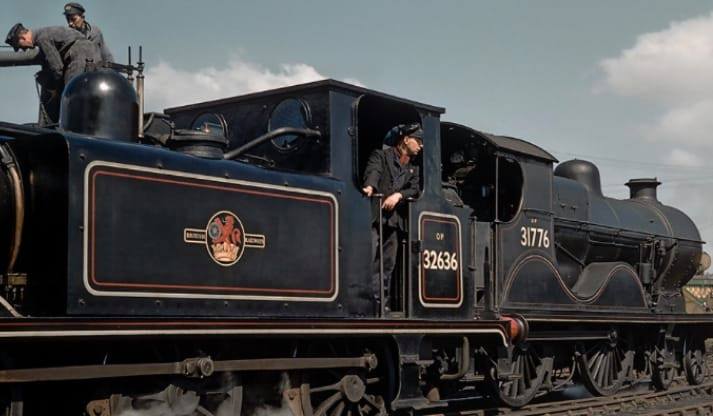
PHOTOGRAPHERS UNKNOWN
A scene at Newhaven Loco June 1958
Ron Terrill is on the top of the Boiler the fireman bending over looking in the water tank is Mike Farley
and the fireman in the cab is Will Still
Ron remembers the occasion and believes the train had been involved in a crash somewhere between Oxted & Haywards Heath and was brought back to Newhaven Loco by Dave Renville. The Forman ordered us on arrival to take water as quick as possible because the tanks were empty on the terrier by the way the Boiler on the SECR “ L" class was drained to reduce the load for the A1
Minutes of the Newhaven Branch Meeting
held at the Labour Club on Sun December 8th 1958
Bro. E. King in the Chair
7 Members present
Bros. E. King, S. Cheal, J. Knott, F. Wheeler, J. Bowden, R. Morris, & F. Goff
The minutes were of the previous meeting and passed as a true record. Proposed by Bro. F. Goff and seconded by Bro. S. Cheal.
Bro. S. Cheal then read correspondence to the meeting about Bros. F. Wheeler and J. Knott. Bro. S. Cheal then moved. That a letter be sent to Head Office. seconded Bro. J. Knott.
The Secretary then gave District Council report and the Chairman read a letter from E.C. member Bro. Hocking on the steam heating on Newhaven electric loco.
It was then proposed by Bro. J. Knott and seconded by Bro. S. Cheal. That the election of Branch Officers for 1959 be re elected in block. Bro. S. Cheal then asked that Bro. M. Giles be approached to serve on the Branch Committee for 1959 in place of Bro. T. Spraque who has transferred.
A.A.D. 1959, it was proposed by Bro. S. Cheal and seconded by Bro. J. Knott. That the Branch support Bro. Willshaw of Norwood Jct. for 1959 A.A.D. delegate.
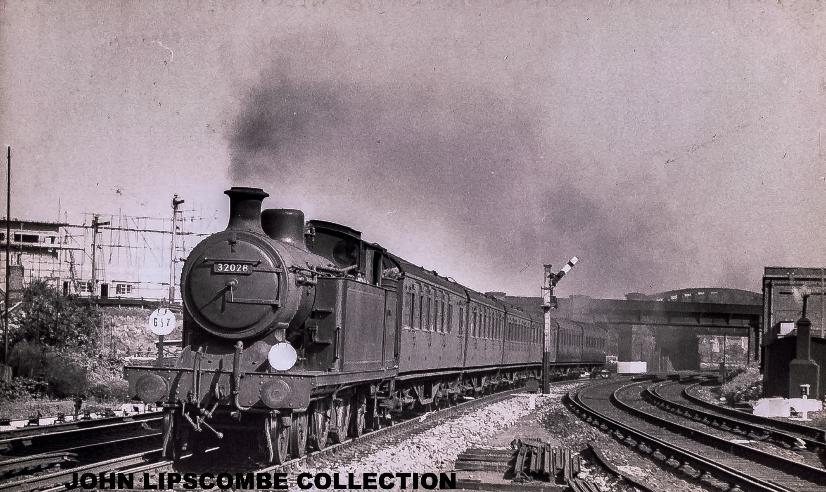
32028 WORKING THE 9.08 a.m. VICTORIA TO TUNBRIDGE WELLS AT STREATHAM COMMON
DATE UNKNOWN
Minutes of the Newhaven Branch Meeting
held at the Labour Club on Sun Feb. 8th 1959
Bro. W. Ware in the Chair
15 Members present
Bros : J. Nash, R. Turner, F. Wheeler, C. Evans, C. Wickenden, W. Ware, G. Hilton, W. Lipscombe,
D. Creasey, W. Mullett, M. Giles, W. Folwell, N. Folwell, F. Goff & R. Morris.
Correspondence was read including a letter written by Bro. S. Cheal apologising for not being able to attend the meeting as he was working, also he expressed views on the up grading of Passed Cleaners and Passed Fireman for Sunday duties.
L.D.C. Secretary then spoke on why the meeting was called, this matter being that Brother W. Mullett had received two letters complaining to the Shed Master on the position of the Newhaven Depot in regards to the unproductive time, and that Passed Firemen R. Morris should not be placed on the roster for driving duties in place of Burtles. S. Turner who is unfortunately sick. Brother W. Mullett then replied and a discussion took place and L.D.C. Sec. C. Wickenden read a letter wrote to Brother E.H. Channing and the reply from Bro. Channing, that the Senior Passed Cleaner & Passed Fireman can be rostered in red ink.
A lengthy discussion then took place and no agreement could be and it was proposed by Brother C. Wickenden and Seconded by Brother C. Evans that a letter be sent to Brother E. H. Channing to come down to the Branch. Brother C. Wickenden asked the Branch if they wanted to carry on the same as last year for Sunday work as complaints had been made to one running foreman that men having lieu days off on Saturdays could come in for extra Sunday duties. It was agreed to carry on the same as last year.
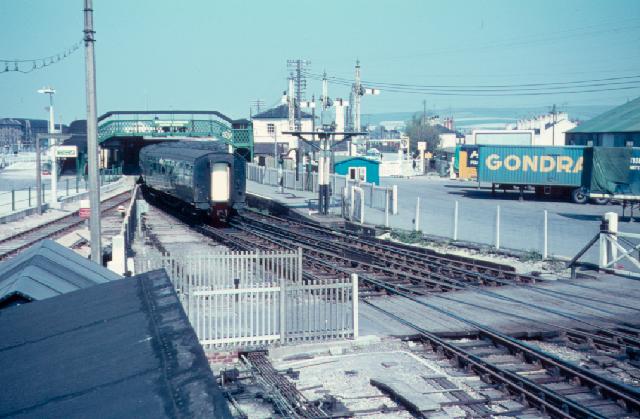
PHOTOGRAPHER UNKNOWN
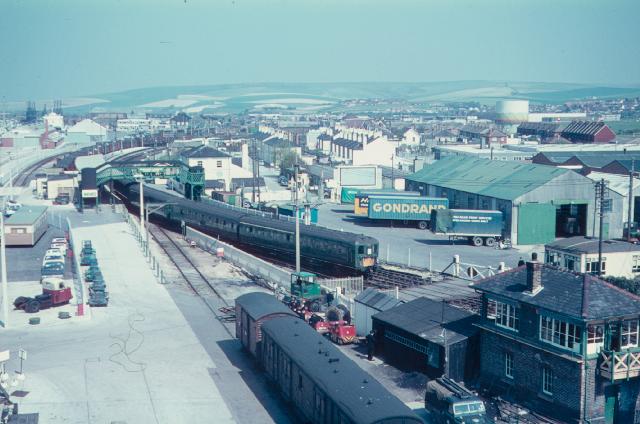
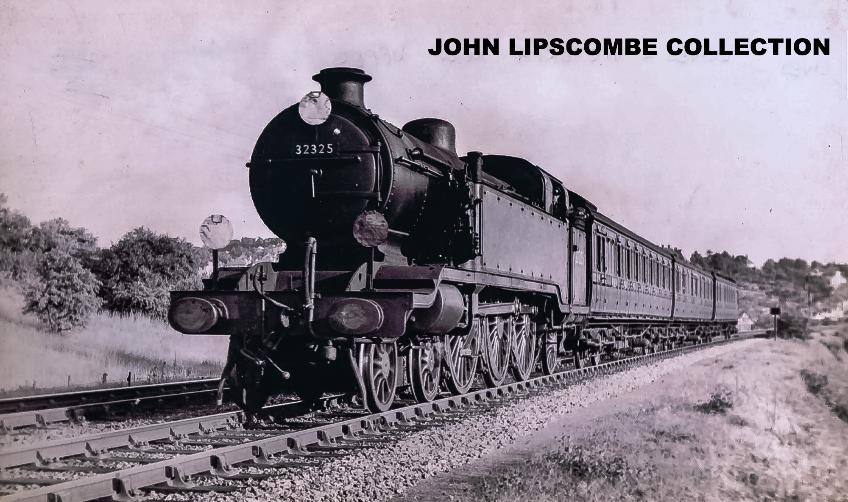
32325 WORKING THE 4.11 p.m. LEWES TO VICTORIA NEAR UPPER WARLINGHAM
DATE UNKNOWN
Minutes of the Newhaven Branch Meeting
held at the Labour Club on Sun Feb. 21st 1959
Bro. E. King was in the Chair
11 Members present
Bros. W. Mullett, C. Evans, W. Lipscombe, C. Bird, S. Cheal, J. Knott, C. Wickenden, F. Goff,
V. Harris, R. Turner & R. Morris.
The Branch Chairman commented on the minutes of the previous meeting and a discussion took place until the Area Representative Bro G.O. Dray addressed the meeting, upon which he agreed on the letter from Bro. C. H. Channing, which was read to the Branch at the previous meetings. He also outlined other cases relating to agreement in regards to machinery of negotiation. Bro. Dray said it is the duties of the local L.D.C. representatives to establish minutes with the management on the case of Passed Fireman R. Morris, also he would come down to future branch meeting if required.
Bro S. Cheal asked Bro. Dray to look into with regard the single manning of the electric loco as the dead-man was not instantaneous, also to be Newhaven conscious at Sectional Council .
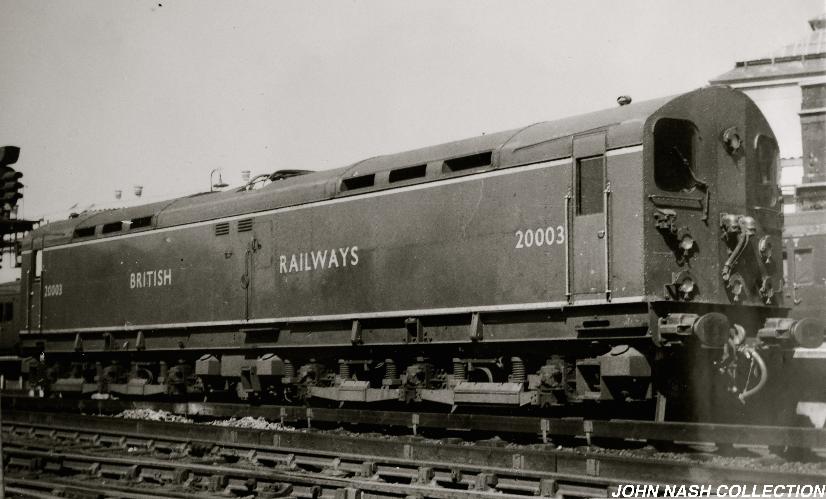
Minutes of the Newhaven Branch Meeting
held at the Labour Club on Sun Nov. 15th 1959
8 Members present
Bro. E. King in the Chair
Bros. W. Ware. S. Cheal, E. King, C. Wickenden, M. Giles, F. Goff, R. Turner & R. Morris.
Minutes of previous meeting were read and discussed and passed as a true record. Proposed by Bro. S. Cheal and seconded by Bro. C. Wickenden.
The Chairman addressed the meeting, that two L.D.C. Reprensenative were to be appointed to serve during 1960. It was proposed Bro. S. Cheal ad seconded by Bro. W. Ware. 'That a ballot be held at the loco depot to appoint the two new representatives.' Proposed by Bro. S. Cheal and seconded by Bro. W. Ware. ‘That the names of the present L.D.C. still stand for re-election, also Bros. V. Harris & S. Cheal.
NEWHAVEN
BRANCH
OFFICERS
1960
Chairman Bro. E. King
Vice Chair Bro. C. Wickenden
Secretary Bro. S. Cheal
Correspondence was then read including a circular on Bonus train working and work study. Also the election result of the Assistant General Secretary, Bro. A. Griffiths, and Bro. S. Cheal nomination for 1960 A.A.D.
Bro. S. Cheal gave a report on District Council and proposed. 'That a fund should be started the residue of expense money paid to the District Council Delegate.' Seconded by Bro. F. Goff.
Bro. Goff spoke on the depot losing work and a general discussion took place.
Minutes of the Newhaven Branch Meeting
held at the Labour Club on Sun December. 15th 1959
6 Members present
Bro. E. King in the Chair
Bros. C. Wickenden, S. Cheal, F. Goff, W. Ware, E. King & R. Morris.
The Minutes were read of previous meeting and passed as a true record. Proposed by Bro. W. Ware and seconded by Bro. F. Goff.
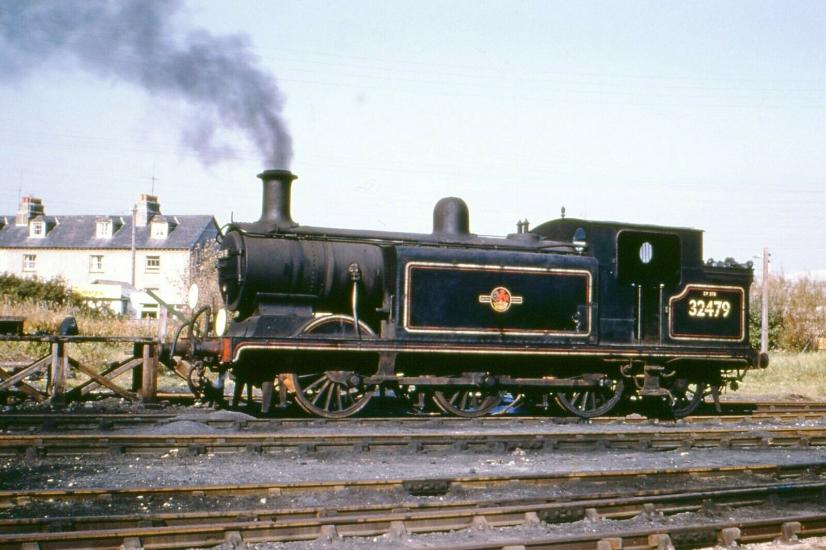
PHOTOGRAPHER UNKNOWN
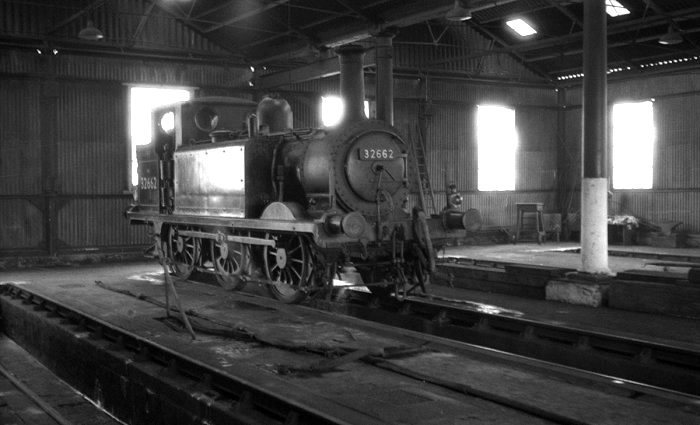
PHOTOGRAPHER UNKNOWN
Inside Newhaven shed sits a "Terrier Tank" 32662
Minutes of the Newhaven Branch Meeting
held at the Labour Club on Sun February. 21st 1960
7 Members present
Bro. E. King in the Chair
Bros. E. King, F. Goff, M. Giles, W. Ware, W. Wickenden, V. Morris & S. Cheal.
The Chairman read minures of previous meeting and passed as a true record, question were raised at the items agreed for 1960 A.A.D. being omitted they being
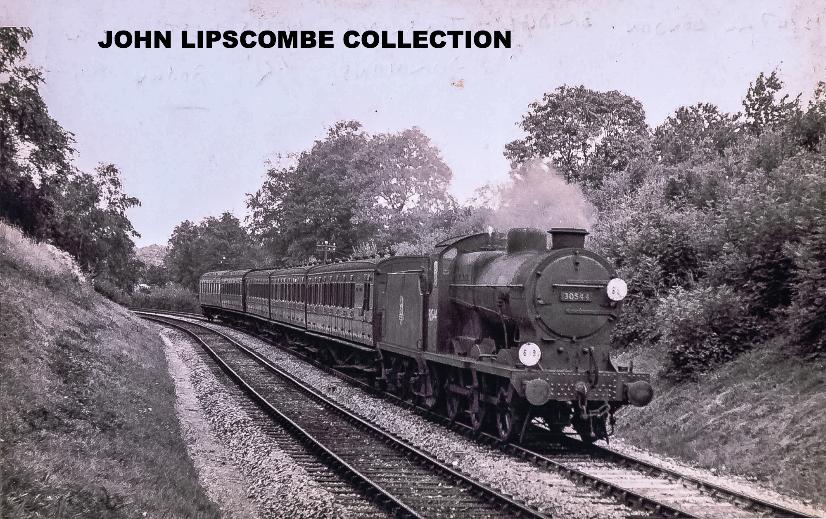
Q CLASS 30544 WORKING THE 12.47 p.m. LONDON BRIDGE TUNBRIDGE WELLS WEST NEAR DORMANS
DATE UNKNOWN
LOCOMOTIVE JOURNAL
APRIL 1960
PAGE 125
NEWHAVEN BRANCH
Some long time has elapsed since the last report from Newhaven. We will shortly be experiencing the Modernisation of Newhaven Harbour, which many throughout the country know as the embarkation port for their holiday to the Continent.
Our Loco., situated directly alongside the Quay, lends itself to many advantages connected with the modernisation which the management have indicated will receive their consideration at Joint Consultation level, in conjunction with the Shipping and Continential Manager. Private enterprise would no doubt welcome the co-operation we are prepared to offer, let us hope the B.T.C. will too.
A new tug has just bee launched named “Meeching”, which was the old name for Newhaven. 1960 starts off with as good a Branch Committee any new Secretary could wish for, namely, Bros. E. King, C. Wickenden, R. Morris, R. Turner, J. Nash, W. Ware, F. Goff, L. Lower and V. Harris, the latter being not only L.D.C. Chairman but a well-known local football referee.
I can now report 100% A.S.L.E.&F. membership.
S. Cheal,
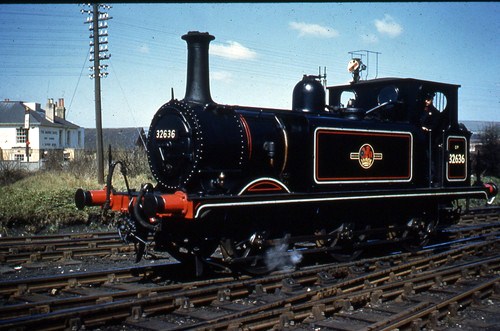
PHOTOGRAPHER UNKNOWN
Minutes of the Newhaven Branch Meeting
held at the Labour Club on Sun May 8th 1960
L.D.C. report, the L.D.C. Secretary Bro. Cheal gave the up to date position and quoted from correspondence and arising from telephone episode which the Secretary and Chairman had experienced it was resolved by all present. 'That no unofficial action be taken at present.' all agreed.
Locomotive Journal, moved by Bro. C. Wickenden and seconded by Bro. W. Ware. ‘ That another Branch report under Newhaven, be submitted to the Locomotive Journal, this to include the final dispute with Shed Master Perry, in not allowing the L.D.C. to function as per the Machinery of Negotiation.
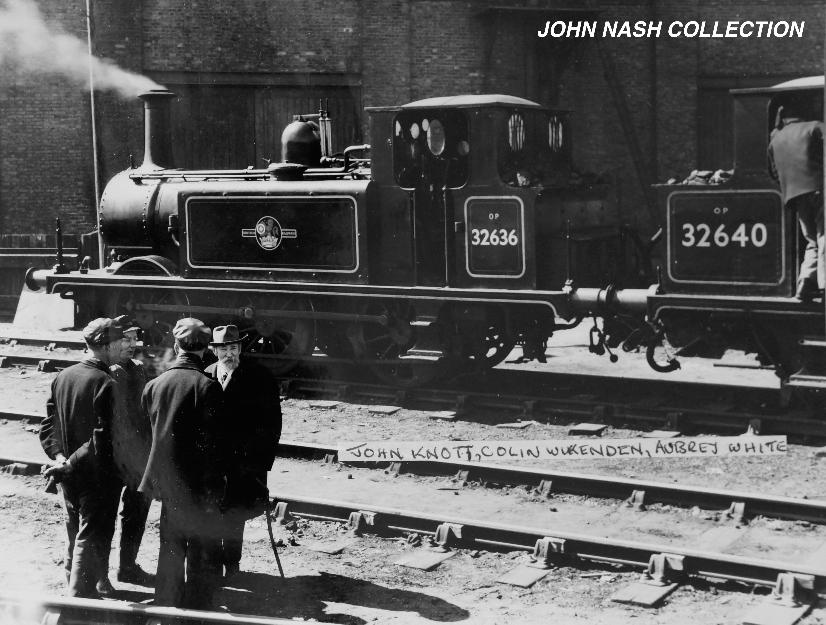
John Knott, Colin Wickenden, unknown & Aubrey White
Minutes of the Newhaven Branch Meeting
held at the Labour Club on Sun May 8th 1960
Bro. E. King in the Chair
6 members present
Bros. E. King, W. Ware, F. Goff, V. Harris, C. Wickenden & S. Cheal
The Chair read the minutes of the previous meeting, moved by Bro. F. Goff and seconded by Bro. W. Ware. That the minutes be signed by the Chairman as a true record. Carried.
Correspondence
Appointment of Organising Secretary, moved by Bro. W. Ware and seconded by Bro. V. Morris. That Newhaven Branch vote for Bro. D. K. Pullen. Carried. It was further moved by Bro. S. Cheal and seconded by Bro. W. Ware. That the Secretary write a letter suitably worded to Bro. D.K. Pullen expressing Newhaven’s wishes. Carried.
Copy of quarterly return sheets present, all members in areas were quotes.
Correspondence from Co Operative Society, moved by Bro. E. King and seconded by Bro. F. Goff. That the correspondence lay on the table. Carried.
Next District Council meeting, moved by Bro. S. Cheal and seconded by Bro. E. King. That Bro. V. Harris attend next District Council meeting. Carried.
Acting Branch Secretary, whilst Bro. S. Cheal at 1960 A.A.D. and Annual Leave. it was agreed that notice be posted with appreciation to Bro. E. King to deal with correspondence and Bro. W. Terrill to collect contributions. Carried.
L.D.C. report, the L.D.C. Secretary Bro. Cheal gave the up to date position and quoted from correspondence and arising from telephone episode which the Secretary and Chairman had experienced it was resolved by all present. ‘That no unofficial action be taken at present.' all agreed.
Acting L.D.C. Secretary, whilst Bro. S. Cheal at 1960 A.A.D. and Annual Leave. Bro. V. Harris agreed to act as acting L.D.C secretary. Moved by Bro. W. Ware and seconded by Bro. F. Goff. That should men be required for an L.D.C. meeting it be left to the acting Secretary Bro. V. Harris.
Pre 1960 A.A.D agenda
Bro. Cheal dealt with the items which were to be dealt with at the 1960 A.A.D. and members present expressed their wishes on many items on how they thought their A.A.D. Delegate should vote.
Appreciation was expressed at the amount of ground work which Bro. S. Cheal had put in to date.
Locomotive Journal, moved by Bro. C. Wickenden and seconded by Bro. W. Ware. ‘ That another Branch report under Newhaven, be submitted to the Locomotive Journal, this to include the final dispute with Shed Master Perry, in not allowing the L.D.C. to function as per the Machinery of Negotiation.
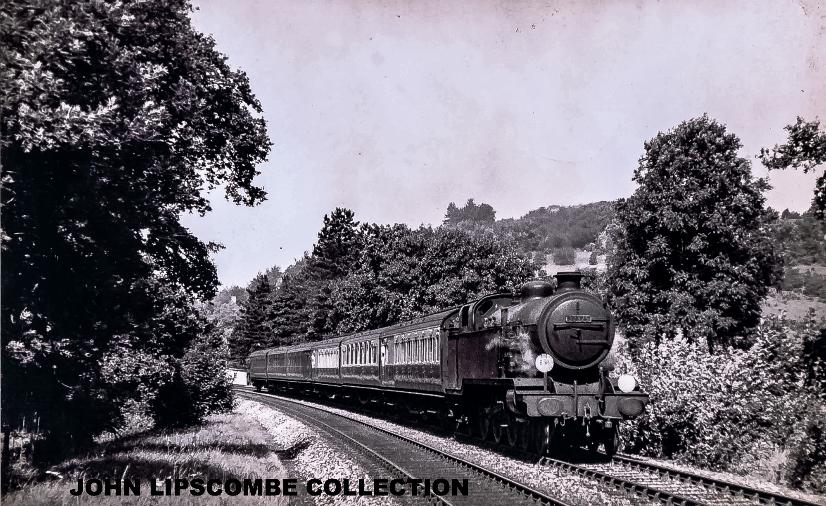
32325 WORKING THE 11.08 A.M. VICTORIA TO EASTBOURNE NEAR WOLDINGHAM
DATE UNKNOWN
The Branch meeting arranged for Sunday 17th July 1960 was cancelled as only the Secretary was present, this was being the result of unexpected amount of extra Sunday work, a written apology was received from
Bro. C. Wickenden and a verbal apology from Bro. W. Ware for being unable to attend.
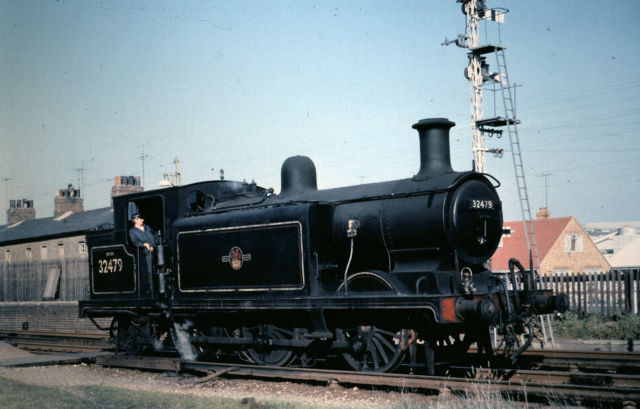
PHOTOGRAPHER UNKNOWN
Minutes of the Newhaven Branch Meeting
held at the Labour Club on Sun Oct. 2nd 1960
Bro. E. King in the Chair
7 Members present
Bros. E. King, C. Wickenden, V. Harris, M. Giles, D. Renville, F. Goff & S. Cheal.
The Chairman read the minutes of the previous meeting, moved by Bro. V. Harris and seconded by Bro. C. Wickenden. that the minutes be signed by the Chairman as a true record. Carried.
Correspondence, Secretary explained that Head Office had forwarded 3 No.2 pages in error. It was agreed the Secretary’s action in not holding a special meeting on this issue be endorsed. The Chairman explained that as a Branch, unofficial action was wrong. 1961 A.A.D., moved by Bro. F. Goff and seconded by Bro. D Renville. That Bro. S. Cheal be nominated by Newhaven Branch. The Chairman signed the nomination form.
September quarterly return sheets, the secretary quoted all members who were in arrears.
District Council Report, Bro. S. Cheal gave his report and requested any suggestions he should on at the the next council.
L.D.C. report, Both L.D.C. representatives gave details of meetings held on 30th August & 15th September1960 and explained that all Newhaven Appointed Drivers were now classed as Train Running Duties.
Bro. S. Turner
A discussion took place on how best Bro. Turner could be assisted, but as members who had put suggestions were not present it was agreed there was a need to assist Bro. Turner in some way in order to sure him he was not forgotten.
N.U.R. Strike Threat.
The N.U.R. strike threat was discussed and it was agreed that should our E.C. decide to ask us to come out on a strike in sympathy with the N.U.R. The Secretary to write with the following resolution. Moved Bro. V. Harris and Seconded by Bro. M. Giles.
For the attention of the E.C.
"That this Newhaven Branch recommends that the A.S.L.E.&F. not participate in any strike action in support of the N.U.R."
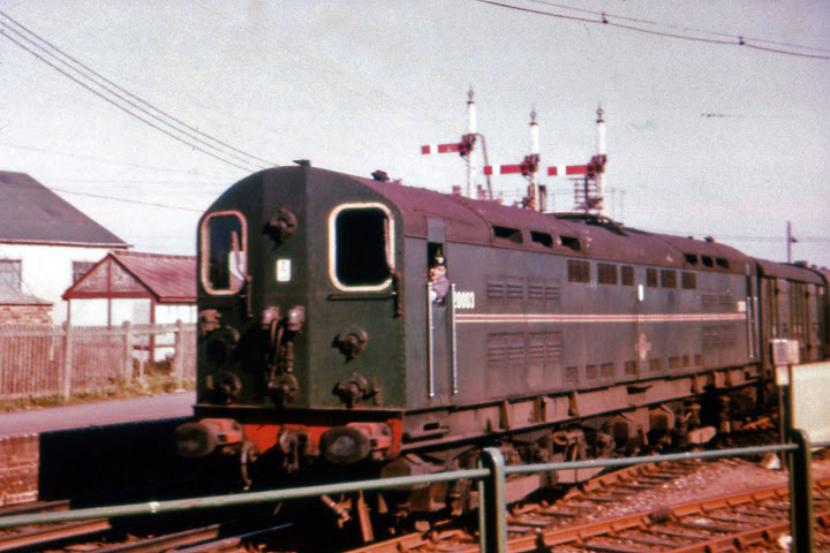
PHOTOGRAPHER UNKNOWN
Hornby Loco 20003(CC3) leaving Newhaven Marine with the up boat train
Minutes of the Newhaven Branch Meeting
held at the Labour Club on Sun January 1st 1961
3 Members present
Bros F. Goff, G. Hilton & S. Cheal.
The meeting which was arranged for Sunday 1st January, 1961, could not take place as there was not a quorum of members present being Bros F. Goff, G. Hilton & S. Cheal.
The Secretary displayed the December quarter returns. As there were no voting papers which had to be at Head Office by 4 & 9 January 1961, it was agreed the Secretary visit our our Chairman Bro. E. King (at present on the sick list) for him to sign the voting papers if he agreed. This was done and Bro Evans of the Neath Branch only was support for the Parliamentary Panel and our own A.A.D. nominee Bro. S. Cheal for the 1961 A.A.D.
Bro. E. King agreed that should the next meeting for the next Sunday 8th January, 1961, not endorsed the action taken Head Office would have to be notified.
The Secretary paid the rent for room for 1960 to the Secretary of the Labour Club and those present left at 11.15 a.m.
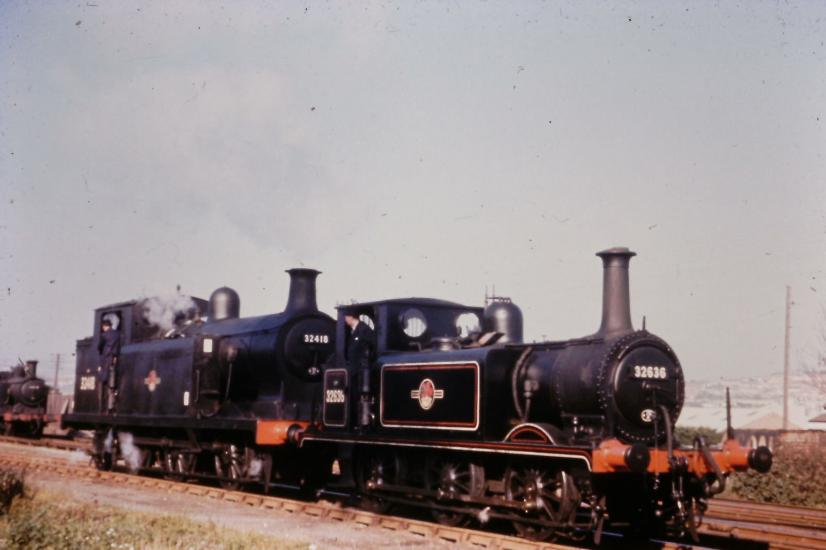
PHOTOGRAPHER UNKNOWN
Minutes of the Newhaven Branch Meeting
held at the Labour Club on Sun January 8th 1961
11 Members present
Bro. E. King in the Chiar
Bros. E. King, C. Wickenden, V. Harris, W. Ware, M. Farley, F. Bartholomew, G. Hilton,
N. Folwell, R. Turner, V. Morris & S. Cheal
The Secretary in calling upon the Chairman Bro. E. King to open the meeting and thanked him for coming along as he was still on the sick list. Bro. S. Cheal wished the Chairman and all present a very Happy New Year.
The Chairman opened the meeting at 10.50 a.m. and in wishing all the complements of the season, ranked all for their kind words.
The Chairman read the minutes of previous meeting also recording for meetings called for 19th July, 1960 and 1st January, 1961. Moved by Bro. V. harris and seconded by Bro. W. Ware. That the minutes be signed by the Chairman as a true record. carried. Moved by Bro. C. Wickenden and seconded by Bro. V. Harris. That the action taken by the Chairman and Secretary arising from meeting held on 1st January, be endorsed in full. Carried. No questions arising from minutes were asked.
Correspondence
Voting papers, acknowledgements for 1961 A.A.D. and Parliamentary Pannel dated 4th January, 1961, were read. moved by Bro. W. Ware and seconded by Bro. C. Wickended. That this Branch support Bro. Beecher, Leatherhead. Carried
S.R. Sectional Council No.2 elections 1961, Bro. L.. C. Dray, St. Leonards, elected unopposed.
Branch Officers and Committee for 1961
Bro C. Wickenden expressed the wish not to be Vice Chairman, Officers and Committee the same except. moved by Bro. V. Harris and seconded by Bro. V. Morris. That Bro. W. Ware be Vice Chairman. Moved by Bro. V. Morris and seconded by Bro. F. Bartholomew. That Bro. C. Wickenden be on the Committee. Carried. As Bro. C. Wickenden agree. Moved by Bro. V. Harris and seconded by Bro. G. Hilton. That Bro. C. Wickenden be Newhaven Travel Agent, and after Correspondence post it be handed to him. Carried.
Newhaven Branch Funds
The Secretary explained the difficulty in being able to claim any payment for out of pocket expenses, e.g. 2 dinners for L.D.C. Representatives, and quote rule 36. Moved by Bro. M. Folwell and seconded by Bro. V. Morris. That the Secretary claim under rule 36 for 1960.
Moved by Bro. R. Turner and seconded by Bro. F. Bartholomew. That Bros. W. Farley and G. Hilton, be Branch Trustees. Carried
Quarter Return Sheets.
Much concern was expressed and the Secretary quote all members who were lapsed and behind in their payments. The Chairman examined the quarter return sheets informing all present they were in order.
Items for 1961 A.A.D.
The Secretary suggested an item to the Labour Party based on the grounds. That all empty property be rated at 1/3 in order to reduced the proposed increase in rates planned for 1962. This was discussed but received no seconder.
Moved by Bro. S. Cheal and seconded by Bro. F. Bartholomew. That this A.A.D. instruct the E.C. to request the replacement of chin straps on all future issues of uniform caps.
Moved by Bro. W. Ware and seconded by Bro. V. Morris. That this A.A.D. instruct the E.C. to request the replacement of pockets in all future issues of overall trousers.
LDC Report
Bro. S. Cheal gave the latest developments.
Questions were asked regarding issues of Mackintoshes. Bro Folwell & other Firemen present, raised the issue of appointed Firemen being booked ‘On Loan’ to other Depots. Bro. Bartholomew quoted a 15 ½ hr turn of duty, other points raised being :- Newhaven Firemen asked to do P&D work when juniors on running duties. Duty numbers altered on arrival at other depots.
It was agreed that the L.D.C. Secretary write a complaint outlining the above to be signed by all appointed Newhaven Firemen, it was also agreed the Secretary telephone the Shed Master Mr. Perry to explain the directive of the Branch.
District Council Report, owing to the time factor the D.C. Delegate could only outline the main issues.
A.A.D. Report, owing to the time it was agreed that any interested member be ab allowed the verbal report.
Any other business.
Moved by Bro. G. Hilton and seconded by Bro. W. Ware. That all future meeting to start at 10.0 a.m.
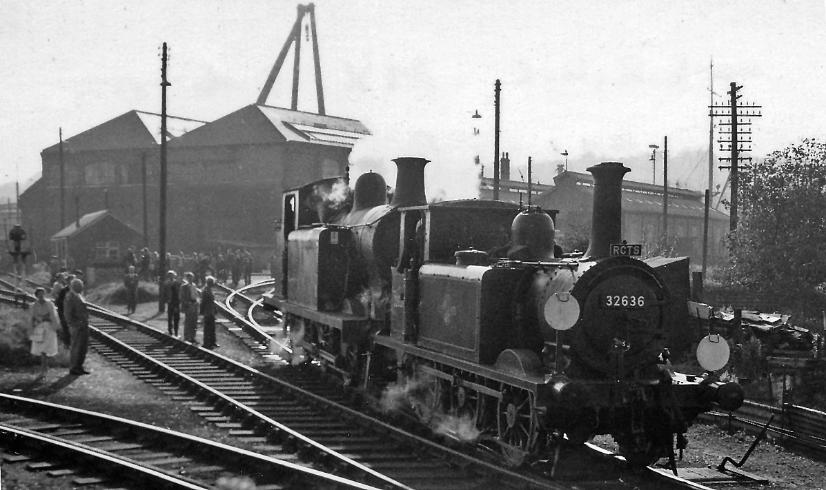
Ben Brooksbank Collection
Minutes of the Newhaven Branch Meeting
held at the Labour Club on Sun Feb. 26th 1961
Bro. W. Ware in the Chair
12 Members present
Bros W. Ware, C. Wickenden, V. Harris, N. Folwell, W. Folwell, F. Goff, G. Hilton, J. Knott, C. Evans,
F. Bartholomew, V. Harris & S. Cheal.
Minutes of previous meeting which were read by the Chairman, moved by Bro. V. Harris and seconded by Bro. M. Folwell. That the minutes be signed by the Chairman as a true record. Carried.
Question on minutes, arising from item dealing with Branch Funds. The Secretary read correspondence headed Branch Funds, Rule 36 also rebate form £2/2/7. Moved by Bro. J. Knott and seconded by Bro. M. Folwell. That the Secretry purchase a cash book, that an account be kept and audited each year. That all moneys received from the fund be signed for and in the case of a purchase being made on behalf of the Branch the Chairman to sign same. The above rules to be left in the front of all Branch Funds Cash Books. Carried. Moved by Bro. V. Harris and seconded by Bro. G. Hilton. That the Secretary write to Head Offic asking for the return of receipt for the lunches to the sum of 7/2d. Carried.
Correspondence
1961 A.A.D. result sheet, Disappointment was expressed with in result in Group 53, it appears a mistake for has been made at Head Office as Bro. S. Cheal only received 146 votes although being supported by Brighton No.1, Eastbourne, St Leonards and our own Branch. It was further agreed that if the receipt for Brighton No.1 was seen by the Secretary, that he again write, but this time on behalf of the Branch.
T.U.C. Men’s Gold Badge. The matter was discussed and information required by Head Office quote and in the light of the circumstances when Bro. E. King was supported last year,it was agreed that no nominee be forwarded.
Bro. J. Giles. The Correspondence fro, Bro. Giles which accompanied the ‘Accident Form’ was read also the remarks of Bro. S. Cheal to the General Secretary. The reply from Head Office was. Moved by Bro. V. Harris and seconded by Bro. G. Hilton. That the two members who were visiting Bro. Giles in hospital the next day, take all the correspondence and receive Bro. Giles comments. Carried.
Quartely returns and new members.
The secretary read quarter returns and the Chairman informed all present that the receipt received was in order with Secember 1960 quarto returns.
Members in arrears were quoted with the one ‘NON’. Moved by Bro. F. Goff and seconded by Bro. V. Harris 'That the Branch Secretary write to D. Creasey asking him to pay up his areas as his name has been crossed from the quarterly return sheets.' Carried.
New members Robert John Capon & Roger Guy, proposed by Bro. S. Cheal and seconded by Bro. C. Wickenden.
1961 A.A.D. Agenda, moved by Bro. F. Goff and seconded by Bro. C. Wickenden. That owing to the large number of items on the Branch agenda, any amendments be dealt with by the Committee. Carried.
LDC Report
The latest corrospendence was read including the directive of the last Branch regarding Firemen. It was agreed that the reply was not completely satisfactory and that an item regarding Fireman be submitted also :- credit & payment, complaint re :- motormen covering Seaford duties instead of Newhaven Dual Link drivers.
Rest Day Working 1961. This Item was discussed at length and it was agreed that our representatives should negotiate for a 100% working of Rest Days for those who volunteered or no rest day working.
There were differences of opinion but it was agreed our LDC Representatives would have to be left to negotiate on the lines indicated.
District Council Report, Bro. S. Cheal gave the up to date position as briefly as possible owing to the time factor.
Any other business. Bro. F. Bartholomew raised the question of Bro. R. Terrill being allowed a set 4:45 a.m. diesel turn of duty. The position was explained by the LDC Representatives, as Bro. Terrill was due to go into Hospital on 18th March 1961.
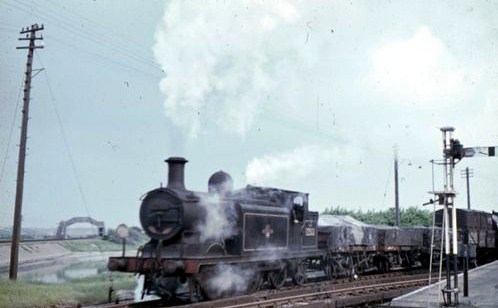
PHOTOGRAPHER UNKNOWN
Minutes of the Newhaven Branch Meeting
held at the Labour Club on Sun June 4th 1961
Bro. C. Wickenden in the Chair, later to be taken over Bro. V. Harris,
owing to Bro. C. Wickenden having to leave early.
6 Members present
Bros. C. Wickenden, D. Renville, F. Goff, V. Harris, M. Giles & S. Cheal
Minutes of previous meeting which were read by the Chairman. Moved by Bro. F. Goff and seconded by Bro. V. Harris. That the Chairman sign the minutes as a true record. Carried. There were no questions on the minutes.
Correspondence
Circular P.T. & R.A. Clauses 22 - 26
A long discussion took place on Circulars 22 & 26 and it was agreed that the matter would have would to be left the LDC and meeting with S.C. No.2, present to agree on the set up for Newhaven. At the moment it appears that for Newhaven to aviod a 'Shunt Link' with the abolition of the 'Dual Link', it would be an advantage to have one large link, but all would rest on Sectional Council No. 2. Moved by Bro. F. Goff and seconded by Bro. C. Wickenden. 'That where necessary two special meetings be held, one early and one late shifts, when definite arrangements have been made by S.C. No.2 and that the Branch & LDC Secretary be present at both meetings. Carried.
New members Roy Steele & Vincent Thompson.
Form 1s to Bros. J. Hillman & F. Bartholomew
The Secretary Bro. S. Cheal explained and quoted all correspondence on these cases which involve our two members refusing to go on loan and the fact that their advocate Organising Secretary Cleaver had both Form 1s withdrawn.
Moved by Bro. V. Harris and Seconded by Bro F. Goff
That the Secretary write a letter of appreciation to Bro. W.J. Cleaver thanking him for the representation given on the Form 1s issued to Brothers J. Hillman & F. Bartholomew. Carried.
Quarterly Return Sheets
The return sheets were examined by the Chairman and members present given the opportunity to examine same.
Bro. S. Cheal Annual Leave. Moved by Bro. V. Harris and seconded by Bro. M. Giles. That Bro. C. Wickenden act as Branch Secretary and District Council Delegate. Moved by Bro. V. Harris and seconded by Bro. D. Renville. That Bro. C. Wickenden be co-opted on the L.D.C. if and when necessary caused by through annual leave of L.D.C. Chairman and Secretary.
L.D.C. Report
The last L.D.C. minutes were quoted and satisfaction expressed with the introduction of deletion of clauses 22 - 26 as from 1st July, 1961, the L.D.C. could do very little without information from Sectional Council No.2
As some members had to leave early and with the absence of a quorum, the Chairman closed the meeting at 12.30 p.m.
*Ron Terrill thinks the form 1 was in connection with a divided train, worked by Driver Jack Hillman & his Fireman Fred Bartholomew. Jack arrived at Copyhold and when he contacted the signalman he was told his train had divided he only had his fitted head and the remaining wagons were at Balcombe Jcn. I think he had lost 46 wagons (not sure if that was the correct number) but I know the Three Bridges pilot had to go and fetch them.
PHOTOGRAPHER UNKNOWN
Minutes of the Newhaven Branch Meeting
held at the Labour Club on Sun Oct. 15th 1961
Bro. E. King in the Chair
5 Members present
Bros. E. King, V. Morris, S Oakley, M. Folwell & S. Cheal
Minutes of previous meeting, moved by Bro. V. Harris and seconded by Bro. S. Oakley. That the Chairman sign the minutes. Carried.
CorrespondenceCircular No. 68/1961. "The Lighted Flame" request for all Branches to purchase a copy of the Lighted Flame for presentation to the Local Library. Moved by Bro. V. Morris and seconded by Bro, M. Folwell. That Secretary purchase one copy of the Lighted Flame (7/6) out of Branch funds.
Horsham Appeal for Bro. E.F. Jarman. The subject matter was discussed it being agreed that no general appeal be made.
Accounts:- 6 button badges 9/-The Secretary stated he would pay the 9/- although to date he had only sold 3 of the 6 badges.
Nomination Form 1962 A.A.D.Moved by Bro. V. Morris and seconded by Bro. M. Folwell. That Bro. S. Cheal be nominated. Carried.
Nomination Form International Transport Workers Federation, July 1962Moved by Bro. V. Morris and seconded by Bro. E. King. That Bro. S. Cheal be nominated. Carried.
New members John Hayward & Michael Burtenshaw.
September Quarter return sheetsThe Chairman Bro. E. King assured present the return sheets were all in orders.The Secretary read all who were not clear to date on the September Quarter. It was agreed that unless Head Office required 2/4d arrears to our late Bro. Bob Shimmans the matter be left. It was agreed that as Bro. E. Hillman was of sick and was always prompt with his payments the amount due (18/10d) be loaned from the Branch Fund. After appreciation had been express to the present LDC for their over the past 2 years, moved by M. Folwell and seconded by Bro. V. Morris. 'That Bros. V. Harris and S. Cheal be again nominated for 1962. Carried.
L.D.C. ReportBro. S. Cheal gave the up to date position and explained the 6 items had been submitted as an L.D.C. agenda.Bro. V. Morris raised the question of the 1.0 p.m. A/O turn on Saturday to 11.0 a.m.
L.D.C. Nominations 1962After appreciation had been expressed to the present L.D.C. for their work over past 2 years. Moved by Bro. M. Folwell and seconded by Bro. V. morris. That Bros. V. Harris & S. Cheal be again nominated for 1962. Carried.
District Council ReportNo report was given, Bro. C. Wickenden who attended the last District Council No.4 was unable to attend as he was working
Any other BusinessThe Secretary raised the issue of Election Results and the method adopted within the Society, which in cases had proved unsatisfactory and unless steps were taken, our Society could find that a case similar to the E.T.U. could arise. Moved by Bro. S. Cheal and seconded by Bro. E. King. That the Secretary write to the Electoral Reform Society, to obtain full information in order that a suitable motion could be placed before this Branch to go on to the 1962 A.A.D. agenda
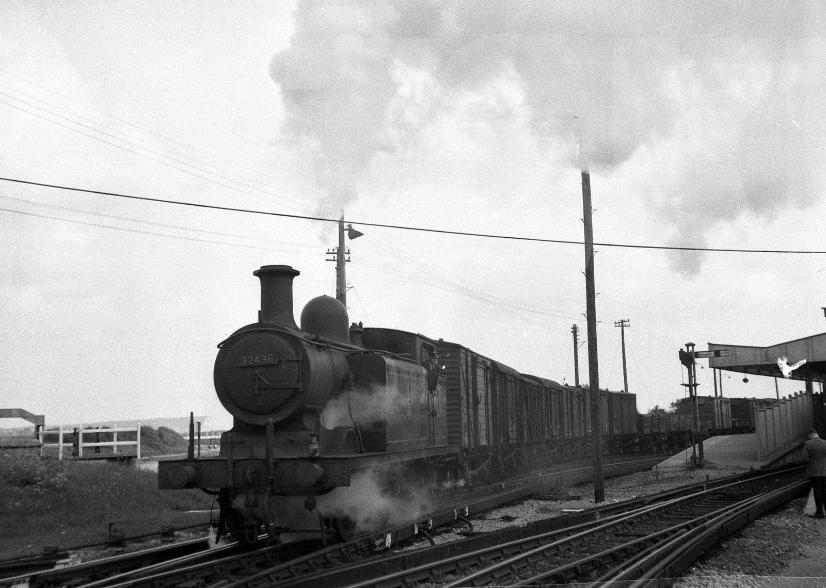
PHOTOGRAPHER UNKNOWN
Minutes of the Newhaven Branch Meeting
held at the Labour Club on Sun Nov. 5th 1961
Bro. V. Harris in the Chair
5 Members present
Bros V. Harris, C. Wickenden, M. Folwell, F. Goff & S. Cheal
Minutes of previous meeting, moved by Bro. M. Folwell ad seconded by Bro. F. Goff. That Chairman sign the minutes as a true record. Carried.
Questions on minutes,
Why 1.0 p.m.A/O turn on a Saturday had not been submitted by L.D.C. for alteration to 11.0 a.m., answered by L.D.C. Secretary. Had contributions been loaned from Branch Funds for Bro. E. Hillman, answered by Secretary, Yes.
Had the Lighted Flame been obtained answered by the Secretary.
Correspondence
December quarter 1961:- 14 weeks due up to 31/12/61. Moved by Bro. V. Harris and seconded by Bro. F. Goff. That all members be informed after the 1st week in December, that 1 extra week is due. The Secretary to the use the yellow forms. Carried.
Voting papers for General Secretary
Moved by Bro. C. Wickenden and seconded by Bro. V. Harris. That this Newhaven Branch support Bro. J.L. Simons, Norwich. Carried
It was agreed that the Secretary should ask at District Council if Chairman of our Branch or this meeting should sign voting paper
New Member accepted Terrence Ivan Chinchen.
September quarter returns, the Chairman informed all present the return sheets were all in order. The Secretary read all the members names who were in arrears and quoted the amount.
L.D.C. Report
A full LDC report was given of the Last LDC meeting by Bro. S. Cheal. It was agreed much depended on S.C. No.2 and deletion Clauses 22 & 26 of PT&RA.
It was agreed that the new Running Foreman be advised that the roster had been incorrectly compiled as the firemen had been booked 4.42 p.m. when his Driver was 8.17 p.m., and the former Dual Link Driver should be need off the R.D.R. first to cover all Electrical work. It was further agreed. That the Secretary draw up a petition re Diesel M.U.T. Oxted Line
District Council Report
Bro. C. Wickenden gave a full report from his notes on all subjects matters.
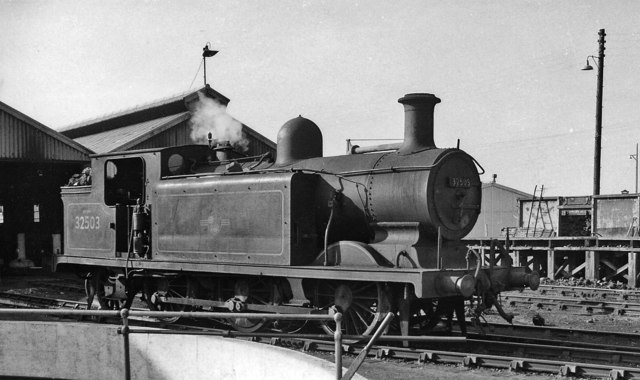
Ben Brooksbank Collection
Minutes of the Newhaven Special Branch Meeting
held at the Labour Club on Sun Dec. 17th 1961
Bro. E. King in the Chair
7 Members present
Bros. E. King, C. Wickenden, M. Giles, G. Hilton,
R. Turner, V. Morris & S. Cheal.
Minutes were read by the Secretary Bro. S. Cheal moved by Bro. C. Wickenden and seconded by Bro. S. Cheal. That the Chairman sign the minutes as a true record. Carried.
Questions on Minutes: - The Chairman informed the Branched he had contacted the Newhaven Librarian who would be very pleased to receive a signed copy of the "Lighted Flame".
Correspondence
Society Ballot voting procedure, the acting Chairman to sign Ballot paper, reply dated 22 november 1961, acknowledgement re General Secretary.
Letter from Clapham Junction Branch re non Co-operation.
Joint Electrical Branches Committee:- Suggestion for guidance, resolution from meeting held on 10th December, 1961
Voting papers 1962 A.A.D. moved by Bro. V. Morris and seconded by Bro. G. Hilton. That this Branch support our candidate Bro. S. Cheal. Carried
Election of Officers & Committee 1962
Chairman Bro. E. King, Vice Chairman Bro. W. Ware, Secretary Bro. S. Cheal
Committee
Bros. C. Wickenden, R. Morris, F. Goff, C. Lower, G. Hilton & R. Farley
Collectors
Bros. W. Terrill & E. King
District Council Delegate Bro. S. Cheal
Branch Auditors Bros. G. Hilton & R. Farley
Travel Agent Bro. C. Wickenden.
September & December 1961 quarter returns
The assurance was given by the Chairman, Bro. E. King that the returns were in order and invited any members to examine same. The Secretary read out all members who were in arrears for September quarter.
NEWHAVEN
BRANCH
OFFICERS
1962
Chairman Bro. E. King
Vice Chair Bro. W. Ware
Secretary Bro. S. Cheal
Items for 1962 A.A.D.
Moved by Bro. E. King and seconded by Bro. G. Hilton. That the following item be submitted. That this 1962 A.A.D. direct the E.C. to negotiate with the Electoral Reform Society for the purpose of allowing all voting papers to be counted by an independent body, thus avoiding the possibility of this Society being involved in court actions such as that experienced within the E.T.U., which will further allow this Society’s system of vote counting to the same as the N.U.M., N.U.R. and other trade unions. Carried.
Moved by Bro. S. Cheal and seconded by Bro. C. Wickenden. That the following item be submitted. That this 1962 A.A.D. direct the E.C. to submit a claim to the B.T.C. that the closing date on all monthly vacancy lists will be the appointment date to all successful applicants as per clause 3 of the P.T.& R.A. Carried
Moved by Bro. V. Morris and seconded by Bro. S. Cheal. That the following item be submitted . That this 1962 A.A.D. direct the E.C. to submit a claim to the B.T.C. for payment of double time for all time worked between mid-night Saturday and mid-night Sunday. Should failure to reach agreement after full negotiation machinery has been exhausted, this A.A.D. further instruct the E.C. to advise all member to take militant action in support of this claim. Carried.
Bro. S. Cheal moved an item relating to an alteration to Cause 8(c) of the P.T.& R.A., but this received no seconder.
L.D.C. Report
Bro. S. Cheal L.D.C. Secretary gave his report on the last meeting with Sectional Council Chairman, Secretary and Representative Bro. R. Weeks, who are on the S.C. sub-committee relating the clauses 22-26 of the P.T. & R.A., the position was further explained arising from District Council report on this subject.
Another item dealt with the training of 1 driver and 2 Passed Firemen being trained for Electric Loco, when there were still senior Drivers who had not received training.
Moved Bro. C. Wickenden & Seconded by Bro. V. Morris "That the L.D.C. Secretary write to Management further on the subject of not training appointed Drivers for the Electric Loco". Carried.
L.D.C. Nominations 1962
The position was explained that Bro. F. Goff had declined to stand and it was requested that he Secretary write to Bro. J. Nash, asking him to stand for L.D.C. with Bro. S. Cheal.
District Council report
Bro. S. Cheal had previously explained Clauses 22-26 part of the long history of the 42hr week, and the grand effort our E.C. had put in on this issue.
Bro. S. Turner, Appreciation was expressed to Bro. G. Hilton for posting a list for Bro. S. Turner. Bro. G. Hilton handed the Secretary £5/-/-, and it was agreed the Secretary write a suitable letter to Bro. S. Turner.
Any Other Busineess
The Xmas Holiday leave arrangements were explained to the satisfaction of all concerned.
The meeting booked and arranged for Sunday 4th March, 1962, had to be cancelled owing to a heavy fall of snow on Saturday night.
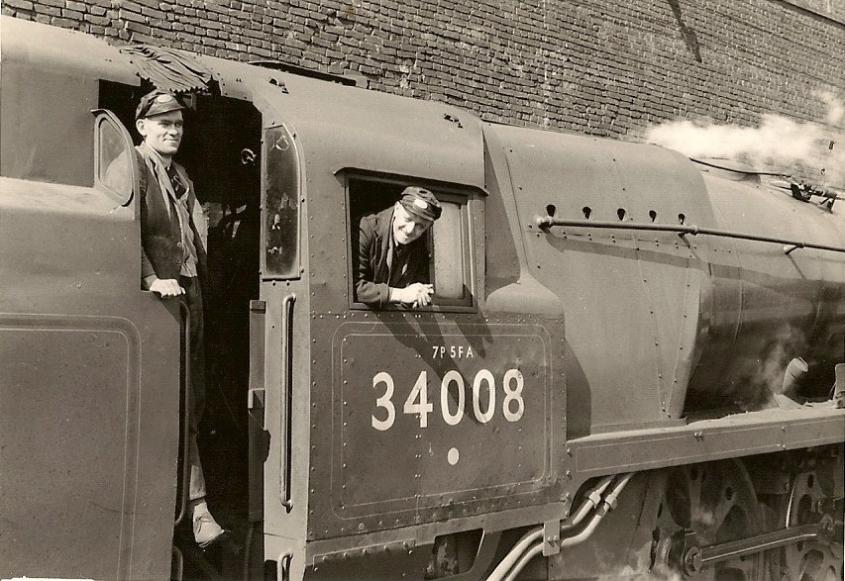
Ron Terrill Collection
Bill Terrill & Alf Charman at London Bridge having brought up the 7.17 ex Brighton via Eridge & Oxted
7th June 1962.
West Country Class No. 34008 'Padstow'
Minutes of the Newhaven Branch Meeting
held at the Labour Club on Sun March 11th 1962
Bro. E. King was in the Chair
12 Members present
Bros. E. King, C. Wickenden, C. Evans, W. Ware, M. Giles, D. Renville, V. Harris,
G. Hilton, F. Goff, R. Guy, V. Morris & S. Cheal.
Minutes were read by the Secretary Bro. S. Cheal, moved by Bro. C. Wickenden and seconded by Bro. G. Hilton. That the Chairman sign the minutes as true record. Carried.
Questions on minutes The Chairman displayed the copy of the “Lighted Flame” which would be presented to Newhaven Public Library which was signed by all present members of the E.C.
The secretary suggested the following also from Members and Committee of Newhaven Branch of the A.S.L.E.F. the Chairman and Secretary signed over the Branch Stamp. The Secretary suggested the following also be entered, presented to Newhaven Public Library from members and committee of Newhaven Branch of the A.S.L.E.F. The Chairman & Secretary signed over the branch stamp.
Bro. M. Giles asked about being trained for the electric loco and answered by the Secretary.
Correspondence
Receipt 1962 A.A.D. election, it was noted the result for Group 53, Bro. S. Cheal 354 Elected, Bro. W. Hutchings Horsham 67, Bro. P. Willshaw 203.
International Transport Workers Federation
It was noted this Branch was unable to support our own candidate as voting paper had to be in by 22nd January, 1962.
Second ballot election of General Secretary, moved by Bro. S. Cheal and seconded by Bro. W. Ware. That this Branch vote for Bro. A. Clifford.
New Members
Moved by Bro. S. Cheal and seconded by Bro, E. King. New members Victor Sexton, Terence S. Walton & Andrew Hindry,
L.D.C. Report
A full report was given on the last L.D.C. meeting it being noted that "Failed To Agree" was the minute Newhaven Firemen on Loan to other Depots.
It was explained why the First Roster submitted by the Management was not accepted and also why the Second Roster submitted by the Management was not posted.
The L.D.C. Secretary Bro. S. Cheal explained why he had telephoned Bro. Clanning in trying to find out about Clauses 22 to 26. Bro. Clanning had advised that a Material Change would take place at Newhaven and it was agreed that the Staff-side L.D.C. advise the Management.
The meeting agreed that if the plan suggest by the Representatives namely link of 20 could be obtained and also if agreement could be reached with Sectional Council members present this should be done.
December Quarter Returns. The Chairman assured all present that the receipt for December Quarter 1961 was all in order and all present were given an opportunity ask questions. The Secretary explained the two 'NONS" and hoped members would contact them. The meeting endorsed the action taken over Fireman V.J. Preece.
1962 A.A.D.
It was moved by Bro. W. Ware and seconded by Bro. V, Harris. That the following amendment be submitted to item No. 66 - Issue of electric torches to drivers of M.U. stock, add after the word stock on second line to replace the antiquated paraffin hand lamps, such torches to have a red shade attachment.
District Council report
Bro. S. Cheal informed the meeting he had been honoured as Newhaven delegate by being elected as Chairman No.4 District Council.
The subjects dealt with being 42 hour week, 3% award, young person act, free passes over 65, membership Ireland, London Allowance, macks light weight, Form 1s, M.O.T.s, Norwood Jct Branch Secretary and their funds & running by signals when piloting.
Any other Business
Bro. V. Harris asked that the L.D.C. Secretary take up the matter with the running foreman re J. Nash being booked 4.15 p.m. on Monday S.E.M. It was agreed the Secretary also deal with the H.S.R. and matters relating to drivers being incorrectly booked.
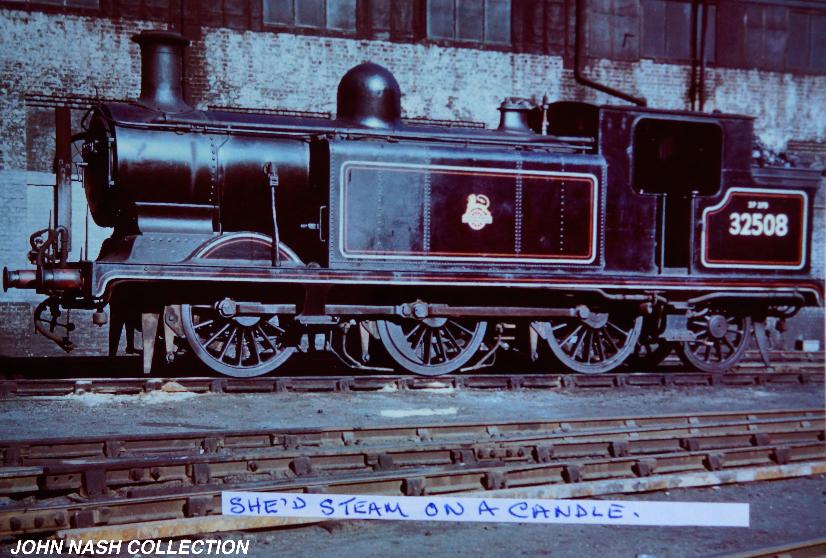
Minutes of the Newhaven Branch Meeting
held at the Labour Club on Sun April 8th 1962
Bro. E. King in the Chair
12 Members present
Bros. E. King, C. Wickenden, W. Folwell, V. Morris, W. Ware, R. Guy, R. Terrill, J. White, M. Giles,
W. Mullett, G. Hilton & S. Cheal.
Minutes were read by the Secretary Bro. S. Cheal, moved by Bro. C. Wickenden and seconded by Bro. W. Folwell. That the Chairman sign the minutes as a true record. Carried.
Correspondence
Letter of thanks to members and committee of Newhaven Branch, from the County Librarian Newhaven Public Library, for copy of ‘The Lighted Flame’
L.D.C. Report
A detailed report was given of the meeting held at Essex House yesterday 7th April 1962:- deletion Clauses 22-26 of the P.T. & R.A.
The 2 Electrical (EMUT) turns to go to Seaford. 4 Drivers, Brothers C. Wickenden, W. Mullet, W. Lipscombe & S. Cheal will be transferred to Seaford on 30th April 1962.
The importance related in the fact that many small Depots (EMUT) would go up to Depots with 11 turns of duty, starting trains the crews would travel by STOCK/STAFF trains.
It was now clear that the Seaford L.D.C. Representatives had acted not only in their own interests, but in the interests of future Drivers who would be submitting Seaford as their first preference and application was expressed all agreed that our own Newhaven Representatives had also contributed considerably their negotiating methods and it was appreciated that these now going to Seaford had lost about £75 in hard cash, by not demanding their seniority position, although this had contributed considerably to them now going to Seaford.
This meeting was mainly caused by this subject matter and the 42 HOUR WEEK ROSTER.
Bro. S. Cheal explained that the L.D.C. had to come back to the Branch, as it was not now possible to work one Link of twenty. The short unofficial meeting with Mr. Lelew Shed Master at Essex House, Bros. E.A. King and S. Cheal made it clear we were prepared to assist the Running Foreman in compiling a Roster on the understanding it would not be an agreement.
It was appreciated that Newhaven were the only L.D.C. on the Central Section who requested Sectional Council No.2 Representation and Wednesday 18th April 1962 at 10.30 a.m. at Brighton was agreed by Staff-Side S.C. No.2 and Mr. Ryan Motive Power Superintendent.
The meeting could see that a great effort was being made by their Representatives and agreed to let the L.D.C. Negotiate on No. 1 Link 16 turns with a R.D.R. for the bottom men, with 1 1/2 H.S.R. turns.
The meeting on the Young Persons Act was fully dealt with.
It was agreed a new L.D.C. Secretary would have to be found as Bro. S. Cheal would be going to Seaford on 30th April 1962.
The last item caused through the time factor was Any Other Business.
Any Other Business
Moved by Bro. W. Mullett and Seconded by Bro. M. Giles, "That the Secretary write to the Seaford Branch Chairman and Secretary suggesting that the two Branches should amalgamate." Carried.
Moved by Bro. V. Morris and seconded by Bro. G. Hilton. 'That the secretary visit Bro. E. Hilman to advise and assist our member and write to Head Office as necessary. Carried.
Moved by Bro. S. Cheal and seconded by Bro. V. Morris. 'That the Secretary write to the Editor of the Locomotive Journal for explanation as to by a paragraph appeared in the stop-press of the Evening News. Carried.
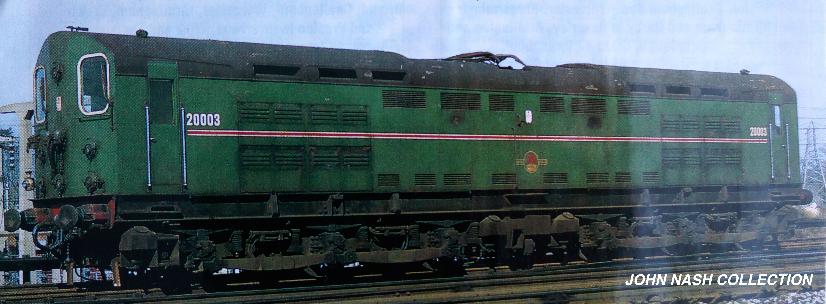
The meeting called for Sunday 6th May 1962 could not be held as only
Bros. C. Wickenden, G. Hilton & S. Cheal were present
Minutes of the Newhaven Branch Meeting
held at the Labour Club on Sun Feb. 26th 1962
12 Members present
Bros W. Ware, C. Wickenden, V. Harris, N. Folwell, W. Folwell, F. Goff, G. Hilton, J. Knott, C. Evans,
F. Bartholomew, V. Harris & S. Cheal.
Quartely returns and new members.
Members in arrears were quoted with the one 'NON'. Moved by Bro. F. Goff and seconded by Bro. V. Harris 'That the Branch Secretary write to D. Creasey asking him to pay up his areas as his name has been crossed from the quarterly return sheets.' Carried.
New members Robert John Capon & Roger Guy, proposed by Bro. S. Cheal and seconded by Bro. C. Wickenden.
LDC Report
The latest corrospendence was read including the directive of the last Branch regarding Firemen. It was agreed that the reply was not completely satisfactory and that an item regarding Fireman be submitted also :- credit & payment, complaint re :- motormen covering Seaford duties instead of Newhaven Dual Link drivers.
Rest Day Working 1961. This Item was discussed at length and it was agreed that our representatives should negotiate for a 100% working of Rest Days for those who volunteered or no rest day working.
There were differences of opinion but it was agreed our LDC Representatives would have to be left to negotiate on the lines indicated.
Any other business. Bro. F. Bartholomew raised the question of Bro. R. Terrill being allowed a set 4:45 a.m. diesel turn of duty. The position was explained by the LDC Representatives, as Bro. Terrill was due to go into Hospital on 18th March 1961.
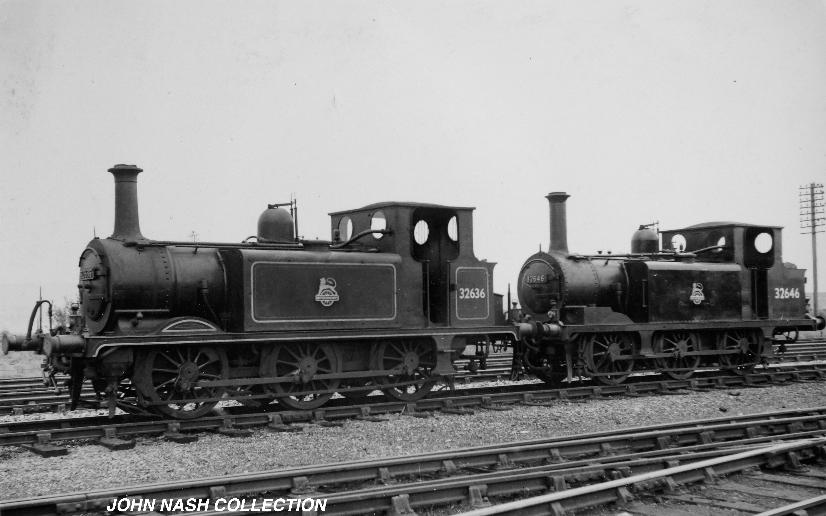
LOCOMOTIVE JOURNAL
JUNE 1962
NEWHAVEN
PAGE 140
Our March meeting was well attended, but there is still room for improvement.
This branch very much appreciates the assistance given by Sectional Council Representatives, especially after learning that Bro. Saunders attended a meeting although still on the sick list. Likewise, our Branch Chairman, Bro. E.A. King, obtained doctors’ permission in order to preside over one of our Branch meetings.
We are not proud of the fact that we have two “nons”. Will all members keep these two continually reminded. To those who have paid their full 1962 contributions in advance, many thanks.
Appreciation has been expressed by the Chief Librarian of the Newhaven Public Library for the copy of The Lighted Flame.
S.F.G. Cheal,
Branch Secretary.
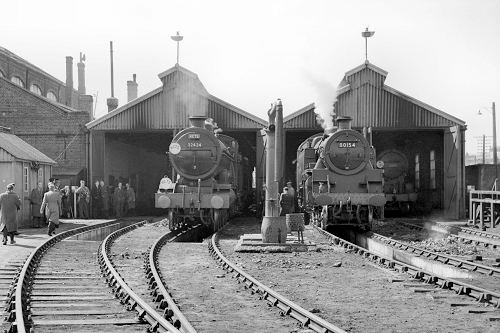
PHOTOGRAPHER UNKNOWN
Meeting held on Sunday 15th July 1962
At the Labour Club Newhaven
Bro. E. King in the Chair
5 Members present
Bros. E. King, C. Wickenden, V. Harris, G. Hilton, & S. Cheal.
The Secretary read the minutes, moved by Bro. C. Wickenden and seconded by Bro. G. Hilton. That the Chairman sign the minutes. Carried
Matters arising from the minutes
Moved by Bro. G. Hilton and seconded by Bro. C. Wickenden. That the sum of £1/15/9 for service to the Secretary’s type writer be paid from Branch funds. Carried.
The Secretary read copies of correspondence he had written to Seaford Branch Chairman and Branch Secretary for which no reply has been received.
Moved by Bro. S. Cheal, and Seconded by Bro. V. Harris: - That after the matter had been raised at District Council Meeting tomorrow, 16th July 1962. The Secretary submits all the subject matter to Head Office to be placed before the E.C. Carried.
The Secretary raised the subject of contributions being loaned from the Branch Fund to pay Bro. E. Hillman’s contributions. It was agreed that as Bro. E. Hillman had not made any request the matter be not entertained.
Correspondence
Voting papers Labour Party Conference closing date 2nd July, 1962 and E.C. Member District No.8 closing date 4th July 1962. Regrets were expressed that this Branch could not record a vote although a meeting was called for 6th May, 1962.
Circulars were dealt with for candidates for the position of Organising Secretary, but voting paper not received to date. Moved by Bro. V. Harris and seconded by Bro. S. Cheal. That in the event of another meeting being held, this Branch supports Bro. Pinches, further, that in the event of any further election this Branch support, such candidate as the Committee shall support, but the Chairman and Secretary not sign such voting until this has been done. Carried.
March & June quarter returns were presented to the meeting, Chairman informing members all in order. All Nons and arrears were quoted.
Newhaven Branch Fund
As per rule 36 £3/1/3 for 1961, moved by Bro. V. Morris and seconded by Bro. C. Wickenden. That when a member takes over to become L.D.C. Secretary, the Secretary purchase a suit case to transfer all L.D.C. correspondence in Carried.
1962 A.A.D. Report
Bro. S. Cheal gave report on the 1962 A.A.D. which was of interest to all present but again time was against the meeting, although in the 45 minutes a good idea of the conference spirit was conveyed. It was agreed that Bro. S. Cheal would be able to gov further details at the next meeting.
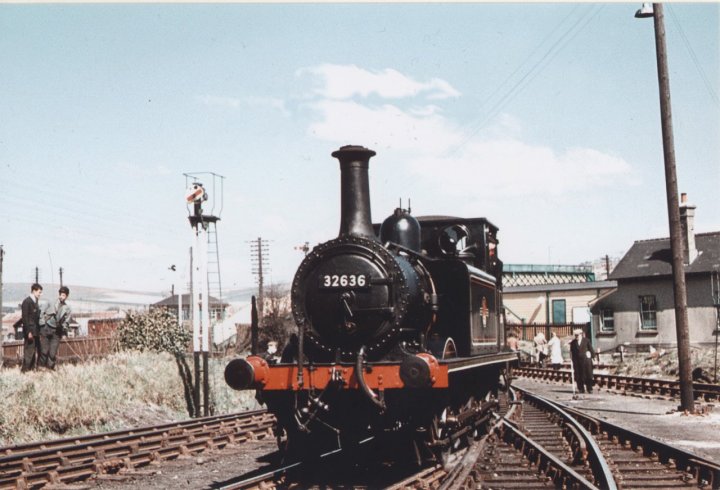
PHOTOGRAPHER UNKNOWN
Minutes of the Newhaven Branch Meeting
held at the Labour Club on Sun October 28th 1962
Bro. E. King in the Chair
3 Members present
Bros. E. King, D. Renville & S. Cheal
The September Quarterly were examined and the rent if 7/6 for booking paid.
Apologies received from Bro. C. Wickenden.
It was agreed the secretary write to all committee members informing them of the Nons and those “lapsed”.
The room was booked for the next meeting 4th November.
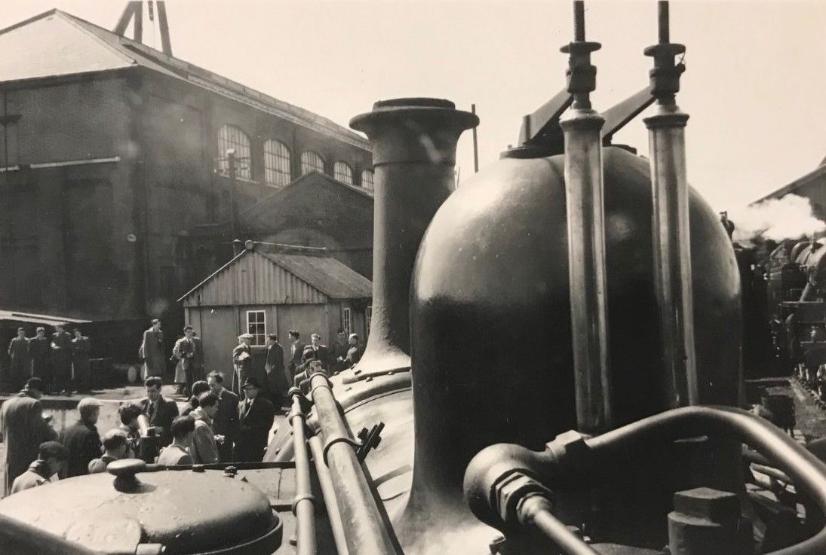
PHOTOGRAPHER UNKNOWN
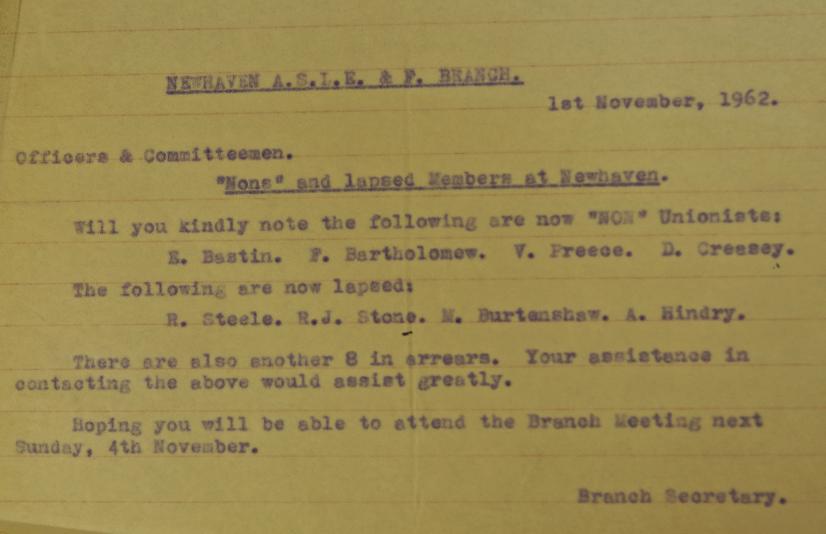
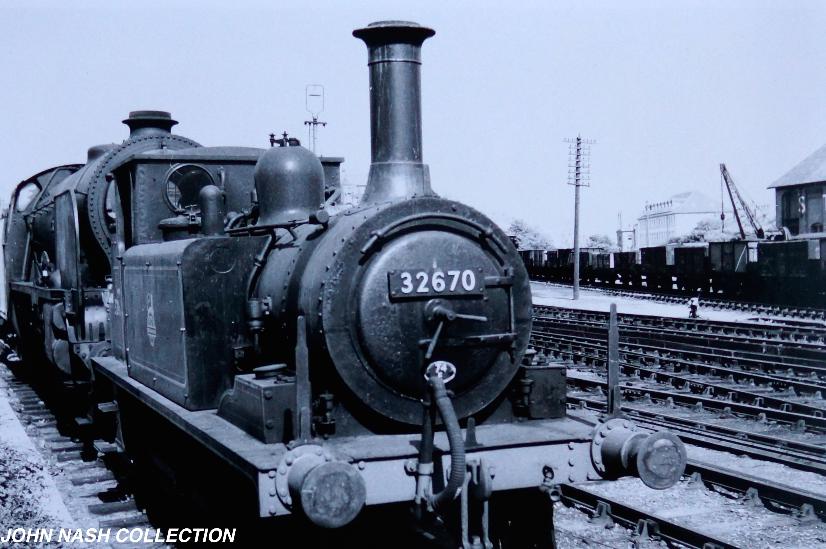
Minutes of the Newhaven Branch Meeting
held at the Labour Club on Sun Nov. 4th 1962
Bro. R. Turner in the Chair
7 Members present
Bros. C. Wickenden, F. Goff, G. Hilton, M. Giles, R. Turner, V. Harris & S. Cheal.
Minutes of previous meeting, moved by Bro. C. Wickenden and seconded by Bro. G. Hilton. That Chairman sign the minutes as a correct record. Carried.
Questions on minutes
The subject of amalgamation with Seaford Branch was discussed and head Office Correspondence dated 11th September and 11th October was read. It was also quoted that the rumours being quoted at Seaford that this Branch wished to closed Seaford Branch was not true. It was noted Bro. W. Lipscombe had joined Seaford branch.
Arising from the failure to be able to hold a meeting last Sunday 28th October, moved by Bro. G. Hilton and seconded by Bro. S. Cheal. That our next meeting held on a Monday at 7.0 p.m.
Correspondence
Election of an Organising Secretary, moved by Bro. C. Wickenden and seconded by Bro. G. Hilton. That this Branch vote for Bro. D. Pullen. Carried.
1963 A.A.D., moved by Bro. F. Goff and seconded by Bro. G. Hilton. That the action taken on Sunday 28th be endorsed in supporting Bro. S. Cheal for the 1963 A.A.D. Carried.
The September Quarter Returns, this subject matter was discussed at great length. Correspondence to and from Head Office was quoted which Chairman and Secretary had written.
It was agreed that the "NONS" at Newhaven were not of a type which would do credit to any trade union and the Secretary of both Newhaven Branches (N.U.R. & A.S.L.E.F.) would insure they remained out until their full arrears were paid.
It was further agreed the Secretary should raise the matter at No.4 District Council.
LDC Business Bro. F. Goff said he was quite prepared to stand for the L.D.C. but would not be Secretary. Bro. R. Turner also agreed to stand for L.D.C. but he too did not wish to be Secretary. It was agreed that Bro. J. Nash would again be approach to be L.D.C. Secretary.
Any Other Business
Moved by Bro. R. Turner and seconded by Bro. Goff. That the Secretary write to Bro. J. Nash expressing this Branches sympathy at the loss of his father.
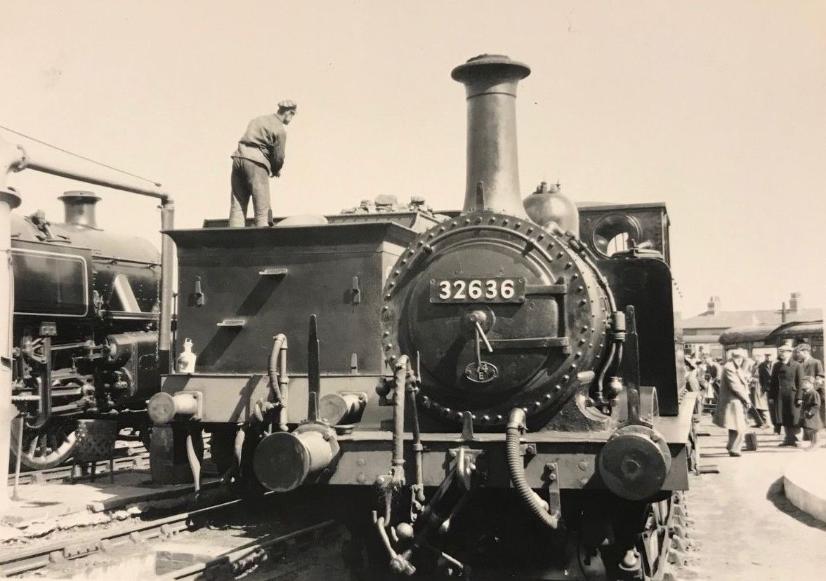
PHOTOGRAPHER UNKNOWN
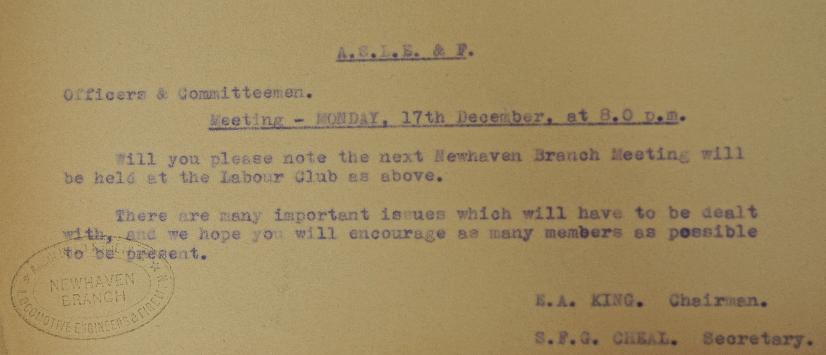
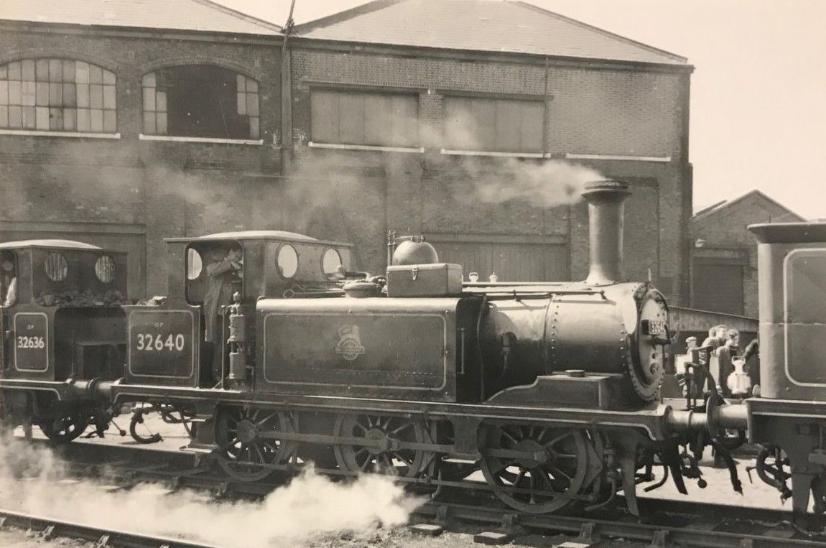
PHOTOGRAPHER UNKNOWN
Minutes of the Newhaven Annual General Branch Meeting
held at the Labour Club on Monday Dec. 17th 1962
was cancelled, apologies from Bro. R. Farley, only 2 Members present Bros. G. Hilton & S. Cheal.
held at the Labour Club on Monday Dec. 17th 1962
was cancelled, apologies from Bro. R. Farley, only 2 Members present Bros. G. Hilton & S. Cheal.
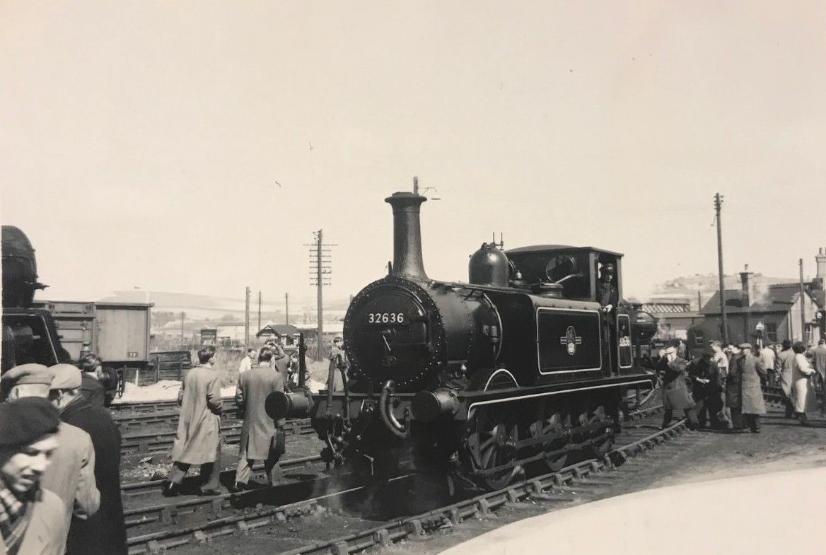
PHOTOGRAPHER UNKNOWN
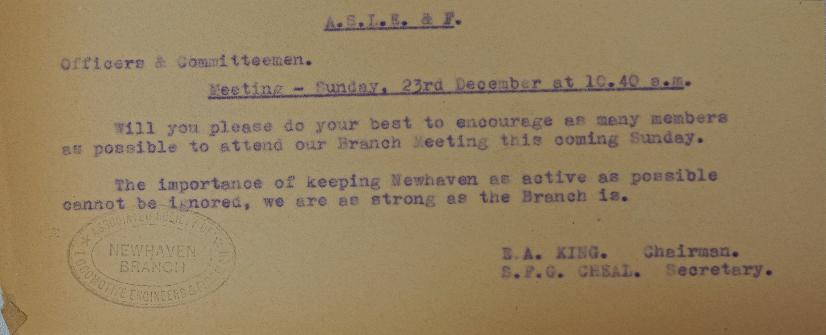
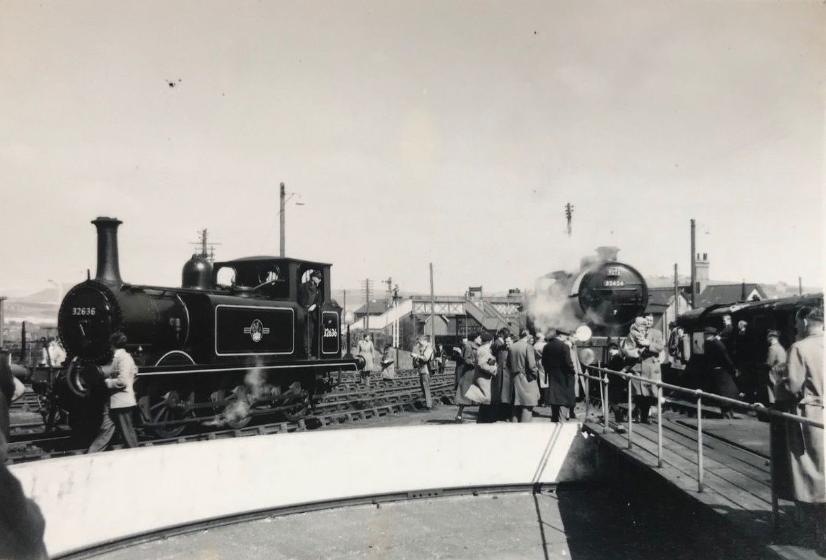
PHOTOGRAPHER UNKNOWN
Minutes of the Newhaven Annual General Branch Meeting
held at the Labour Club on Sun Dec. 23rd 1962
5 Members present
Bros. E. King, C. Wickenden, G. Hilton, W. Ware, R. Turner, R. Morris & S. Cheal.
The Secretary read the minutes, moved by Bro. C. Wickenden and seconded by Bro. W. Ware. That the Chairman sign the minutes as a true record.
Correspondence
Voting for T.U.C., moved by Bro. Ware and seconded by Bro. C. Wickenden. That this branch supports Bro. Beecher of Leatherhead. Carried
Voting for A.A.D., moved by Bro. V. Morris and seconded by Bro. W. Ware. That this Branch support Bro. S. Cheal our Secretary. Carried.
Election of Branch Officers 1963.
held at the Labour Club on Sun Dec. 23rd 1962
5 Members present
Bros. E. King, C. Wickenden, G. Hilton, W. Ware, R. Turner, R. Morris & S. Cheal.
The Secretary read the minutes, moved by Bro. C. Wickenden and seconded by Bro. W. Ware. That the Chairman sign the minutes as a true record.
Correspondence
Voting for T.U.C., moved by Bro. Ware and seconded by Bro. C. Wickenden. That this branch supports Bro. Beecher of Leatherhead. Carried
Voting for A.A.D., moved by Bro. V. Morris and seconded by Bro. W. Ware. That this Branch support Bro. S. Cheal our Secretary. Carried.
Election of Branch Officers 1963.
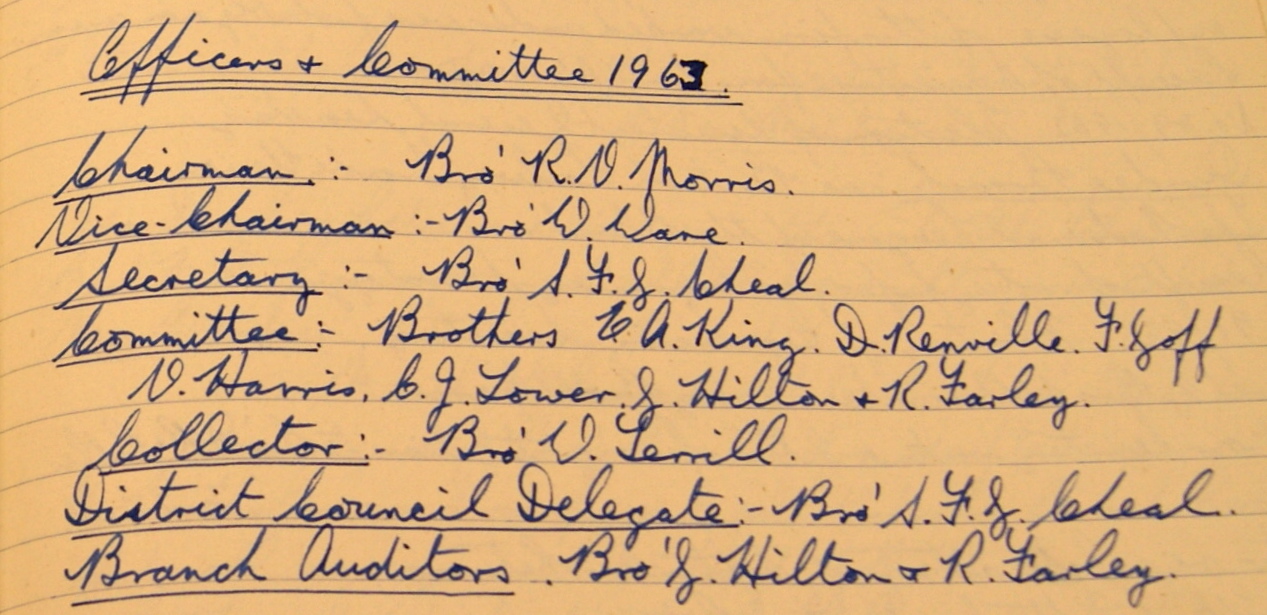
Newhaven Branch Fund
Bo. G. Hilton had been handed the ledger, but as he was unable to be present, the balance sheet could not be present, but the Secretary had the cash with him which amounted to £2-1-11.
The Quarter Returns were gone through and the Chairman Bro E. King assured all that everything was in order.
New member William Barnett, it was agreed Bro. Barnett be accepted. F. Bartholomew, those present felt that this Branch Ruling that all arrears must be paid still stands.
Bros. C. Wickenden & W. Mullett wishes to transferred to Seaford Branch. The Chairman signed the Forms.
L.D.C. Representatives Newhaven & Seaford, the Secretary explained the Chairman of Seaford Branch had ruled that Bros. C. Wickenden & S. Cheal could not stand for Seaford L.D.C.
Bro. E. King explained he would have to stand down as he had done for Branch Chairman owing to ill health.
The Secretary explained how serious this matter was, but no one present was prepared to be L.D.C. Secretary.
Items for 1963 A.A.D.
A discussion arose relating to suggestions by Secretary and arising from this it was moved by Bro. S. Cheal and seconded by Bro. E. King. That the following items be submitted to the 1963 A.A.D.
1, That this 1963 A.A.D. direct the E.C. to negotiate with the Electoral Reform Society for the purpose of allowing all voting papers to be counted by an independent body, thus avoiding the possibility of this Society being involved in any court action, such as that experienced with the E.T.U. and which will further allow this Society’s system of vote counting to be the same as the N.U.M., N.U.R. and other trade unions.
2, That this 1963 A.A.D. instructs the E.C. to form a special investigating committee comprising of six elected representatives (one from each region) to submit recommendations to the 1964 A.A.D., with a view to make our Society a more efficient trade union. Any member with 10 years continuous membership (except permanent officers and E.C. members) to be eligible for nominations.
3, That all Organising Secretaries be directed to visit each Branch in their area at least once each year, and submit a report of all such meetings to the General Secretary.
4, Rule 15. The number of delegates to all future A.A.D.s be reduced to 30.
5, Rule 35. That all branches with less than 20 members shall be closed by the E.C. and transferred to the most convenient Branch.
6, That his 1963 A.A.D. direct the E.C. to take all necessary action to insure that all rest day working is controlled by our E.C.
District Council report
Bro. S. Cheal dealt with all the points raised by Bros. Cleaver and C. J. Poole, the E.C. member, also giving a detail report on the matter dealing with this suggestion that Newhaven and Seaford Branches should amalgamate. moved by Bro. Ware and seconded by Bro. V. Morris. 'That a letter signed by our Chairman and Secretary your concern at the suggestion that District Council Delegate should attend No.4 District Council alternately.
A vote of thanks to Bro. S. Cheal for his work at this Branch and No.4 District Council. Was moved by Bro. E. King and seconded by Bro. W. Ware.
It was agreed if necessary the folowing issues should raised by our delegate at the next Dstrict Council.
Tonbridge Drivers & Firemen, unloading mails on their rest days, Eastbourne Firemen booked cleaning on Sundays, Horsham men working 8 hours as Driver and 8 hours as Secondman.
THE CLOSING PAGES OF THESE MINUTES NEED TO BE ADDED
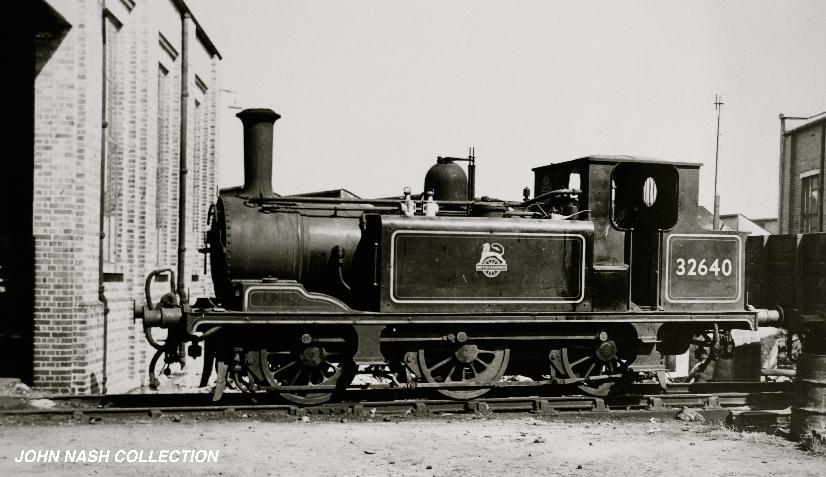
Minutes of the Newhaven Branch Meeting
held at the Labour Club on Sun March 1963
THE OPENING PAGES OF THESE MINUTES NEED TO BE ADDED
New members, V.G. Preece, D. Creasey and F. Bartholomew. moved by Bro. S. Cheal and seconded by Bro. D. Renville. That the other three "NONS," namely E. Bastin, R. Burtenshaw and R. Steele be accepted if membership form completed. Moved by Bro. W. Terrill and seconded by Bro. D. Renville. 'That the Secretary write a suitable letter to Bro. E. King now in Hospital.
Bro. T. Holder had phoned the Secretary to say he would be unable to attend this meeting, but if there was someone who could act as Chairman, he would be Newhaven L.D.C. Secretary. It was agreed the Secretary hand over all LDC business to Bro. T. Holder if satisfactory arrangements could be made.
District Council Report
Bro. S. Cheal gave an interesting report which touched on much of the correspondence, Bro. S. Cheal was now Vice Chairman of D.C. No.4
The new P.T.&R.A. was discussed and it was not thought necessary to write to Head Office re Bro C. Poole’s suggestion at D.C. No.4. The loan arrangements also covered by correspondence.
The Beeching Report
Bro. S. Cheal gave a report on his findings in the report, all the maps etc were explained to those present. It was agreed this subject be again dealt with a the next meeting.
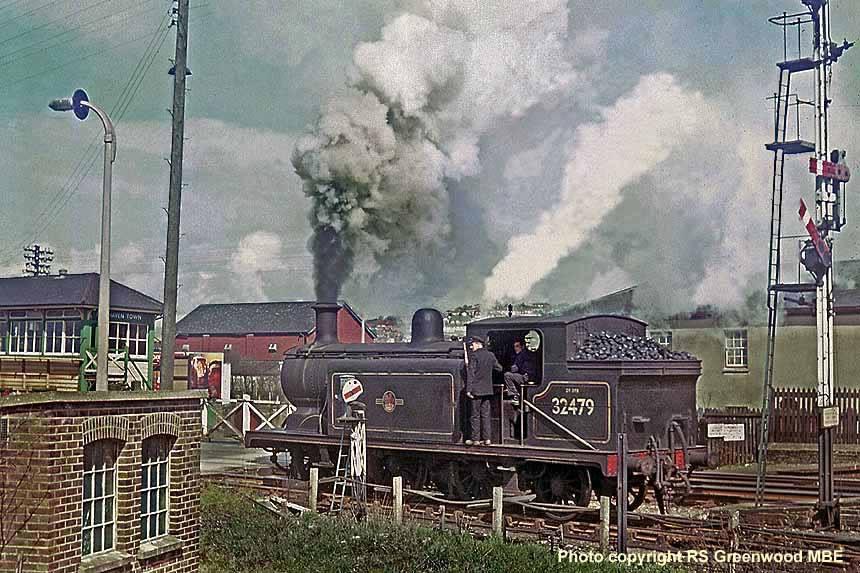
E4 0-6-2T 32479 was photographed at Newhaven as it returned to the shed on Saturday afternoon 13 April 1963.
Minutes of the Newhaven Annual General Branch Meeting
held at the Labour Club on Sun June 9th 1963
Bro. V. Harris in the Chair
7 Members present
Bros. V. Harris, D. Renville, C. Evans, R. Terrill, W. Terrill, T. Holder, & S. Cheal.
The Secretary read the minutes, moved by Bro. D. Renville and seconded by Bro. R. Terrill. That the Chairman sign the minutes as a correct record. Questions were asked regarding new members.
Branch Fund
Moved by Bro. D. Renville and seconded by Bro. R. Terrill. That the Secretary write to Head Office requesting a refund for our Branch Fund. Carried.
March Quarter returns
The Chairman examined the quarter returns and assured all present they were in order. The Secretary read out all who were in arrears.
L.D.C. Report
Bro. T. Holder gave the up to date position regarding the suggested closure of Newhaven Loco. Along discussion arose on the closure of Newhaven Loco. The P.T. & .R.A. were discussed and it was agreed the Secretary write to Bro T. Holder outlining questions relating the Preference for men who had registered before and after the deletion of Clauses 22 to 26 for Seaford E.M.U.T. Depot. It was agreed.
That at a later and more suitable time Bro, E Channing Secretary Sectional Council No.2, be invited to attend this Branch, and that a suitable present be obtained, the cost to be taken from our Branch Fund.
1963 A.A.D. Report
Owing to the time Bro. S. Cheal was only able to report in the E.C. Report, but it was agreed that he continue his report at our next Branch meeting.
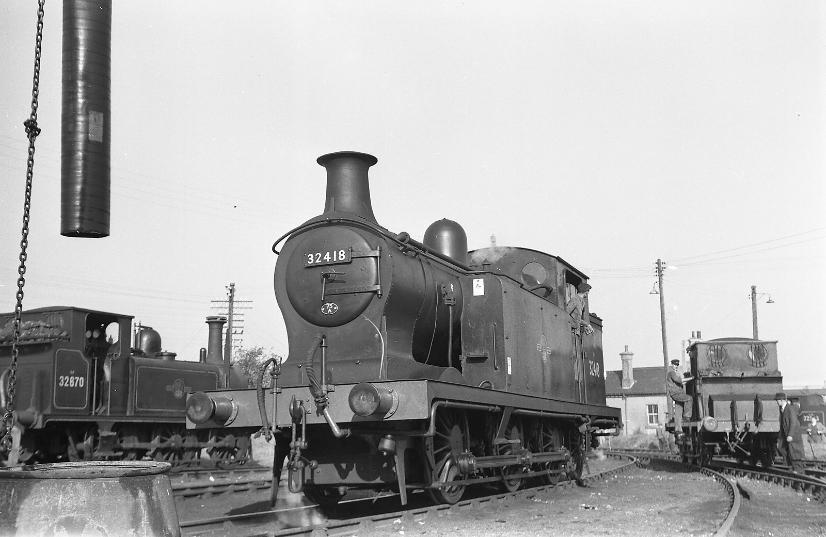
PHOTOGRAPHER UNKNOWN
Minutes of the Newhaven Branch Meeting
held at the Labour Club on Sun June 30th 1963
Bro. W. Ware in the Chair
13 Members present
Bros. W. Ware, M. Giles, C. Bird, J. Hillman, R. Turner, V. Sexton, V. Harris, D. Renville, W. Terrill,
W. Folwell, C. Evans, F. Goff & S. Cheal.
It was agreed it would not be possible to deal with all 7 items on the agenda.
The Secretary read the minutes, moved by Bro. V. Harris and seconded by Bro. T. Holder. That the Chairman sign the minutes as a correct record.Carried.
Questions on minutes
Newhaven Branch Funds, the Secretary had received the rebate form, rule 36, £2/16/9.
P.T.&R.A. & Resettlement Arrangements Booklet. Bro. R. Terrill asked if the extra 5 had ben received from Head Office
Closure Newhaven Loco 9th September 1963.
L.D.C. & Branch Secretary Reports: -
Correspondence to and from E.H. Channing, Secretary S.C. No.2.
The position of men who took priority was made clear to all present. Bro. T. Holder gave a report of a meeting at Essex House held on Friday 28th June 1963. S.C. No.2 Staff-Side present: - E.H. Channing Secretary, M. Kenshall, Bro. Perry Sec. elect. Members present from Newhaven Loco: - Bros. T. Holder, W. Folwell, and V. Morris & R. Turner. The subject matter was fully dealt with, to date the arrangements were
14 Drivers & W. Terrill to Brighton, 1 to Eastbourne. 6 Drivers not covered.
10 Firemen to Brighton. 4 Firemen not covered.
The following was agreed "That Secretary write to Bro. C. Dray asking if he objected to Bro. E.H. Channing visiting our Branch."
After the reply from Bro. Dray the Secretary write to Head Office requesting the attendance of Bro. E.H. Channing.
The Secretary ask for replies to the following questions. The wording was also agreed by the members present.
1. Where a driver has already a registration to Seaford E.M.U.T., will it be necessary for him to state his first preference Seaford E.M.U.T. on his redundancy paper?
2. Can you let this Branch know how the 14 Drivers, 1 Shed Engineman and 10 Fireman to be allocated to Brighton Loco was arrived at?
3. can you let us know where in the re-settlement arrangements the position is covered which allows the Management to determine that no Newhaven Driver will be entitled to this payment, bearing in mind the first train arrives at Brighton at 6.55 a.m. and the last train leaves Brighton at 11.33 p.m. Many of our Drivers use no private transport and do not wish to lodge at Brighton.
The Secretary requested members to pay their June quarter subscription as soon as possible. Cash received Bro. W. Ware £1/13/- & Bro. J. Hillman £1/6/6.
It was agreed our next meeting be held as soon as possible after the necessary arrangements had been made.
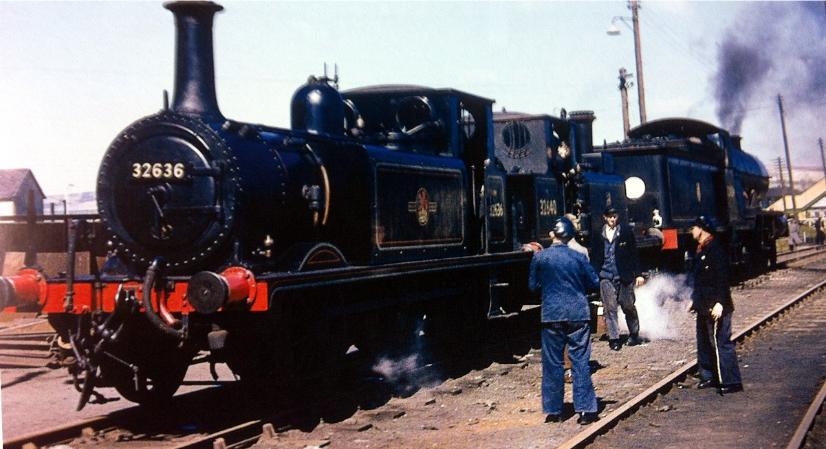
PHOTOGRAPHER UNKNOWN
Minutes of the Newhaven Branch Meeting
held at the Labour Club on Sun July 21st 1963
Bro. W. Ware in the Chair
15 Members present
Bros. W. Ware, D. Creasey, G. hilton, V. Harris, W. Folwell, M. Giles, R. Turner, T. Holder, F. Goff,
W. Terrill J. Bowden, D. Renville, C. Evans, C. Bird & S. Cheal.
It was agreed it would not be possible to deal with all seven items on the agenda
The Secretary read the minutes, moved by Bro. V. Harris and seconded by Bro. M. Giles. That the Chairman sign the minutes as correct record. Carried. Questions arose on the Newhaven Loco Closure.
Correspondence dealing with closure of Newhaven Loco was dealt wit.
L.D.C. report of the meeting held at Essex House, on 17th July, was given by Bro. M. Folwell. Bro. V. Morris alas attended in place of Secretary Bro. T. Holder who was on annual leave.
A vote of thanks was moved by moved by Bro. F. Goff and seconded by Bro. C. Evans, for the stand put up by our representatives at Essex House meeting on 17th July, 1963.
Arising from the above it was agreed that theSecretary write to Head Office asking if they can assist in any way to worked by the numbers going to Brighton and to R.D.R. and H.S.R. also manning agreement re Brighton E.M.U.T.
The answer to the following questions were required.
Would it be in order for a Redundant Driver to elect to be 'Put Back' and go into Brighton?
Could a 'Put Back Driver' retain his registration '8b' move?
It was agreed that when this Branch has visiting speakers members who cannot attend to write written questions to the Secretary. A notice to be place when necessary.
held at the Labour Club on Sun July 21st 1963
Bro. W. Ware in the Chair
15 Members present
Bros. W. Ware, D. Creasey, G. hilton, V. Harris, W. Folwell, M. Giles, R. Turner, T. Holder, F. Goff,
W. Terrill J. Bowden, D. Renville, C. Evans, C. Bird & S. Cheal.
It was agreed it would not be possible to deal with all seven items on the agenda
The Secretary read the minutes, moved by Bro. V. Harris and seconded by Bro. M. Giles. That the Chairman sign the minutes as correct record. Carried. Questions arose on the Newhaven Loco Closure.
Correspondence dealing with closure of Newhaven Loco was dealt wit.
L.D.C. report of the meeting held at Essex House, on 17th July, was given by Bro. M. Folwell. Bro. V. Morris alas attended in place of Secretary Bro. T. Holder who was on annual leave.
A vote of thanks was moved by moved by Bro. F. Goff and seconded by Bro. C. Evans, for the stand put up by our representatives at Essex House meeting on 17th July, 1963.
Arising from the above it was agreed that theSecretary write to Head Office asking if they can assist in any way to worked by the numbers going to Brighton and to R.D.R. and H.S.R. also manning agreement re Brighton E.M.U.T.
The answer to the following questions were required.
Would it be in order for a Redundant Driver to elect to be 'Put Back' and go into Brighton?
Could a 'Put Back Driver' retain his registration '8b' move?
It was agreed that when this Branch has visiting speakers members who cannot attend to write written questions to the Secretary. A notice to be place when necessary.
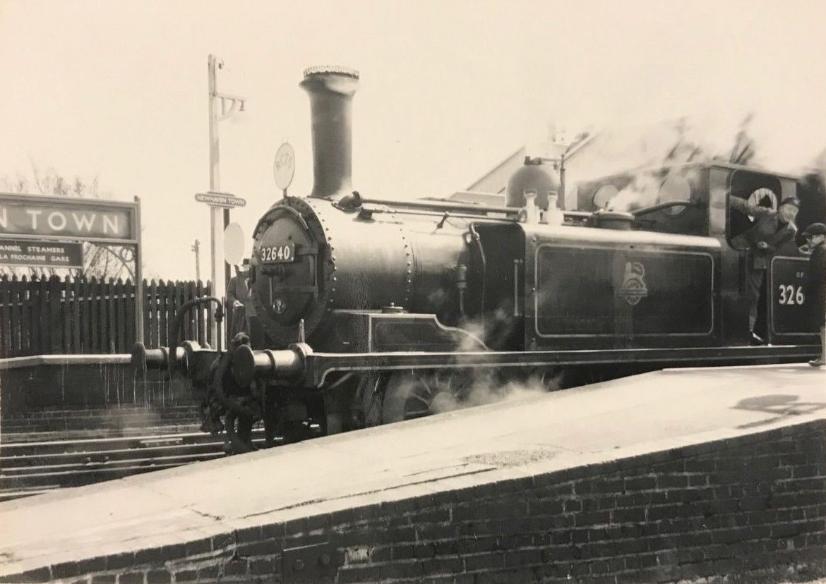
PHOTOGRAPHER UNKNOWN
Driver Johnny Knott
Minutes of the Newhaven Annual General Branch Meeting
held at the Labour Club on Sun Aug. 11th 1963
12 Members present
Bro. V. Morris in the Chair
held at the Labour Club on Sun Aug. 11th 1963
12 Members present
Bro. V. Morris in the Chair
Bros. V. Morris, J. Nash, G. Hilton, W. Ware, M. Giles, V. Harris, F. Bartholomew, F. Goff, C. Evans,
J. Bowden, R. Turner & S. Cheal.
Redundancy Transfer and Resettlement Arrangements, Agreements 15.2.63.
L.D.C. Report,
Bro. V. Morris gave the latest details of meeting between the management, Brighton and Newhaen LDC.s.
The members did not think any useful purpose would be served by Bro. W. Cleaver visiting our Branch on Sunday 8th September 1963, but agreed that Bro. Channing, Secretry, No.2, Sectional Council would be very welcome, to answer questions relating to closure of Newhaven Loco.
It was agreed that the Secretary write to our General Secretary asking if he could visit our Branch on Sunday 25th August.
Not the items on the agenda could be dealt with as most of the time was taken up by discussion on the closure of Newhaven Loco.
The Chairman Bro. V. Morris thanked the members for attending and for appreciation made for the representation given and closed the meeting at 1.05 p.m.
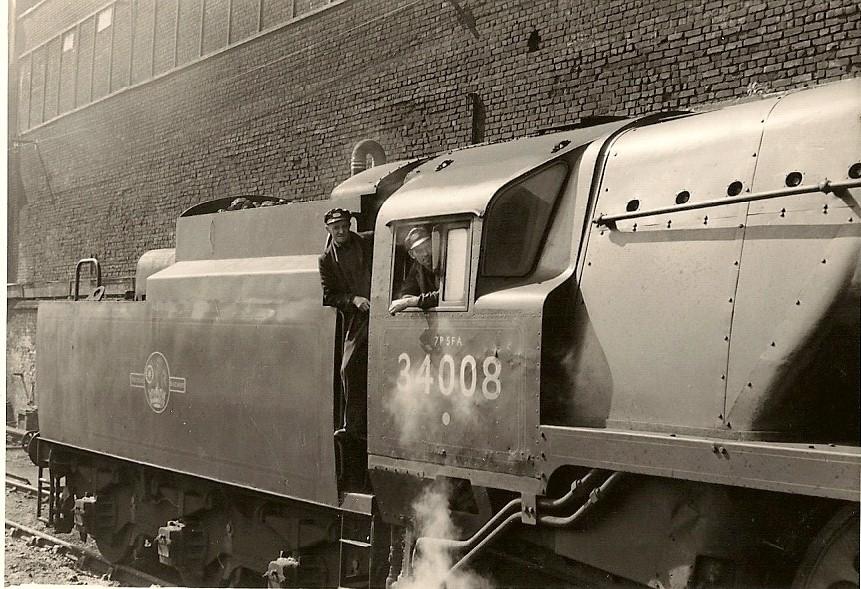
Ron Terrill Collection
Alf Charman & Bill Terrill
Minutes of the Newhaven Branch Meeting
held at the Labour Club on Sun Sept 1st 1963
held at the Labour Club on Sun Sept 1st 1963
13 Members present
Bros. V. Morris, F. Goff, V. Sexton, T. Holder, C. Evans, M. Giles, G. Hilton, V. Harris, W. Terrill, C. Bird, A. Charman, J. Lower & S. Cheal.
The meeting called for 10.15a.m. was opened by our Chairman Bro. V. Morris at 10.15a.m.
Minutes of previous meeting, the Secretary read the minutes, moved by Bro. M. Giles and seconded by Bro. C. Evans. That the Chairman sign the minted as a correct record.
June & September Returns.
The Chairman assured all present the June Quarter Returns were in order. Members in arrears were quoted September Quarter Returns: - It was agreed the Secretary issue all members with the Quarterly Summons for September before next week’s Branch meeting and request that members clear September before going to Brighton.
It was agreed this Branch would continue to 30th September 1963.
It was agreed that no useful purpose could be served by Bro. Cleaver attending this Branch at such a late stage.
Mr .E.H. Channing, Sectional Council Secretary.
Bro. V. Harris was thanked for meeting Bro. Channing who had arrived early.
The Secretary Bro. S. Cheal introduced Bro. Channing and then made it known of Resolution of Meeting 9.6.63, and presented Bro. Channing with a pig skin travel alarm for Mrs Channing a box of Handkerchiefs, in appreciation for the work as Secretary of S.C. No.2 as he was due to retire in October 1963.
Bro. Channing very surprised, suitably replied with thanks on behalf of his wife who was in very poor health.
Bro. Channing then presented Bro. W. Terrill with a Society Diploma for his work as Branch Collector.
Bro. Channing gave a report in detail and many questions were asked.
Bro. V. Sexton kindly made two journeys to Newhaven Loco to remove notices for Mr Channing to see. Bro. M. Giles went home to allow Bro. Channing to see replies given to him by Management. Although an L.D.C. meeting was being held tomorrow on the Firemen's Roster it was agreed that the above subject matter would be dealt with, with Bro Channing in attendance.
It was learnt at the meeting Bro. R. Turner had decided not to go into Brighton, which meant all Newhaven Drivers would go into Brighton (1 to Eastbourne).
Every member asked questions on their personal problems relating to P.T. & R.A., Housing, and Travel Allowance. Bro. Channing agreed to give replies to details on depots mentioned in writing to the Secretary. G80.27.6.63. relating to Travel Allowances quoted.
Moved by Bro. Terrill and seconded Bro. J. Lower. ' A vote of thanks to Bro. Channing.' Carried Moved by Bro W. Terrill and seconded by C. Evans. 'A vote of thanks to Bro. S. Cheal, Branch Secretary., Carried.
The members were thanked for their attendance and the meeting had to close at 1.25p.m. to allow Bro. Channings to catch the 1.33 p.m. train.
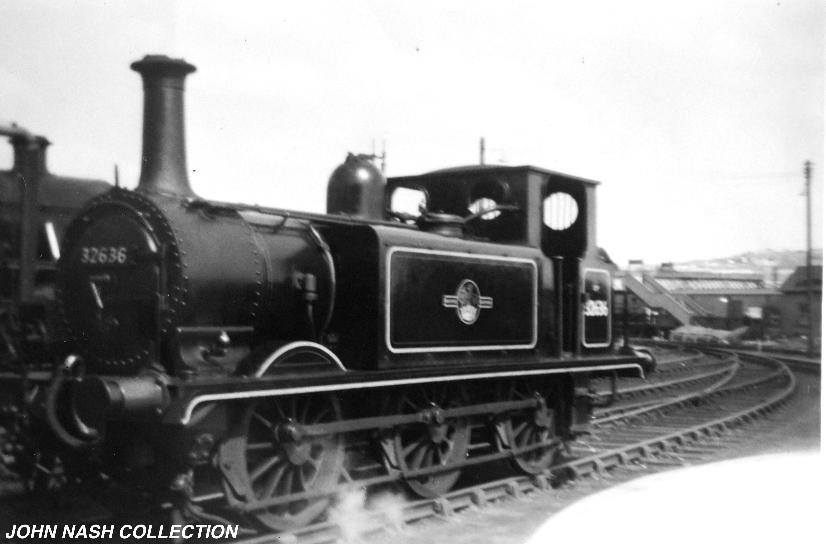
Minutes of the Newhaven Branch Meeting
held at the Labour Club on Sun Sept. 8th 1963
held at the Labour Club on Sun Sept. 8th 1963
16 Members present Bros. V. Morris, F. Goff, J. Nash, M. Giles, V. Harris, G. Hilton, C. Evans, R. Turner, W. Ware, J. Lower, W. Terrill, E. King, A. Charman, D. Renville, C. Bird & S. Cheal.
The meeting called for 10.15a.m. was opened by our Chairman Bro. V. Morris at 10.15a.m.
Apologies were received from Bro. T. Holder who was working.
Minutes from the previous meeting, moved by Bro. C. Evans and seconded by Bro. V. Harris. That the Chairman sign minutes as a correct record,
The Chairman and Secretary welcomed Bros. R. Turner and E. King. Regret was express that the Society Diploma had not arrived in time for Bro Ern King who had been Secretary for 15 1/2 years and Chairman for 10 1/2 years.
Bro. King suitably replied and thanked members for the taxi. Appreciation was expressed to Bro Reg Turner, having been active in the Branch, L.D.C. etc.
The Chairman assured all present the returns were in order and reminded members this Branch would continue until 30th September, 1963. It was agreed the members transferred to the Branch where the members would be after 30th September. The secretary thanked all who had paid in advance.
Correspondence
Letter from Secretary, St. Leonards Branch requesting to be allowed to nominate our Secretary Bro. Cheal for the 1964 A.A.D. It was agreed that as Newhaven Branch was to close on 30 September, it would not be in order for this Branch to nominate Bro. S. Cheal.
Nomination form, Southern Region Sectional council No.2. moved by Bro. V. harris and seconded by Bro. C. Evans. That this Branch nominate Bro. Dray. Carried.
It was agreed the Secretary write a suitable reply to Bro. Sargent of St. Leonards Branch.
Travelling Allowance in Lieu of Lodging.
Letter from Organising Secretary dated 3rd September 1963. Members present express their opinions on. Bro. W.J. Cleaver it was noted no word was included relating to Redundant Drivers and Fireman and men who made accepted Resettlement Payment. Members had not forgotten the last meeting to this Branch by Bro. W.J. Cleaver.
Correspondence on Closure of Newhaven Loco
The Chairman, Bro. Morris explained that the meeting held on Monday 2nd September 1963, present were Newhaven and Brighton L.D.C.'s and Sectional Council Chairman and Secretary, Bros. F. Saunders and E.H. Channing. Arising from this meeting a notice was posted at Newhaven Loco dated 5/9/63.
Moved by Bro. D. Renville and seconded by Bro. J.Nash.
'That having heard the report of our Representatives and having examined closely notice posted 5/9/63. This Newhaven Branch support members claiming the use of the Railway taxi after booking on duty at Newhaven on Monday 9/9/63.'
All the correspondence relating to the P.T.&R.A.the Newhaven Closure file was placed before the members. It was further agreed that another meeting be held before 30th September if necessary. A number of members expressed the opinion they would like to telephone the Secretary with their personal problems, this was agreed.
Moved by Bro. V. Harris and seconded by Bro G. Hilton.
'That if an extra meeting be held, Bro. Channing be invited.' Carried.
Newhaven Branch Fund
The cost for the taxi for Bro.King was 10/-. Moved by Bro. V. Harris and seconded by Bro. C. Evans. 'That any balance after deductions of taxi for Bro. E. King, be taken by Bro. S. Cheal, Secretary, to offset loss on Locomotive Journals.
Any Other Business.
A great surprise for the Secretary, Bro. W. Terrill had collected from the Newhaven members, and Bro. E. King former Branch Secretary and Chairman presented to Bro. S. Cheal a table lamp in the form of a Lighthouse and capstan, the capstan acting as a table cigarette lighter, and for Mrs Cheal a decorative china dressing table make up mirror.
Bro. King paid very kind remarks to Bro. Cheal for the work he had done for Newhaven members.
In reply, Bro. Cheal was lost for words, he had never seen a table lamp like this and one he would treasure it all his life as a reminder of the members of Newhaven Loco. Bro. Cheal also thanked the members on behalf of Mrs Cheal who had done so much to assist him.
The Chairman reminded member of the time and regretted that time would not allow for refreshments which had been planned. In wishing all members the best of luck in the future at other depots or in outside industry he closed the meeting at 1.10 p.m.
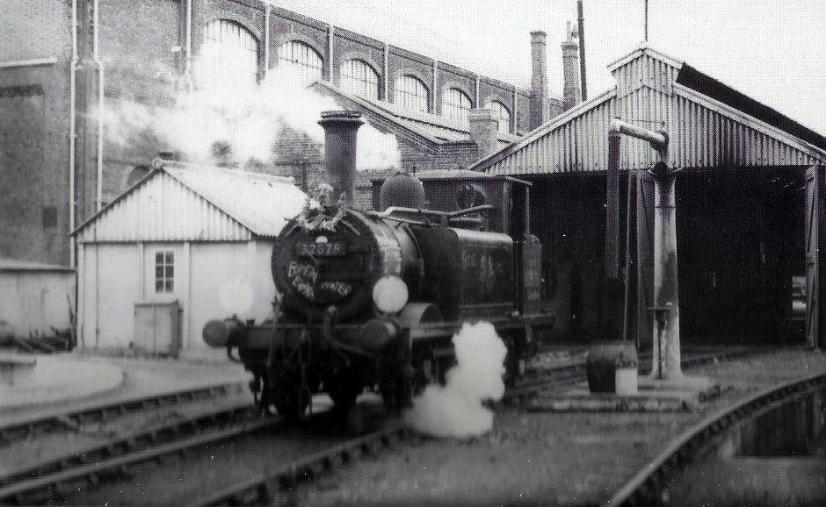
PHOTOGRAPHER UNKNOWN
LOCOMOTIVE JOURNAL
DECEMBER 1963
NEWHAVEN
PAGE 236
This will be the last Branch Report, as on 9 September Newhaven Loco was closed and all staff made redundant. Those who are trying to adjust themselves to their new surroundings wish those who have left the railway every success.
When it was first learned we would close, the branch decided to work to a system which proved to very satisfactory, so with the assistance of the Society pamphlet issued May, 1963, to all members on promotion, transfer, redundancy and resettlement arrangements, the branch was turned into a type of Improvement Class. Every assistance was given by Bro. E.H. Channing, Southern Sectional Council Secretary, who answered all queries in writing.
Why Newhaven Loco. had to close is still a mystery, with the Newhaven – Dieppe Car Ferry Service opening in 1964 and the increasing popularity of the Victoria - Newhaven Boat Train Service. The representatives were told a £4,000 saving would be made each year, but the management would not state how the figure was arrived at.
So much could be said, but may I conclude by thanking Newhaven redundant drivers and firemen for the wonderful presentation made to my wife and myself. It was a pleasure to serve yow.
Stafford Cheal,
Branch Secretary
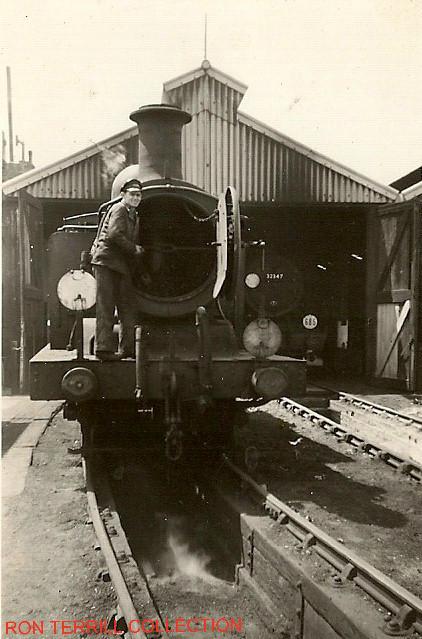
Bill Terrill
William Charles Terrill entered the footplate grade at Newhaven on the 20th January, 1920.
Below are some papers highlighting his career
NEWHAVEN'S WEST QUAY
LAST TRIP
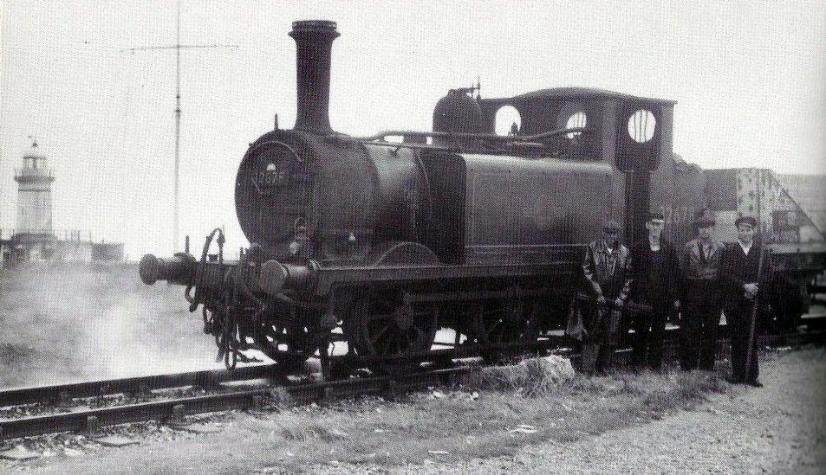
R. Riley Collection
The last train on the West Quay Newhaven line Saturday 10th August 1963
Left - Right: Harbour employ unknown, Fireman Roger Stone, Driver Maurice Smith
& Shunter/Flagman Bob Cobden,
(Bob was a Shunter at Newhaven from 1946 until 1963).
Maurice Smith returned to worked after recovering from T.B. and plusery, he was given the job driving the 'Terrier' tanks engine on the West Quay 'Pilot'. The West Quay 'Pilot Turn' included shunting the sidings on the West Quay and taking provisions to the light house keeper at the end of the Breakwater.
PHOTOGRAPHERS UNKNOWN IN GALLERY ABOVE
Above scenes of Newhaven tramway line to the West Quay
The last train ran on Saturday 10th August 1963 hauled by a Terrier tank engine No.32678,
Driver Maurice Smith and his Fireman Roger Stone.
The engine took water beside the Railway Hotel at 07:30 a.m.; the shunter unlocked the gate from the rail connection on to the bridge. Railwaymen stopped the traffic , one controlling the gate at each end (this was not done before the last war, the train only being protected as it crossed the road). The engine run light across the bridge, with the instructions to clear all wagons. First the large warehouse used as a rope works and tarpaulin factory; this had been closed on the 2nd August, and the consequent loss of rail traffic contributed to the decission to close the tramway. The first job was to shunt some empties back into the siding, and then pass them on the adjacent loop to fetch an empty box van and an empty bogie luggage van from the former oil siding (oil traffic had ceased four or five years earlier). Ther train ran past the Sheffield Hotel, where the chairs showed evidence of post war relaying, and then beyond the Hope Inn the track had concrete sleepers, the line having been relaid due to storm damage. In the breakwater siding, material for maintaince of the breakwater was kept under lock and key; this had been the main traffic on the line, shingle etc., not necessarilly from local sources. Here a self propelling crane and an open wagon containing a tank for its water supply were left to make their own way across the bridgea week later - a new diesel crane had been provided for breakwater maintenance. The engine returned with five wagons, and a member of the breakwater staff locked the gate behind it. The engine did not need to go back onto the breakwater, with its old tied tracks; in the past when it did so sometimes when the sea was rough the breaking water might go down the chinmey. The train eventually formed up by the sheet stores comprised eight open wagons, two covered wagons, and the bogie luggage van (the largest load the driver could remember in recent years had been 19 wagons). About 10:30, the single gates at each end of the bridge closed against road traffic, and Maurice Smith and his engine No. 32678 made the last slow journey across, turning by the Railway Hotel into the main sidings.
It was some sixty years since the first Terrier tank made this trip; the driver on this occassion recalled that No. 32678 had been "on station" since 3rd July, instead of the usual weekly change-over, due to the poor state of the boiler of No. 32649, which had been sharing the duty.
Extracted from
the Newhaven & Seaford
Branch book
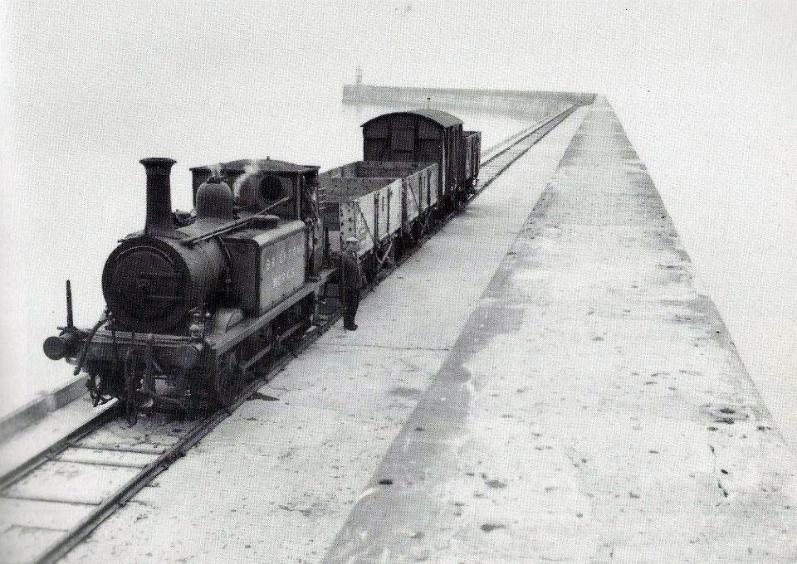
PHOTOGRAPHER UNKNOWN
STORIES FROM THE SHOVEL
By ex-Newhaven Engine Cleaner & Fireman (1949 - 1956)
Dave Brady
On leaving school in 1949, I started work as a cleaner at Newhaven loco shed, where I joined my mother's brothers, Uncles Ted & Jack Hillman who were both drivers. My first day's work was cleaning the boiler (red hot) of Atlantic Class loco "Beachy Head". On another occasion I remember cleaning an E4 class loco still in its wartime black, and sideways on in the shed light, saw on the tank side some brown paintwork with the words 'Birch Grove' which did not mean a lot to me at the time. That loco is now preserved on the Bluebell Railway.
Having been passed as a cleaner, my first day acting as a fireman was on an E4 class loco and having booked on at 4.45am we travelled "light engine" to Lewes where we coupled-up to a full load and travelled back to Newhaven then on to Seaford.
I have many fond memories of Jack Simmons known as Bogey (but not to his face) mainly because he was permanent driver at the time on the Fenchurch (Terriers). The best turn of all was with a Terrier, and having booked on at 6.45 am, we would attach a dozen trucks or so and haul them over the swing bridge and down to the breakwater in all weathers where they were detached. Then it was back to the shed to put the loco away at about 12.30pm. After putting the engine away and be home in doors by 1.30. "Bogey" did have a shaky hand which was quite funny when he was opening and shutting the steam regulator, but he was a nice gentleman.
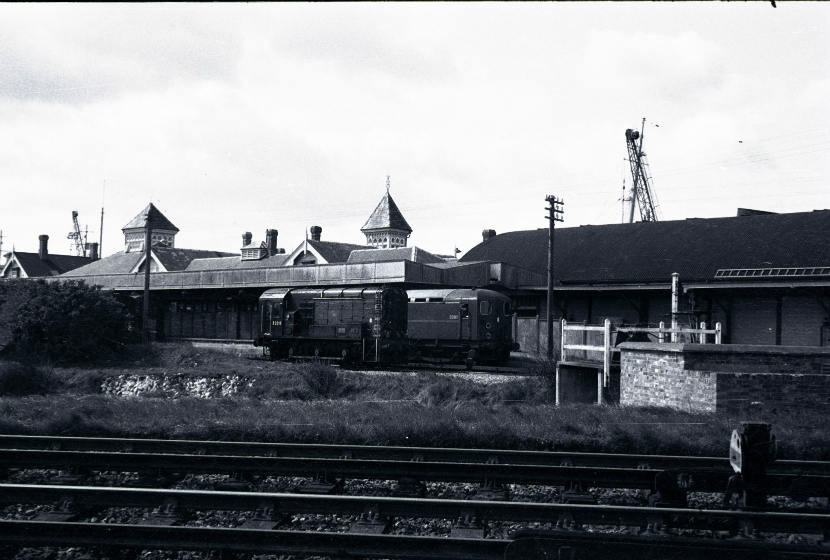
BOB CUTBRUSH COLLECTION
NEWHVEN MARINA
THE SUSSEX MOTIVE POWER DEPOTS WEBSITE.
HAS NOW BEEN MOVED TO A NEW SITE CALLED
IGNITING THE FLAMING OF UNITY
PLEASE CLICK ON THE IMAGE BELOW
TO TRANSFER TO THIS NEW SITE
CLICK ON THE ABOVE IMAGE TO TAKE YOU
TO THE NEW UPDATED COMBINED AND WEBSITE
IGNITING THE FLAME OF UNITY WEBSITE
https://ignitingtheflameofunity.yolasite.com/
THIS WEBSITE COMBINES THE FOLLOWING WEBSITES
THE BRIGHTON A.S.L.E.&F., THE BRIGHTON MOTIVE POWER DEPOTS
& THE SUSSEX MOTIVE POWER WEBSITES
WHICH EXPLAINS THE EVOLUTION OF THE FOOTPLATE GRADES AND THE
HISTORY OF THEIR TRADE UNIONS AND THE STRUGGLES TO IMPROVE
THEIR WORKING LIVES
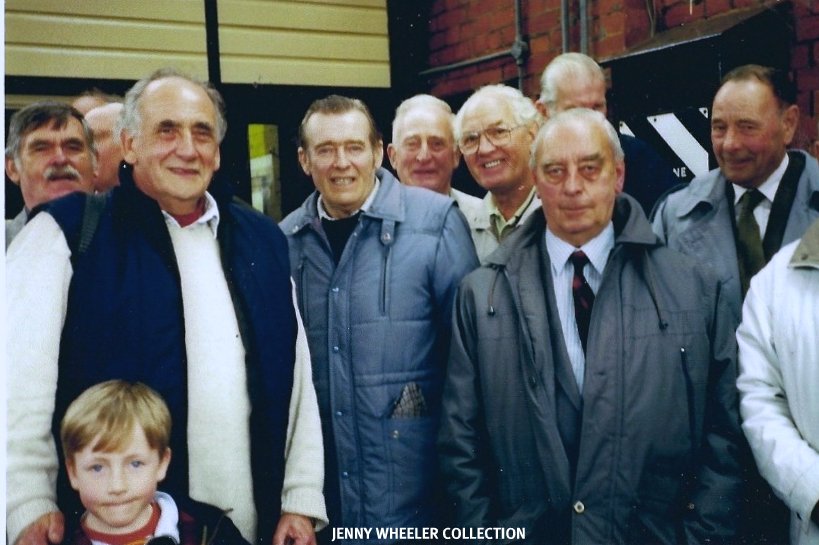
Left ~ Right: Ron Terrill, Dave Creasey, George Hilton, Fred Wheeler, Bill Morris (Vic’s brother), Vic Harris, Colin Wickenden,& Tom Holder.
All drivers with the exception of Ron Terrill & Vic Harris eventually moved to Seaford E.M.U.T. depot until their retirement.
Dave Creasey later moved to Eastbourne with the closure of Seaford depot in Febuary 1994.
 Fred Wheeler |
 Dave Creasey (THE POOR RELATION) |
 L ~ R: Dave Shopland (T B) & George "Honda" Hilton |
Vic Morris (Standing) & Ernie Southon (Bton) |
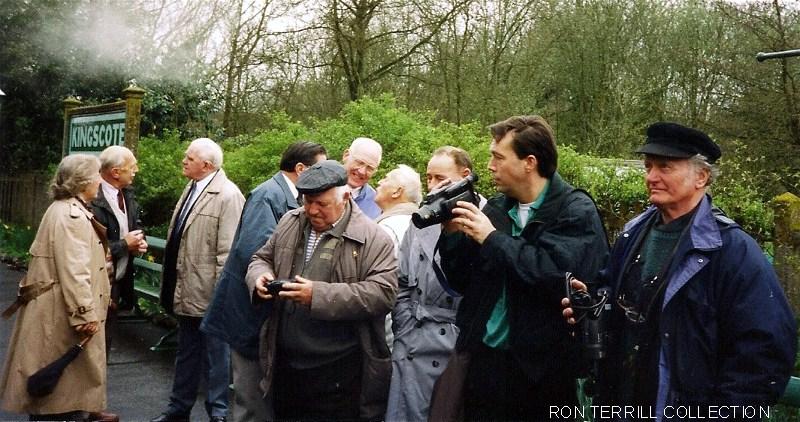
Unknown, Tug Wilson (T.Bdgs), John Nash, Vic Morris, Ron Knight (Bton), Ernie Southon (Bton), Tom Holder, Unknown & Ian Munro (Barnham)
Left~ Right: Colin Wickenden Centre & Ernie Southon (Bton)
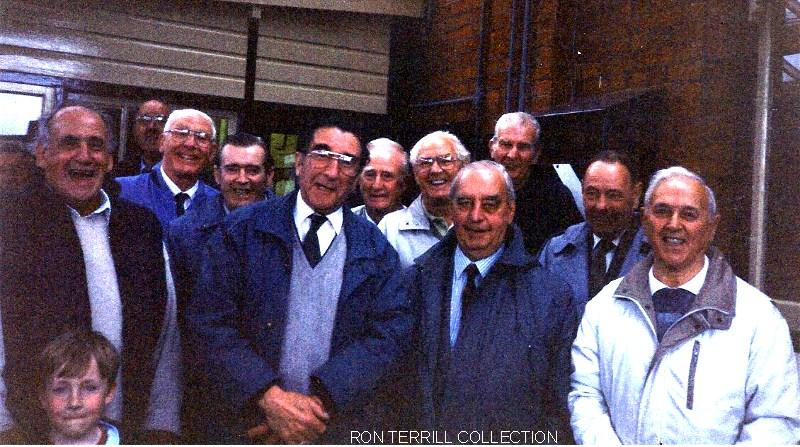
Left ~ Right: Dave Creasey,Dave Shopland (T.Bdgs), Vic Morris, George Hilton, John Nash, Fred Wheeler, Bill Morris, Vic Harris, Colin Wickenden,Tom Holder, & Ernie Southon (Bton).
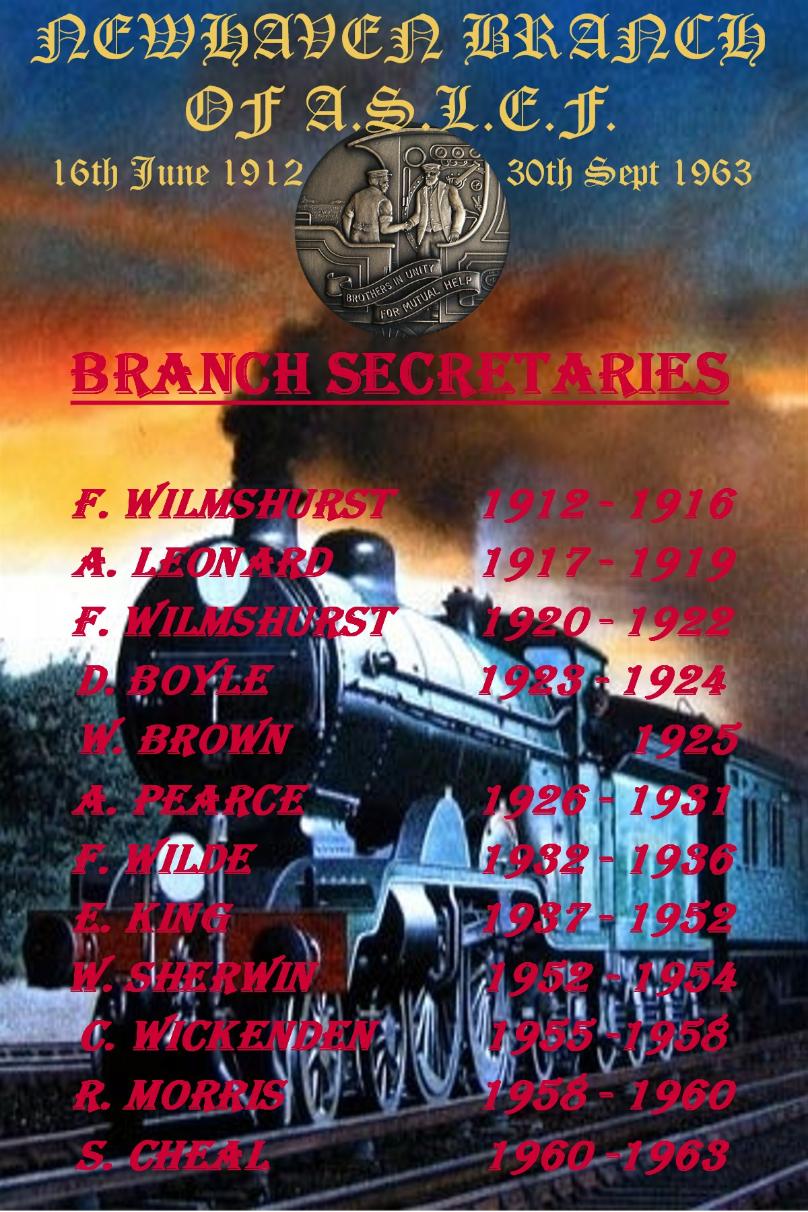
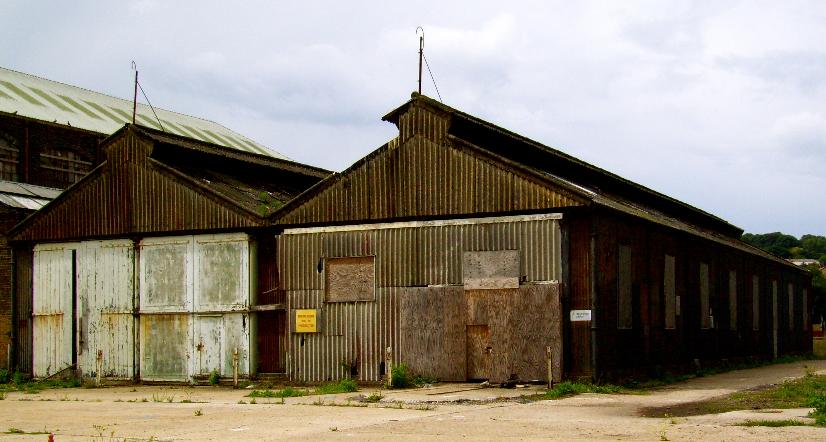
TIM WOOD COLLECTION
Newhaven Loco Shed as seen in August 2014, and fifty-one years later, on Monday 15th September the loco shed were demolished as part of a regeneration project for this location. The Marine Workshops which are situated next door will be converted for commercial use.
It’s understood that owing to the loco shed being constructed out of asbestos, it drew no interest in saving this building.
There are only two L.B.S.C.R. loco sheds still surviving, one at Tunbridge Wells West and the other is at Littlehampton.
THE SUSSEX MOTIVE POWER DEPOTS WEBSITE.
HAS NOW BEEN MOVED TO A NEW SITE CALLED
IGNITING THE FLAMING OF UNITY
PLEASE CLICK ON THE IMAGE BELOW
TO TRANSFER TO THIS NEW SITE
CLICK ON THE ABOVE IMAGE TO TAKE YOU
TO THE NEW UPDATED COMBINED AND WEBSITE
IGNITING THE FLAME OF UNITY WEBSITE
https://ignitingtheflameofunity.yolasite.com/
THIS WEBSITE COMBINES THE FOLLOWING WEBSITES
THE BRIGHTON A.S.L.E.&F., THE BRIGHTON MOTIVE POWER DEPOTS
& THE SUSSEX MOTIVE POWER WEBSITES
WHICH EXPLAINS THE EVOLUTION OF THE FOOTPLATE GRADES AND THE
HISTORY OF THEIR TRADE UNIONS AND THE STRUGGLES TO IMPROVE
THEIR WORKING LIVES

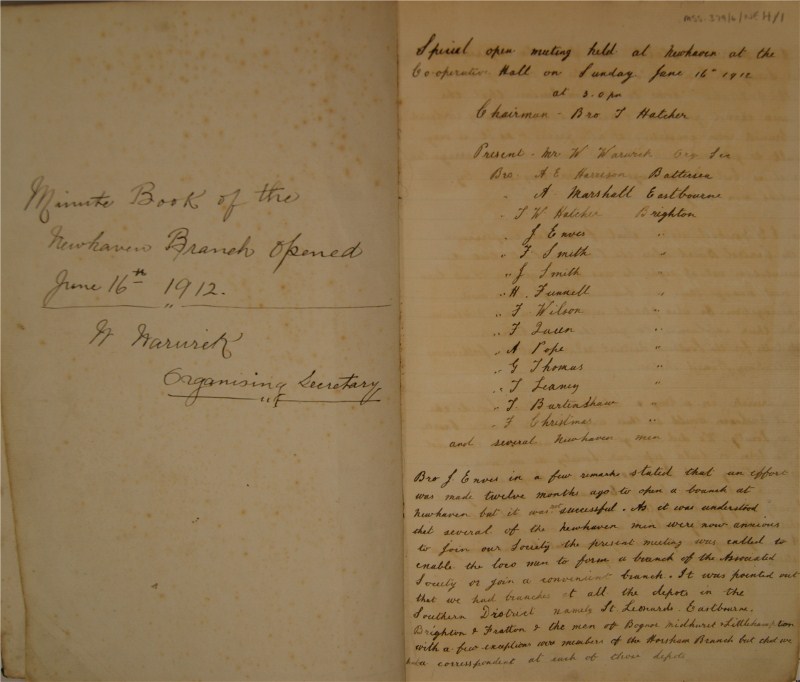
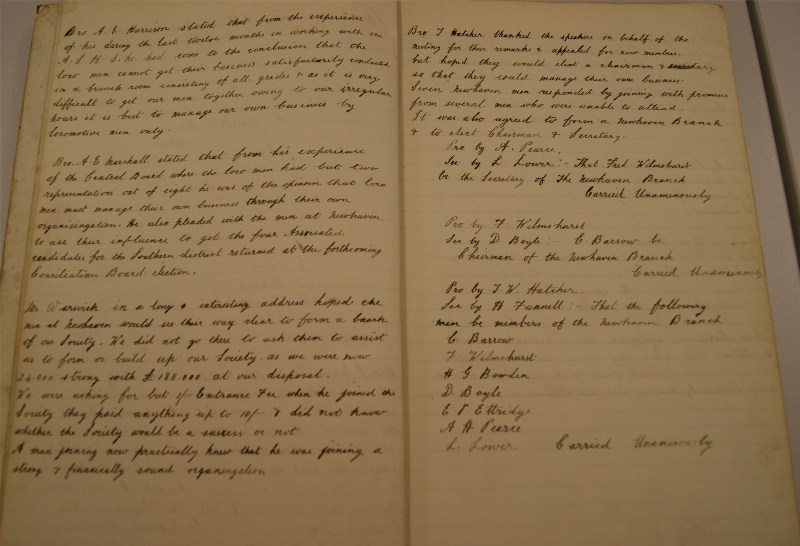
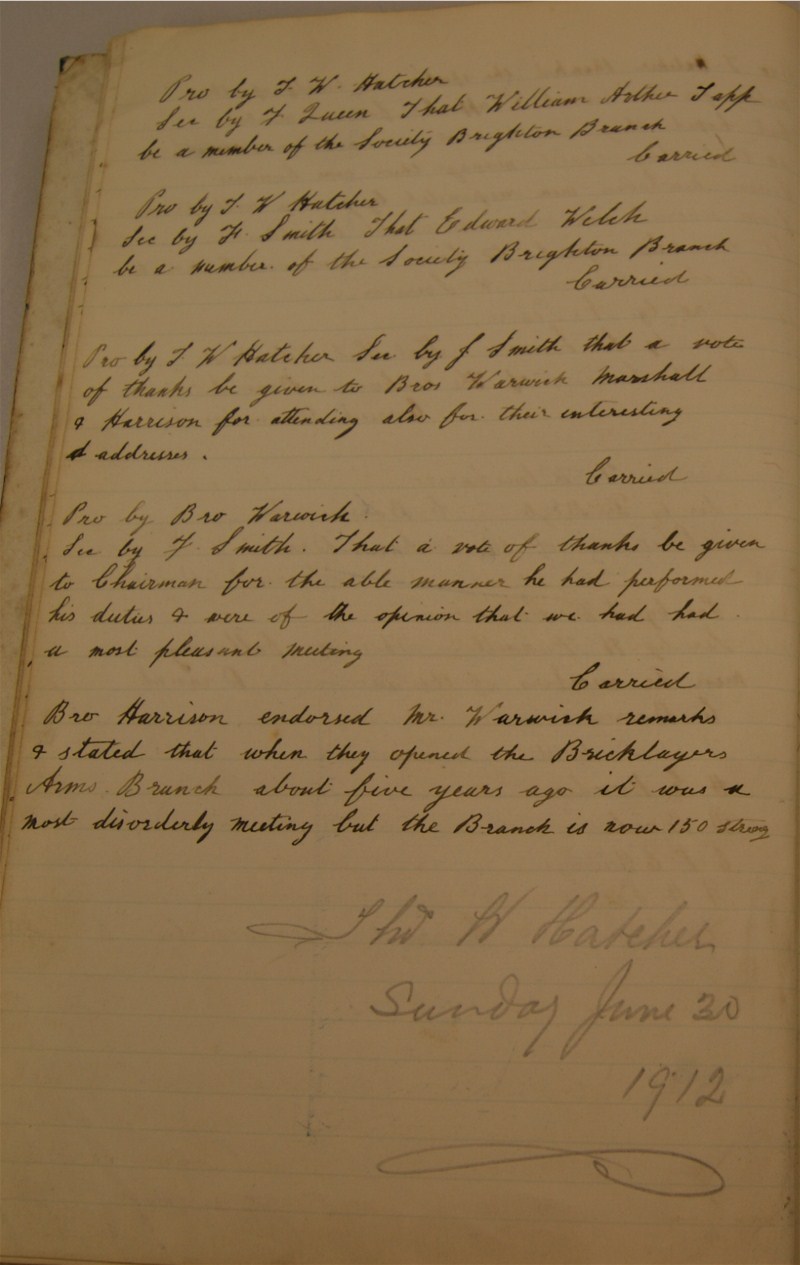
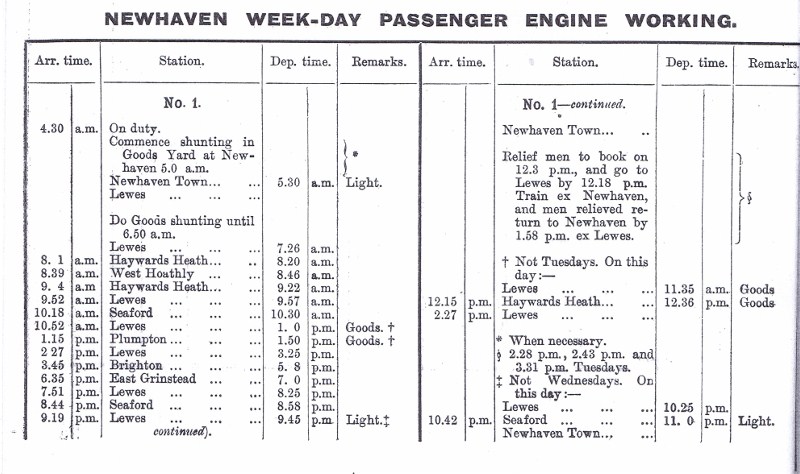
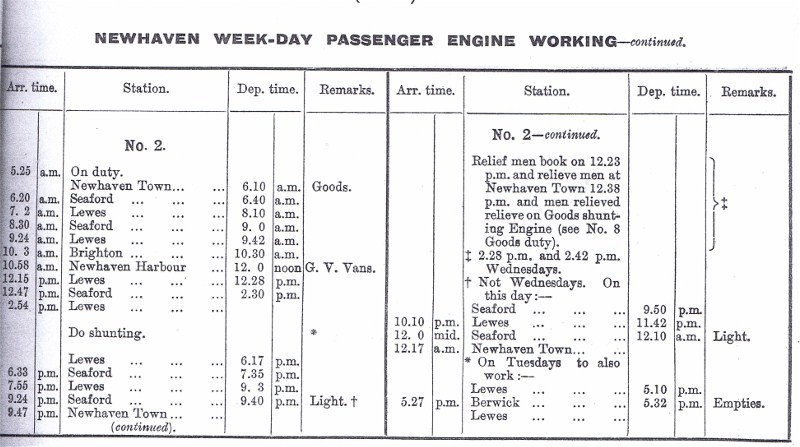
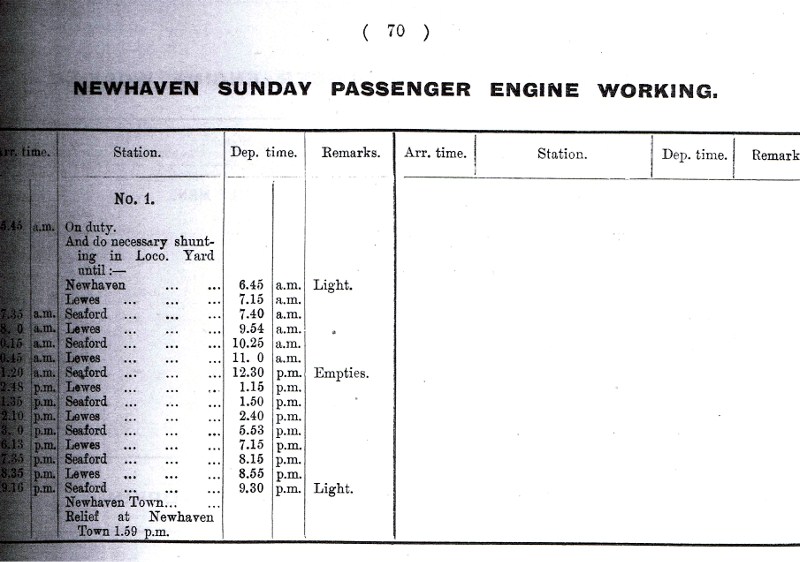
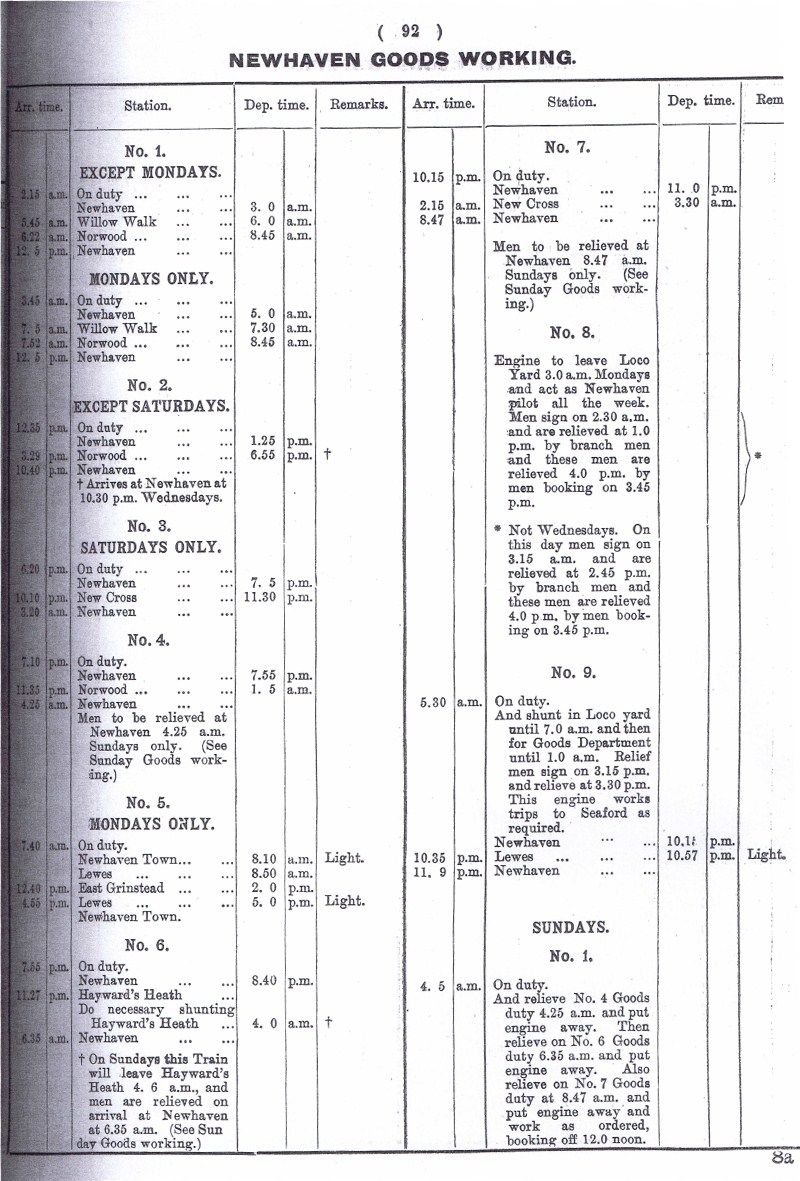
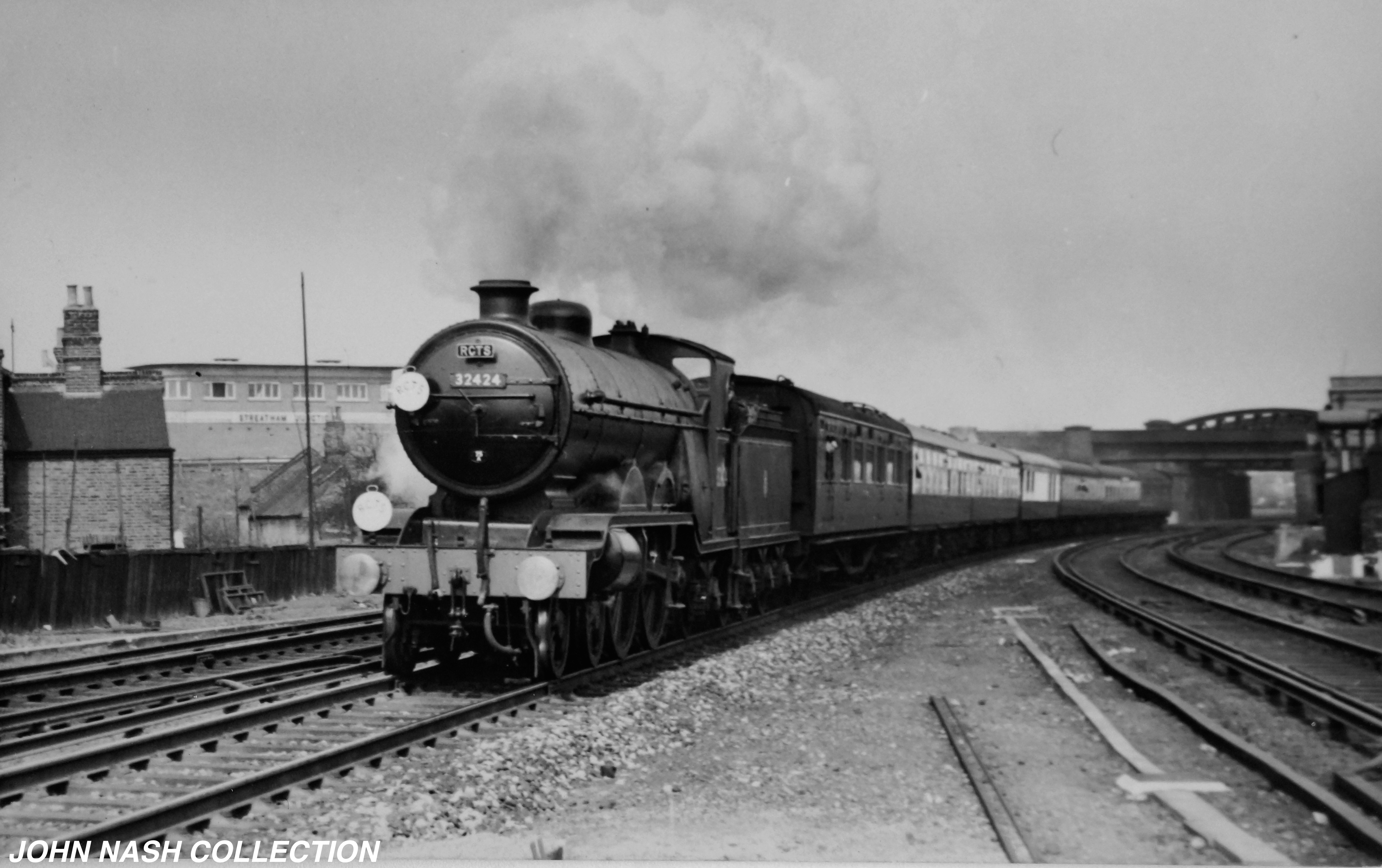
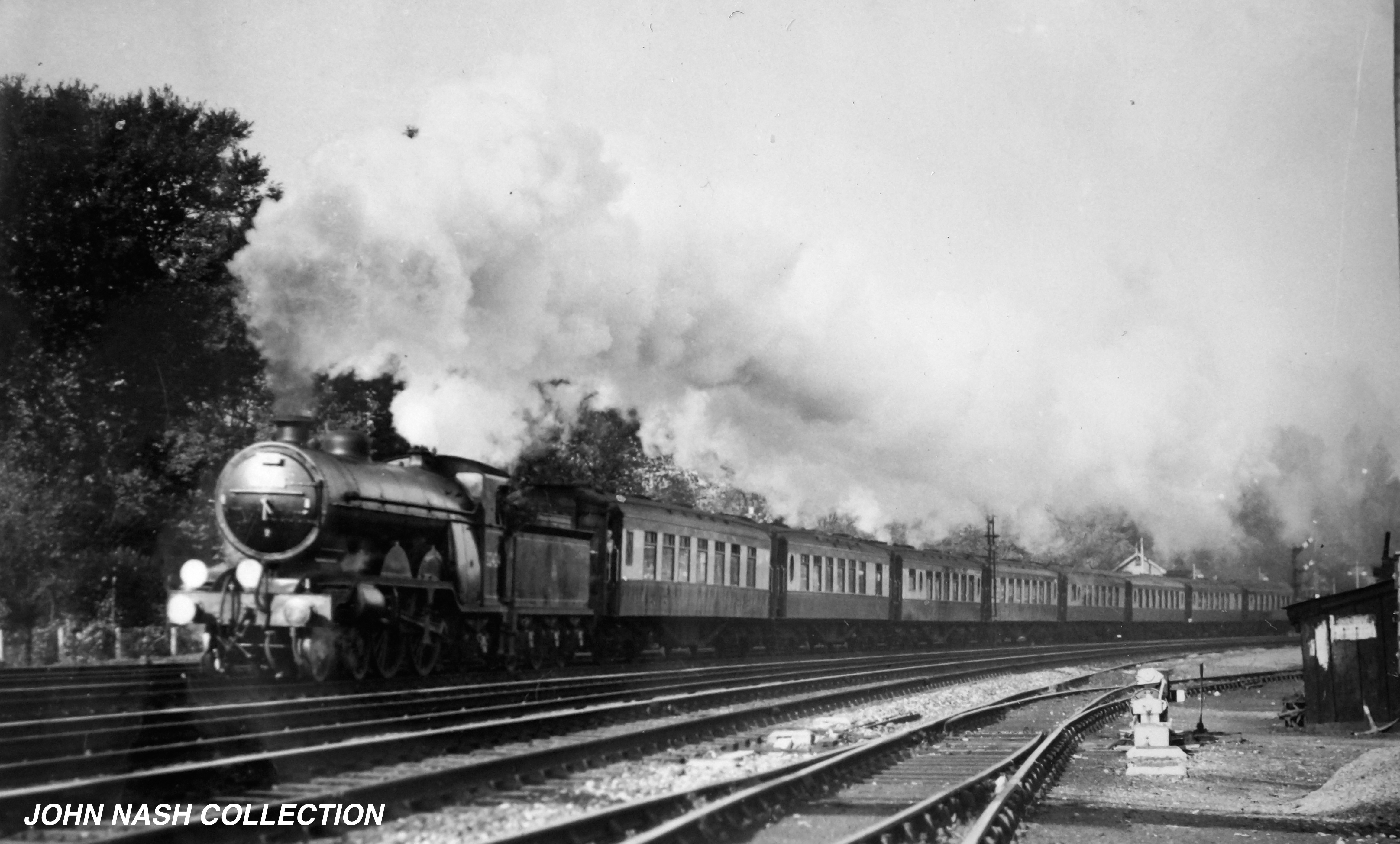
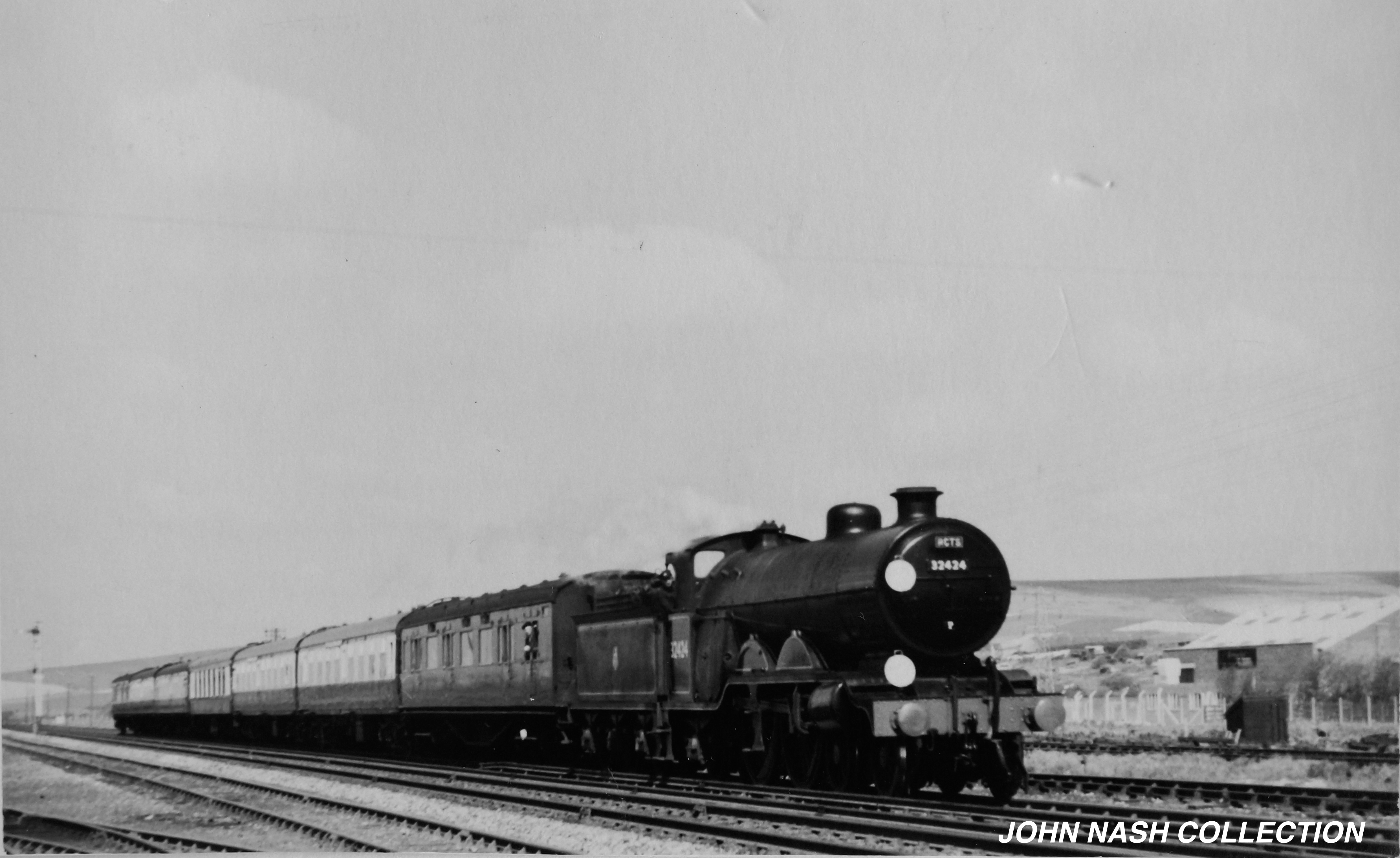
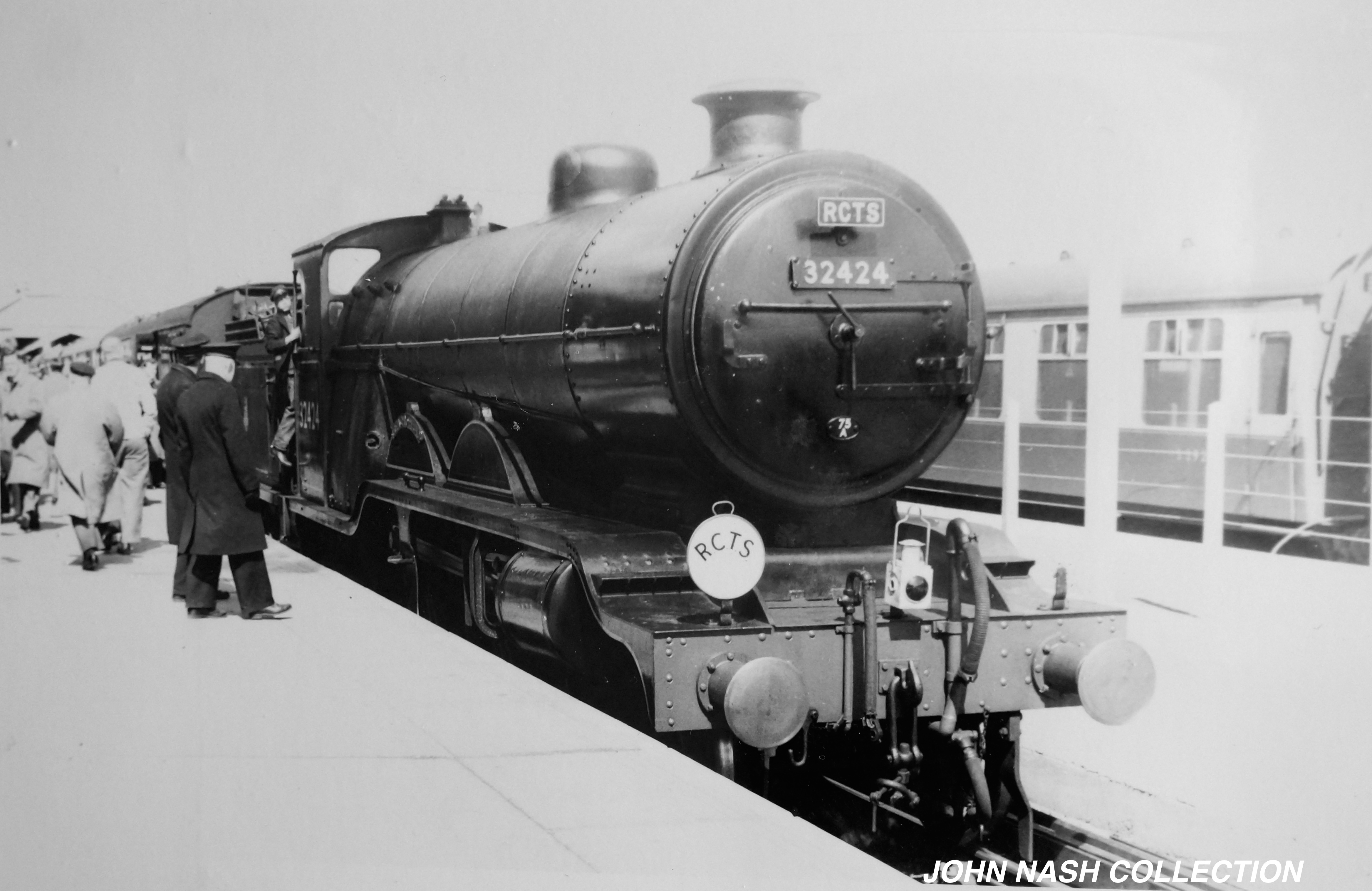
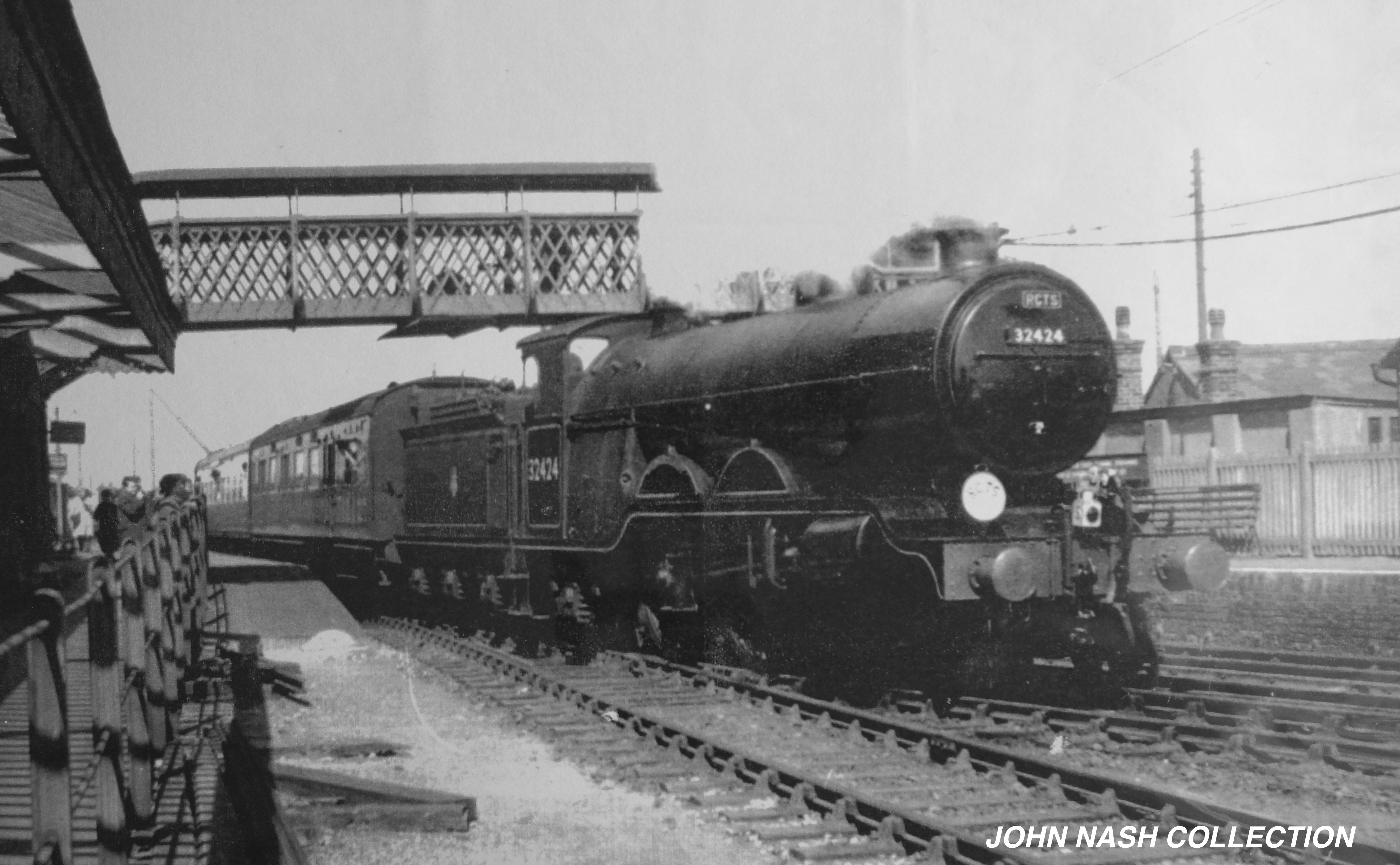
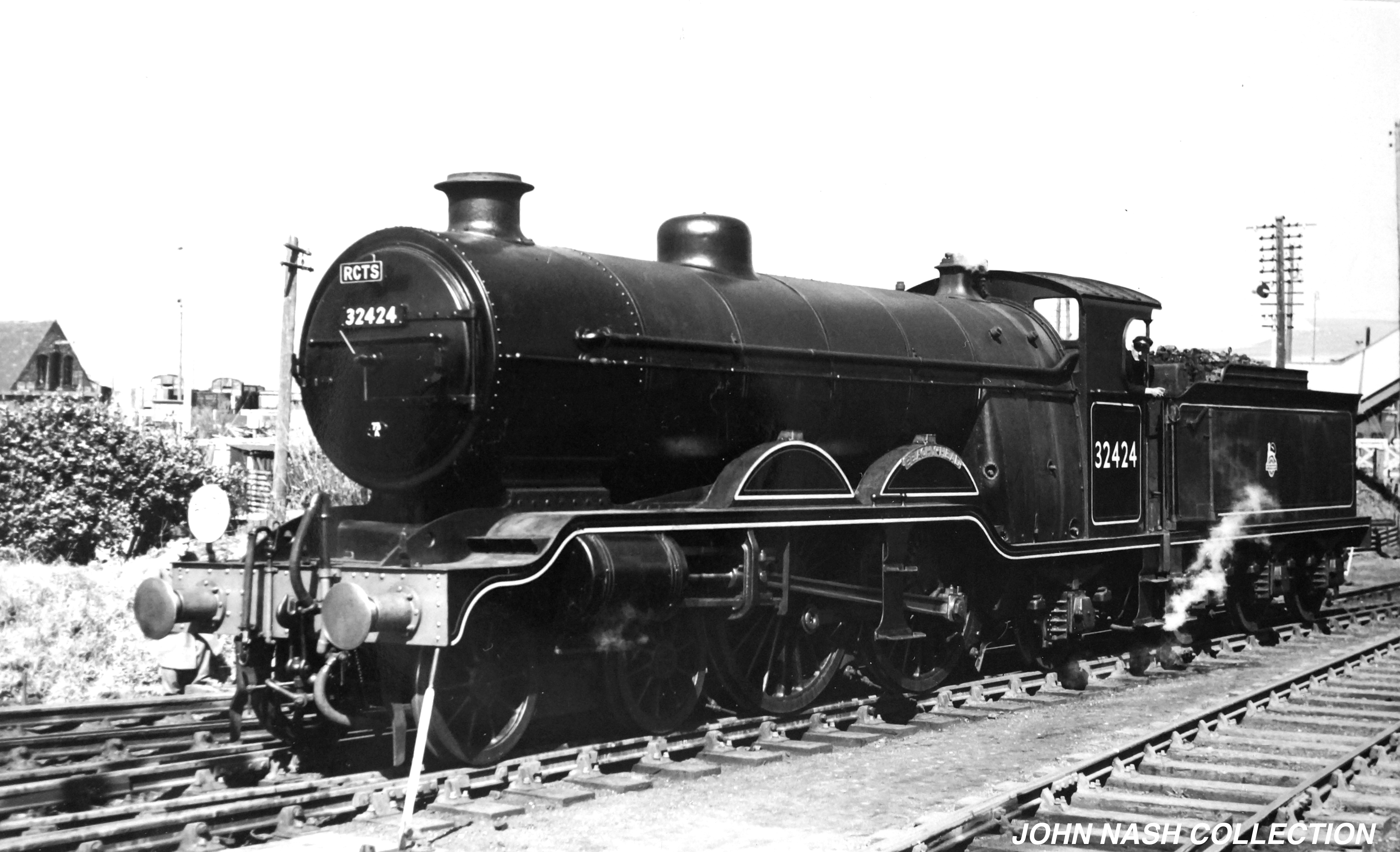
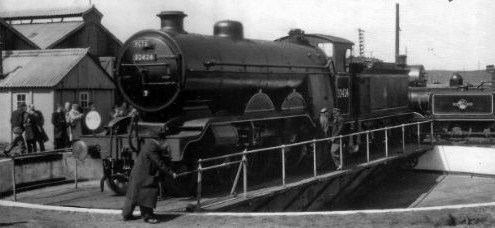
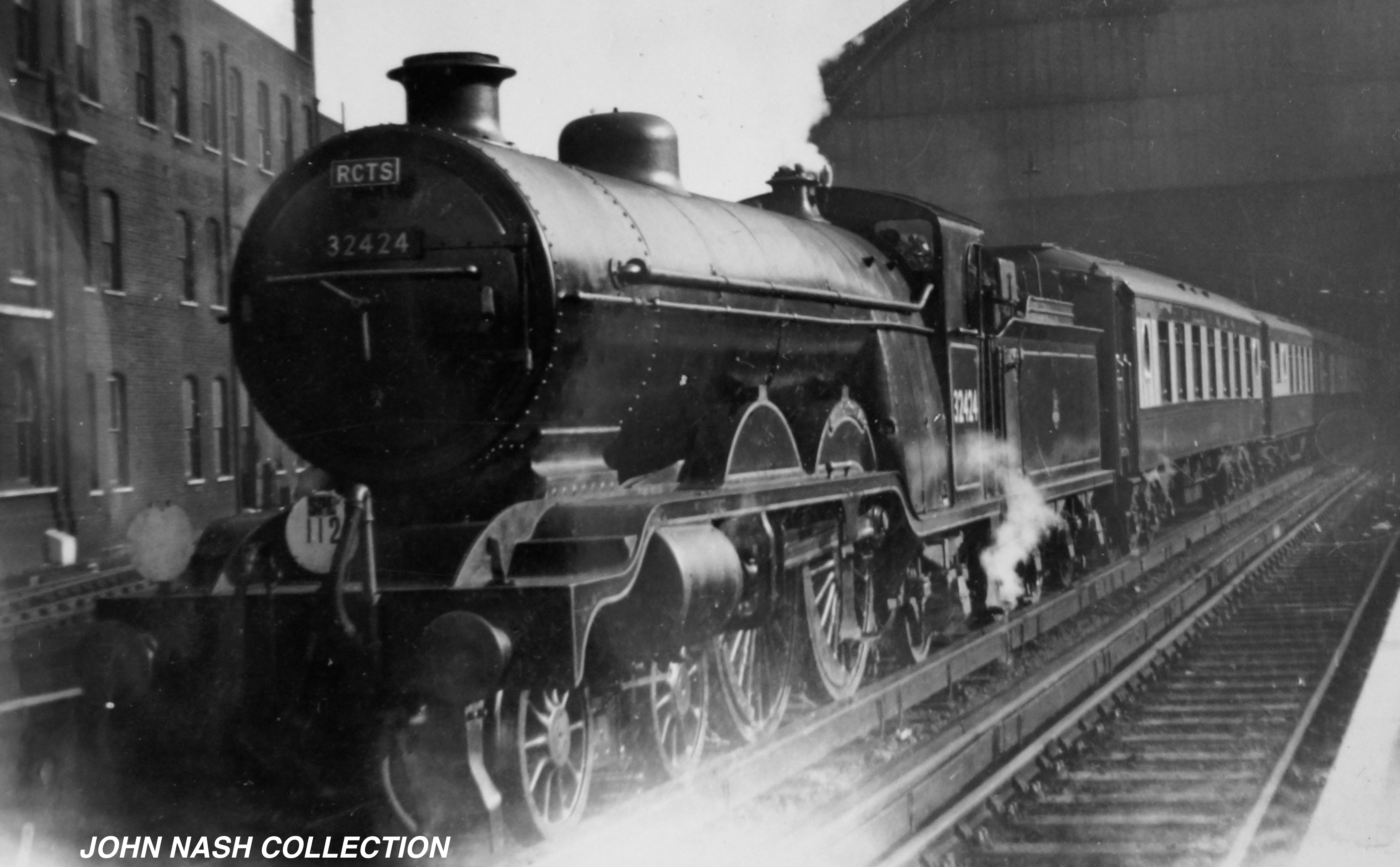
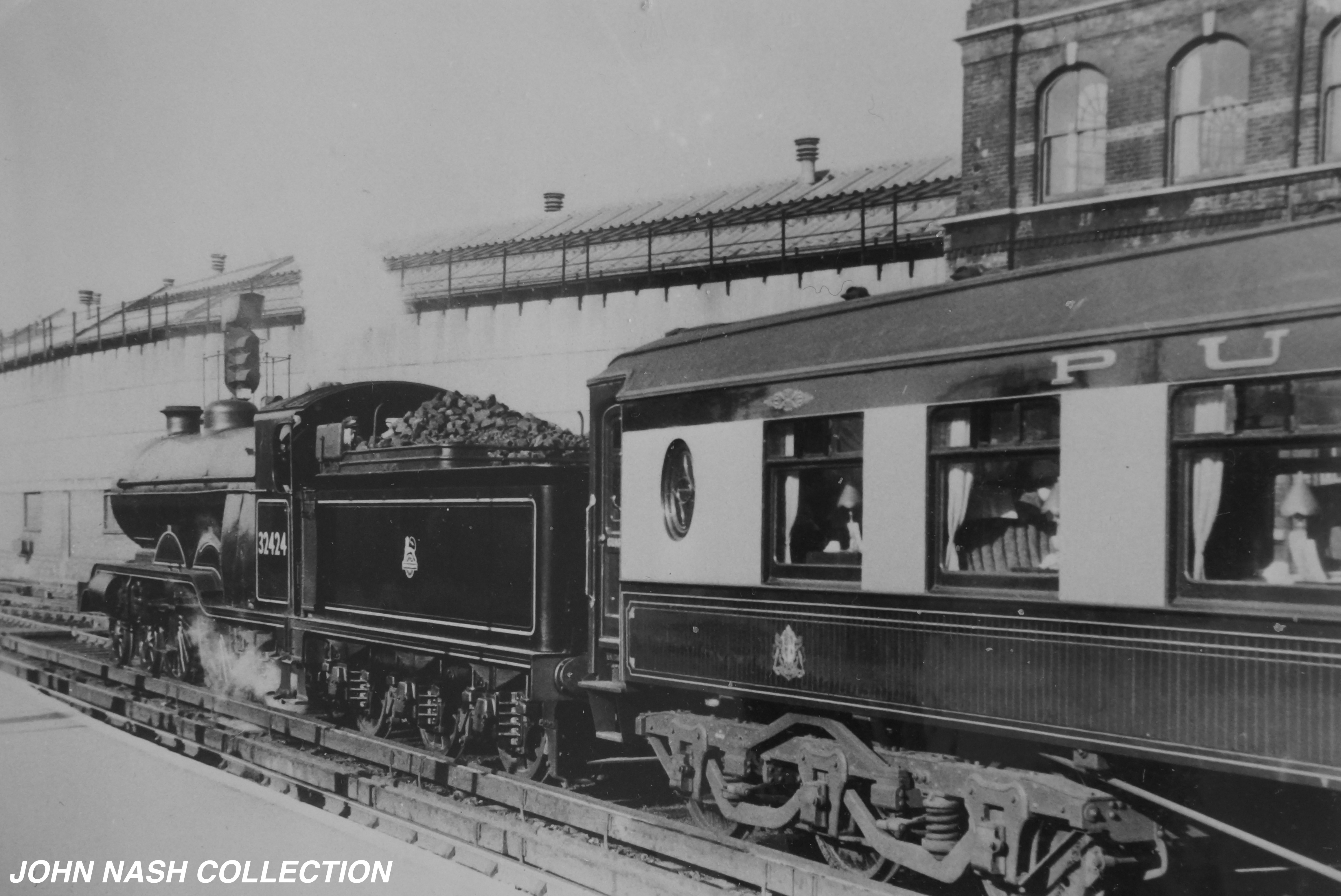
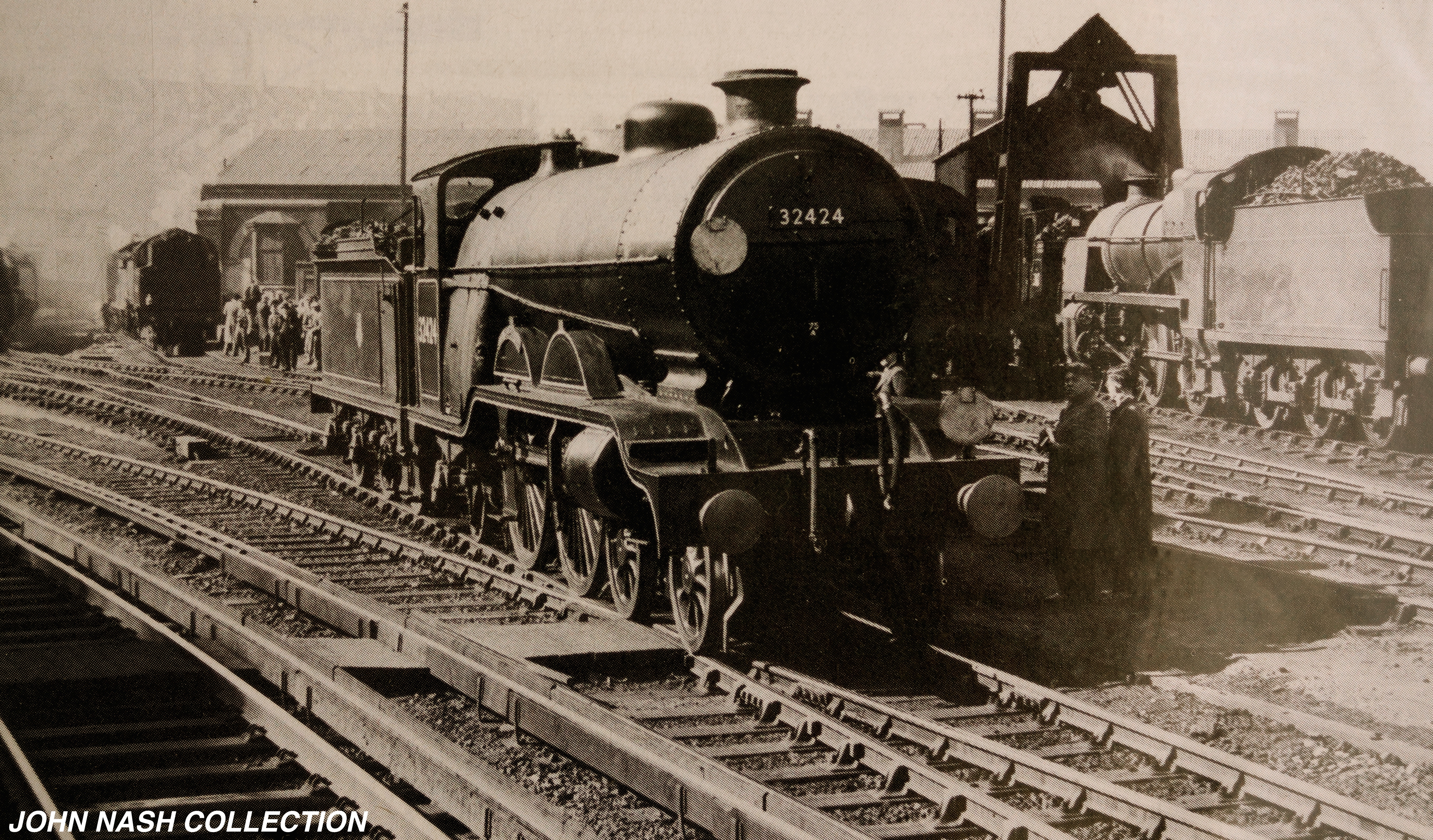
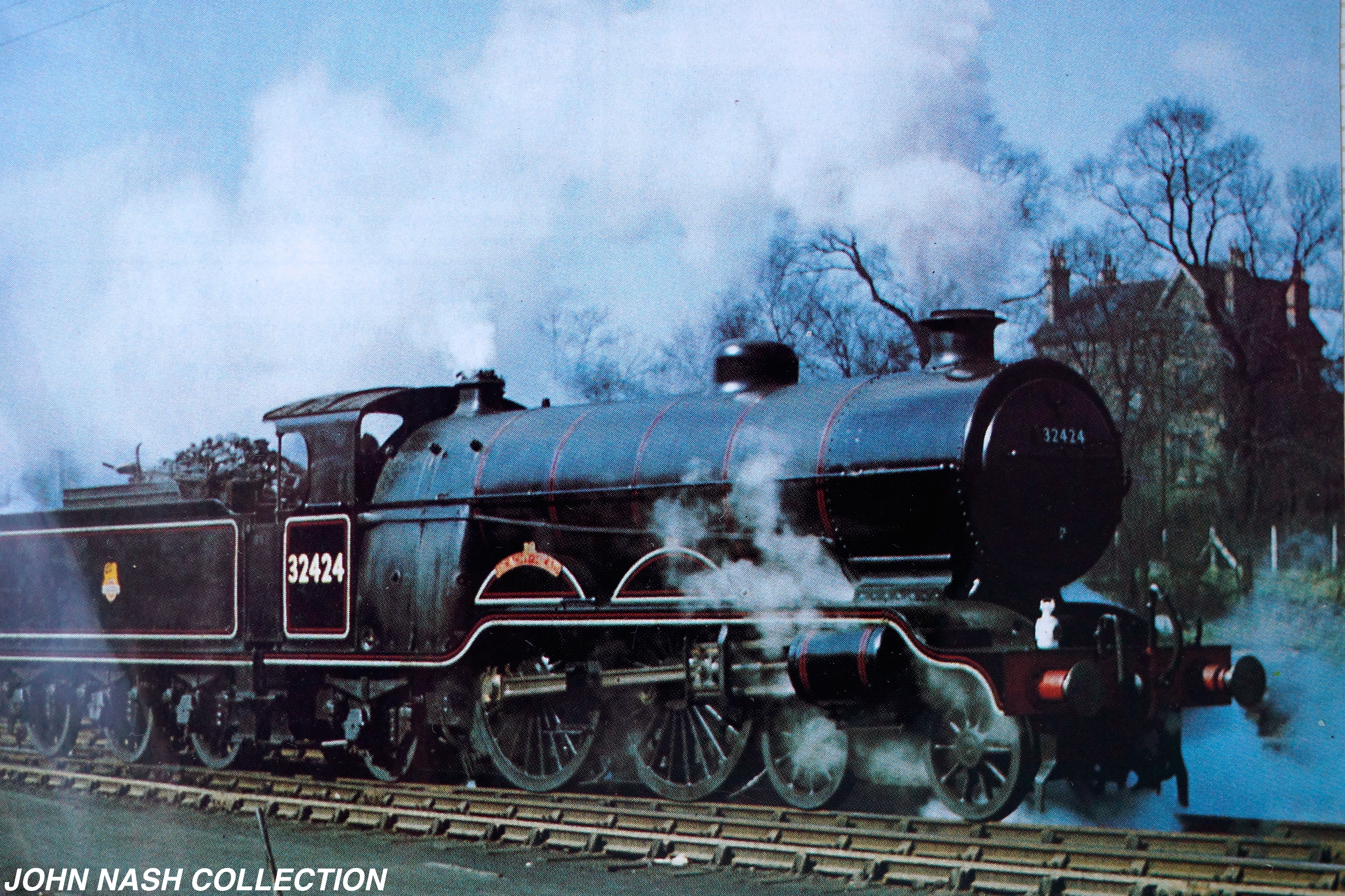
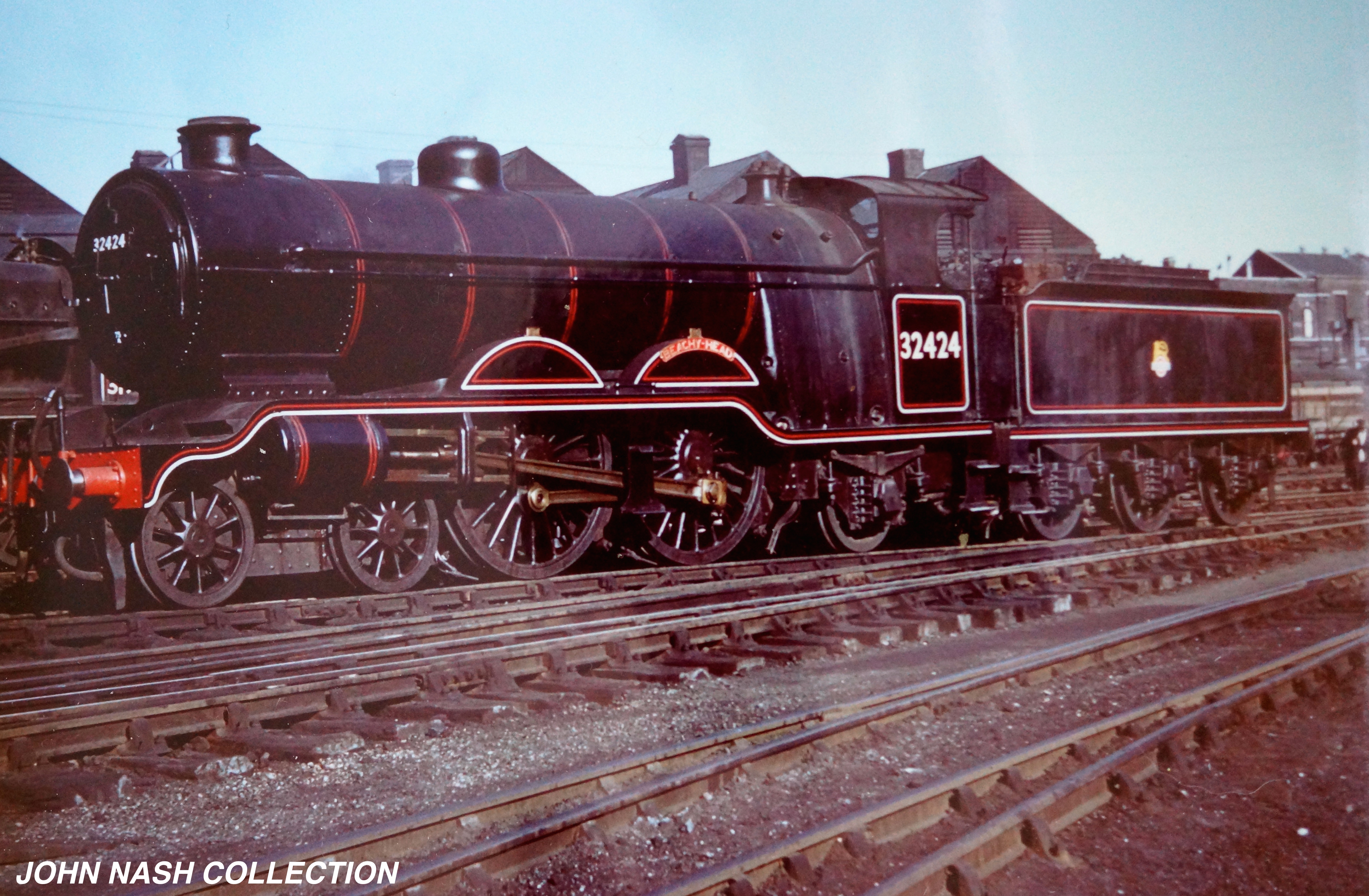
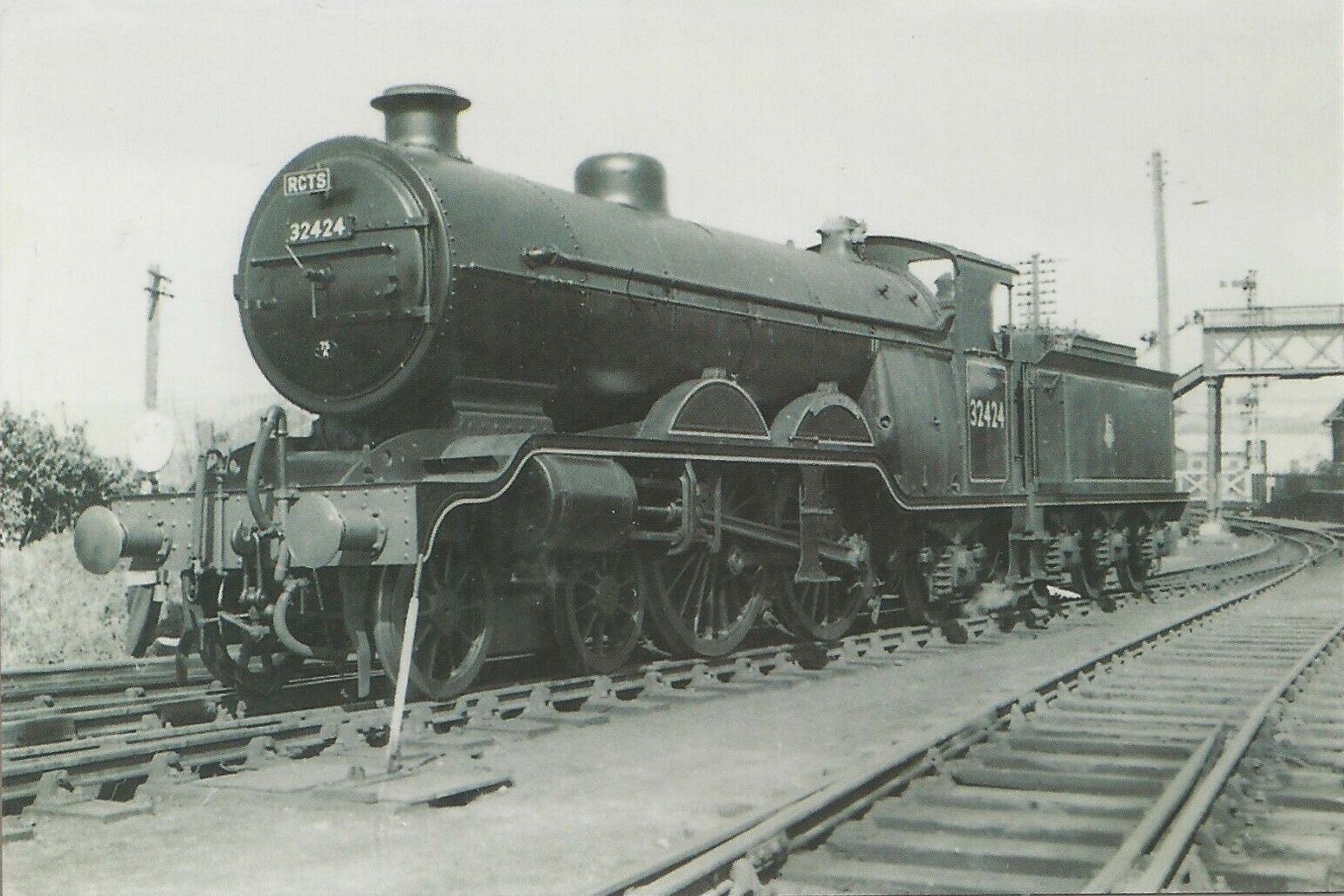
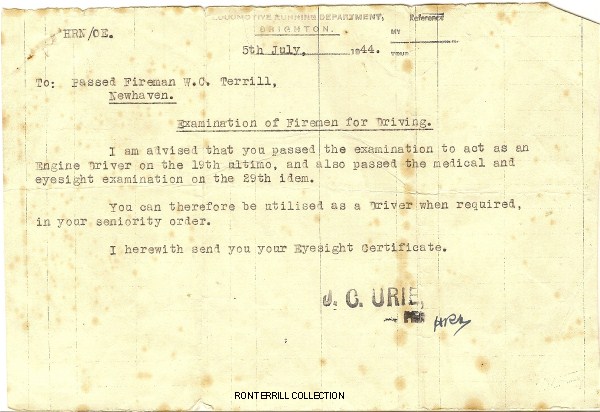
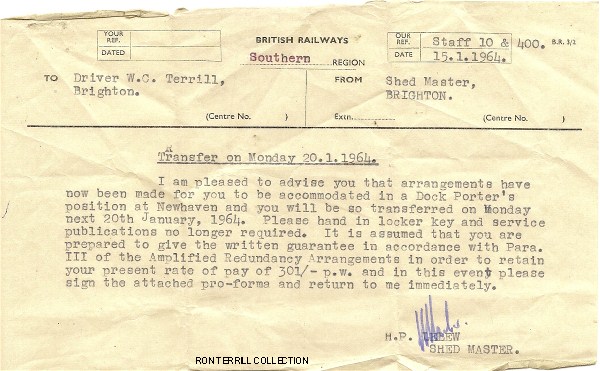
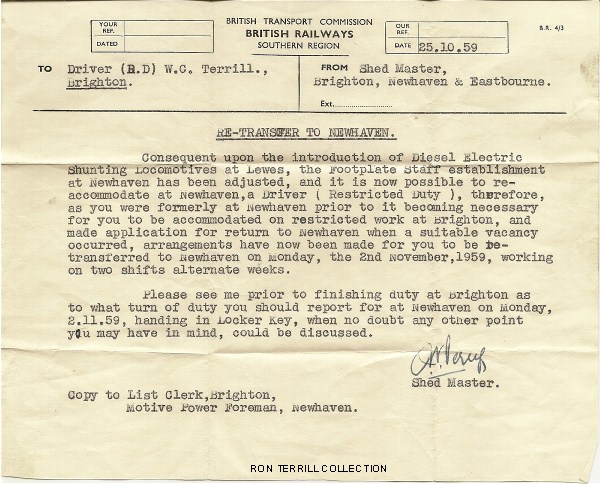
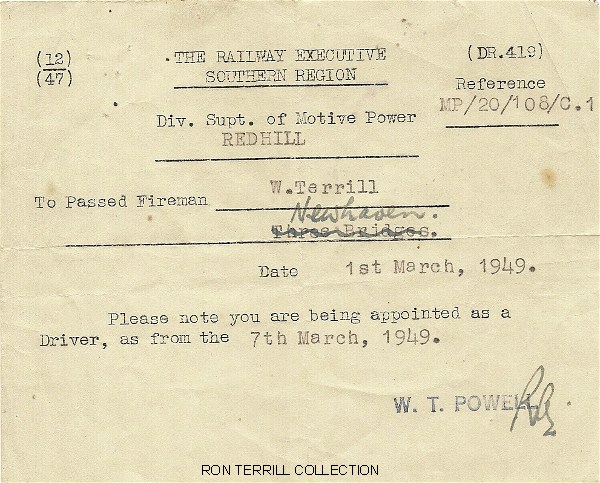
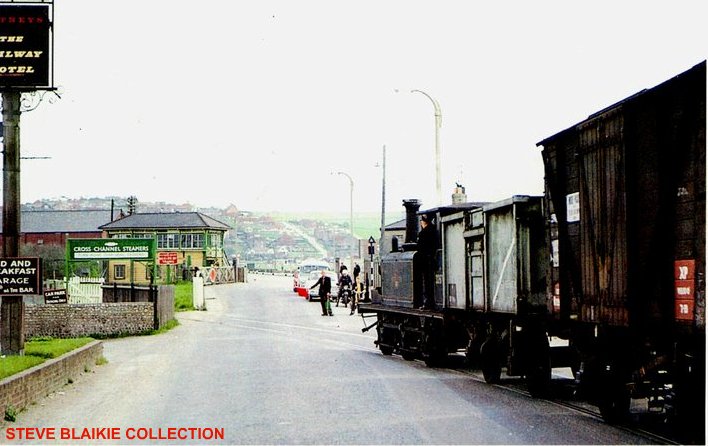
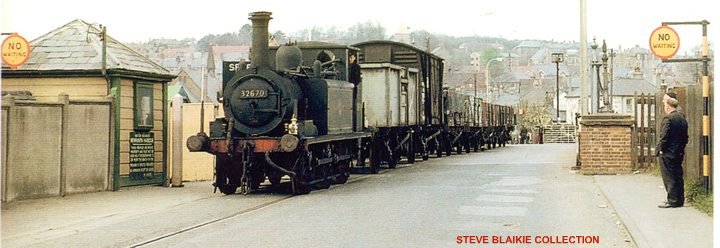
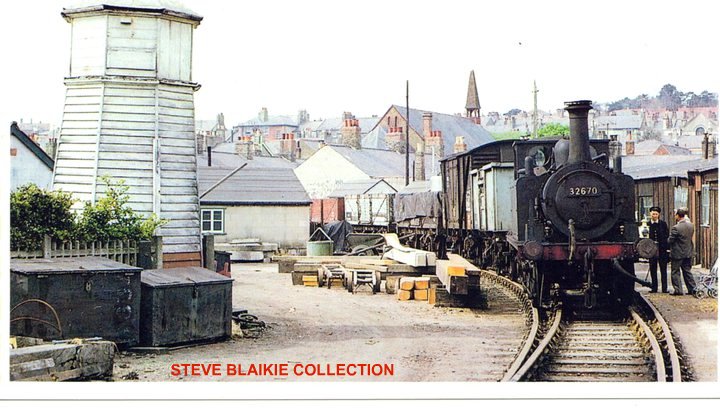
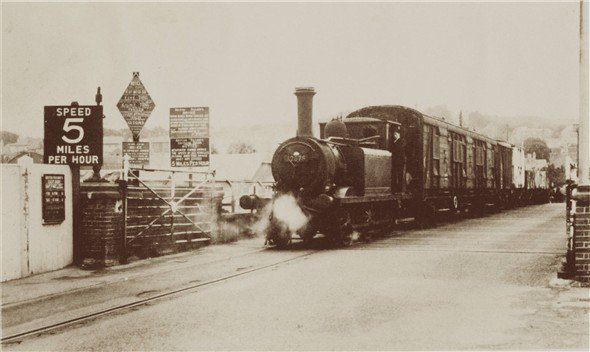
One summer weekend in the early 1950's while working nights and acting as shed fireman, in the height of the the summer traffic the shed was full with locos of several classes, Brighton Atlantics, Terriers, Moguls, E4s, a C2 Vulcan and a Schools Class. There was even a West Country class loco for boat train traffic, however using those West Country locos was short lived because they came off the rails on the sharp curve into the shed.